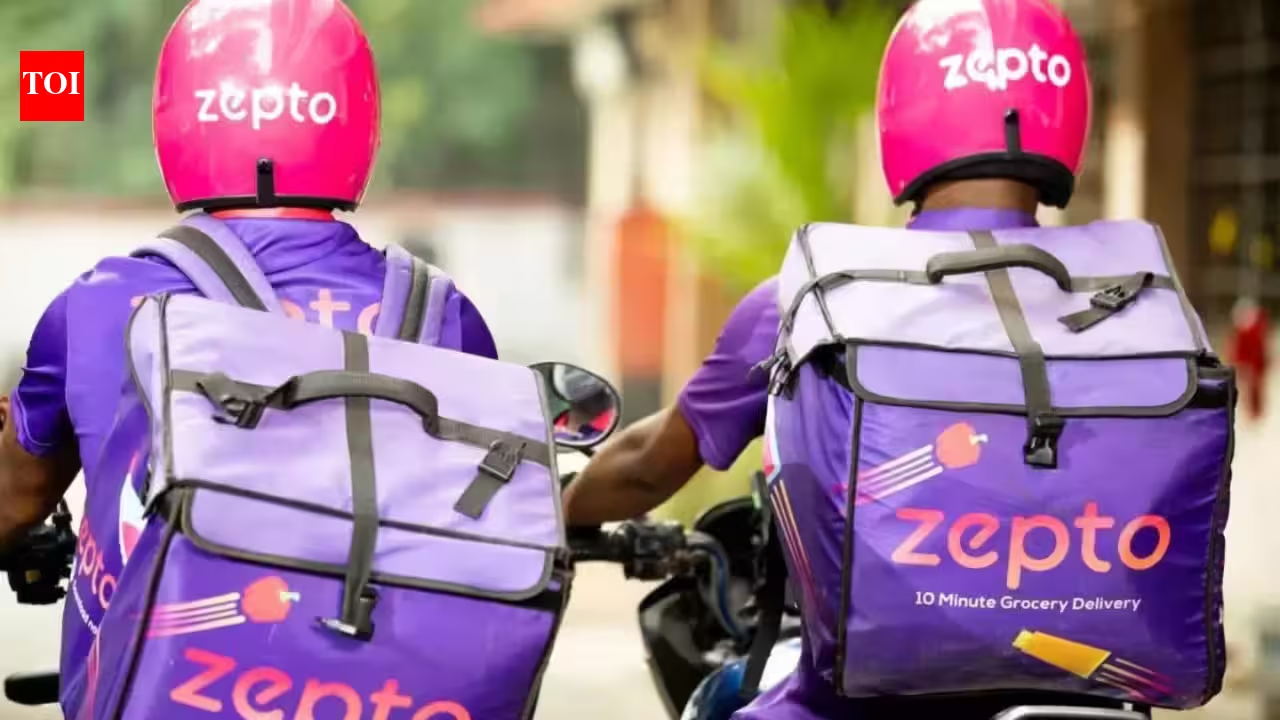
Earlier this year, q-comm company Zepto started marketing its much-talked-about IPO with a nosebleed ask of $7 bn. It failed to fly with public investors. By end-July, its Stanford dropout founders Kaivalya Vohra and Aadit Palicha were ready to slash valuations by 60%, and even considered downsizing issue size by 20%. Still, they failed to get their blockbuster listing out of the door last week. In hindsight, what seems a crushing blow may well turn out to be a fortuitous opening.The speed with which Zepto has ramped up its national footprint, order volumes and brand loyalty is mind-boggling. Within six years of operations, it has become the fastest-growing q-comm platform with order volumes outpacing FY26 industry growth. It already has the second-largest network of dark stores. Revenues have also leapt 5x in the last two years. But with mounting losses, half-baked business plans and huge execution risks, the speed at which it was trying to blaze its way to the bourses would have upended all its gains.
Instead of rushing an IPO and disappointing public market investors, it may be a far better strategy for Zepto to stay private for now, and fix its core challenges. It is still just a fast commerce company when all its competitors have significant heft in other areas of ecomm or physical retail. The platform needs to show its orders can become large and profitable enough to justify cost of servicing them. And that starts with hauling its average order value, which is still the lowest among listed peers.Also Read: Investors slash Zepto’s valuation, delaying India IPO plansNo doubt a bumper listing remains the most important milestone in a corporate rite of passage. But it's the possibility of stumbling like Paytm that should give Zepto's leadership a pause. There are many large and perfectly fine privately-owned tech companies. Access to capital doesn't seem to be an issue, given the increasing depth of private markets.Luckily, Palicha and Vohra have so far attracted substantial funding from global VCs who may prefer to backstop the losses further if they see a firm turnaround plan and realistic valuations for an eventual bumper payout. For the time being, they are doubling down.Hypercompetition is already haemorrhaging the balance sheets of the $14 bn q-comm industry by $2 bn every year. It's safe to assume industry losses in FY27 would be even higher on the back of rampant discounting and large capex investments in dark stores, tech, supply chains and customer acquisition. A key catalyst behind Flipkart's decision to postpone its IPO is arguably the ongoing q-comm carnage, and need to crank up capital commitments.Zepto alone accounted for nearly one-third of the industry's cash burn in the previous fiscal. Continued losses and negative free cash flows have weakened its sales pitch as a value retailer, making public market investors skittish about underwriting the story at premium multiples.