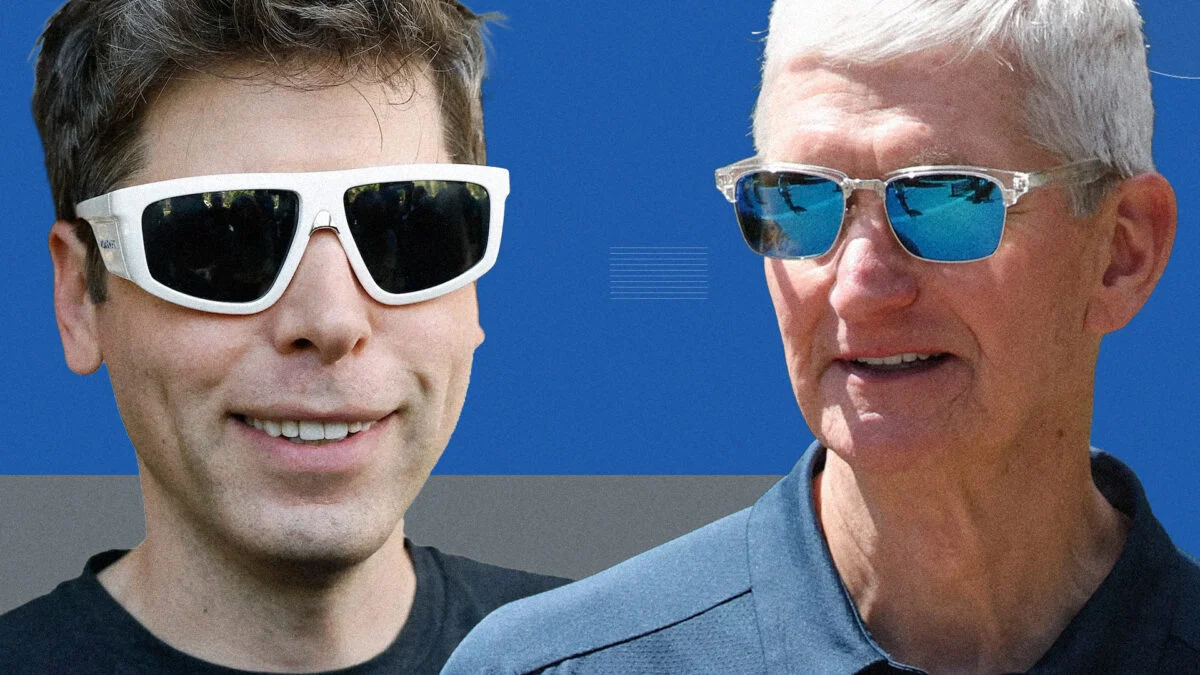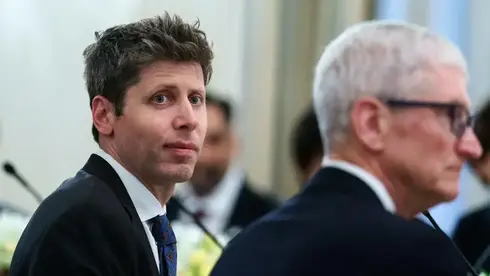
Apple accused former employees of taking hardware secrets to OpenAI, but the AI company’s response exposed alleged mistakes by the tech giant while highlighting a deeper fight over the future of personal devicesA legal battle between Apple and OpenAI that began over alleged trade secrets has quickly turned into something much bigger: a fight over who will define the next generation of personal technology.The dispute started when Apple sued OpenAI, accusing former senior employees who joined the ChatGPT maker of taking confidential information related to hardware development.GalleryOpenAI CEO Sam Altman and outgoing Apple CEO Tim Cook (Photo: Reuters)But OpenAI’s response, titled “Apple is wrong,” shifted the focus away from the original allegations and toward Apple’s own handling of the case, accusing the iPhone maker of making a series of legal and management mistakes.The clash now extends beyond trade secrets. At its core is a broader competition over the future of consumer technology, as OpenAI moves deeper into hardware while Apple faces pressure to prove it can keep pace in the artificial intelligence race.Apple’s lawsuit centers on former employees including Tang Tan and Chang Liu, who moved from Apple to OpenAI.Apple alleged that the former employees had access to sensitive information involving hardware design and development.OpenAI rejected the accusations and argued that Apple’s claims were based on misunderstandings and procedural failures.According to OpenAI’s response, Apple claimed it had attempted to contact the company months earlier but sent legal correspondence to the wrong person after confusing two similar names.OpenAI also challenged Apple’s claim that a documented conversation with its chief legal officer had taken place, saying the alleged discussion never occurred.The AI company further argued that Apple had spent months suggesting the two sides were attempting to resolve the dispute privately before unexpectedly filing the lawsuit.Jony Ive and Sam Altman (Photo: OpenAI)The most damaging accusations from OpenAI focused on Apple’s internal security procedures.The company argued that communications involving former employee Chang Liu showed Apple workers had contacted him after his departure asking for help locating internal files.OpenAI also claimed Apple had failed to immediately cut off Liu’s access to his company iCloud account, and that he ultimately had to request that access be removed himself to prevent potential exposure between his former and current employers.Instead of acknowledging a possible weakness in employee offboarding procedures, OpenAI argued, Apple portrayed the situation as unauthorized access.The response gave OpenAI an opportunity to attack a company whose brand has long been built around attention to detail, privacy and tightly controlled technology.Behind the legal arguments is a much larger strategic rivalry.Apple has struggled to match the pace of AI companies such as OpenAI, Google and Microsoft, while OpenAI is attempting to expand beyond software and into physical devices.The company is working with former Apple design chief Jony Ive on a new AI-focused hardware product, raising questions about whether future consumers may rely less on traditional smartphones and more on AI-powered devices.For Apple, that possibility represents a major challenge.The iPhone remains the company’s most important product, driving a significant portion of its revenue and shaping its influence in the technology market. A successful AI device that changes how people interact with technology could threaten the central role the iPhone has played for nearly two decades.Apple’s leadership transition adds another layer of uncertainty. Outgoing CEO Tim Cook is expected to move toward a board role, while hardware executive John Ternus is viewed as a potential successor tasked with addressing some of the company’s biggest challenges.The Apple-OpenAI fight reflects a wider battle taking place across Silicon Valley.For years, the smartphone was the center of digital life. Now AI companies believe the next major platform may look very different.The question is whether artificial intelligence will become another feature inside existing devices, as Apple hopes, or whether it will create an entirely new category of products controlled by companies like OpenAI.The lawsuit may ultimately be decided in court, but the larger competition will be decided in the marketplace.For Apple, the stakes are enormous: protecting the dominance of the iPhone while proving it can lead in an era that may no longer revolve around the smartphone.
Apple vs. OpenAI: the legal battle that could shape the future beyond the iPhone
Apple accused former employees of taking hardware secrets to OpenAI, but the AI company’s response exposed alleged mistakes by the tech giant while highlighting a deeper fight over the future of personal devices
683 words~3 min read