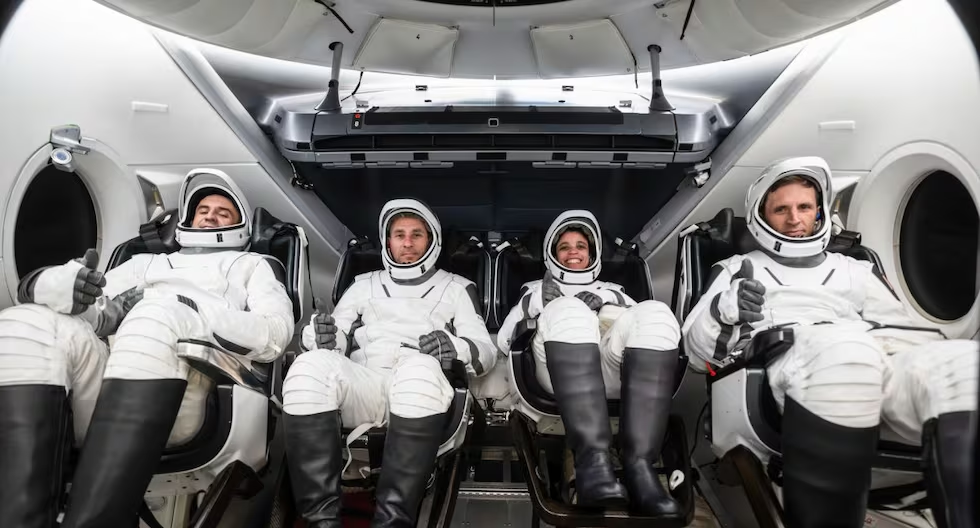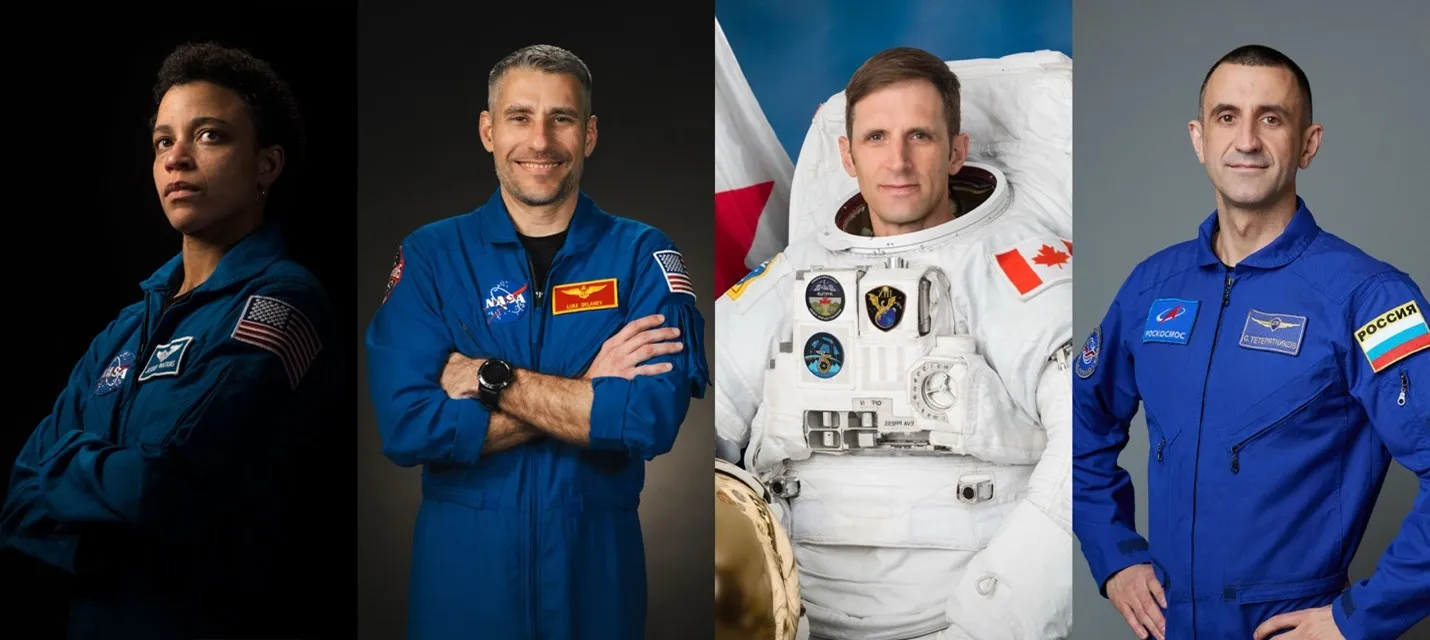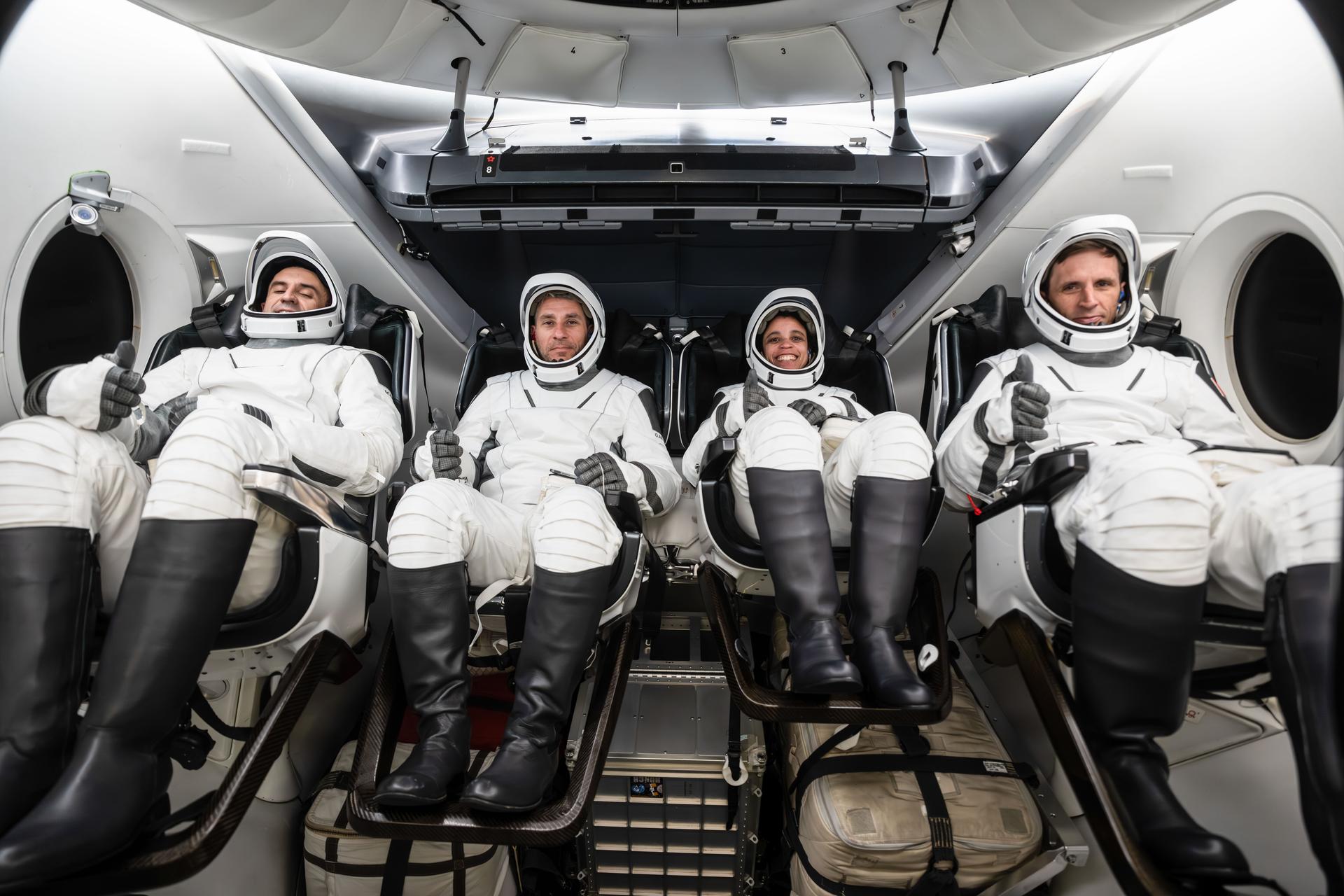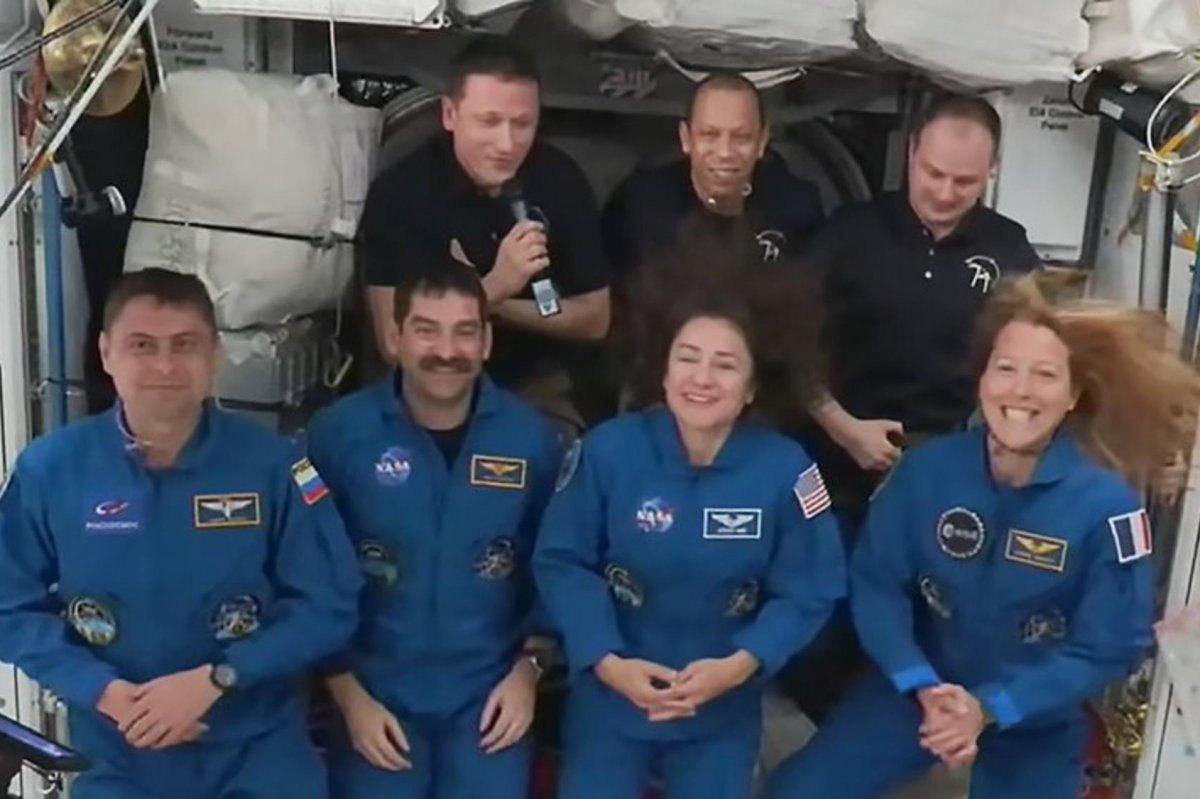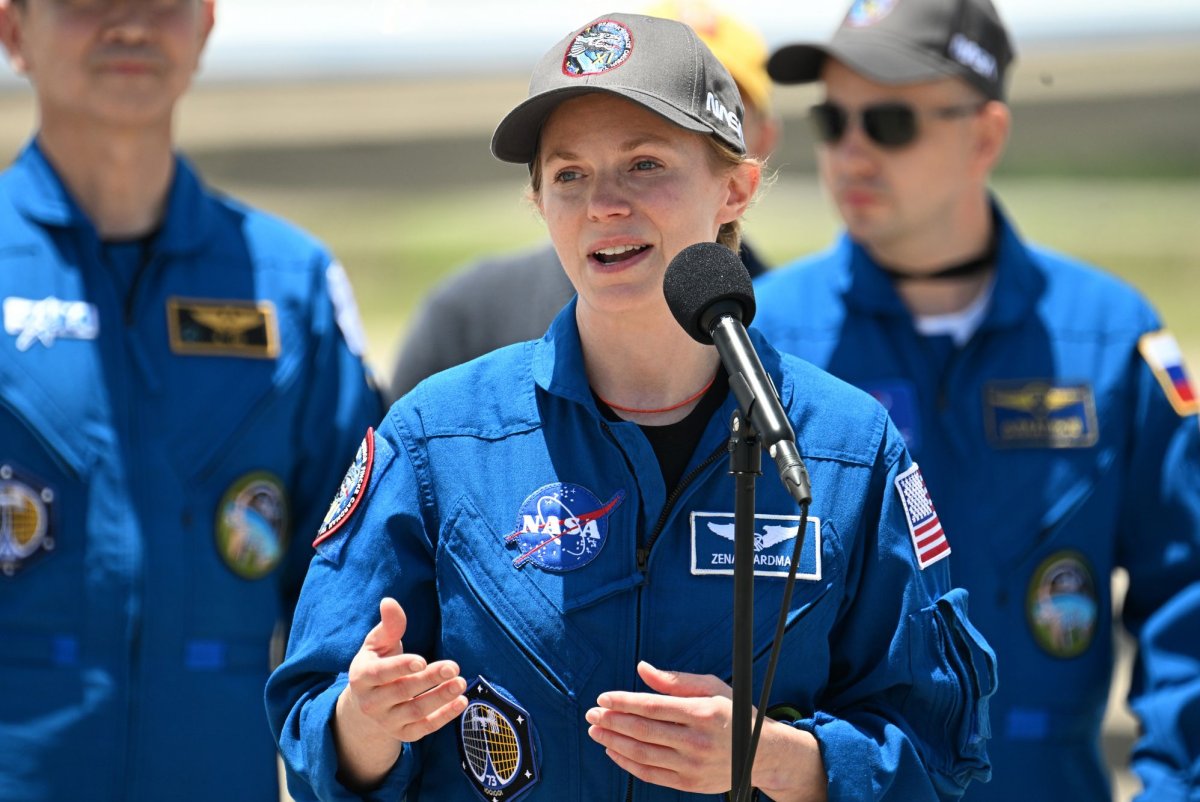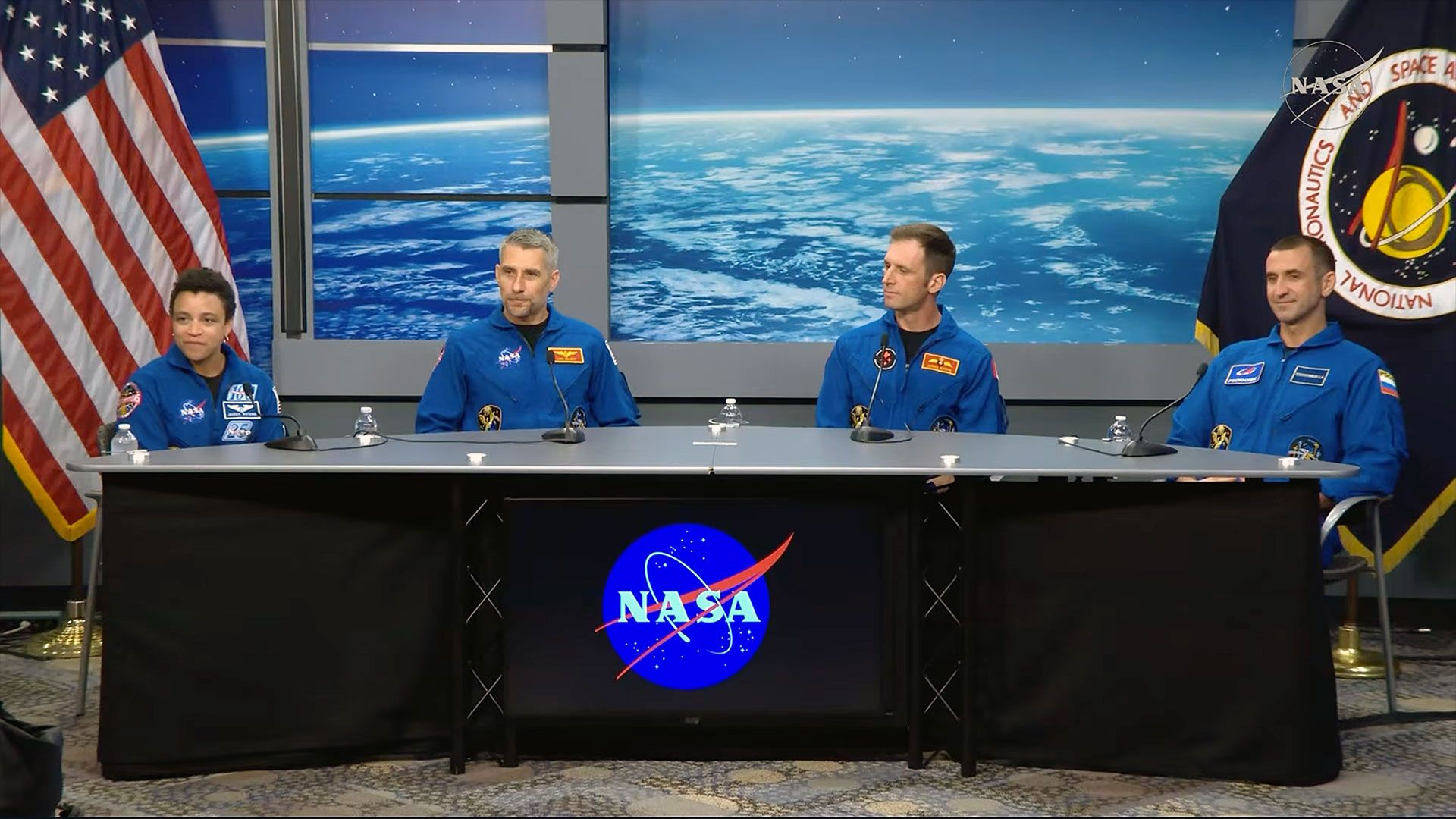
From left to right, Crew-13 commander Jessica Wakins and pilot Luke Delaney, both of NASA, Canadian Space Agency astronaut Joshua Kutryk and Roscosmos cosmonaut Sergey Teteryatnikov, both mission specialists, take questions from reporters during an Aug. 3, 2026 press conference at NASA's Johnson Space Center in Houston, Texas.
(Image credit: NASA)
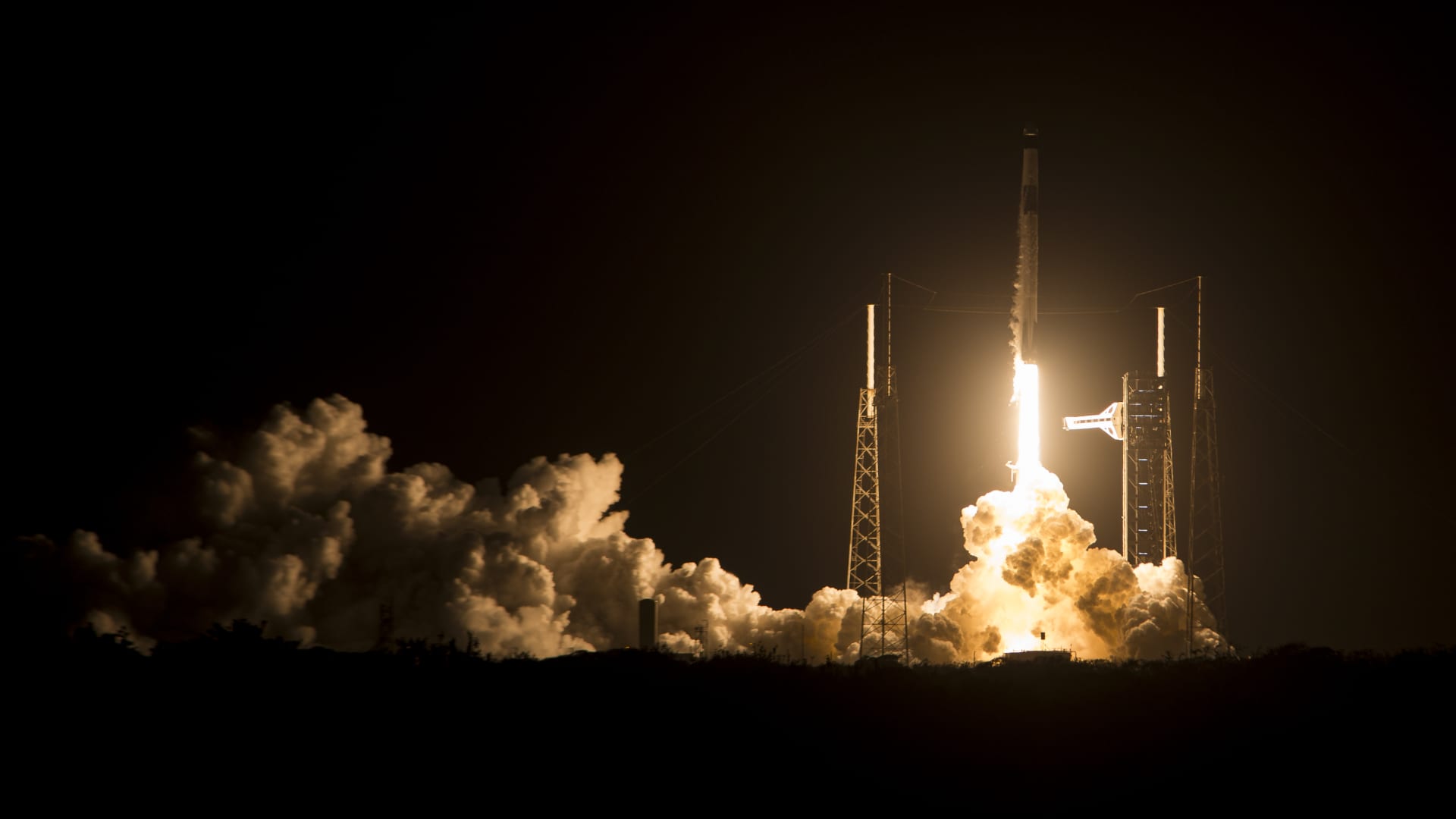
The next crew, spacecraft and rocket to fly to the International Space Station are on schedule to meet their mid-September launch date, mission managers and the astronauts told reporters on Monday (Aug. 3).SpaceX's Crew-13 astronauts — commander Jessica Watkins and pilot Luke Delaney of NASA, mission specialist Josh Kutryk with the Canadian Space Agency and mission specialist Sergey Teteryatnikov of Russia's federal space corporation Roscosmos — will become only the second crew to fly aboard the Dragon spacecraft "Grace" when they lift off no earlier than Sept. 12 from Space Launch Complex-40 at Cape Canaveral Space Force Station in Florida.They will then dock with the space station the following day to begin a seven-month stay on the orbiting outpost, as part of the Expedition 75/76 crew."We expect a very busy mission with lots of station maintenance, both internal and external, with a few EVAs [extravehicular activities, or spacewalks] on the docket," said Watkins, who is the only member of Crew-13 to have flown into space before and will become the first active NASA astronaut to fly on Dragon twice. "[We also expect] visiting vehicle capture and stowage operations, lots of science — very interesting science experiments that will be flying with us as well — and plenty of outreach."Kutryk will be the fourth Canadian to serve on an ISS crew and the second from his country to fly this year, after Jeremy Hansen launched around the moon on the Artemis II crew in April."Personally, myself, I grew up on a cattle farm in Canada. It's a long way from being here with this mission in front of us, but the one thing that has resonated at every twist and turn in that journey has been the complexity of these missions and the enormity of the teams that go into pulling missions like this off," said Kutryk. "So, we need to say thank you to everyone."Cybertrucks, spacesuits and mudflats"Every time we do a human spaceflight mission, it gives us an opportunity to strengthen our understanding of low Earth orbit. It gives us an opportunity to broaden our international relationships and an opportunity to showcase to the world what we can do in low Earth orbit for human spaceflight," said Joel Montalbano, NASA's deputy associate administrator for human spaceflight.