Equities now account for nearly the entire portfolio, reflecting a strategic shift away from lending, with Reliance Industries, Infosys, TCS, HDFC Bank and Hindustan Unilever remaining among its largest equity holdings.
| Photo Credit:
Dado Ruvic
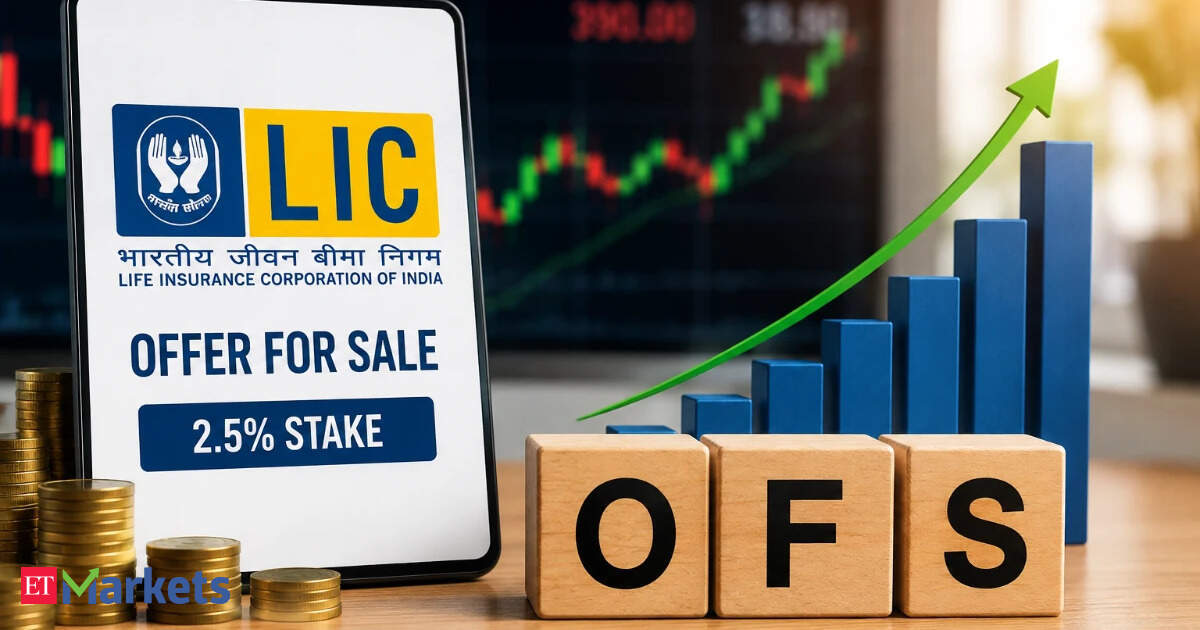
The Government of India’s announcement of the offer for sale (OFS) of equity shares in Life Insurance Corporation of India (LIC) renewed investor attention on the country’s largest institutional investor and the composition of its massive investment portfolio.Data from RBI’s Handbook of Statistics shows that LIC’s total investments reached ₹50.66 lakh crore at the end of March 2026, almost doubling from ₹26.62 lakh crore in March 2019. However, the data also points to two important structural trends: the pace of portfolio growth has moderated in recent years, while the share of investments in private, largely unlisted, companies has gradually increased.Growth slows as portfolio mix evolvesLIC’s investment portfolio has expanded at a compound annual growth rate (CAGR) of 15.3 per cent over the past three decades, rising from ₹53,480 crore in March 1995 to more than ₹50 lakh crore by March 2026. Yet the pace of expansion has slowed markedly. Annual growth, which routinely exceeded 20 per cent during much of the late 1990s and early 2000s, has remained below 10 per cent in each of the last five years, ranging between 8.4 per cent and 10 per cent.At the same time, LIC’s investment mix has gradually shifted. The share of investments in public listed companies has eased to 79 per cent in 2026 from over 85 per cent in the mid-1990s, while the share of investments in private or unlisted companies has climbed to 21 per cent, its highest level in the series. The trend suggests that, alongside its traditional preference for listed companies, LIC has been steadily increasing its exposure to privately held enterprises.Equities dominate portfolio allocationOur analysis also shows a decisive transformation in the type of financial instruments held by LIC. Investments through the stock exchange accounted for 99.88 per cent of the portfolio in March 2026, up from 70 per cent in 1995. In contrast, the share of loans has steadily declined from 26.5 per cent three decades ago to just 0.12 per cent. The shift underscores LIC’s move from lending to companies under distress to better portfolio management.Among individual holdings, as put in a reply to a question in the Lok Sabha on December, 1st, 2025 by the Finance Minister of India, “among the private firms, LIC had the highest equity investment of ₹40,901.38 crore in Reliance Industries Ltd, followed ₹38,846.33 crore in Infosys, ₹31,926.89 crore in Tata Consultancy Services, ₹31,664.69 crore in HDFC Bank, and ₹30,133.49 crore in Hindustan Unilever.”As of June 30, 2026, LIC continued to hold 6.88 per cent of Reliance Industries' total shares. It also held 11.73 per cent of Infosys' total shares, 5.52 per cent of Tata Consultancy Services' total shares, 4.77 per cent of HDFC Bank's total shares, and 6.59 per cent of Hindustan Unilever's total shares.Published on August 4, 2026