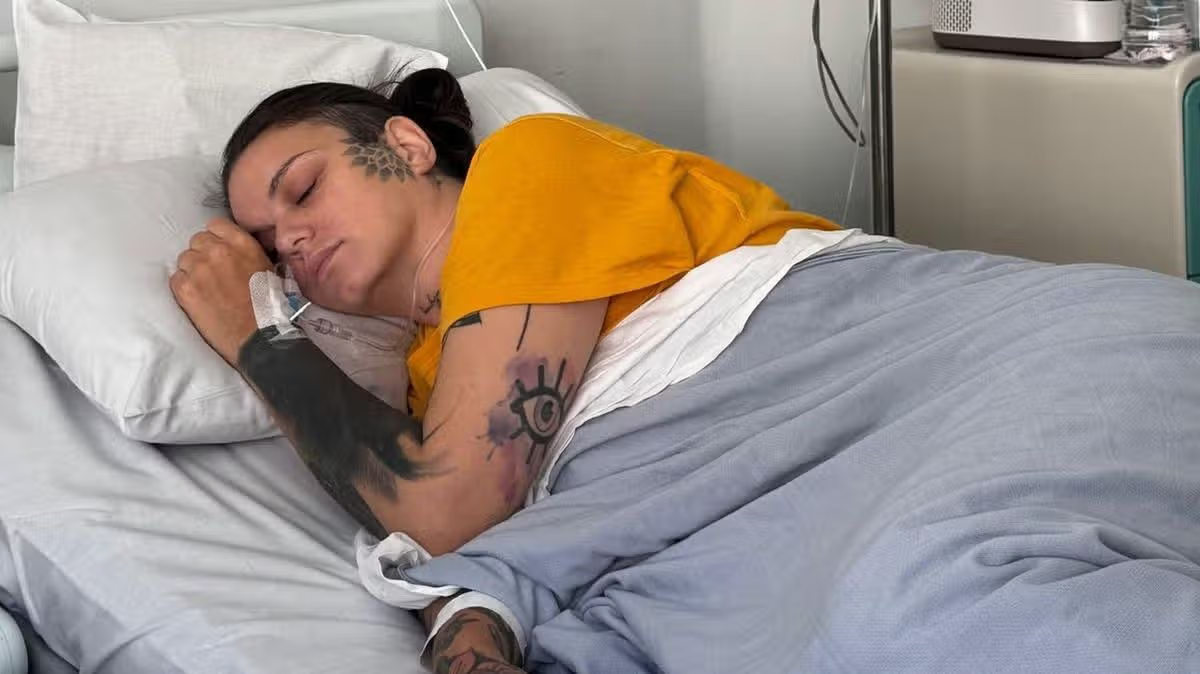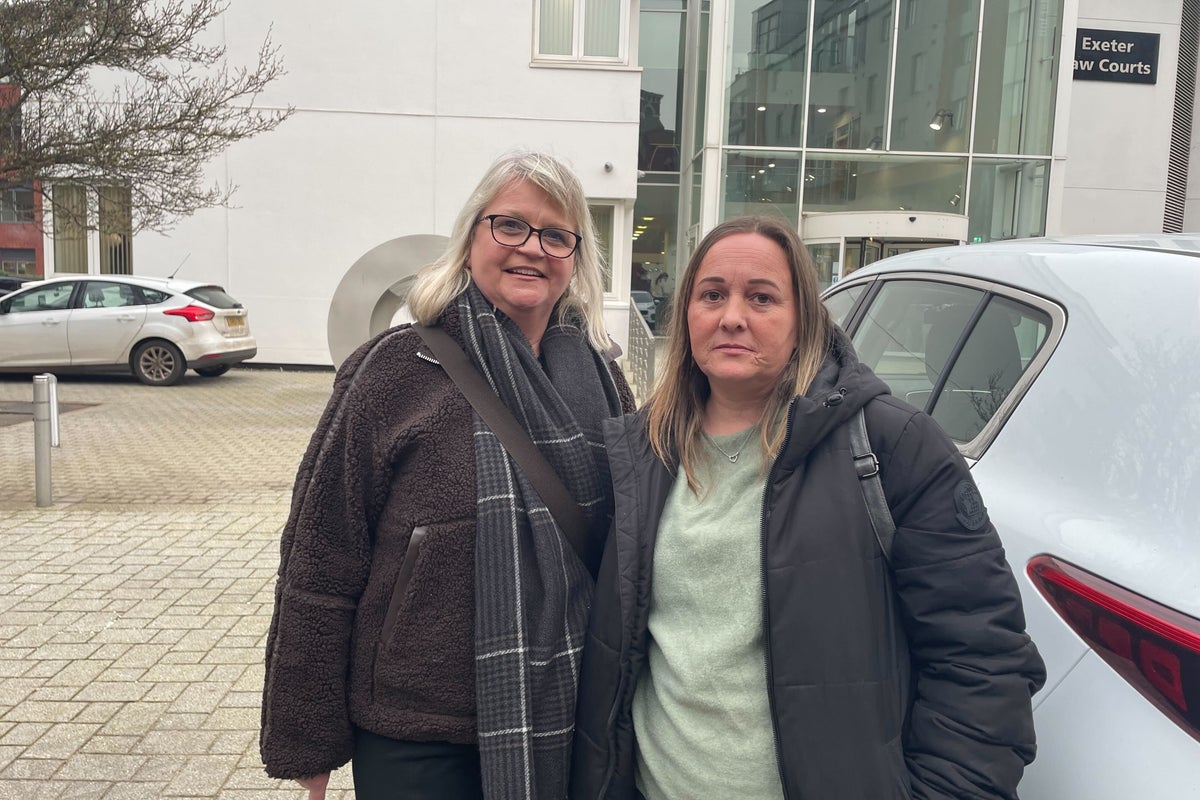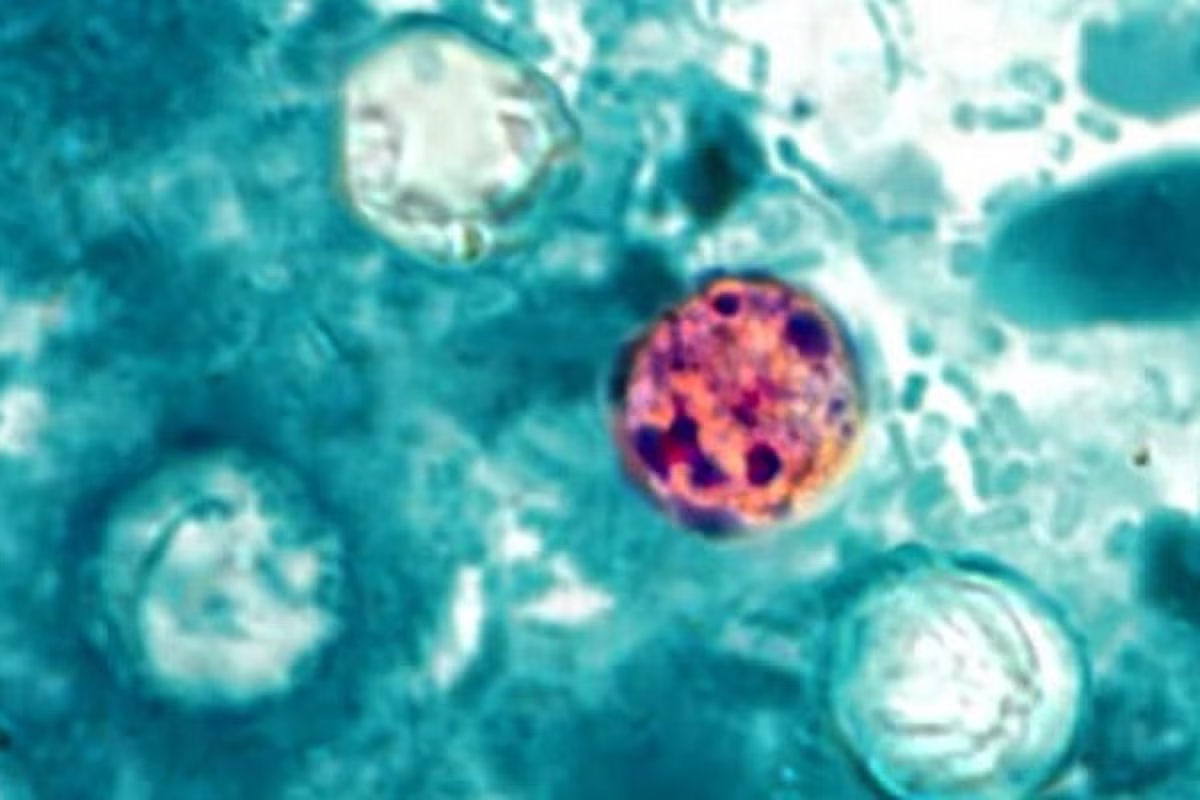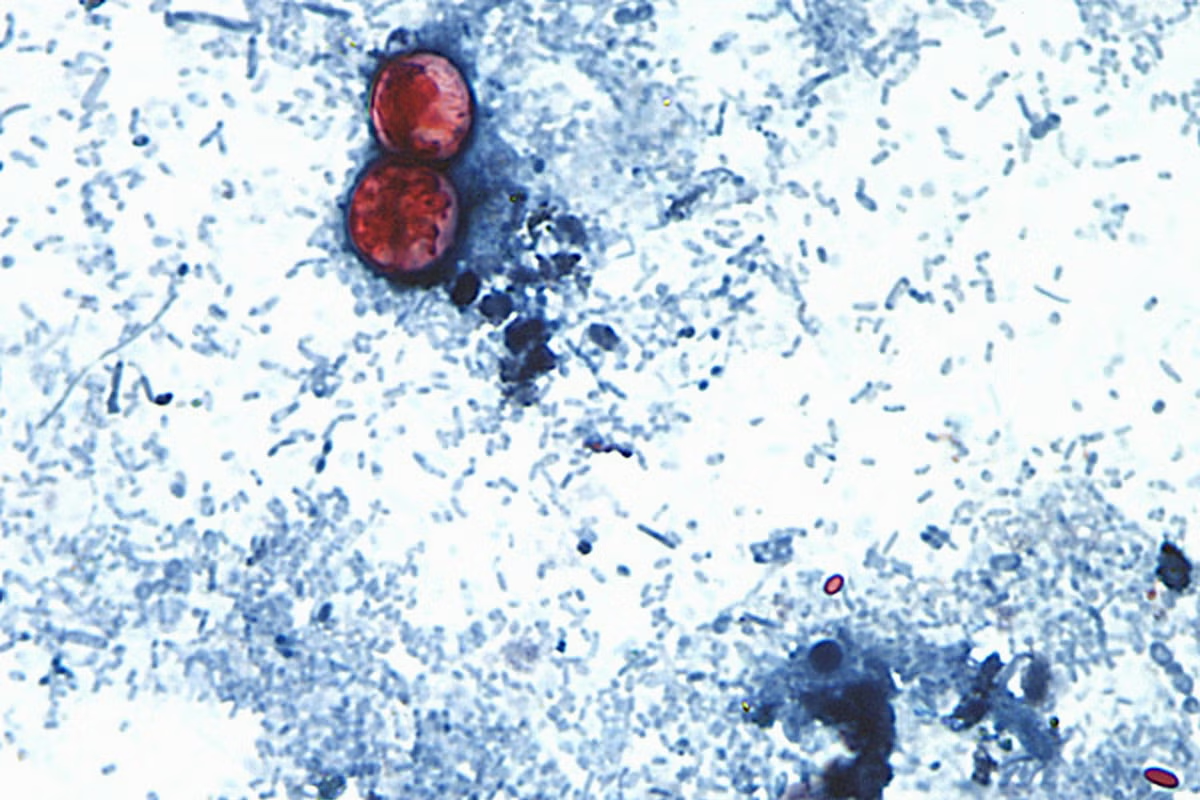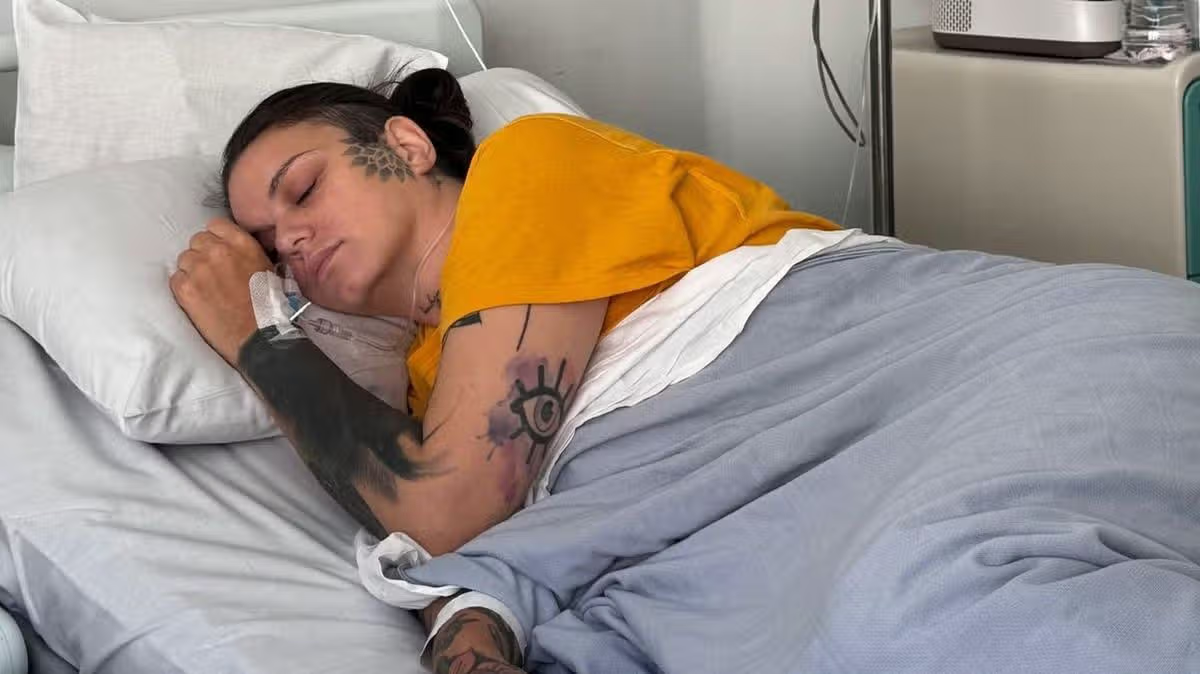
EXCLUSIVE: Ex-tattoo artist Katherine Hopkins revealed she started experiencing agonising stomach cramps and had to use the toilet as much as 30 times a day after she took a dip during a heatwave09:37, 04 Aug 2026Updated 17:14, 04 Aug 2026Woman hospitalised with cryptosporidium parasite after swimming in the sea near BrightonBrits flocking to beaches have been warned to remain vigilant for sewage in seawater this summer, after woman claims she contracted a nasty intestinal parasite after a trip to the beach.Millions of holidaymakers will flock to the seaside this summer, with many being keen to cool off with a quick dip. But safe water campaigners have shared warnings after a keen swimmer contracted a parasite after swimming off popular beaches visited by 11 million people each year combined.Katherine Hopkins, 35, was hospitalised for a month just days after she went for a swim in the sea at Hove Lawns, Brighton, in East Sussex. She swam in the water over four consecutive days from May 23, as well as enjoying one quick dip at Lancing Beach about eight miles away in West Sussex.The ex-tattoo artist said she had been swimming for about “three to four hours at a time” and ended up splashing her face with seawater, but did not put her head beneath water. About 10 days after her first beach swim, Katherine developed agonising stomach cramps and ended up using the toilet as much as 30 times a day.Katherine’s symptoms got worse and she went to hospital where tests revealed she had contracted cryptosporidium - a microscopic, single-celled parasite that causes an intestinal illness called cryptosporidiosis. Katherine, who was a vulnerable patient after undergoing a kidney transplant in 2010, believed she ingested the parasite by swallowing seawater when splashing her face.Katherine, who lives in Hove, said: “I went in the sea for the majority of each day. I loved it. It didn't look visibly dirty. Brighton sea always looks a bit murky.“There were no signs saying 'don't swim here'. There were kids in the water. I splashed my face and got water in my eye. I was in and out between three to four hours at a time."Katherine was discharged from hospital after a month, and was two-and-a-half stone lighter, surviving on a liquid diet. Katherine, who is still experiencing symptoms now, believes she got the infection from dirty seawater and fears more people could fall ill if they swim in it.The shingle and pebble Hove Beach has received praise online for being a cleaner and quieter alternative to neighbouring Brighton Beach. The beaches welcome some 11 million visitors combined each year and Hove in particular is known for the Fat Boy Slim co-owned Big Beach Café as well as being home to one of Angela Rayner's flats.Katherine says she started showing symptoms days after visiting Hove Beach. Cryptosporidiosis typically starts to show between two to 10 days after infection. A specialist doctor said it was likely picked up from swimming in the sea with the parasite known to infect people who come into contact with contaminated water sources.Meanwhile, a mum whose daughter died after swimming in sewage-filled water at a Devon beach shared a warning to parents, claiming the situation is worse than ever. Heather Preen, 8, died two weeks after contracting E. coli in 1999, during a family holiday to Dawlish Warren.Her mum Julie Maughan, 59, believes her daughter caught the disease from sewage in the water. South West Water said there was no definitive source of infection that was established.While the cause of the outbreak was not identified, a verdict of death by misadventure was returned by a jury. From that moment, Julie focused on campaigning for better water quality and sharing her daughter's story. The charity Surfers Against Sewage, which supported Julie, said: "Sewage overflows... are designed to discharge waste only during heavy rainfall, when sewer systems risk becoming overwhelmed."However, our investigation shows that sewage is being discharged even when it hasn’t rained. A dry spill occurs when a sewer overflow releases sewage when rainfall is below 0.25mm on the day of the spill and the following 24 hours."Because there is no rainwater to dilute the waste, pollution released during dry spills can be more concentrated and potentially more harmful for swimmers, surfers and other water users."Sewage discharge in the UK results in untreated wastewater being released into rivers and coastal areas. In England alone last year, there were some 290,000 discharge incidents, lasting around 1.9 million hours.The discharges can have devastating environmental and health impacts, such as altering river chemistry, causing illness for wildlife and people, particularly recreational swimmers. The Marine Conservation Society has also warned people visiting Britain's beaches to take the threat of sewage pollution seriously.Gareth Cunningham, Director of Conservation and Policy at the Marine Conservation Society, told The Mirror: “People should be able to enjoy our coastline without worrying that sewage pollution could harm their health. Untreated sewage contains a cocktail of bacteria, viruses, harmful chemicals and microplastics. We’re deeply concerned how these continue to affect water users and coastal communities, and the impact that they have on our precious marine life. The upcoming Clean Water Bill will be a vital opportunity for the UK Government to fix our broken water system, stop pollution at source, and protect both people and our seas.“The ocean protects us from climate change and dangerous heatwaves that lead to wildfires. We must take the threat of sewage pollution seriously because the damage they do to our ocean will stop the ocean working effectively to tackle extreme heat.“Before you head out to the beach, we’d recommend searching online for the local water company’s ‘live storm overflow map’ to find out if there have been any recent sewage discharges and avoid the water if there has been. Untreated sewage can still enter the water in dry periods, so it’s important to check even during the heatwave we’re experiencing.”Earlier this month, Southern Water was fined £7.1million at Canterbury Crown Court following repeated illegal sewage pollution incidents forcing the closure of beaches off the Kent Coast. The court heard how preventable equipment failures and poor operational oversight led to repeated discharges of untreated sewage between 2019 and 2021, some at the height of summer.The prosecution comes about five years after Southern Water received a record £90 million fine for nearly 7,000 illegal sewage discharges across Hampshire, Kent and Sussex. Across five major pollution incidents, Southern Water repeatedly failed to maintain critical pumping equipment, delayed reporting pollution to regulators and allowed untreated sewage to enter coastal waters, the court heard.Southern Water said that the incidents were five years ago, and pointed out that Hove's bathing water is now rated 'Excellent' by the Environment Agency. Southern Water said there were no storm overflows released at either of the nearest locations during the times Katherine swam.A spokesperson from Southern Water said: "Hove’s bathing water is rated 'Excellent' by the Environment Agency, with the nearest storm overflow more than two miles offshore and five miles north west of Hove."Local waters are further protected by Brighton’s super-sewer, which can store 150,000 tonnes of rainwater and wastewater for treatment at Peacehaven. No overflow took place on the days in question and samples taken by the EA on the 15th, 21st and 27th May showed no so-called faecal indicators.Article continues below"We are sorry to hear someone became unwell after swimming. Southern Water is committed to protecting bathing water."
Beach trip leaves woman with parasite after 'swallowing contaminated seawater'
EXCLUSIVE: Ex-tattoo artist Katherine Hopkins revealed she started experiencing agonising stomach cramps and had to use the toilet as much as 30 times a day after she took a dip during a heatwave
1,232 words~6 min read