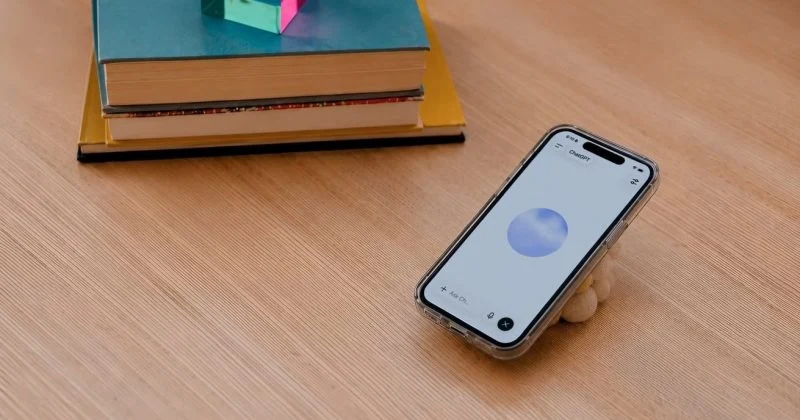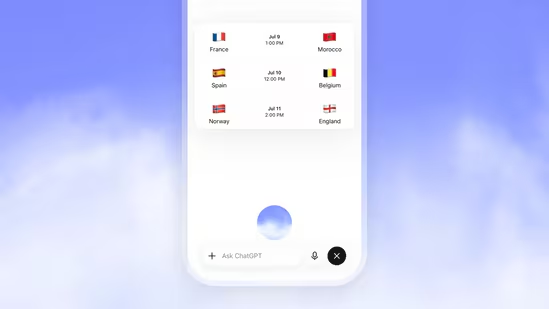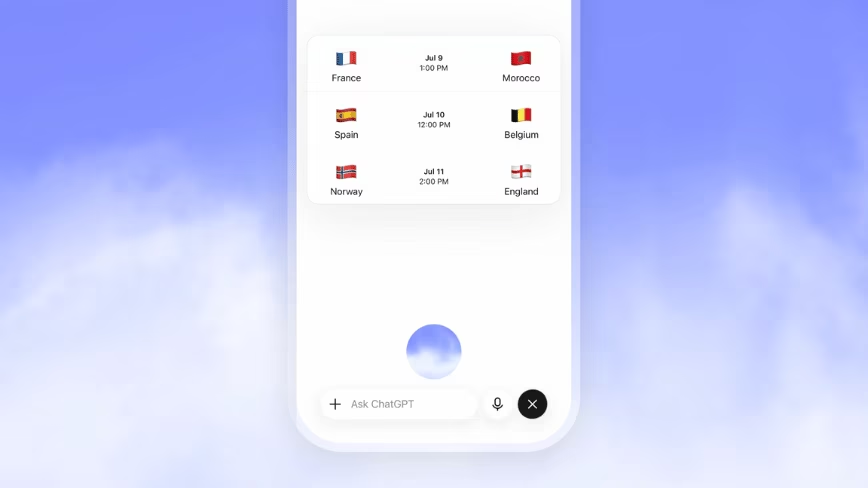
OpenAI has introduced GPT-Live, a new generation of voice models intended to make ChatGPT conversations more fluid through continuous, real-time interaction. Rather than treating speech as a sequence of separate recordings and responses, GPT-Live uses a full-duplex design that allows the system to listen while speaking. The result is meant to support more natural turn-taking, brief acknowledgments, and interruptions without stopping the exchange.
The launch matters because voice interfaces often struggle when a conversation becomes more demanding. A user may interrupt, change direction, ask for a web search, or need a more deeply reasoned answer. OpenAI's approach separates the real-time conversational layer from the models handling heavier work, so those tasks can happen without creating a conspicuous break in the spoken interaction.
OpenAI's official GPT-Live announcement describes the rollout across ChatGPT Voice on iOS, Android, and the web. The company is releasing GPT-Live-1 for paid plans and GPT-Live-1 mini for Free users, while API access is planned for a later date.
A voice architecture built for continuous interaction
GPT-Live is built around full-duplex audio, meaning the model can process incoming speech and produce speech at the same time. That is a material change from voice experiences designed around rigid, alternating turns. OpenAI says the architecture supports behaviors people expect in spoken conversation, including deciding when to listen, speak, pause, interrupt, or call a tool.