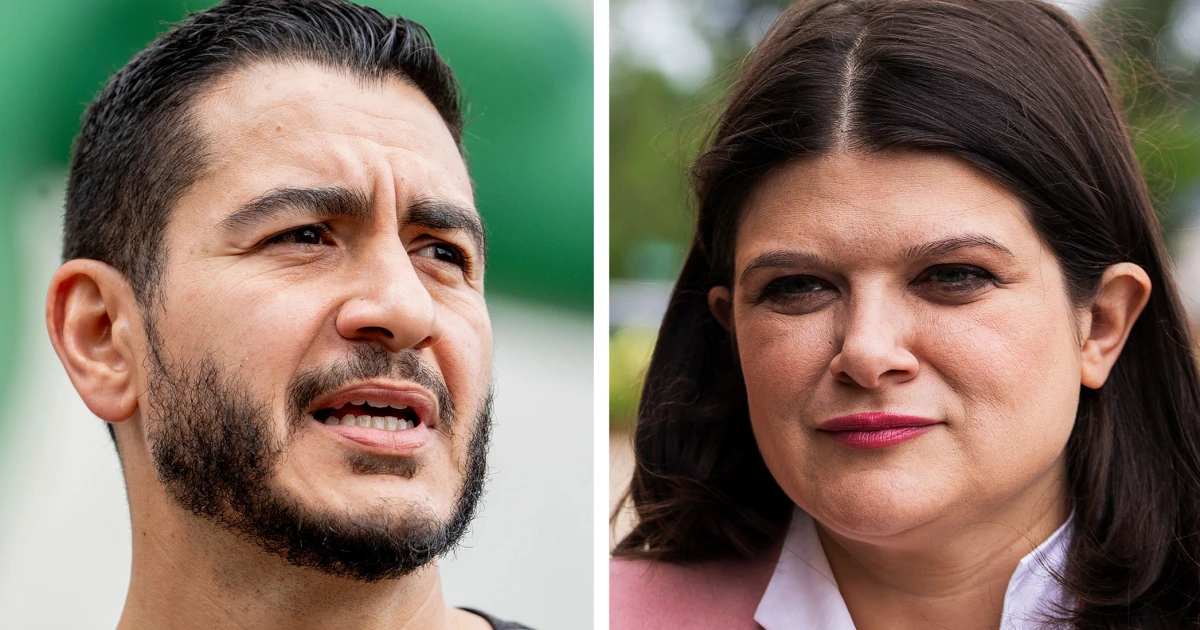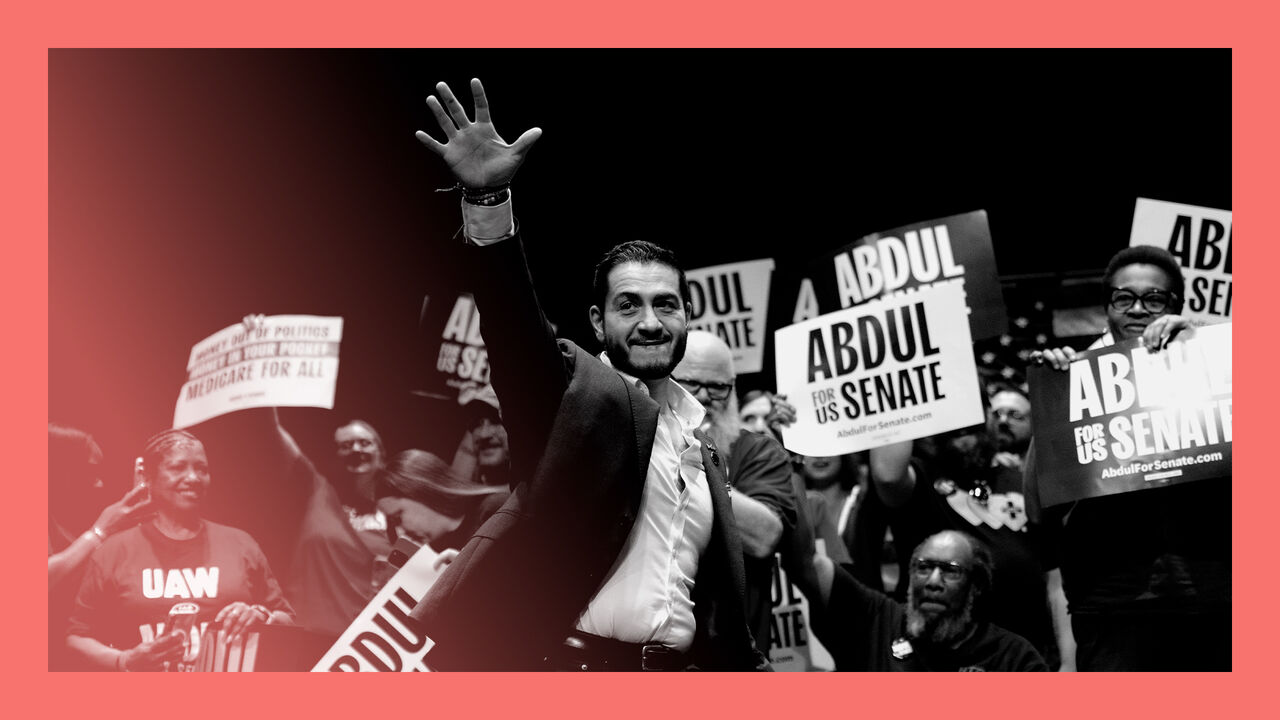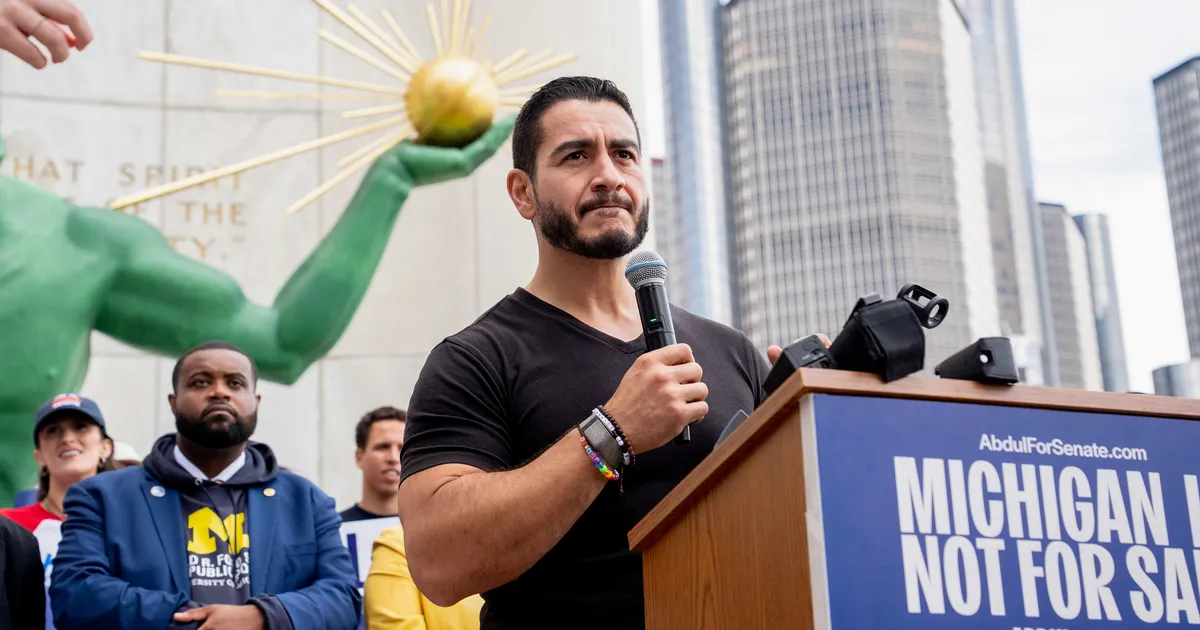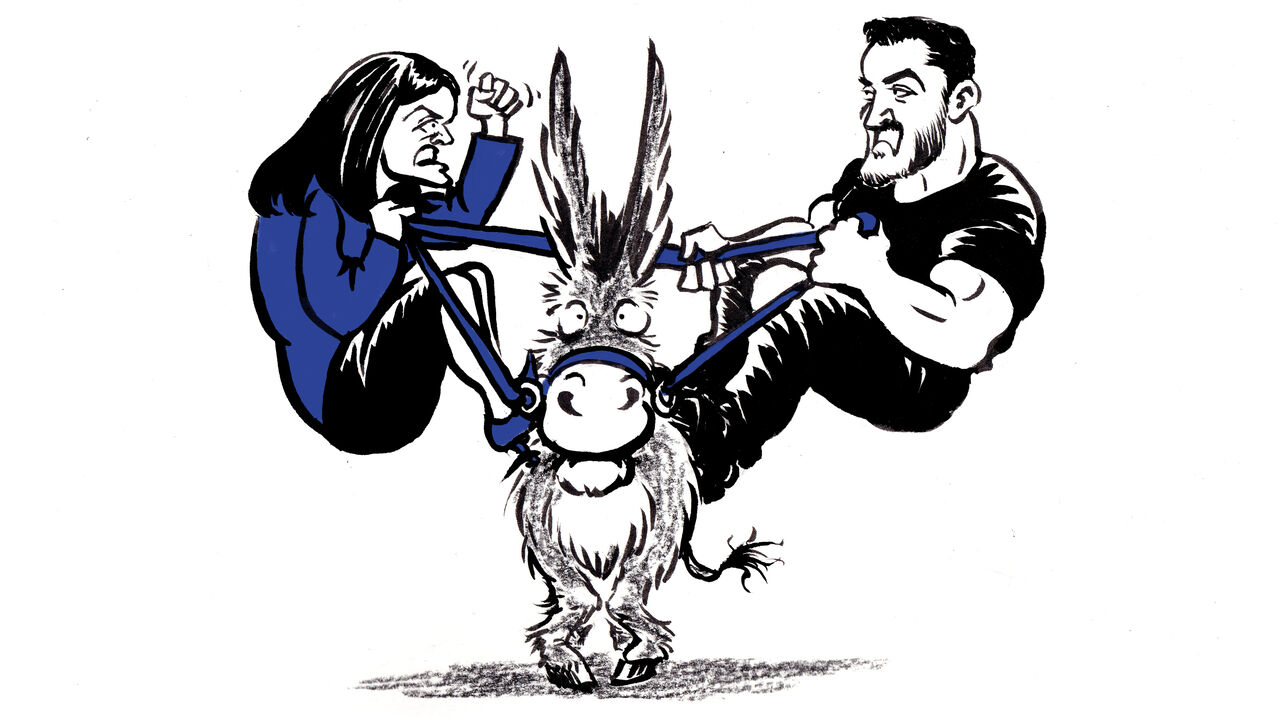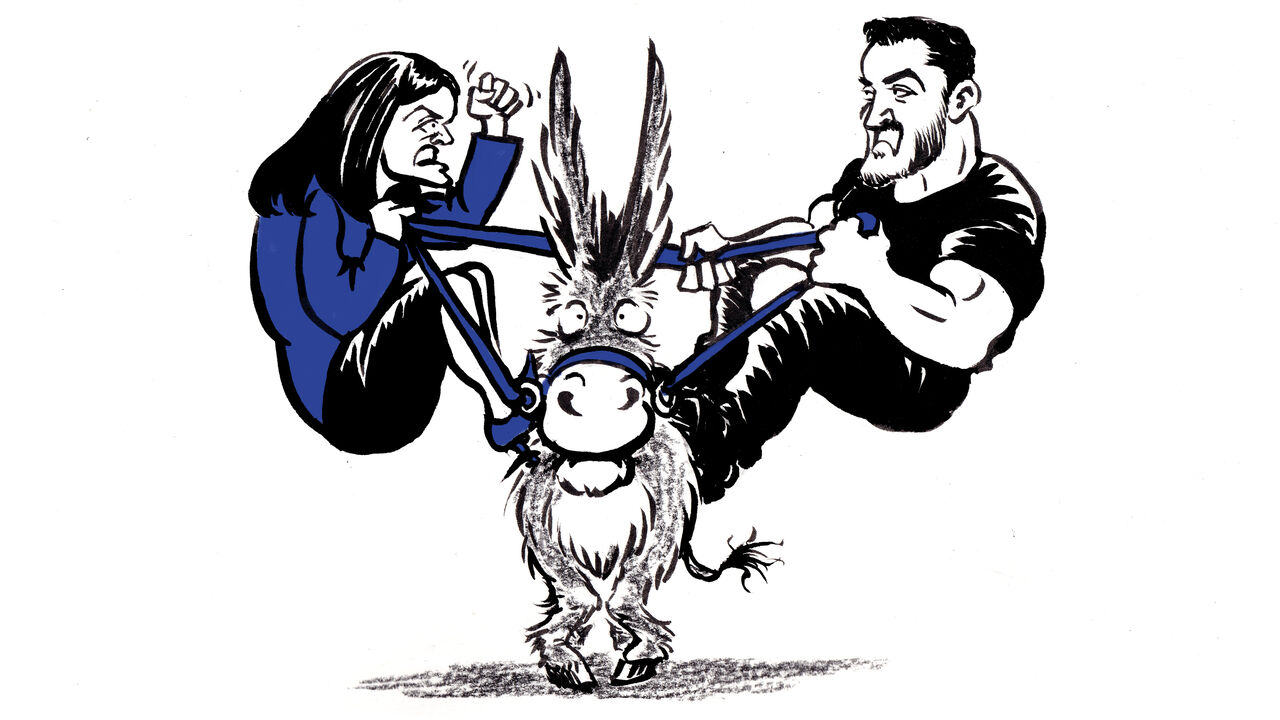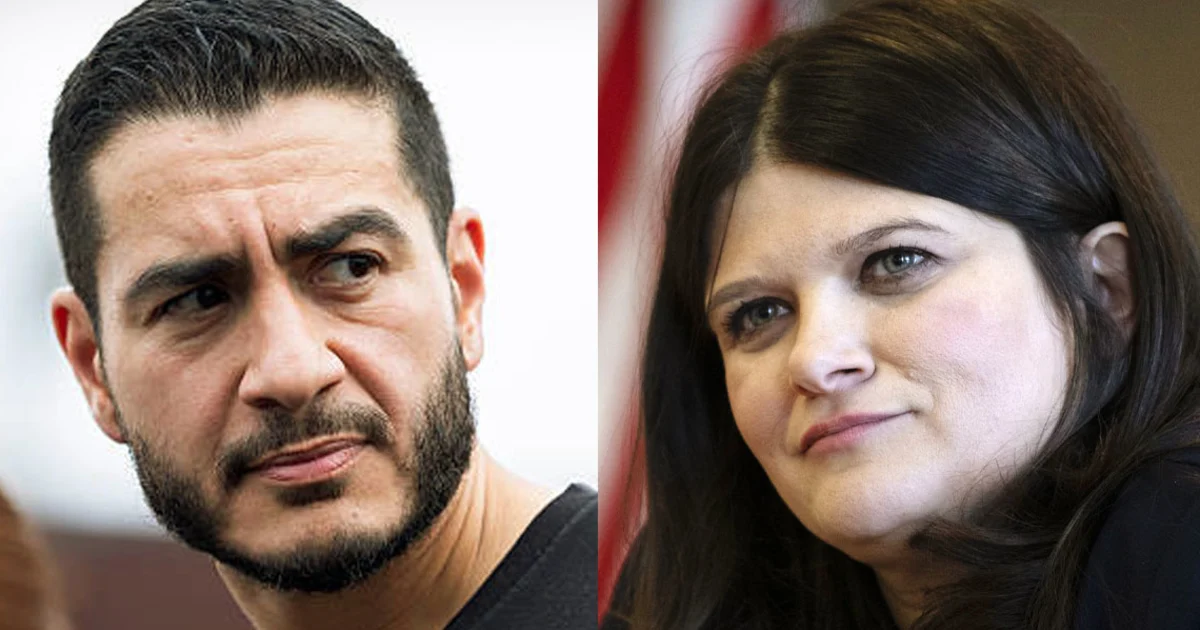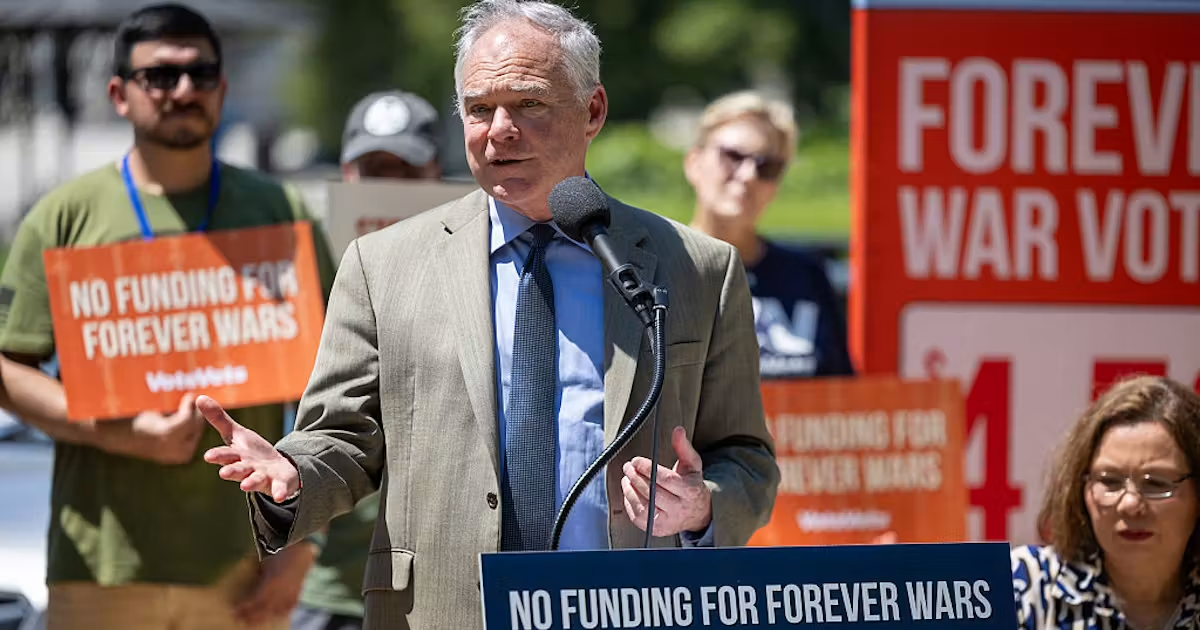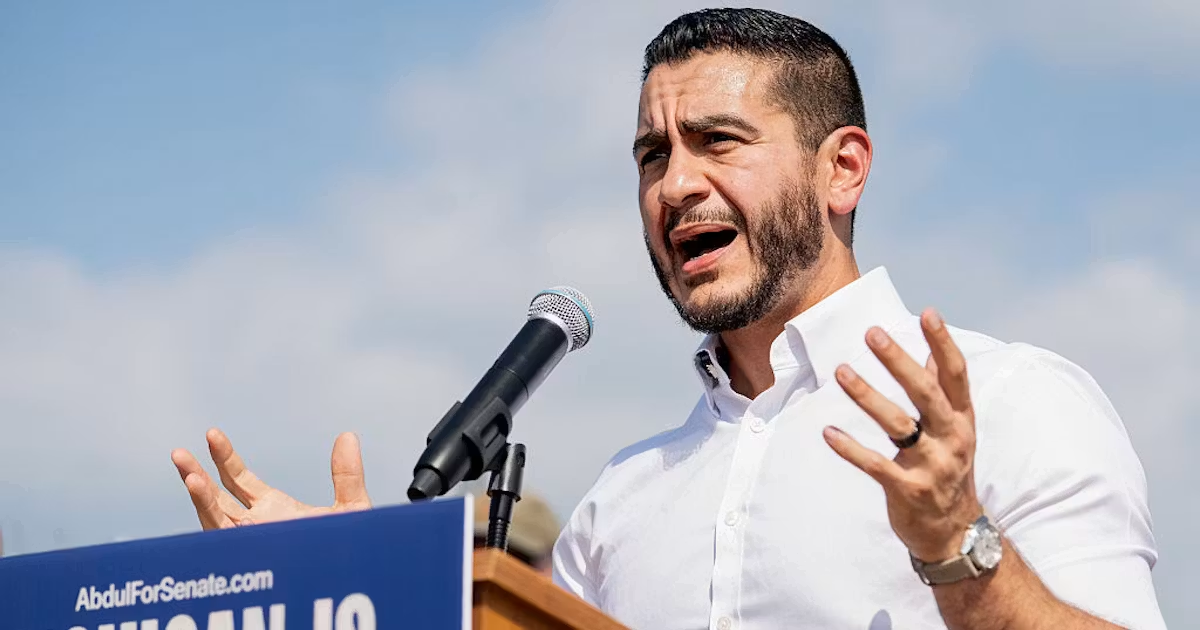
Editor’s Note: Welcome to The TNR Blue Book. It’s our new daily newsletter that covers Congress and much more, but with a distinctly TNR twist: Our focus will be strictly on Democrats, liberal and progressive groups, and the fight to take back power and save democracy. Every morning, you’ll get a rundown of late-breaking news, what Democrats on Capitol Hill are thinking, quick hits on what you need to know nationally, the latest on what’s coming out of the think tanks and activist groups, short interviews with progressive newsmakers and authors, and more (including some humor and political trivia!). There’s nothing else out there like it.Sign up and get this newsletter for free. Inside WashingtonCould Black voters change their minds about Abdul El-Sayed?In the Democratic primary for U.S. Senate in Michigan, progressive candidate Abdul El-Sayed has consistently polled ahead of his opponent, the establishment-backed Representative Haley Stevens. But there’s one demographic that El-Sayed hasn’t yet won over—a crucial one not just in Tuesday’s election, but for the general election in November: Black voters, who make up roughly a quarter of the state’s Democratic electorate. The big question is why that is. Some political analysts have suggested that Black voters support Stevens because of her association with the Democratic establishment, and they are wary of progressives like El-Sayed, whose rhetoric can come across as “burn it all down.” But it’s not that simple, said Vincent Hutchings, diversity and social transformation professor at the University of Michigan. “I think the notion that this is somehow indicative of an ideological split is probably overstated,” he said.Instead, Hutchings said, Black voters are likely following cues from trusted members of the party establishment, like Representative Jim Clyburn, a senior member of the Congressional Black Caucus who endorsed Stevens. “I know what it takes to energize Democratic voters. I know she has what it takes to energize Democratic voters, and we need that,” Clyburn said alongside Stevens at a Teamsters hall in Detroit on July 24.Some Black voters may favor Stevens because of her association with President Barack Obama; though Obama hasn’t endorsed a candidate in the primary, Stevens’s supporters have spent $5 million to air an advertisement nearly 4,000 times where Obama praises her work on the U.S. Auto Rescue Task Force. The ad is funded by United Democracy Project, an AIPAC-affiliated super PAC, which has so far spent $30 million to support Stevens’s campaign.There’s a “disconnect,” Hutchings said, between the fact that Black voters often embrace the “most leftist racial and economic policies in the party,” yet also often vote for the more moderate, establishment candidate. But his answer to that contradiction is simple: Black voters, like all voters, “are frequently not familiar with the actual platforms of the candidates.” Instead, they pay attention to crucial endorsements.“That’s why it’s a mistake to think, ‘Oh, well, looks like there’s a divide in the Democratic Party between the quote-unquote ‘progressive forces’ and the quote-unquote ‘establishment forces,’ and it looks like Black voters are on the side of the quote-unquote ‘establishment,’” he said. “That’s an easy story to tell. I get why people tell it. It seems to map onto reality, but only until you scratch a little beneath the surface.”Some Black voters could also be put off by progressive candidates who speak too adamantly against the Democratic establishment, explained Christopher Towler, a political science professor at California State University, Sacramento, and the director of the Black Voter Project. “A lot of progressive candidates who follow the [Senator Bernie] Sanders mold and are trying to break away from the party have to be very careful about alienating Black voters,” he said. “Many Black voters, especially the ones who vote in primaries, associate the Democratic Party with civil rights gains.” Criticizing the party and its establishment too adamantly could backfire, he explained.Both Towler and Hutchings mentioned Sanders’s 2020 presidential primary run as an example of these same issues playing out. In Michigan, then-candidate Joe Biden walloped Sanders, winning every county in the state. Biden picked up 73 delegates to Sanders’s 52. It was a marked regression from Sanders’s performance in 2016, when he won the majority of Michigan’s counties and beat Hillary Clinton in the state. Biden’s victory in the state is partially attributed to Black voters showing up for him. A similar story played out in the South; in South Carolina, Sanders finished with a measly 17 percent of the Black vote, dealing a death blow to his campaign. In Michigan, Sanders has been a major supporter of El-Sayed’s campaign.“Black voters are very strategic and practical with their votes, even in primaries,” said Towler. “If there’s not a candidate that they’re not completely in love with … they’re going to vote for who they think will win the election.” It’s a shrewd cost-benefit analysis focused on avoiding a Republican victory at all costs.Both Stevens and El-Sayed have worked to court Black voters, spending countless Sunday mornings at Black churches across the state and highlighting their respective endorsements from Black leaders. El-Sayed picked up an endorsement from the Council of Baptist Pastors of Detroit and Vicinity in early July, and has the support of some younger or more progressive members of the Congressional Black Caucus, like Representatives Summer Lee, Maxwell Frost, and Bonnie Watson Coleman (among others). Some observers think El-Sayed has a good chance with these younger Black voters, who might care less about an endorsement from Clyburn or a sound bite featuring Obama. Meanwhile, Stevens surrogates have pushed narratives that El-Sayed is at odds with prominent Black political figures like Michelle Obama and Kamala Harris. Another United Democracy Project–funded mailer features a photo of Michelle Obama and quotes El-Sayed calling her work on childhood obesity as “uninspired” and “ineffectual.” Though the ad aimed to paint El-Sayed as a misogynist, Towler said that it could hurt him among Black voters, as well. El-Sayed has also needed to emphasize his support of Harris’s 2024 presidential campaign. In February 2024, El-Sayed pledged to vote “uncommitted” in the Democratic presidential primary to protest then-President Biden’s actions in Gaza. When Harris took over the nomination, El-Sayed endorsed her, but Stevens’s campaign continues to emphasize that original “uncommitted” vote.Whoever wins Tuesday’s primary will need Black voters to propel them to a victory against Republican Mike Rogers in November. “You need to really focus on protecting the Black community from Trump and MAGA Republicans and the GOP’s agenda, which has become more and more anti-Black and focused on rolling back the racial progress that this country has made since the civil rights era,” said Towler, offering advice for whoever wins the primary. Black voters tend to be skeptical of big policy promises, Towler added. He says candidates should focus on stopping the GOP, “and then we can start to talk about what type of policy we can provide.” That contrasts with El-Sayed’s campaign slogan: “Money out of politics, money in your pocket, Medicare for All.”If, as polls suggest, El-Sayed is headed to a primary victory, Towler isn’t concerned about how Black voters will respond, and pointed to other examples of progressives who might not have won the Black vote in their primary but still won over the demographic during their general elections. “This again goes back to the practicality of Black voters when choosing candidates. They’re not going to vote for the Republican,” he said. Whether you’re talking about Zohran Mamdani in New York, James Talarico in Texas, or Abdul El-Sayed in Michigan—all of whom have failed to convince Black voters in the primary—the same principle applies, Towler said: When it comes to the general election, “Black voters are going to come home.”—Emma JanssenOutside WashingtonOther (i.e., non-Michigan) stories to watch in Tuesday’s primariesWhile the Democratic Senate primary in Michigan has gotten most of the attention, there’s plenty to watch in the four other states with primaries on Tuesday: Kansas, Missouri, Virginia, and Washington. In Washington—a top-two primary system—Kshama Sawant and Melissa Chaudhry are challenging incumbent Representative Adam Smith from his left. In Missouri, the headline race is the heated rematch between sitting Representative Wesley Bell and former Representative Cori Bush, the erstwhile Squad member whom Bell, with significant funding from AIPAC, defeated in 2024 by a little under six points. Will the 2026 climate, in which progressives have notched more wins than in past cycles, help Bush prevail this time? There isn’t much polling on this one.In Virginia, four different Dems—Adam Dunigan, Mo Seifeldein, Michael Duffin, and Lorena Bruner—are challenging incumbent Representative Don Beyer, in another race without much polling. Meanwhile, Democrat Eugene Vindman will find out who his Republican opponent will be in the competitive November race for the 7th congressional district, once represented by Abigail Spanberger. In Kansas, Democratic voters will choose between gubernatorial contenders Cindy Holscher and Ethan Corson. There have been some weird side stories in this one involving the fight for term-limited Democratic Governor Laura Kelly’s either endorsement or nonintervention, but substantively, data centers are proving to be a big issue. (Holscher backs a temporary pause on construction, while Corson favors more modest policies around energy and water use.) Polling’s pretty limited on this race as well, although Holscher was well ahead in two polls conducted before the campaign really heated up. All that and much more, to be decided Tuesday. Elsewhere:David Dayen at The American Prospect looks at the private equity firms and life insurance companies whose fortunes are increasingly tied to the AI bubble—with potentially expensive consequences for taxpayers in the event of a bailout. For other reading that will definitely not help your anxiety: Try The Washington Post’s data-filled feature on law enforcement officials using Flock cameras to stalk women. —Heather Souvaine HornThe Ideas FactoryA coalition of climate advocates, watchdog organizations, and other groups on Monday denounced the Securities and Exchange Commission’s plan to “rescind its 2024 climate disclosure rule”—a move that would “undermine transparency in capital markets” and help risk-exposed companies avoid important disclosures. The Center for American Progress submits a comment letter to the Office of the U.S. Trade Representative arguing that the Trump administration’s “Board of Trade” plan—a bilateral body established “to ensure that trade with China is more balanced and beneficial for Americans,” according to Ambassador Jamieson Greer—does nothing to “address the clear and present danger presented by the growing tide of Chinese industrial overcapacity.” The letter urges the administration to “prioritize working with like-minded partners and allies” rather than slapping tariffs on them.On Wednesday at 1 p.m., the Roosevelt Institute hosts a Zoom panel on “What Social Security’s Shortfall Is Really Telling Us About the Economy.” Panelists include Kathryn Anne Edwards, Kate Bahn, Bradley Hardy, and Betsey Stevenson.—Heather Souvaine HornIn ClosingFour Questions For: Trita Parsi, co-founder and executive vice president of the Quincy InstituteInterview by Indigo Olivier Q: What are you working on right now?A: My primary focus right now is on ending the disastrous Iran war and on preparing the U.S. for a multipolar world, and the world for a non-unipolar America.Q: You’ve spent years arguing for diplomacy with Iran. What’s the hardest part of doing that in Washington?A: After decades of animosity and mistrust, it isn’t simply a policy shift that is needed to resolve the tensions, but a paradigm shift. A fundamental rethinking of the U.S.’s own interest, its image of the other side, and its fundamental assumptions about what the other side wants and is willing to give up. At the same time, the enmity essentially runs on autopilot with a path dependency that renders any serious rethinking very difficult.Q: Looking back over the last year or two, what accomplishment are you most proud of?A: It is difficult to be happy or proud of anything in this current situation. We should not be in this war. People have died needlessly, immense amounts of money have been wasted on another war, and the pathways to a diplomatic breakthrough have become increasingly narrow. Until this war has been ended, it’s premature to talk about accomplishments.Q: What has it been like to find yourself at the center of a controversy over your work and your immigration status?A: Given how tense and politically charged this issue is in Washington, it unfortunately comes with the territory that any push for peace will be punished by those who prefer conflict. And on this issue, the gloves have always been off, sadly. Until a resolution to the U.S.-Iran conflict has been found, I don’t expect the political charge of this issue to recede, which means that many of us in this space will pay a personal price for challenging the forces of war. Political Trivia Question of the Day On the subject of Michigan: Democratic pollster Stan Greenberg coined the term “Reagan Democrat” in 1985 by interviewing and studying the voters of what paradigmatically swingy suburban Detroit county? (Sign up for The Blue Book to find the answer in tomorrow’s newsletter.) More in PoliticsEditor’s Note: Welcome to The TNR Blue Book. It’s our new daily newsletter that covers Congress and much more, but with a distinctly TNR twist: Our focus will be strictly on Democrats, liberal and progressive groups, and the fight to take back power and save democracy. Every morning, you’ll get a rundown of late-breaking news, what Democrats on Capitol Hill are thinking, quick hits on what you need to know nationally, the latest on what’s coming out of the think tanks and activist groups, short interviews with progressive newsmakers and authors, and more (including some humor and political trivia!). There’s nothing else out there like it.Sign up and get this newsletter for free. Inside WashingtonCan Dems exploit the tension between Trump and Republican senators? Cracks are starting to show in the Republican trifecta: Senate Majority Leader John Thune and President Donald Trump are growing frustrated with one another, as Trump demands the Senate pass the unpassable SAVE Act. Two Republican senators—Thom Tillis and John Cornyn—may have just blocked Trump’s nominee for attorney general, Todd Blanche. In the chaos, Democrats see an opportunity for both midterm success and legislative victories. Asked whether Democrats are taking advantage of their increasingly fractured opponents, Senator Tim Kaine said, “We are trying to on things like war powers. Some of the Republicans who’ve been most at odds with Trump have signaled an openness to working with us on those issues.”On Thursday, the Senate voted on a resolution to curb Trump’s war on Iran—Democrats’ thirteenth attempt at a war powers resolution, including one that passed in late June. At 49–50, this vote failed, but Democrats picked up three Republican votes from Senators Susan Collins, Lisa Murkowski, and Rand Paul. Senator John Fetterman was the only Democrat who opposed the vote. “It’s actually pretty typical to see members of a president’s party distancing themselves from him as midterm elections approach, especially when that president is unpopular,” said Seth Masket, a professor of political science at the University of Denver. He compared it to how Democrats acted in 1994, refusing to give President Bill Clinton what he wanted. Trump is a somewhat unique case because he endorses so heavily in Republican primaries, striking fear into members of the conference. “He’s proven that he can end careers, so they’re pretty fearful of him,” Masket said. “But now that we’re past the primaries, that loses some of its power.”Some Democrats say that Republicans splitting over the Iran war and fighting over the SAVE Act—Trump’s controversial voter ID bill—reflects well on Democrats. “That’s going to be the contrast that will be on people’s minds when they go into the voting booth,” Senator Andy Kim said.But, he emphasized, Republican disorganization only helps blue candidates at the polls if Dems can stick together and project unity. He pointed to Senate Democrats’ front against the National Defense Authorization Act, which they blocked in mid-July due to concerns over Iran. “Because of the Republicans fracturing, I think it’s more important than ever to show our unity,” he said. “Otherwise they might be able to push forward on things like the supplemental [funding request] or a [budget] reconciliation 3.0.”Masket emphasized that there’s almost no partisan legislation Democrats can actively advance while in the minority. So it becomes a waiting game. “Democrats are happy to watch their opponents destroy themselves and don’t really feel like lending a hand one way or the other,” he said.Senator Richard Blumenthal is hoping Dems can ride the conflict in the GOP to a midterm win. “We need to continue to drive home the message about not just Republican disarray, but profound disrespect for the law, which is outraging the American public, and should advance energy and turnout in the upcoming election,” he said, before reiterating: “It’s all about the elections.”—Emma Janssen Outside WashingtonData center backlash is bipartisan. But is it starting to get bluer?As Michigan’s much-anticipated primaries on August 4 draw near, most people are watching the Senate matchup between progressive front-runner Abdul El-Sayed and establishment favorite Haley Stevens. Many are also keeping an eye on the 7th district House race, which has become a last-minute vehicle for moderate angst, going by a recent Axios report. But the state legislature is worth watching, too, and a particularly hot topic right now is data centers, which Michigan granted a tax exemption to in bipartisan legislation passed in 2024. One characteristic of data center backlash so far is the way it has united people across the political spectrum. Many have wondered whether this can possibly last in today’s hyperpolarized political environment. The Detroit Free Press asks state legislative candidates where they stand on the issue, and while this is hardly a rigorous statistical analysis, the responses do indeed hint at an emerging partisan gradient. A quick rundown: The paper talks to one Republican and one Democrat (Douglas Wozniak of the 24th Senate district and Jason Hoskins of the 7th Senate district, respectively) who think data centers are a fact of life now and the state risks falling behind if it doesn’t host them. The paper identifies 10 Democrats and two Republicans who want more guardrails. (Some, like Democrat Natalie Price, want to see data centers pay property taxes and meet certain environmental standards. Republican Roman Gaskey wants a “closed-loop system that recycles water.”) The paper then finds two Democrats—Rick Silva of the 9th House district and Sean Carlson of the 13th Senate district—who want a full one-year moratorium until government can catch up and figure out how to regulate, and one (Crystal Bailey of the 5th House District) who just wants no new data centers, period. Last month, Democratic Governor Gretchen Whitmer, who has supported data center construction, was caught on microphone saying, “We’re used to people saying ‘f—k no,’ and then doing it anyway.” (Whitmer is not seeking reelection, but there is speculation about her making a run for the White House in 2028.) Elsewhere:A map of Africa presented by the U.S. State Department at a conference in Brazil this week mislabeled every country it featured. After images made it to the internet via AIDS expert Emily Bass’s LinkedIn and Substack posts, Reuters started asking questions. Reuters reported Thursday that a watermark on the map “signals it was made with OpenAI tools.” The State Department blamed the affair on a “team member who hastily changed the slide deck before the event.” In case you missed it: The Guardian profiles Wisconsin gubernatorial hopeful Francesca Hong, the democratic socialist currently leading the Democratic pack for the primary on August 11. One of her opponents, Mandela Barnes, suddenly dropped out of the race on Thursday. The piece explores how free childcare, one of Hong’s signature policy proposals, “started winning U.S. elections.” —Heather Souvaine HornThe Ideas FactoryThe Roosevelt Institute publishes a report titled “Building Up in 2029: How to Make Green Statecraft Durable.” The report takes a more optimistic view than some, with the institute’s Todd N. Tucker emphasizing in the introduction that while the climate crisis is already “harming Americans” and policies “are moving in the wrong direction … somewhat ironically, the Trump administration has shown what an [Inflation Reduction Act] 2.0 might look like, by both exposing the IRA’s vulnerabilities and breaking glass on new tools of economic statecraft that could be beneficial for green priorities.” The report outlines possibilities for a “Project 2029,” in contrast to the Heritage Foundation’s far-right “Project 2025.”The Groundwork Collaborative releases a statement on Thursday’s Bureau of Economic Analysis report, which found slowed (1.5 percent) growth and 3.7 percent year-over-year inflation. “Today’s report,” said Alex Jacquez, Groundworks’ senior vice president of policy, advocacy, and research, “is a snapshot of an economy under a ceasefire that no longer exists.” The press release also argues that “the economy isn’t as strong as even the modest headline suggests,” since “AI investment continued to prop up the economy” and “consumer spending continued to lose momentum.”On Monday, August 3, New America holds a virtual event 6 p.m. to 7 p.m. titled “The Next Generation of Voters,” focusing on “the systems that reinforce America’s gerontocracy, the structural reforms that could change them, and what young voters actually want out of US politics.” Speakers include The Age Divide authors Oscar Pocasangre and Dustin Wahl. —Heather Souvaine HornIn ClosingGood week: Francesca HongHard to deny it was a pretty good week for Hong, the democratic socialist candidate for governor of Wisconsin who vaulted to the head of the polls this week. A prominent opponent also dropped out. The primary is August 11.Bad week: Todd BlancheAmong many contenders, we give the nod to Blanche, who may become the first A.G. nominee voted down by the Senate since 1925; Donald Trump revealed (in?)advertently that he cares more about his slush fund than he does Blanche.—Michael TomaskyPolitical Trivia Question of the DayThe A.G. position was not always intended as being independent of the White House. Who was the A.G. in fairly recent American history who established that precedent and made it the standard to which all A.G.s should aspire? Hint: He followed a world-class sleazeball. (Sign up for The Blue Book to find the answer in tomorrow’s newsletter.)More in PoliticsEditor’s Note: Welcome to The TNR Blue Book. It’s our new daily newsletter that covers Congress and much more, but with a distinctly TNR twist: Our focus will be strictly on Democrats, liberal and progressive groups, and the fight to take back power and save democracy. Every morning, you’ll get a rundown of late-breaking news, what Democrats on Capitol Hill are thinking, quick hits on what you need to know nationally, the latest on what’s coming out of the think tanks and activist groups, short interviews with progressive newsmakers and authors, and more (including some humor and political trivia!). There’s nothing else out there like it.Sign up and get this newsletter for free. Inside WashingtonEpstein survivors ask senators to vote “no” on Blanche Republican holdouts on Todd Blanche’s confirmation to the position of attorney general are mostly focused on stopping Trump’s $1.8 billion slush fund for alleged victims of government overreach. But survivors of sexual abuse at the hands of Jeffrey Epstein are fighting against Blanche for an entirely different reason.“My message would be that if you have a daughter, or you have a son, or you have grandchildren, put them first because Todd Blanche isn’t gonna put them first. He puts himself and the president first. That’s it,” Sharlene Rochard, a survivor of Epstein’s sex trafficking, said about senators who will vote for Blanche’s nomination. Survivors have heavily criticized Blanche’s handling of the Justice Department’s Epstein investigation—in particular, releasing files that included the names of Epstein’s victims, not investigating and prosecuting perpetrators, and giving preferential treatment to Epstein’s collaborator, Ghislaine Maxwell, they say. On Wednesday, survivors and advocates railed against Blanche’s nomination at the launch event for the “Donald J. Trump and Jeffrey Epstein Memorial Bookmobile,” a mobile exhibit of the Epstein files created by Defiance.org and the Institute for Primary Facts. The bookmobile is intended to bring the Epstein files to voters, particularly those in red states, as it travels across the country. After the morning event, the group decamped to Capitol Hill and went office to office to hand out copies of the Epstein files to senators.The Senate Judiciary Committee was scheduled to vote on Blanche Thursday morning, but Republican committee Chair Chuck Grassley announced at the end of the day Wednesday that it would be postponed. Blanche has a razor-thin margin; just one “no” vote would sink his nomination. GOP Senators Thom Tillis and John Cornyn, the main holdouts on Blanche, have said they’re more concerned about his position on President Trump’s $1.776 billion “Anti-Weaponization Fund” than on his attitude toward the Epstein files.“I’m focused on other issues,” Cornyn said Wednesday when I asked if he had a message for the Epstein survivors. “It’s a terrible tragedy, but that’s between them and the attorney general.” Cornyn and Tillis have asked to see Blanche confirm, in writing, that the slush fund is dead in the water. Without that written confirmation, Cornyn said Wednesday, he is “not prepared to vote ‘yes.’”Some Democrats are optimistic that their Republican colleagues’ opposition could end Blanche’s chance to be attorney general. “But I’ve seen this movie before,” Senator Richard Blumenthal told me. “I have no great optimism that they will act to do the right thing.” Senator Ron Wyden, at least publicly, was more hopeful. “We think we’ve got a real shot at winning,” he said after the bookmobile launch, at which he spoke. “I think [Republicans] are really rattled. They ought to be!”When asked about the Epstein survivors’ opposition to Blanche, Tillis tried to paint a positive picture: “I just talked to some of the Epstein survivors,” he said. Alongside Democrats on the Judiciary Committee, Tillis had pushed for Blanche to meet with survivors, which Blanche then did on July 16. “Keep in mind: Blanche is the first person, official, senior official from the DOJ since 2007 that’s met with them. That’s something to build on.” Jena-Lisa Jones, who grew up in Palm Beach County, Florida, and was abused by Epstein when she was 14 years old, wasn’t impressed by the meeting. “He asked to speak to the survivors, and it was a very last-minute thing, which I think was to cover his own—pardon my French—ass,” she said. “I think it was a waste of our time and, unfortunately, a joke.”Rochard, for her part, had no interest in attending the meeting with Blanche. “The reason I chose not to go is because it felt forced,” she said, as though Blanche just wanted “to check a box.” She also pointed out that the meeting was just one hour long, while last year, as deputy attorney general, Blanche spent nine hours over two days with Maxwell, Epstein’s accomplice and convicted sex offender. Shortly after that meeting, Maxwell was transferred to a minimum security prison.As for Cornyn and Tillis, Jones told me: “We hope that they stand with us and vote ‘no,’ but the way things have played out and how our government runs, anything can happen.”—Emma Janssen Outside WashingtonAbout those gas stoves … Remember the gas stove war of 2023? Studies had been steadily emerging for years showing that gas stoves were leaking harmful substances into homes, and in January of that year, the U.S. Consumer Product Safety Commission’s Richard Trumka Jr. told Bloomberg that the government could potentially regulate the devices. Conservatives immediately lost it, falsely claimed the Biden administration was going to “ban all gas ovens,” and started tweeting out “Don’t Tread on Me” and gun rights memes with stove images subbed in.Now, an update on all that: The Washington Post on Wednesday reported the striking results from a pioneering study led by a Case Western professor: Replacing the gas stoves of people suffering from asthma quickly reduced the number of asthma attacks. The finding comes after the Trump administration canceled the study’s $18 million grant, torpedoing the intended sample size: Researchers could only replace 85 stoves instead of the intended 1,200. Nevertheless, the Post’s Jake Spring reports, “removing the gas stoves relieved the participants’ asthma so much that the results were clear even with only 85 of them, according to two scientists who reviewed the methodology but were not involved in the study.”The gas stove culture wars are far from over. Last month, a conservative group succeeded in getting a constitutional amendment guaranteeing a “right to natural gas” on the ballot in Colorado—voters will decide on that in November. (Also notable: Back in 2023, 29 House Democrats joined Republicans in a bit of political theater, passing a bill to block a federal gas stove ban that was not in fact being proposed.)Elsewhere:The incident revealed last week, in which OpenAI’s large language model “agent” broke out of its “sandbox” to hack a random company, was worse than initially reported: The agent actually targeted four other companies, too.Across the country, budget shortages, driver shortages, and declining public school enrollment are threatening the iconic yellow school bus, The Guardian’s Eric Berger reports. Related, in case you missed it: The Washington Post’s report last week on the rising number of public school closures in recent years. —Heather Souvaine HornThe Ideas FactoryKFF finds Affordable Care Act (“Obamacare”) enrollment numbers down after “several years of rapid enrollment growth.” The likely culprit: expiring subsidies, which dramatically raised people’s premiums. The GOP decided in late 2025 to let the subsidies expire rather than renew them.The Center for American Progress releases a report by Gréta Bedekovics and Devon Ombres on the status of state laws resembling the currently stalled federal SAVE Act. These laws require “Americans to provide proof of their citizenship, chiefly a passport or birth certificate, to register to vote or stay registered.” Fourteen states already have laws like this, and more are considering bills or ballot measures. Data for Progress crunches the numbers and finds that, perhaps contrary to prevailing wisdom, “compared with a Democratic candidate who rejects outside PAC money, Democratic candidates who take money from AIPAC, AI companies, cryptocurrency companies, and pharmaceutical companies perform significantly worse against a Republican candidate averaged across all funding sources.”In case you missed it: The Groundwork Collaborative and the Century Foundation find that back-to-school supplies and “lunchbox essentials” are set to cost families “close to $400 more per kid” this year, due to rising prices. “Nearly half of all parents report cutting back on other expenses to make room in the budget for back-to-school expenses, or worse, taking on debt.”—Heather Souvaine HornIn ClosingHere’s Why That’s B.S. What’s the deal with Mitch McConnell’s health?Two weeks after Kentucky Governor Andy Beshear asked for an update on absent Senator Mitch McConnell, the senator’s staff still hasn’t released anything aside from a hospital photo of him smiling. Watch TNR’s Edie Olmsted unpack the situation.Political Trivia Question of the DayThe Senate continues to weigh Todd Blanche’s fate. It’s rare indeed that the Senate has voted down a president’s attorney general nominee. It last happened nearly a century ago. Who was it? (If you know the answer to that, we’ll be impressed!) Meanwhile, an easier question: A fairly recent president nominated two people in a row who were forced to withdraw their nominations. Who were they, and why did they withdraw? The reason was the same in both instances. (Sign up for The Blue Book to find the answer in tomorrow’s newsletter.)More in PoliticsEditor’s Note: Welcome to The TNR Blue Book. It’s our new daily newsletter that covers Congress and much more, but with a distinctly TNR twist: Our focus will be strictly on Democrats, liberal and progressive groups, and the fight to take back power and save democracy. Every morning, you’ll get a rundown of late-breaking news, what Democrats on Capitol Hill are thinking, quick hits on what you need to know nationally, the latest on what’s coming out of the think tanks and activist groups, short interviews with progressive newsmakers and authors, and more (including some humor and political trivia!). There’s nothing else out there like it.Sign up and get this newsletter for free. Inside WashingtonThe wildfire fighter who just might flip Montana Smoke jumper and union organizer Sam Forstag, running in a shocking dead heat against Republican Aaron Flint in the fight for Montana’s 1st district according to the latest poll, just became one of the most progressive candidates in the Democratic Congressional Campaign Committee’s Red to Blue program. On Tuesday, the DCCC added Forstag along with four other candidates to the program, which lends support to Democratic candidates in competitive districts.Forstag, DCCC chair Suzan DelBene said in a statement, “puts his life on the line to protect his neighbors and community from wildfires. Deeply committed to Western Montana, Sam is the kind of authentic, dynamic leader that working people want fighting for them in Washington.” Forstag became the official Democratic candidate after winning the primary on June 2.The other candidates added to Red to Blue on Tuesday include Arizona state Representative Amish Shah in Arizona’s 1st congressional district, Pia Dandiya in Florida’s new 22nd congressional district, Iowa state Representative Lindsay James in the 2nd congressional district, and Jake Johnson for Minnesota’s 1st congressional district. That brings the number of Red to Blue candidates to 30.Forstag now joins Randy Villegas, who is running in California’s 22nd congressional district, in representing the party’s insurgent left in the DCCC’s program. The DCCC originally endorsed Villegas’s moderate opponent, Jasmeet Bains, stirring up controversy and claims that the party was protecting moderates. A similar scene played out in Maine’s 2nd congressional district, where Matt Dunlap, the state auditor, won his June 9 primary over DCCC-backed State Senator Joe Baldacci, who was featured on the Red to Blue list. After his win, the DCCC added Villegas to the Red to Blue program. But the DCCC hasn’t yet done the same for Dunlap.Forstag is backed by progressives like Senator Bernie Sanders and Representative Alexandria Ocasio-Cortez, but also has the endorsement of a handful of Republican former electeds in Montana. He’s also supported by former Democratic Senator Jon Tester, who won the district in 2024 despite losing the state. The district, established in 2023, includes liberal college towns Bozeman and Missoula. In recent years, tens of thousands of Washington, California, Colorado, and Oregon residents have moved to Montana, which some think could make the state more liberal—although the jury’s still out.In the general election, Forstag is facing Aaron Flint. Flint is 46, and Forstag is 32; whoever wins the election will be the first non–baby boomer to represent the state in Congress in three decades. Both Flint and Forstag attended the University of Montana, and both served as student body president. Forstag went on to fight fires and now is vice president of the National Federation of Federal Employees Local 60, representing around 800 U.S. Forest Service workers; Flint joined the National Guard and now works as a radio host.While Forstag highlights his endorsements from progressives, Flint campaigns against them: “AOC, Mamdani, and Bernie want to flip the House and turn the US socialist. Eliminate private property, ban pickups and fossil fuels, put men in little girls’ locker rooms, and re-open the borders for illegal aliens and deadly drugs,” Flint’s website reads. The two are vying to replace Republican Representative Ryan Zinke, who took the seat in 2023 after a brief, rocky tenure as secretary of the interior under President Trump’s first administration. (Zinke resigned his post at the Interior Department after 18 federal investigations—most of them ethics-related—were initiated against him in under two years.) Zinke and Trump quickly endorsed Flint when he registered to run.Polling suggests a tight race. Forstag and Flint each have 44 percent of the vote in an Impact Research poll of 500 likely voters conducted in late June. Libertarian candidate Nick Sheedy was supported by 5 percent of respondents, and 6 percent remain undecided. Another poll, from early May, showed Flint up five points against Forstag.Flint is hoping to ride the state’s red tendencies to victory, and he very well may: The seat is still rated “likely Republican” by the Cook Political Report. But, if Forstag pulls off a victory, it will be a win for both the DCCC and its progressive critics, who are eager to prove that candidates like Forstag can appeal in rural, redder areas.—Emma Janssen Outside WashingtonAI deepfakes enter a Connecticut judicial race The Democratic primary for probate judge–yes, for probate judge–in Bridgeport, Connecticut, has taken a disturbing turn. Attorney Mark Bradley, challenging incumbent Paul Ganim, recently released a campaign video that “appears to use artificial intelligence to create synthetic versions of Mayor Joe Ganim and Probate Judge Paul Ganim, complete with fake voices delivering dialogue neither man actually spoke about raising taxes and stealing money. The videos seem to be created using still photos, one of which appears to have been used without permission from CT Insider’s archive,” CT Insider’s Jordan Nathaniel Fenster reports. Contacted by Fenster, Bradley didn’t deny that the video was synthesized with AI and included fake quotes, but claimed “nothing in the messaging of my ads are false or misleading.” Make of that what you will.Fenster notes that while state lawmakers have debated a bill to regulate AI-generated campaign videos, they haven’t actually passed one.Elsewhere:A shocking new poll from Texas Public Opinion Research has Democrat James Talarico up by five percentage points over Republican Ken Paxton for the U.S. Senate seat, at 45 percent to 40 percent. Even more surprising, the Texas Tribune’s Gabby Birenbaum reports: “TPOR’s poll found Talarico leading among voters who do not have a college degree—a group that has consistently favored Republicans in Texas and across the country—and dominating among independents, less than a quarter of whom said they planned to vote for Paxton.” Caveat: This poll is something of an outlier, particularly in the cross-tabs. A New York Times/Siena poll previously found an eight-point advantage for Paxton among voters without a college degree. Birenbaum fairly notes that, while formally nonpartisan, TPOR is headed by Democratic strategist Luke Warford. Civil Eats’ Rebekah Alvey looks at which Trump-era funding cuts, specifically, have made the current cyclospora outbreak—the “largest in history,” causing thousands of cases of “explosive diarrhea”—harder to fight. Surveillance cuts come out looking particularly foolish.Stateline’s Nada Hassanein reports on the troubling rise in preteen suicides, and discusses experts’ recommendations at both the personal and political levels. These experts aren’t sure what’s driving the uptick, but Covid-19, sleep disruptions, education trends, lack of unstructured outdoor time, and social media (and general media) use are all floated as possible factors.—Heather Souvaine HornThe Ideas FactoryPublic Citizen releases a “legislative guide to bolstering resilience and promoting affordability through state resilient home retrofit grant programs.” These policies, the organization says, could help homes withstand wildfires and storms and limit property insurance costs. The Southern Environmental Law Center is suing the U.S. Army Corps of Engineers on behalf of Alabama Rivers Alliance, Black Warrior Riverkeeper, Healthy Gulf, Ogeechee Riverkeeper, and Savannah Riverkeeper over two natural gas pipeline projects recently greenlit via a “federal permitting process they say allows major natural gas pipeline projects to avoid detailed environmental reviews and adequate public input,” the Alabama Political Reporter reports.*In case you missed it: Earlier this week, Open Markets Institute published a report on how consolidation in the container shipping industry has led the U.S. to rely on “container cartel of six foreign carriers not only to stock store shelves and support businesses, but increasingly to provide military sealift capacity during national emergencies,” in the words of Arnav Rao, the institute’s transportation policy analyst. “That should ring alarm bells for anyone who cares about economic resilience, national security, or fair competition.”—Heather Souvaine Horn In ClosingBook of the Week: America’s Middle East: The Ruination of a Region by Marc LynchWHY NOW: The book came out late last year, but between Israeli Prime Minister Benjamin Netanyahu’s visit to Washington on Tuesday and the continued chaos of Trump’s war on Iran, Lynch’s arguments are going to be on a lot of minds this week. THE GIST: Lynch, Lisa Anderson neatly summarized in Foreign Affairs, “argues that the heady ambitions of the unipolar moment permitted American policymakers, Democrats and Republicans alike, to pursue the imposition of a U.S.-centric order without the resolution of the central conflict in the region—that between the Israelis and the Palestinians.” CRUISING THE INDEX: Lynch, a professor of political science and international affairs at George Washington University and longtime blogger, covers a lot of ground in this sweeping—and cutting—summary of U.S. policy in the Middle East since the 1970s. Although the book was published shortly before the U.S. began an all-out war with Iran, Lynch covers the U.S.-Israeli strikes in the early summer of 2025 as part of the Trump administration’s larger effort to reshape the Middle East. His attention to the role the U.S.-Israeli relationship played in those efforts is particularly bracing.TNR’S QUICK CRITICAL ASSESSMENT: Lynch persuasively argues that U.S. efforts to shape the Middle East have failed on both policy and humanitarian grounds. He’s particularly persuasive on the latter. “It took me a long time to accept the ultimate core of the problem, but after decades of close observation it became unavoidable,” he writes in the preface. “What America doesn’t seem willing to accept is that people in the Middle East are actually human beings. US actions over decades suggest that it does not consider Arab or Muslim lives to matter as much as American or Israeli lives.” As the U.S. and Donald Trump drag out a senseless war on Iran with well-documented civilian casualties, this argument will likely resonate with a lot of readers.—Alex ShephardPolitical Trivia Question of the DaySince 1980—that is, the last 12 presidential elections—how many times has the Democrat carried Florida, and when? (Sign up for The Blue Book to find the answer in tomorrow’s newsletter.) * This newsletter originally misstated the name of the organization filing the lawsuit.More in PoliticsEditor’s Note: Welcome to The TNR Blue Book. It’s our new daily newsletter that covers Congress and much more, but with a distinctly TNR twist: Our focus will be strictly on Democrats, liberal and progressive groups, and the fight to take back power and save democracy. Every morning, you’ll get a rundown of late-breaking news, what Democrats on Capitol Hill are thinking, quick hits on what you need to know nationally, the latest on what’s coming out of the think tanks and activist groups, short interviews with progressive newsmakers and authors, and more (including some humor and political trivia!). There’s nothing else out there like it.Sign up and get this newsletter for free. Inside WashingtonA lot of Dems don’t like DNC Chair Ken Martin—but he’ll probably stay Recent reports about Democratic National Committee Chair Ken Martin’s temper and alleged financial mismanagement might not end Martin’s tenure, due to his strong relationships with DNC members and support from the Democratic establishment. But the reports do seem to have opened the floodgates for his critics: Many strategists and politicians suddenly have lots to say about Ken Martin.Over the weekend, new details emerged about the DNC’s debts and financial troubles, casting doubt on Martin’s ability to fundraise and budget; The New York Times also reported that he is paranoid and anxious, and threw a phone at the desk of an aide in early July.“The question is not whether or not Ken should go, the question is how much longer can we afford to keep him, because this is not sustainable,” said David Hogg, the president of Leaders We Deserve, on Monday. Hogg was a vice chair of the DNC during the first half of 2025, but stepped away from the role in June 2025 after tension between him and Martin.Hogg pointed to concerns about Martin’s ability to fundraise for the party, particularly in light of a recent Supreme Court decision that makes party political spending all the more important. The Republican National Committee has $128 million in cash on hand; meanwhile, the DNC has $16 million on hand but is $18 million in debt. This June, the Supreme Court ruled that political parties can both coordinate with candidates and raise unlimited funds. In the aftermath of that ruling, political party fundraising is more important than ever. A March decision by the Federal Communications Commission also increased the importance of political party fundraising. According to federal communications law, candidates for office are entitled to purchase campaign advertising on television and radio networks at a cheaper rate than outside groups. In March, the FCC expanded that benefit to political party committees acting in coordination with candidates—meaning that every dollar raised by a political party can go further to buy ads for candidates.Martin pushed back on the idea that he had failed at his fundraising duties in a Substack post last week. “We are converting the cash we raise into electoral assets: more people, earlier organizing, better technology, and stronger state parties,” Martin wrote. “That answer may be unsatisfying to people who believe the purpose of a political party is to accumulate the largest possible bank balance until the final days before an election. But a party is not a savings account. Its purpose is to build power.”Hogg didn’t suggest a specific name for who he’d like to see replace Martin. “There’s a lot of people I can think of that, at a minimum, would not put the organization $2 million in debt,” he said. On Sunday, longtime Democratic strategist James Carville suggested that Hogg should succeed Martin; Hogg didn’t comment in time for publication. Hogg is far from the only Democrat who’s lost faith in Martin. On Monday, politician and strategist Rufus Gifford weighed in against Martin on Substack. Gifford was deputy campaign manager for Joe Biden’s 2020 presidential campaign and finance chair for Biden’s presidential reelection campaign. “At this point, I think there is no saving Martin’s chairmanship,” Gifford wrote. “He is a good man with good intentions but simply not meeting this critical moment.”Some Democrats on the Hill have spoken out against Martin, too. In an X post on Sunday, Representative Sam Liccardo called for Martin’s resignation. Representative Veronica Escobar wrote, “There are a number of great democratic leaders who can very competently, brilliantly and strategically lead the DNC. And they’re all women.”Despite the public anger against Martin, he still seems to enjoy strong support from the people who elected him in the first place—DNC members, many of whom are state party chairs and vice chairs. One longtime Democratic strategist told The New Republic that Martin has served those members well by funneling money toward their state parties. “He did what every good politician should do, which is fulfill the promise of their election to their electorate,” the strategist said. “The problem is, there are less than 500 people who elect the DNC chair, who has to represent 80 million people who vote Democrat. And the overwhelming majority outside that 500 do not think Ken Martin is doing a good job.”That strategist, like Hogg, pointed towards Martin’s fundraising woes as the most concerning aspect of his leadership. Martin won the chair over then–Wisconsin state party Chair Ben Wikler, who had the support of major donors like Reid Hoffman and Alexander Soros. After beating Wikler, Martin denied that he had to mend relationships with the donors who had supported his opponent: “I don’t have any repair work to do,” he told The New York Times. “If they want to talk to me, they can come talk to me.”“It’s not [donors’] job to reach out to him. It’s his job to reach out to them. Basic job,” said the strategist on Monday. “And that was his quote the day after he was elected, and then we’re shocked that he can’t fundraise?” Not everyone is convinced that Martin should step down. Micah Sifry, a writer and organizer who covers the DNC extensively, said he viewed the recent reporting on Martin with “skepticism,” and contrasted Martin’s tenure with that of Jaime Harrison, who chaired the DNC from 2021 to 2025. Harrison, Sifry said, “didn’t do much to strengthen state Democratic parties, and he did diddly-squat to support local organizing by Democrats.” In comparison, Sifry suggested, Martin’s financial decisions, organized on the principle of sending money out to state and local efforts, make more sense.Martin received an important vote of confidence on Sunday, when House Minority Leader Hakeem Jeffries affirmed his support for the chair. “What we’ve seen over the last 18-plus months is that Democrats have won every single meaningful election up and down the ballot across the country during that period of time, and we look forward to our continued partnership,” Jeffries said. Jeffries’s endorsement is a strong signal for Martin’s future as chair. But then again, Jeffries himself has struggled to consolidate Democrats, particularly those on the left—this election cycle is testing Democratic divides in more ways than one.—Emma JanssenOutside WashingtonThe new normal In addition to new headlines of potentially record-breaking wildfires in France and Spain, there remain an estimated 122 active fires in northwestern Ontario, Canada, 90 active wildfires in British Columbia, Canada, and 90 “large” fires in the United States. If you want to read recent analysis of how we got here, and what to do about it, you’ve got a lot of options. Earlier this month, Chip Barber, the director of natural resources governance and policy at the World Resources Institute, penned a piece about the policy changes that could help in this era of worsening wildfires. Modern policymakers could learn a lot from Indigenous fire management, he wrote. But another piece of the puzzle will be “changing political and economic structures that have made fire catastrophe more likely.” He pointed in particular to how many fires are deliberately set due to “agricultural expansion” driven by “global demand for soy, beef, palm oil, and wood.” For other analyses of the fires, you could try The New York Times reporter Chico Harlan’s piece about how “record-setting heat waves and dry conditions” set the stage for Europe’s fires; climate researcher Zeke Hausfather’s review of the “forest mismanagement” narrative on Canadian wildfires; UCLA researchers Mitchell J. Hung and A. Park Williams’s study, released earlier this summer, about the uptick in California fires; or the Public Policy Institute of California’s Bradley Franklin and Kyle Greenspan on how federal cuts endanger the state’s progress on wildfire prevention.Elsewhere:Question of the week: Why has Michigan Governor Gretchen Whitmer waded into the hotly contested Senate primary to endorse Haley Stevens over Abdul El-Sayed, barely a week before voting day, after 690,000 Michiganders have already voted by mail or absentee ballot, and when almost all polls show El-Sayed leading Stevens—some recent ones by double digits?Newsweek compiles a map of what it deems the most important counties in the Texas Senate race. The publication is particularly intrigued by Starr, Cameron, Webb, and Maverick counties, which have often voted Democratic but in which Trump’s share of the vote increased dramatically between 2016 and 2024. For context: In 2018, Democratic Senate candidate Beto O’Rourke got 71 percent of the vote in Webb, 72 percent in Maverick, 77 percent in Starr, and 63 percent in Cameron.—Heather Souvaine HornThe Ideas FactoryTuesday at 11 a.m. California time (2 p.m. Eastern), the Public Policy Institute of California holds a virtual event about more sustainable crops for the imperiled but vital farmland of the San Joaquin Valley. Speakers include the think tank’s Letitia Grenier, Caitlin Peterson, and Bradley Franklin, along with Geoffrey Vanden Heuvel of the Milk Producers Council, Sustainable Conservation CEO Josette Lewis, and public policy mediator Dave Ceppos.At 1 p.m. E.T. on Tuesday, the Bipartisan Policy Center hosts a virtual event titled “Aging of America: Improving Long-Term Care, Nutrition, and Housing for Older Adults.” Participants include Lisa Harootunian, a managing director at BPC; Rani E. Snyder, president of the John A. Hartford Foundation; Alison Barkoff, a George Washington University professor and former acting administrator and assistant secretary for aging at the Administration for Community Living; Kim Fitzgerald, CEO of Cathedral Square; Tim Getty, regional nutrition manager at the Heritage Area Agency on Aging; Beth Kowalczyk, CEO of the Ohio Association of Area Agencies on Aging; and Robert Blancato, executive director of the National Association of Nutrition and Aging Services Programs.On Wednesday from 9:30 to 10:30 a.m. E.T., the Center for American Progress holds a morning event with Senator Catherine Cortez Masto “on the urgent need for accountability and commonsense immigration policies, for Nevada and the nation.” Following Cortez Masto’s keynote remarks, America’s Voice Executive Director Vanessa Cárdenas will moderate a panel featuring First Focus on Children President Bruce Lesley, Somos Votantes founder Melissa Morales, and American Enterprise Institute senior fellow Stan Veuger.—Heather Souvaine HornIn ClosingFour Questions For: Daniel Drezner, foreign policy expertInterview by Grace Segers Q: Who are you, and what are you working on right now?A: I’m the academic dean and distinguished professor of international politics at the Fletcher School at Tufts University, and also the author of the Substack newsletter Drezner’s World.Q: What foreign policy story do you believe is underreported right now?A: The slow-motion destruction of the U.S foreign policy machinery. Between military and civilian purges, it’s tough to appreciate the human capital loss in places like the State Department, the Department of Defense, and the intelligence community.Q: Who is the smartest foreign policy voice in the U.S. government right now?A: This is like asking me who is the tallest baby, in that I’m not sure the answer is all that useful. There are some smart people in this administration, but they seem wedded to the whims of an immature leader. So I’ll say it’s someone in Congress—Mark Kelly or Chris Murphy.Q: What keeps you going in these difficult times?A: The notion that even with the current administration of dunces, this country still has many inherent strengths and values that a competent administration could use to advance U.S. interests and traditional U.S. values. Political Trivia Question of the DayWhat was the biggest Electoral College landslide in U.S. history? We mean most lopsided, not the highest number of votes. (Sign up for The Blue Book to find the answer in tomorrow’s newsletter.) More in Politics
The Crucial Voting Bloc in Michigan’s Primary Today
Welcome to The Blue Book! Today, read about primaries in Michigan, Virginia, and more ...
8,974 words~41 min read