36 MIN(s) ago
Mohiuddin Rubel
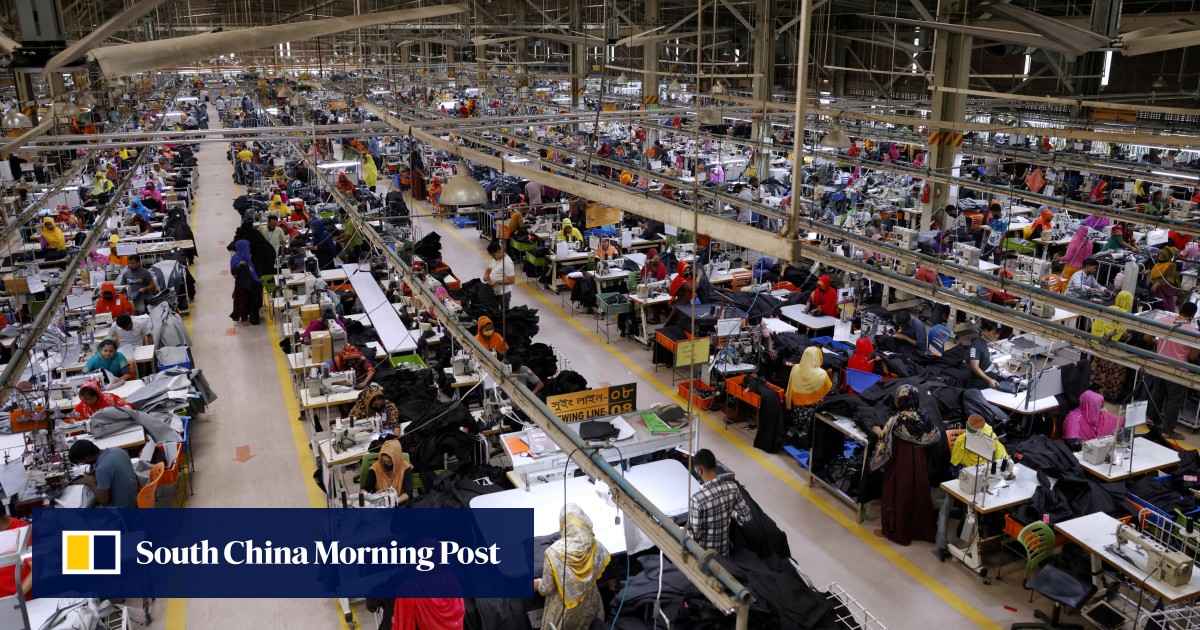
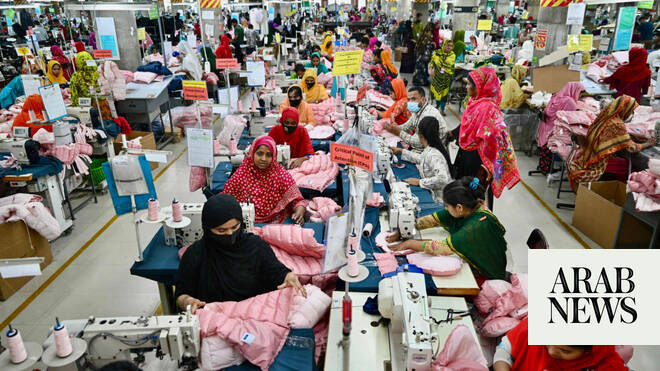
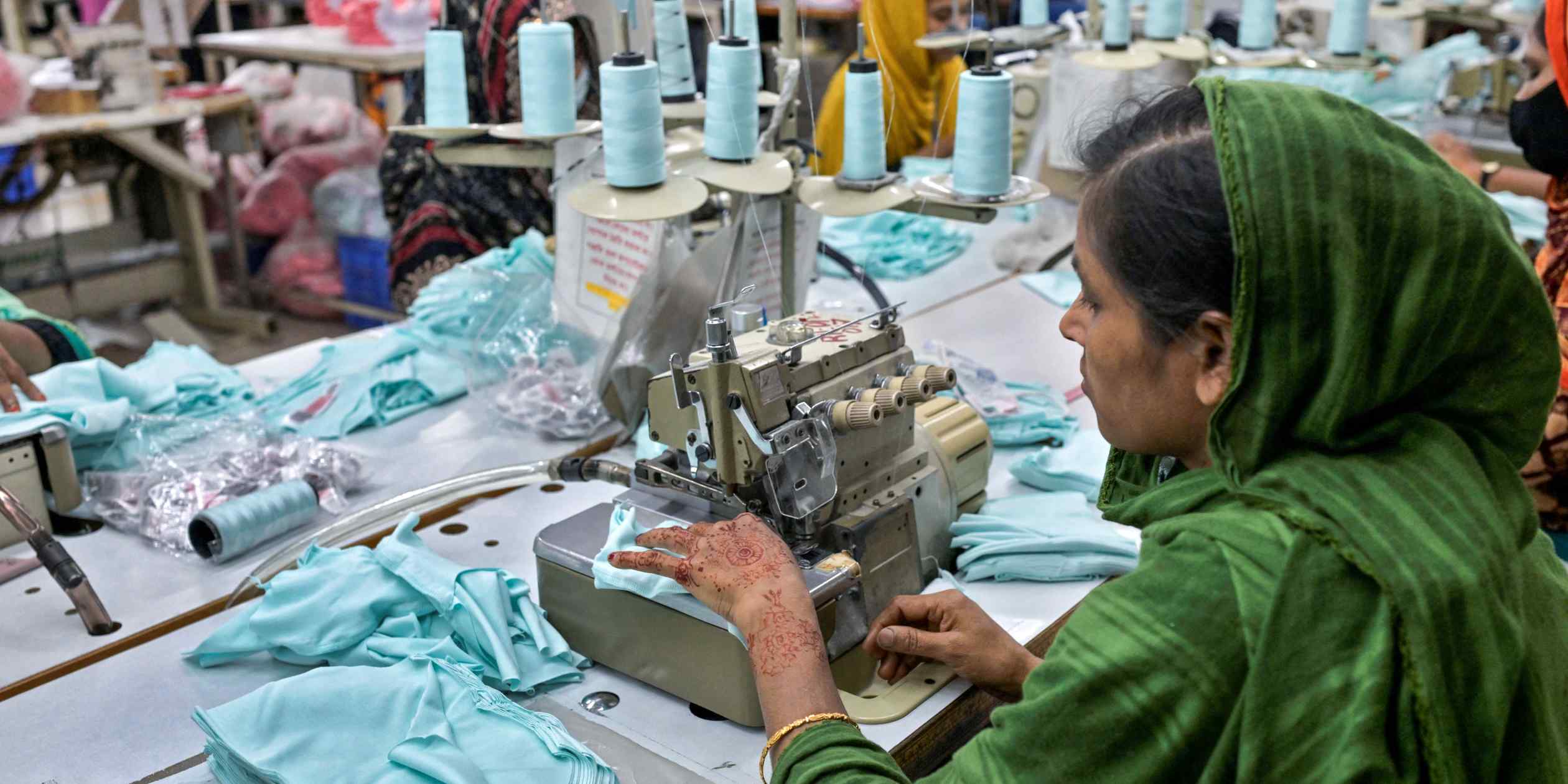
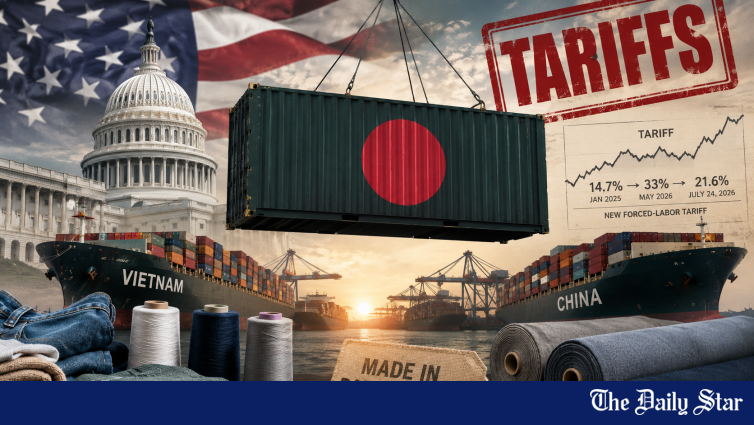
The average US tariff on imported apparel has swung wildly: 14.7 percent in January 2025, a spike to 33 percent, then 21.6 percent by May 2026. On July 24, 2026, Washington added a new forced-labour tariff, redrawing the map again. This volatility is the backdrop against which Bangladesh, competing in a $574 billion global apparel export market, must plot its next move.Bangladesh's 2025 was strong on paper: $8.20 billion in US exports, up 11.71 percent, lifting its share to 10.53 percent — inside a market that shrank 1.74 percent in value and 3.70 percent in quantity.Vietnam extended its lead to $16.75 billion (21.5 percent share); China collapsed to $10.64 billion, down roughly 35.55 percent (13.66 percent share). Cambodia grew fastest at 26.93 percent. Asia supplied 72.6 percent of all US apparel imports.But 2026 is cooling faster, reshaped further by the new tariffs. January-May US imports fell 9.25 percent in value and 9.49 percent in quantity. Bangladesh slipped 8.08 percent, roughly tracking the market. China's fall deepened to 42.75 percent; India dropped 26.37 percent; Pakistan fell 12.35 percent. Only Cambodia (+14.90 percent), Indonesia (+5.49 percent) and Vietnam (+1.46 percent) grew against the tide — the group Bangladesh must watch most closely as it plans its next competitive moves.US retail apparel prices rose just 0.3 percent in 2025, versus 2.7 percent overall inflation. The Bureau of Economic Analysis (BEA) data show apparel's share of US consumer spending shrinking — 2.08 percent in 2025, down from 2.10 percent in 2023 and 2.23 percent in 2021 — as budget-conscious Gen Z shoppers turn to second-hand clothing. That pressure moved backward onto factories, visible in falling export unit prices.The tariff math has also shifted favourably. From a shared 15.6 percent baseline, the new forced-labour levy adds 10 points for Bangladesh, India, Indonesia, Pakistan and Cambodia (25.6 percent total), but 12.5 points for China and Vietnam — pushing China to 35.6 percent and Vietnam to 28.1 percent. For the first time, Bangladesh sits below both rivals. A proposed tariff-rate quota tied to US cotton sourcing could widen that edge further, though it has not yet been implemented.One structural weakness remains: fibre mix. In 2025, man-made fibres (MMF) accounted for 56.61 percent of US import quantity, the larger, faster-growing category — though the true pace may be understated, as some importers appear to engineer product composition towards cotton to manage duty exposure.Even so, Bangladesh stays cotton-heavy (61.61 percent of quantity, 68.29 percent of value), while Vietnam leans MMF (62.48 percent). Bangladesh's unit prices remain the cheapest of the major suppliers, but price alone won't offset a shrinking, second-hand-competing, MMF-tilting market.The near-term opportunity: convert today's 2.5-to-10-point tariff edge into real order reallocation from Vietnam and China, secure tariff rate quota (TRQ) terms to push the effective rate closer to 15.6 percent, market that advantage to buyers, and shift to MMF and technical-textile capacity to intercept demand before it shifts.Compliance credentials — the very issue behind the new tariff — become a market-access requirement, not a formality. Margins must come from productivity, efficiency and product upgrading, not further price cuts that leave factories underwater.The riskier path is equally plausible: a shrinking, thrifting, Gen Z-driven US market that buys less and passes less spend to any supplier, cotton overexposure that gets bypassed as MMF demand grows, and a resurgent Cambodia eating into Bangladesh's price-tier orders.Whether Bangladesh converts its current tariff advantage into durable share, or watches this window close, depends on how fast it moves on TRQ, fibre diversification and compliance — and on raising its own competitive floor rather than defending today's position.The writer is the founder and CEO of Bangladesh Apparel Voice. He can be reached at [email protected]