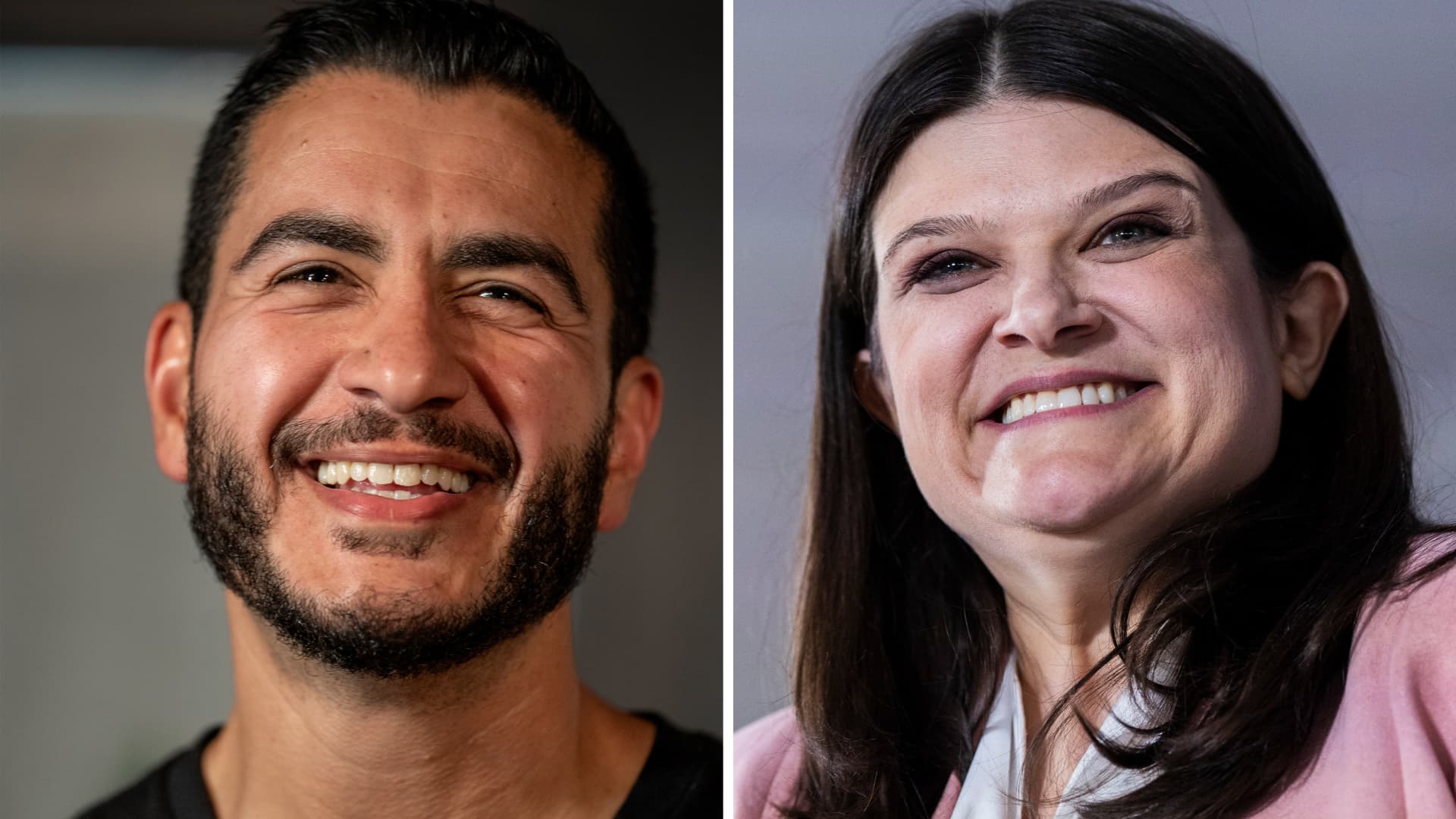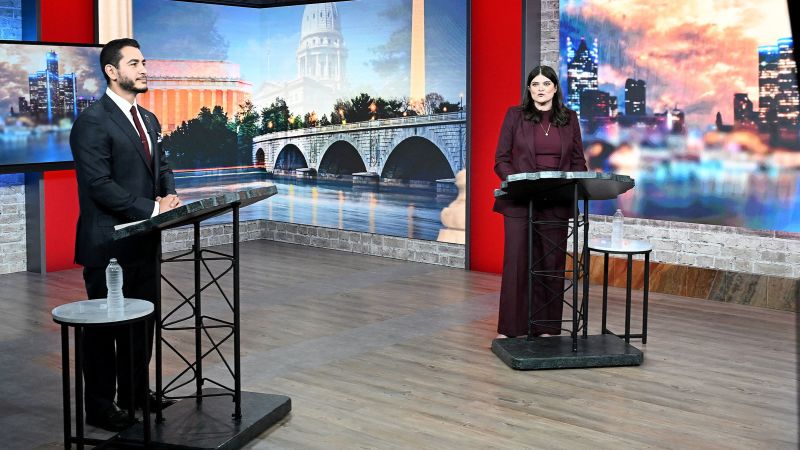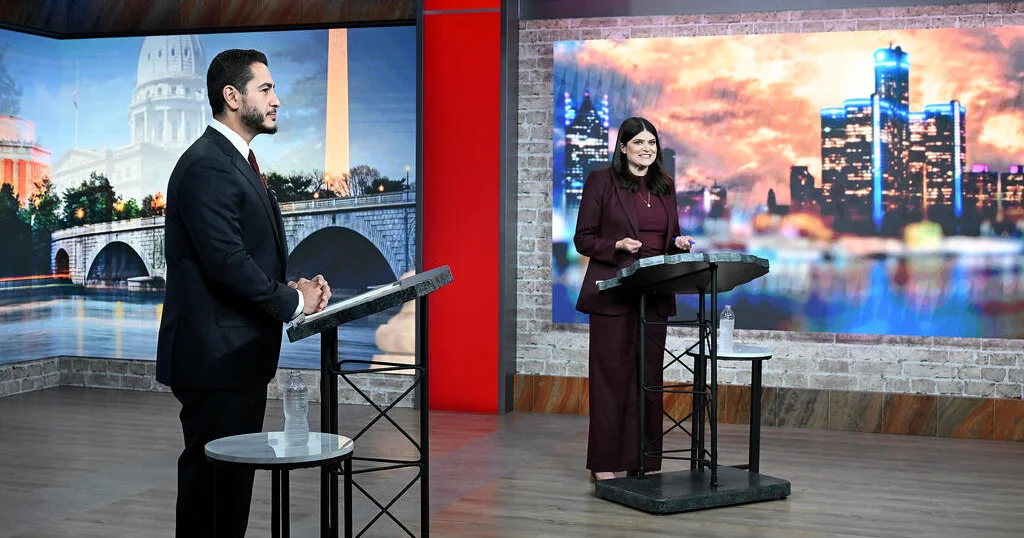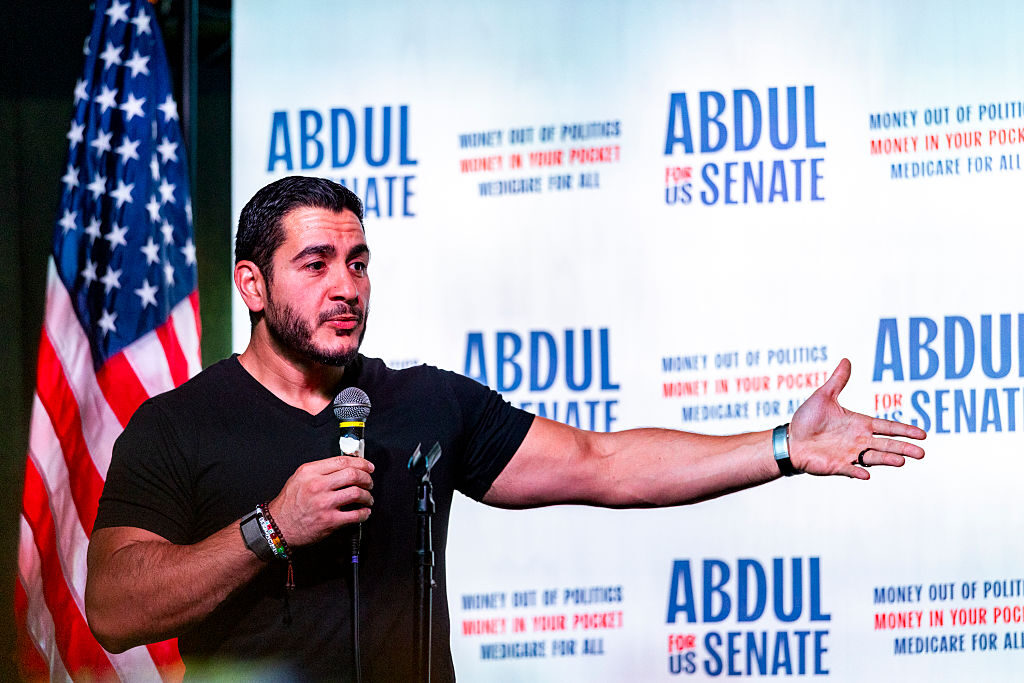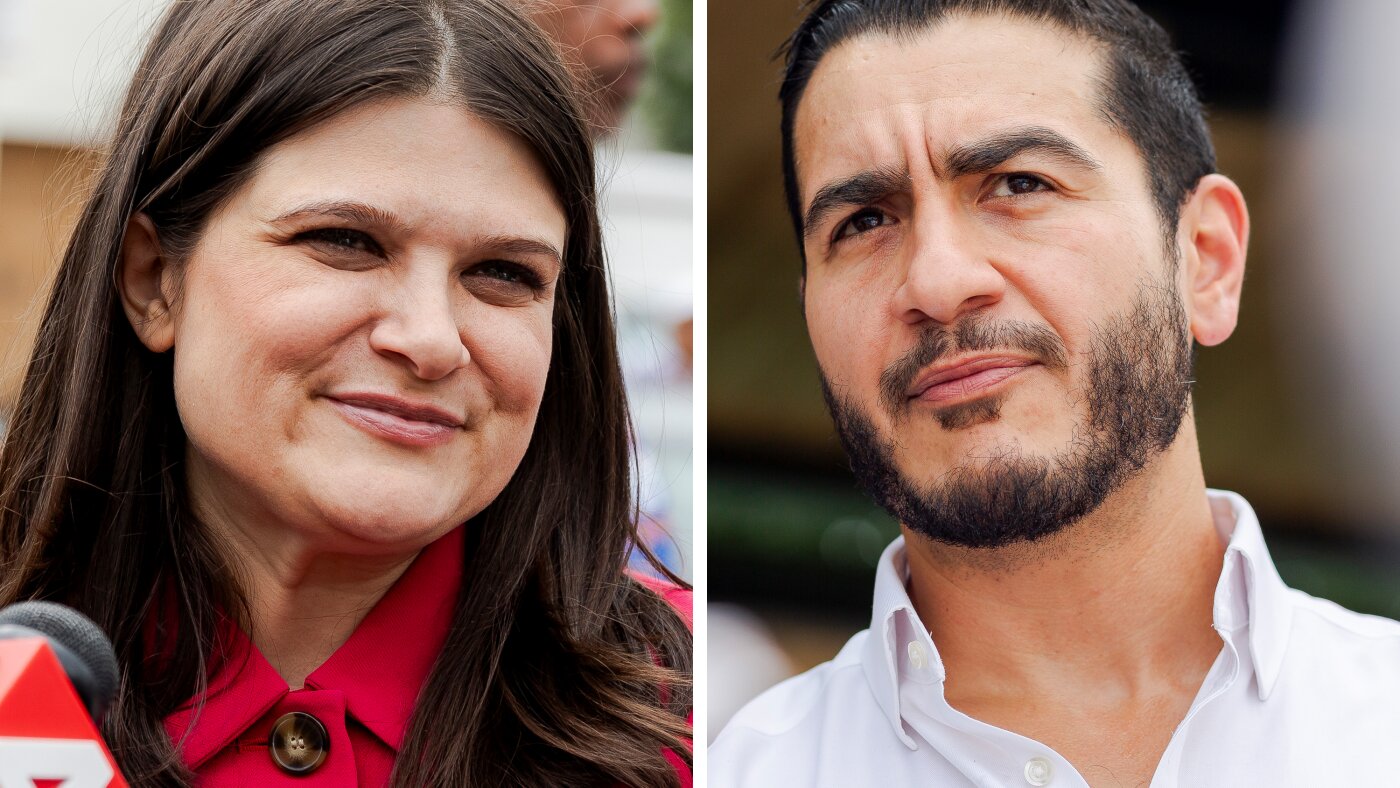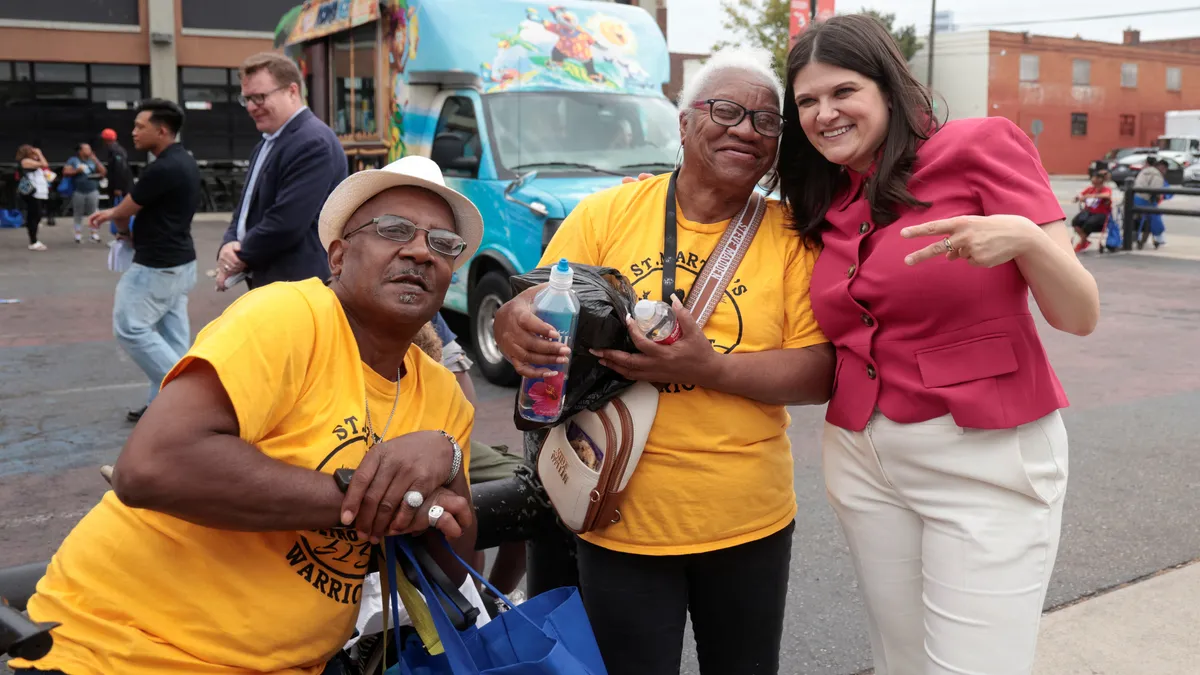
Rep. Haley Stevens and Abdul El-Sayed are both promoting claiming to be the authentic Michigander in the Democratic Senate primary.Show Caption
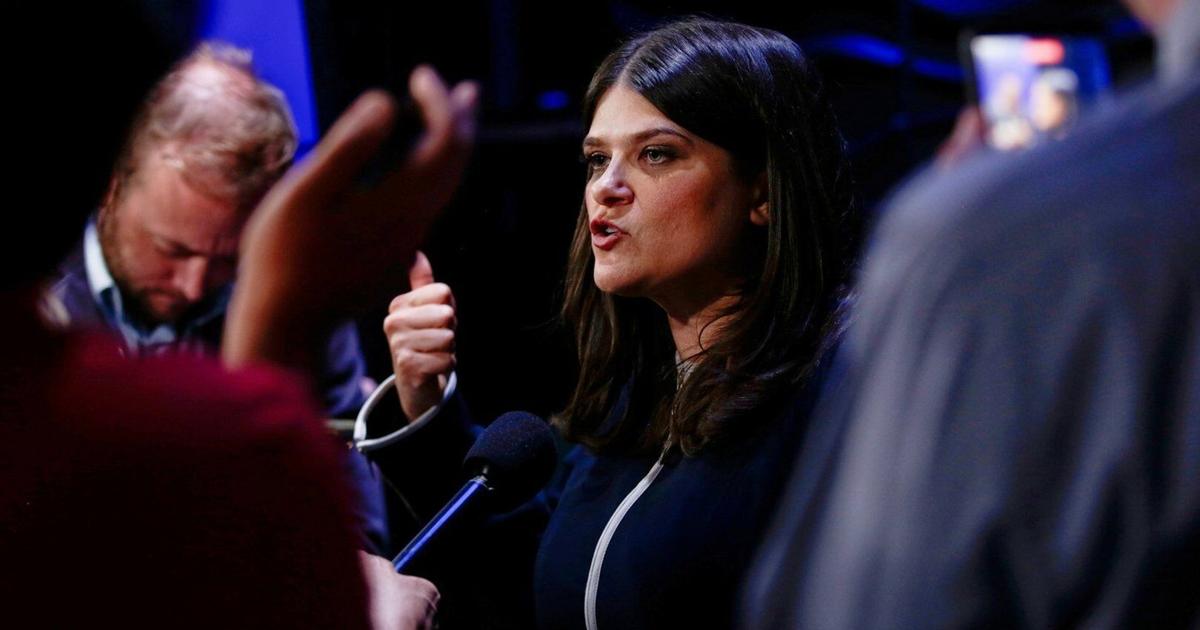
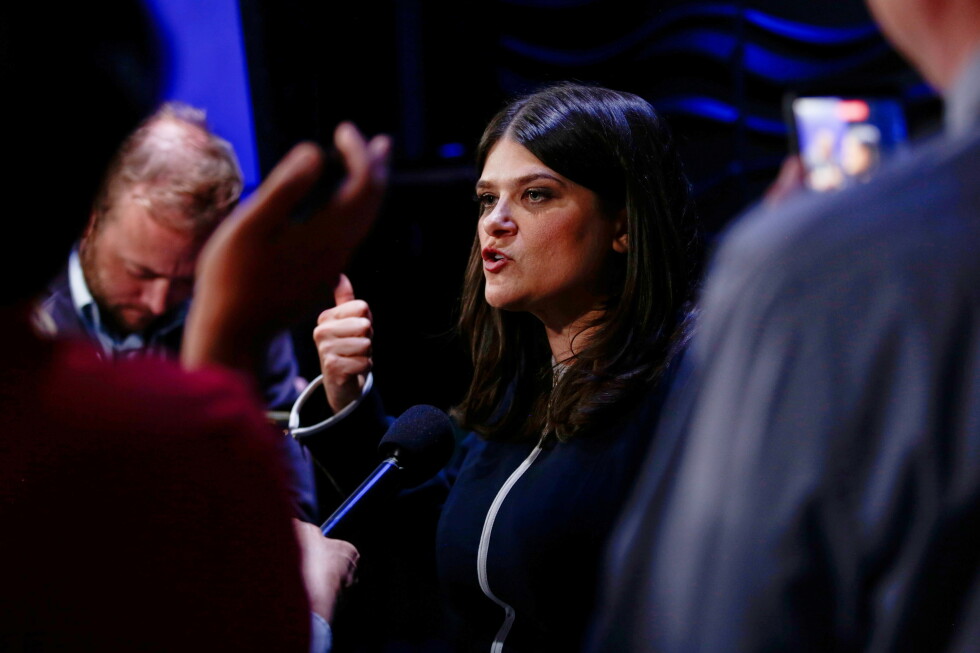
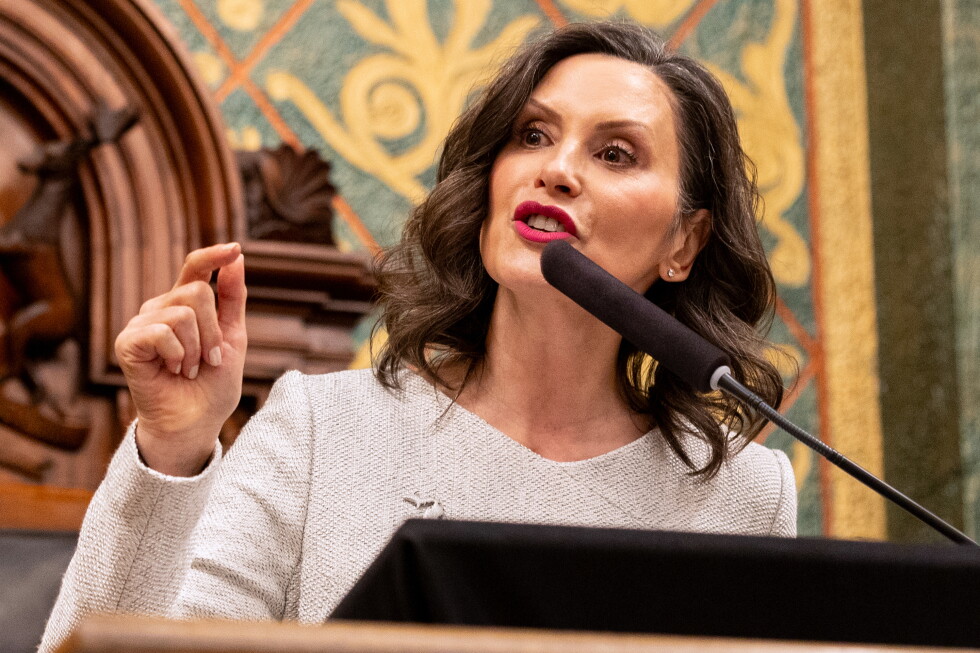
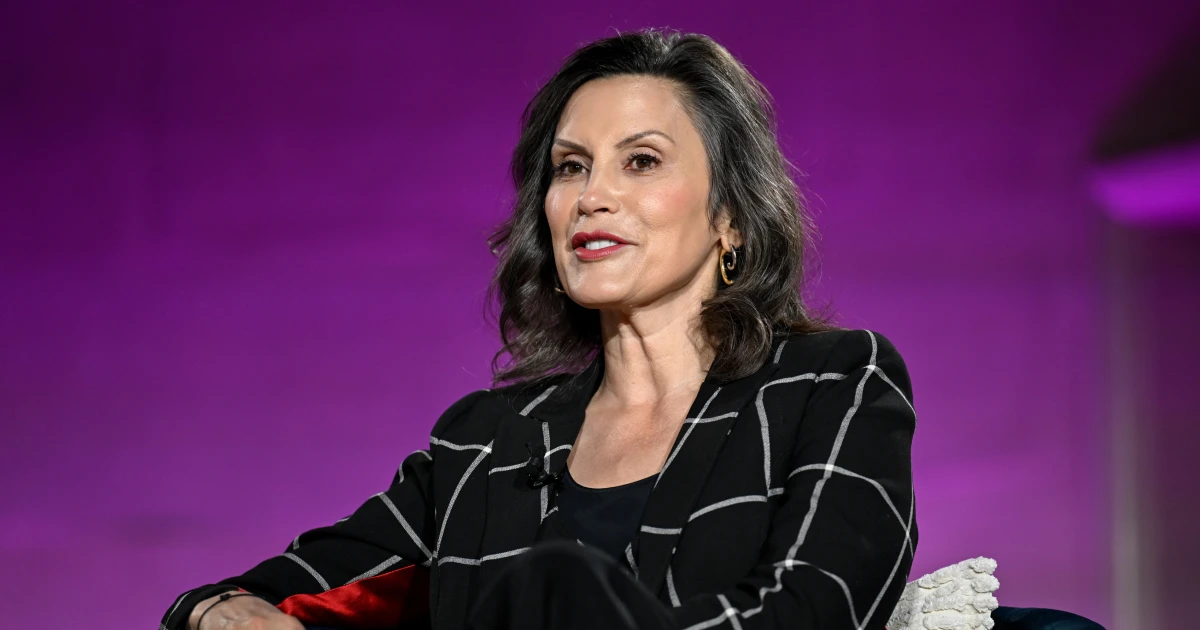
Rep. Haley Stevens, a suburban moderate Michigan Democrat, is an unlikely candidate for social media stardom. But she struck online gold when she campaigned July 18 against progressive opponent Abdul El-Sayed in Michigan's hard-fought Aug. 4 Democratic Senate primary."I am gonna be telling the stories on our behalf," the centrist congresswoman told the crowd in Ecorse, a small suburb of Detroit with a majority Black population. While thrusting her balled-up fists forward, Stevens told the audience, "And you better believe I'm going to be doing it with a little bit of joy, a little bit of enthusiasm, a little bit of energy."And, Stevens said, punching her right fist to her left palm four times, "a little bit of stick it to 'em."A clip of the speech, originally filmed by C-SPAN, garnered 5 million views on X, fueling both mockery and admiration for Stevens' upbeat demeanor. When sharing the clip, the Republican National Committee said Michiganders would have to choose between El-Sayed, who campaigned with controversial political commentator Hasan Piker, and "whatever Haley Stevens is doing."A subsequent TMZ video about the clip notched over 4.5 million views on the same platform. Meghan McCain, the daughter of former Sen. John McCain and former "The View" co-host, joked "How is this not a character from Parks & Rec?" but also praised Stevens for "clear messaging." Chris Cillizza, the ex-CNN commentator, called it "weirdly endearing."While Stevens is a rare establishment Democrat to generate online excitment, the race may test whether her viral moments can compete with the cyber-savvy pro-Palestine progressives, who already have notched upset wins in congressional primaries from New York to Colorado."I don't think anyone's brought up the internet stuff today as I've been campaigning through Detroit and I'm not trying to say it doesn't exist," Stevens told USA TODAY on July 26. She added, "It's one arena, but the arena where this election is going to be won are in the Michigan zip codes and getting Michiganders out to vote."But Stevens' campaign seized on the buzz, seemingly realizing how the power of a viral personality-driven moment could help her compete with El-Sayed, whose campaign has been powered by an army of online progressive activists and donors. El-Sayed's campaign has produced content in the same vein as New York City Mayor Zohran Mamdani, who used playful videos to boost his path from unlikely contender to frontrunner against former Gov. Andrew Cuomo in the city's mayoral race last year.The Stevens campaign produced "STICK IT TO 'EM" yard signs and released an ad using audio from the talk.Michigan race highlights Democratic split over IsraelThe candidates have split over the war in Gaza. Stevens is pro-Israel while El-Sayed, who is pro-Palestine, has been critical of the Israeli government. Stevens lags behind in key polls, including an Emerson College poll released July 30 that shows El-Sayed up by 16 points.In response to the backlash, Stevens has repeatedly told outlets she is being authentically Michigan – and authentically herself.The viral moment and her race against El-Sayed revives age-old questions about whether women are held to unfair standards about public behavior after the first two women nominated for president — former Secretary of State Hillary Clinton and former Vice President Kamala Harris — were defeated by President Donald Trump in 2016 and 2024, respectively.Democratic strategist Tahra Hoops said the narrative around Democratic candidates, especially within the party's establishment, is that they are typically empty suits who often fail to connect with voters. "Any video that is going to humanize them in any way is definitely going to help," Hoops said.'Haley is Haley'Stevens, first elected in 2018 in Democrats' blue wave, will gauge the party establishment's strength in the most competitive Senate primary this cycle. Michigan is rocky terrain for both parties: Sen. Elissa Slotkin, a Democrat, won her seat by less than 1 percentage point against former Republican Rep. Mike Rogers in 2024, as Trump carried the Midwestern state by 1.4 points.Rogers is now running unopposed for the Republican nomination for Michigan's other Senate seat, which is represented by retiring Democratic Sen. Gary Peters.The Michigan Senate race has long been cast as a battle over the party's future. Stevens has the support of Peters, Senate Minority Leader Chuck Schumer of New York, the Congressional Black Caucus, Gov. Gretchen Whitmer, who defended Stevens' accent, and former Sen. Debbie Stabenow.El-Sayed, a public health director, boasts endorsements from Sen. Bernie Sanders, I-Vermont, and progressive Reps. Alexandria Ocasio-Cortez, the popular New York congresswoman, and Rashida Tlaib, who represents parts of Detroit and Dearborn. Sen. Elizabeth Warren endorsed El-Sayed after her first pick, state Sen. Mallory McMorrow, dropped out.Stevens and El-Sayed, who lost to Whitmer in a primary in 2018, have been locked in a contentious contest since McMorrow, left the race July 5.Stevens has courted Black voters, who often make up the Democratic base. In Ecorse, on the day the speech that spurred the "stick it to 'em" video was recorded by C-SPAN, many audience members appeared to be Black.A key Stevens surrogate, Keith D. Williams, chair of the Michigan Democratic Party's Black Caucus, said he met the congresswoman four years ago and her personality appeals to the Black community, who will help decide the result."I truly believe that she is, Haley is Haley, and Black — you know, one thing about the Black community: 'We can see a fake,'" Williams said.Authenticity can be fake, expert saysTo its remaining candidates, the Democratic primary seemingly hinges on which contender can present themselves to voters as an authentic Michigander. Ever since launching her successful 2018 campaign to defeat then-Rep. David Trott, a two-term Republican, Stevens has stressed her work on President Barack Obama's auto bailout, which rescued the state's economy during the Great Recession.El-Sayed, who became a podcast host after losing to Whitmer, boasted in his campaign announcement video about his typical Midwestern upbringing: He scooped ice cream, was captain of his high school football team, loved his Camaro and played club lacrosse at the University of Michigan. A more recent campaign commercial shows him waterskiing on a lake.Michael Serazio, a Boston College communication professor, said the concept of authenticity is subjective in American politics."What we have to always keep in mind is that authenticity can be faked and so these moments, people desire it deeply," Serazio said. "And it can be real at times, but it can also be faked as well."'Authenticity trap' affects womenThe "stick it to 'em" video attracted criticism of Stevens' distinctive Midwestern accent and comments about her wardrobe. In response, El-Sayed defended his opponent."It’s become impossible to ignore the way that people online make fun of my opponent for things that have nothing to do with her policies or politics. It’s unkind and unhelpful. If you support me, please stop," El-Sayed wrote on X before accusing Stevens of being bought by special interests. He added, "We don’t need to be unkind to be honest."Claremont McKenna College professor Lily Geismer, an expert on Democratic politics, said women are often viewed as inauthentic. Anything that seems folksy, Geismer said, often backfires."Hillary Clinton is so the quintessential example of that," Geismer said.Serazio, the Boston College expert on authenticity in politics, said the concept also hurt Sen. Elizabeth Warren, D-Massachusetts, in her 2020 presidential primary run and Harris in 2024. Serazio also pointed to critics of former Alaska Republican Gov. Sarah Palin's voice after she was named John McCain's running mate in 2008."The normal voice that we tend to hear in politics is a masculine one and so a feminine voice that comes into that space is going to be perceived with suspicion because it operates against the backdrop of that historic imbalance of representation," Sezario said.Haley Stevens says criticism comes from coastal elitesIn the viral TMZ video posted July 22, Stevens was stopped by Jacob Wasserman, a member of the gossip brigade's new team in Washington. As a staffer attempted to usher her outside an office building, Stevens stopped to talk about the "stick it" video."You're gonna make fun of me on the internet," Stevens said. The opposite, Wasserman explained as he called the video legendary."You took it and were like, 'you know, I'm going to lean into it and make it a campaign ad,'" Wasserman told Stevens. She responded, "I am authentically Michigan" and then referred to Trump as a "bozo.""They're coastal elites online. They're making fun of me and really what they're doing is they're making fun of Michigan because they don't understand us," Stevens told USA TODAY. She repeated a similar line during a speech in Detroit on July 24, where she was flanked by influential Rep. Jim Clyburn, D-South Carolina, and Whitmer.The next day, Williams, the Michigan Democrats' Black caucus chair, introduced Stevens at the Soul Day Festival in Detroit. The race will be decided by those Black voters, who don't care about what happens online, he argued.Williams said when there were five Black men engaged in a conversation about politics with the congresswoman, her staffers attempted to pull her away, but he instructed her staff to stop."Staffers are trying to protect them, but Haley don't need no protection," he said.