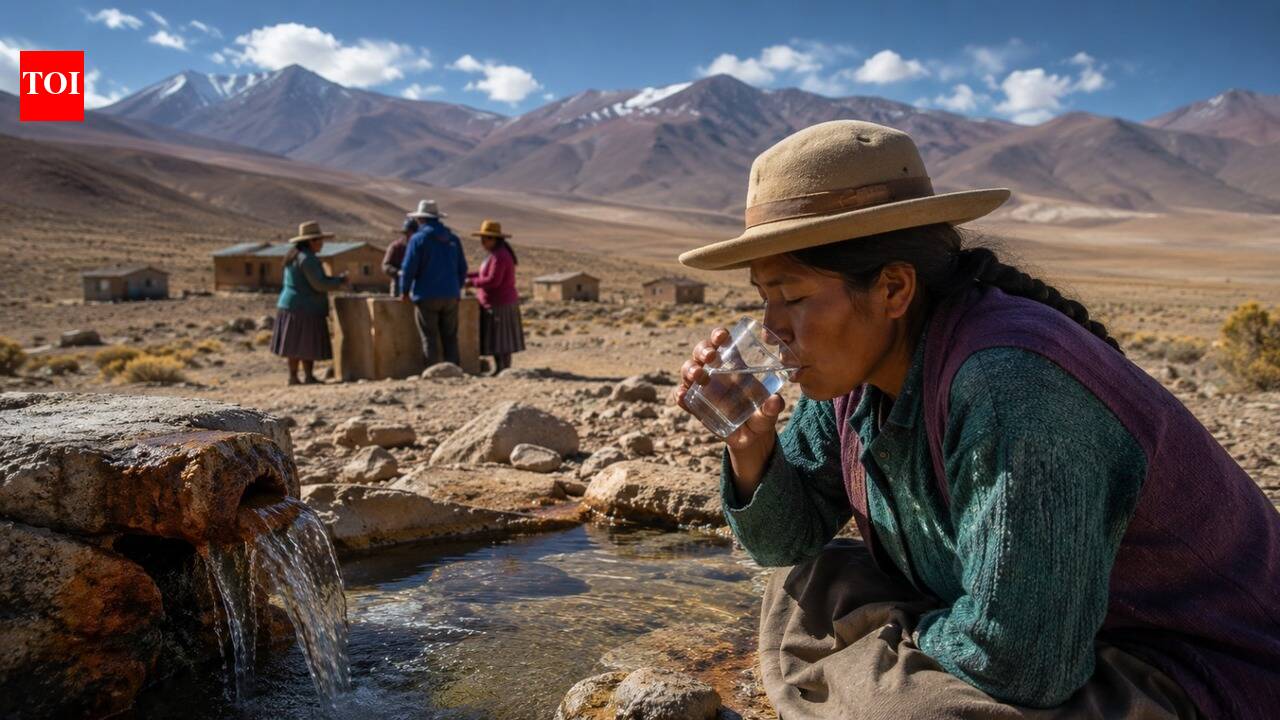
For most of human history, a water source containing high concentrations of arsenic would have been considered deadly.
Long-term exposure to the toxic metal is linked to cancers, cardiovascular disease, diabetes and neurological disorders.
Yet for thousands of years, people living in Chile's Atacama Desert have relied on groundwater containing some of the highest naturally occurring arsenic levels ever recorded.The mystery has puzzled scientists for decades.
How could entire communities survive for nearly 7,000 years without the public health crises normally associated with chronic arsenic poisoning?
A study titled ‘Human adaptation to arsenic in Andean populations of the Atacama Desert’ by Mario Apata, Bernardo Arriaza, Elena Llop and Mauricio Moraga offers a compelling answer.