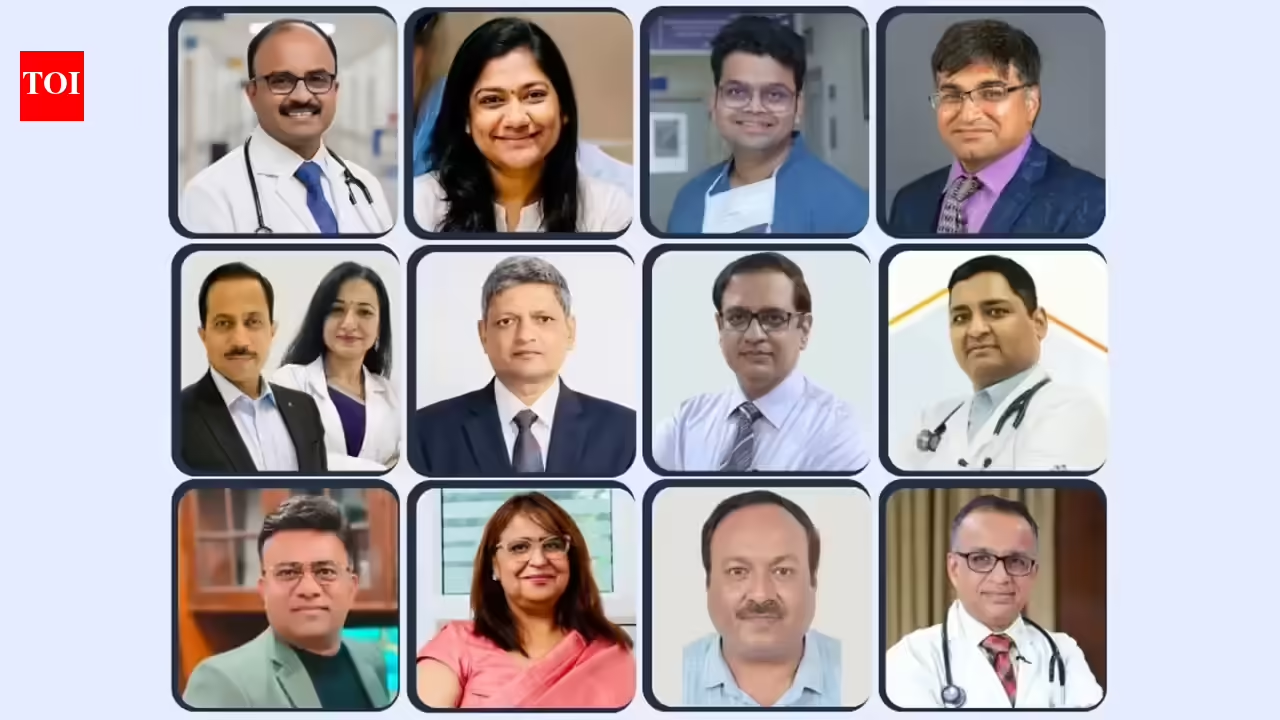
The future of healthcare is no longer just about treating illness, it is about predicting disease, personalising treatment, leveraging technology and building a healthier nation. Bringing together some of India's most respected clinicians, healthcare leaders and innovators, ET Health Conclave 2026, held at The Oberoi, Gurugram, served as a platform to exchange ideas, showcase innovation and celebrate excellence across the healthcare ecosystem.Following the welcome address, the conclave opened with an engaging discussion on "Intimacy as a Biomarker of Longevity".Spotlight Wire“Longevity is not merely about adding years to life—it is about preserving vitality. Healthy intimacy, fertility, and mental wellness are interconnected pillars of healthy ageing that ultimately define an individual’s quality of life,” said Dr. Sankalp Jain, Founder, Fertimacy Clinical Wellness.Dr Dinesh Tiwari, Director, Oneskin Dermatology, highlighted the growing role of regenerative dermatology and non-invasive technologies in intimate wellness, emphasising evidence-based tissue restoration, healthy ageing, and patient-centred care while reducing dependence on unnecessary cosmetic and surgical interventions.Dr Chetna Duhan, Director, 1 Scan Diagnostics, shared insights on the role of advanced diagnostic imaging in validating non-invasive regenerative therapies, demonstrating how objective radiological assessment strengthens evidence-based treatment protocols and supports innovation in longevity, fertility, and intimate wellness.The focus then shifted to one of the fastest-evolving frontiers in medicine with the panel discussion "From DNA to Diagnosis: The Expanding Role of Genomics in Modern Healthcare." The experts discussed how genomics is accelerating precision medicine by enabling clinicians to detect diseases earlier and deliver highly personalised treatment strategies."Genomics is fundamentally changing how we diagnose and treat disease. Precision medicine enables clinicians to move beyond one-size-fits-all therapies towards truly personalised healthcare," remarked Dr Shrinidhi Nathany, Consultant, Molecular Hematology & Oncology, Agilus Diagnostics.Dr Ritesh Monga, Clinical Director & Head of Urology, Marengo Asia Hospital, noted, "Genomic Insights are helping clinicians identify disease risk earlier and develop targeted pathways that improve long term outcomes and planning precision treatment for uro-oncology "Dr R. Balaji, MD, MRCP (UK), Director, Regenix Drugs Ltd.delivered a presentation on the transformative potential of regenerative medicine, highlighting how emerging therapies are creating new possibilities for improving patient outcomes across multiple specialties.Digital transformation took centre stage during the session "Building Smart Hospitals Powered by AI, Automation and Connected Healthcare Systems," where healthcare leaders discussed how intelligent infrastructure and connected technologies are redefining the patient experience while improving operational efficiency."Smart hospitals are no longer defined by technology alone but by how seamlessly they empower clinicians, enhance patient outcomes and create an integrated healthcare ecosystem where every decision is data-driven and patient-first," said Dr Ajay Kohli, Director, Delhi NCR Cluster & Corporate Growth Initiatives, North India, Narayana Health.Manisha Kumar, COO Karnataka, HealthCare Global Enterprises Ltd. observed that "the future of healthcare lies in connected systems where technology improves efficiency while ensuring compassionate, accessible and coordinated care for every patient." Spotlight WireThe conversations on innovation continued with "Next-Gen Clinical Excellence & Advanced Care," where experts emphasised collaboration, advanced technologies and evidence-based care as the cornerstones of modern medicine."Clinical excellence is achieved when innovation, evidence-based practice and multidisciplinary collaboration come together to deliver better outcomes for every patient," said Dr Manoj Padman, Director, Pediatric Orthopedics, Madhukar Rainbow Children's Hospital.Dr Praveen Gupta, Chairman, Marengo Asia International Institute of Neuro & Spine said, “In neurosciences, every minute matters. The ability to diagnose early, intervene rapidly, and continue structured rehabilitation through an integrated care pathway makes the biggest difference.Dr Tariq Matin spoke about the growing role of minimally invasive neurointerventions in improving stroke outcomes, and Dr Vivek Gupta highlighted how AI-powered imaging is enabling earlier detection of vision-threatening diseases.The conclave also featured a presentation by Vivek Khanna, Integrated Vertical Head – PAN India, Manipal TRUtest Diagnostics, who shared insights into the growing role of diagnostics in enabling early disease detection and strengthening preventive healthcare across India.Preventive healthcare remained a key theme during the session "Health, Habit & Bharat: Building Preventive Care at Scale." Addressing the audience, Deepak Narang, COO, Agilus Diagnostics, said, "Preventive healthcare begins with awareness and early diagnosis. Accessible diagnostics and regular health screening can significantly reduce the burden of chronic diseases across India."The final panel discussion focused on "AI, Innovation & Intervention: Transforming the Future of Modern Cardiology." The experts explored how predictive analytics, advanced imaging and minimally invasive interventions are shaping the next generation of cardiovascular care.Spotlight Wire“The future of cardiac care lies in combining clinical excellence with AI integration in predictive technologies that enable preventive approaches, earlier intervention and better patient outcomes," said Dr (Brig) Satish Chandra Mishra, Chairman, Cardiac Sciences, Park Hospital.Dr Vanita Arora, Clinical Lead, Cardiac Electrophysiology Indraprastha Apollo Hospitals said, “AI-powered wearables and 3D mapping are revolutionising arrhythmia detection. Standardising leadless pacing nationwide will fundamentally transform Indian cardiac care.” while Dr. Naveen Bhamri, VP & HOD, Interventional Cardiology Max Super Specialty Hospital, Shalimar Bagh remarked, “Minimally invasive tech drastically reduces complications and accelerates recovery.AI serves as a powerful support tool, but human expertise remains irreplaceable.”Dr Vinayak Aggarwal, Senior Director & Head of Clinical Cardiology & Cardiac Imaging Fortis Hospital Gurgaon highlighted, “AI-driven cardiac imaging enhances early accuracy while preventing unnecessary procedures. The future of personalized heart care relies entirely on multimodality imaging.” and Dr Udgeath Dhir concluded that minimally invasive cardiac surgery continues to improve both patient safety and long-term clinical outcomes.Partners: Title Partner- Dalcore Projects Pvt Ltd., Powered-by Partner-Agilus Diagnostics, Associate Partner- Biotronik, Technology Partner- Bilimbe Digital, Luxury Fleet Partner- Velvet Experience, Associate Partner- PHYNIX, Protein Partner- Not Rocket Science, Skincare Partner- Salve Group of Companies, Wellness Partner- Laiqa, Community Partner- Womennovator, PR Partner- Fanzineindia Group, Grooming Partner- Vi-John, Celebration Partner- AlBasir.Disclaimer: The above content is non-editorial, and TIL hereby disclaims any and all warranties, expressed or implied, relating to it, and does not guarantee, vouch for or necessarily endorse any of the content.
ET Health Conclave 2026: Healthcare leaders reimagine the future of medicine through innovation, prevention and technology
From AI-powered hospitals and genomics to regenerative medicine and precision cardiology, ET Health Conclave 2026 brought together India's leading doctors, healthcare institutions and industry experts to shape the next chapter of healthcare transformation.
950 words~4 min read