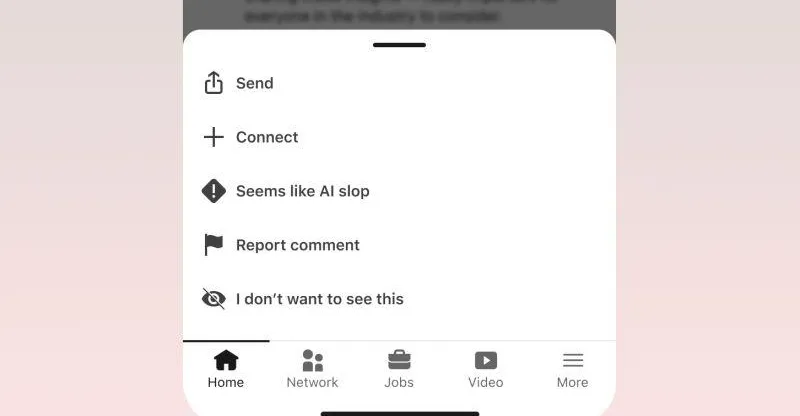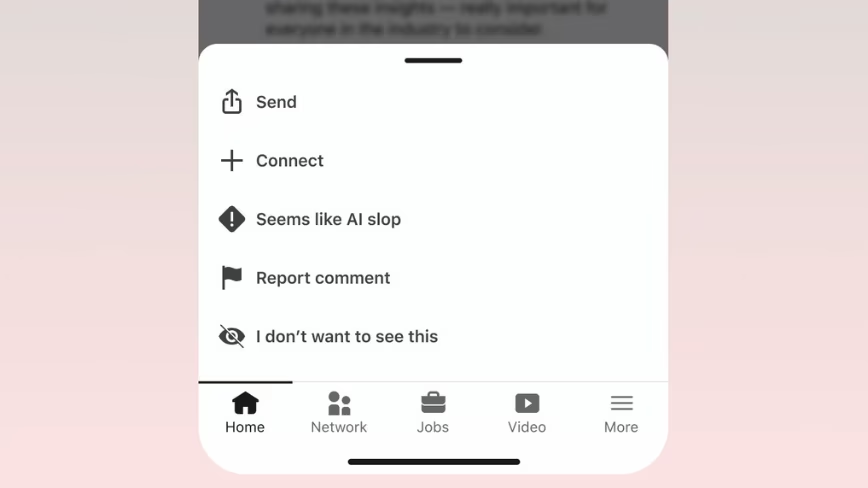
This week LinkedIn rolled out a "Seems like AI slop" button. Tap it under someone's post and the post disappears from your feed, while your report goes off to train their filter. I heard about it through work — keeping an eye on what platforms are up to is part of the job — but I read it less as a marketer and more as someone who writes, and who now, apparently, walks around under suspicion.
LinkedIn's logic isn't hard to follow. According to the AI detector Pangram, they have the highest share of AI content of any platform: roughly a third of short posts and over forty percent of long ones. The feed really is drowning, and handing people a valve is a reasonable move.
It isn't the valve that bothers me. It's whose hands it got put in.
The "this is AI" verdict used to come from an algorithm, and even that missed plenty. Pangram itself claims a 0.01% false-positive rate — which sounds impressive until you multiply it by volume. One hundredth of a percent of millions of posts is still thousands of real people getting labelled as bots. And that's the machine, the one somebody at least tested. Now the "this is AI" stamp has been handed to every passerby, and the cost of getting it wrong is zero. Tap, post gone, on with your coffee. You'll never even find out you were wrong — there's no feedback loop pointing back at you.