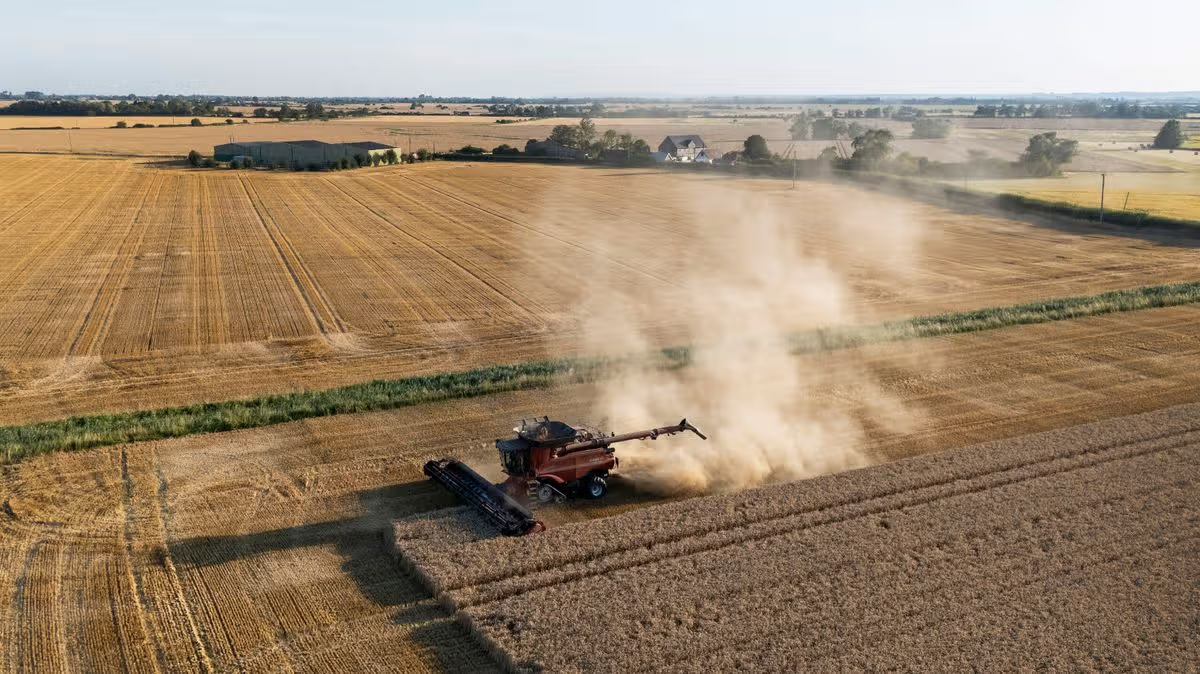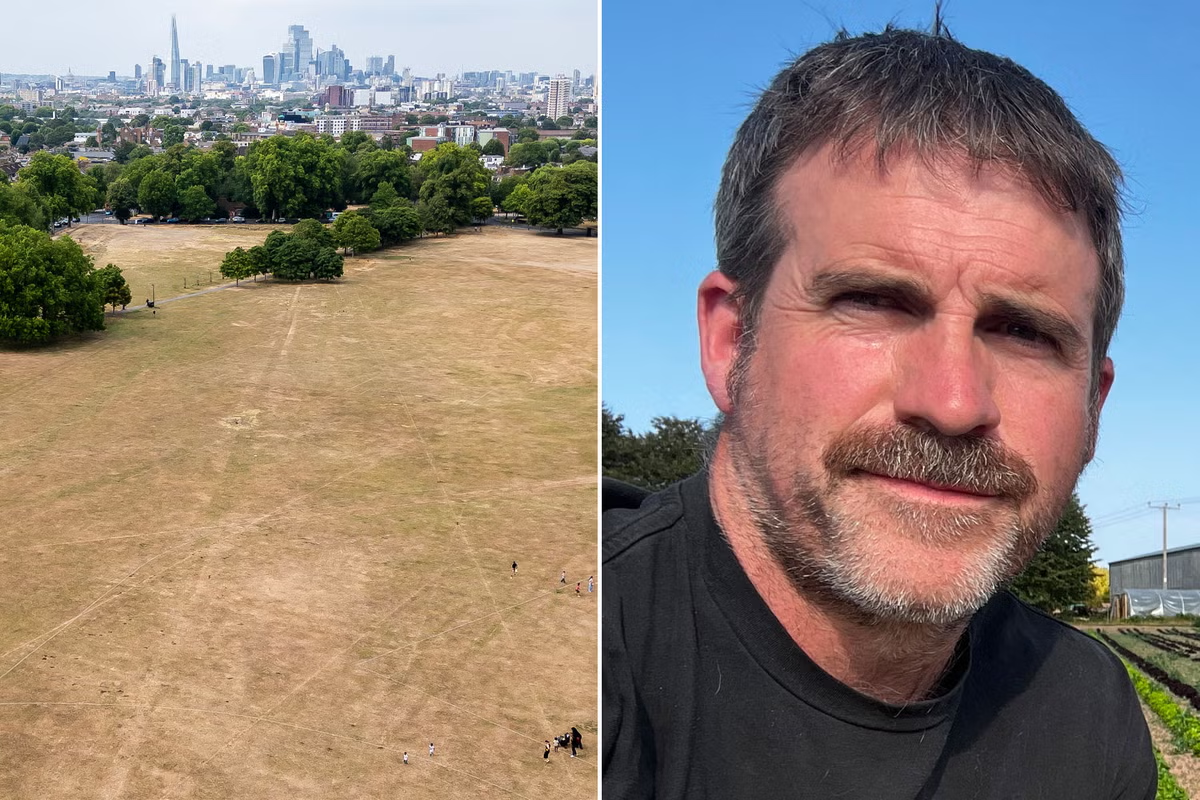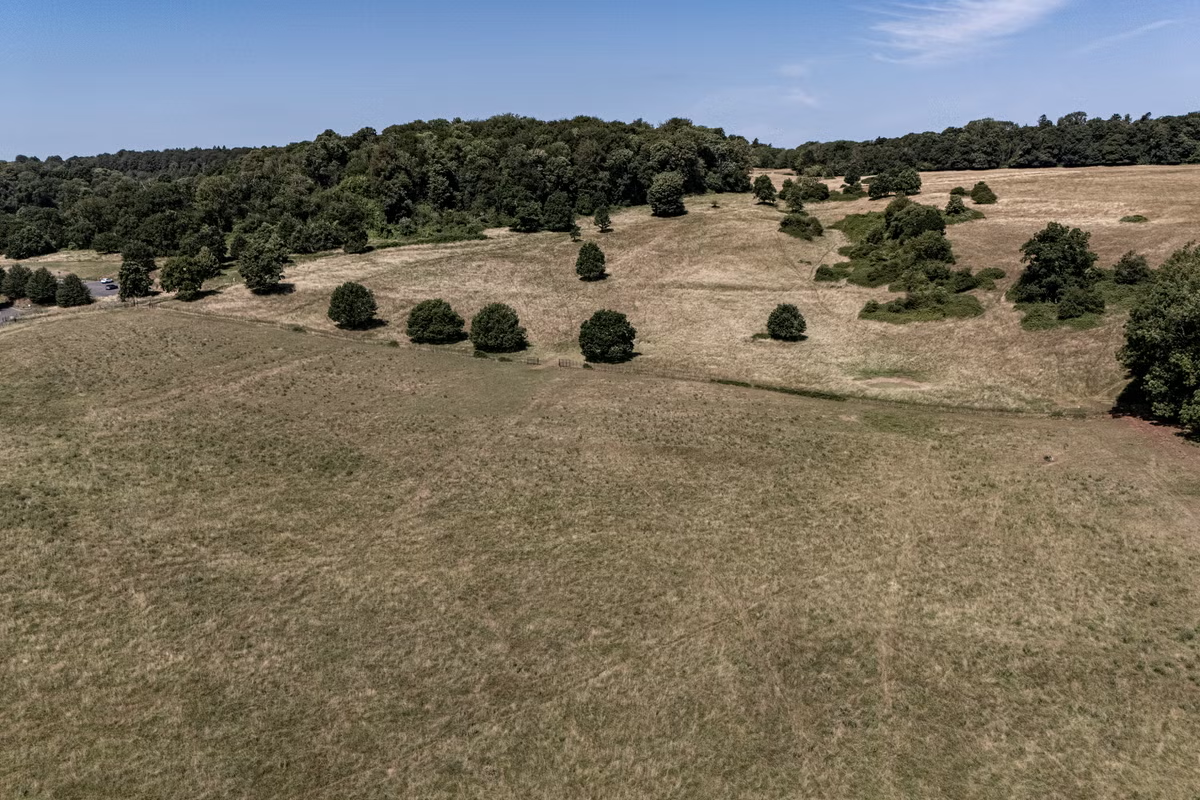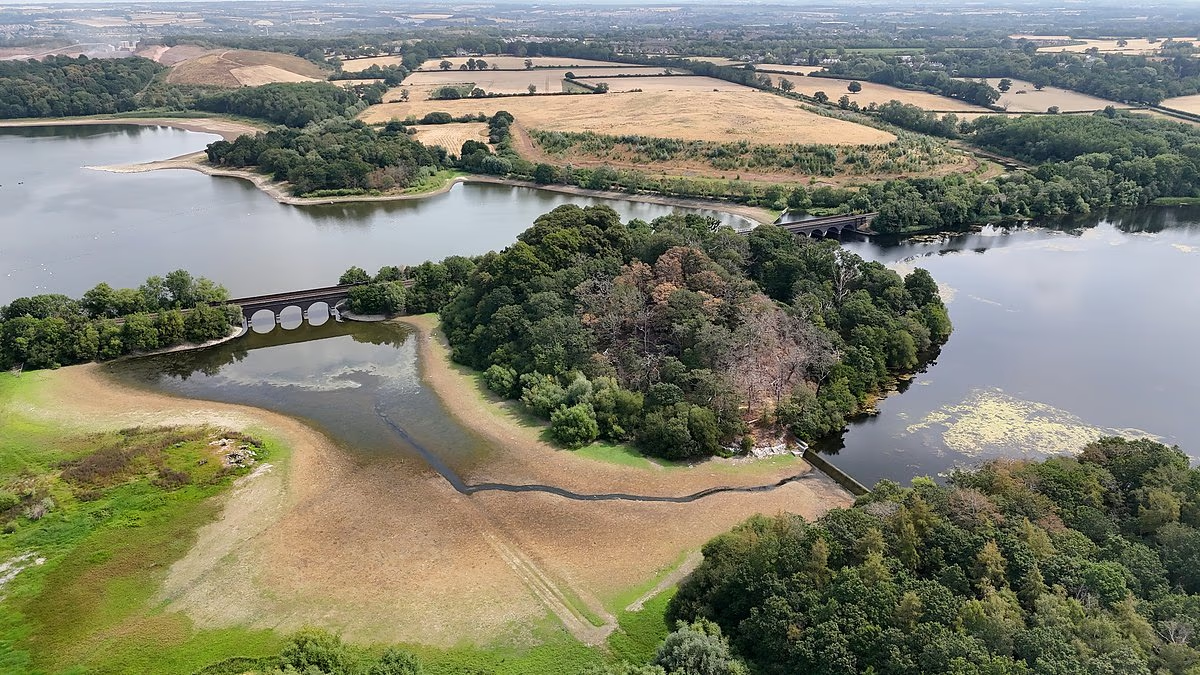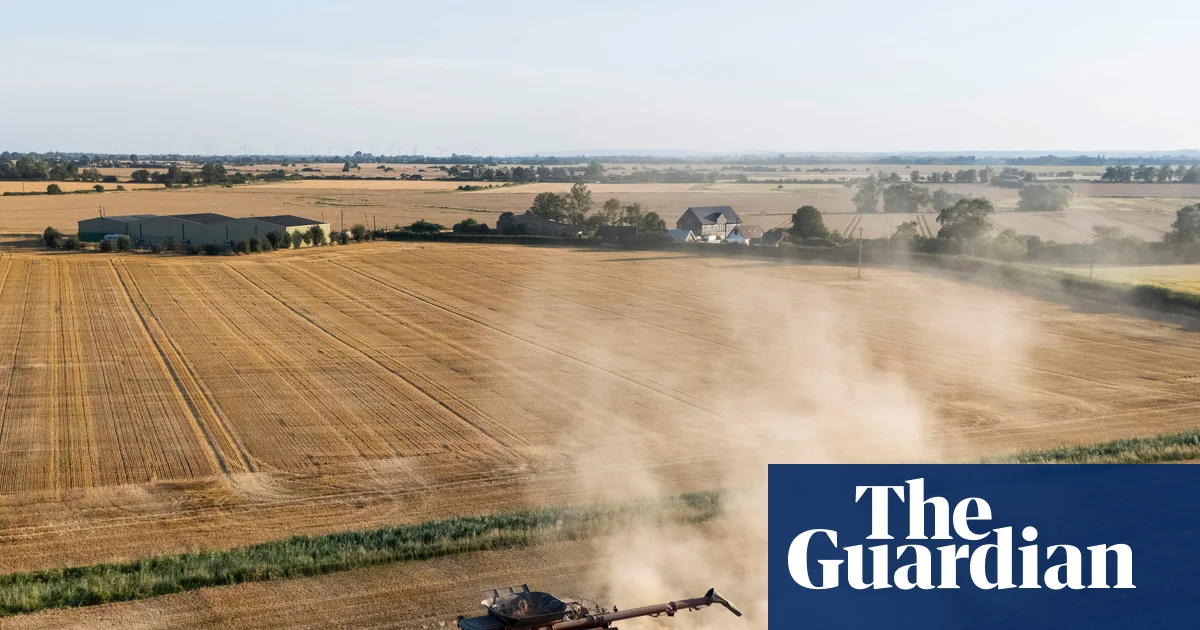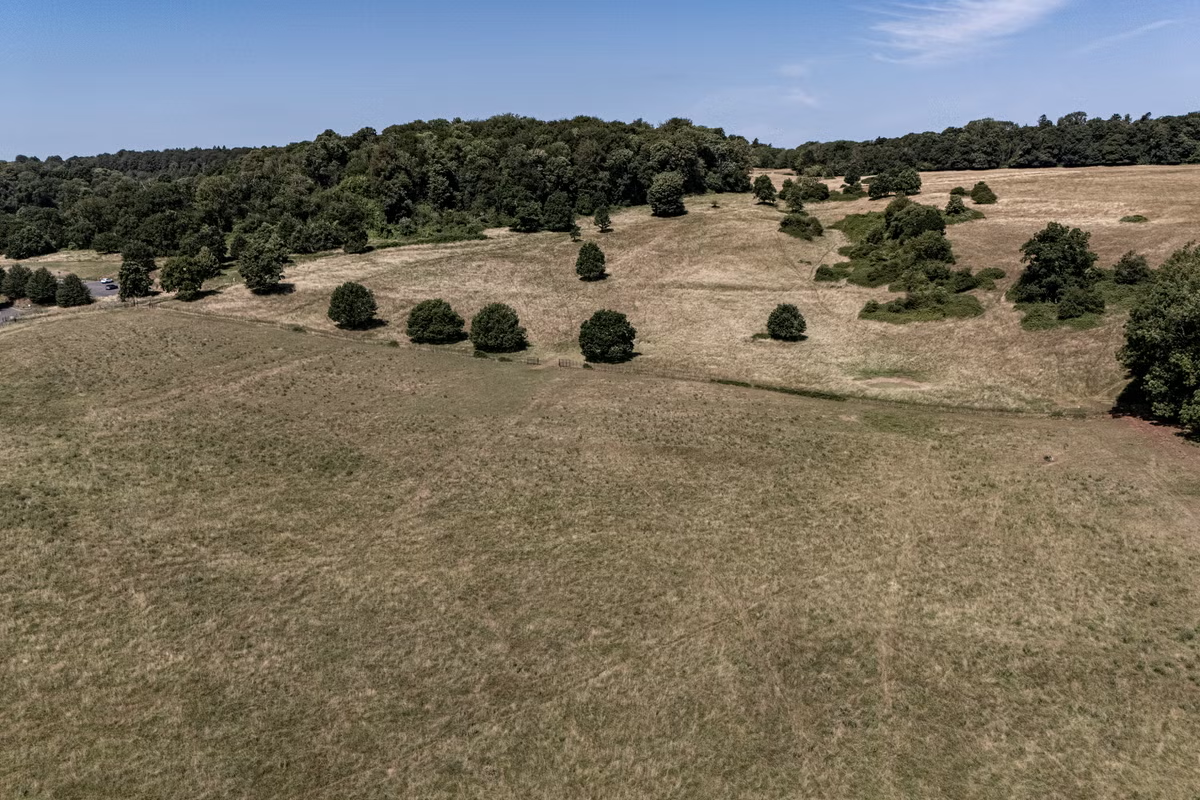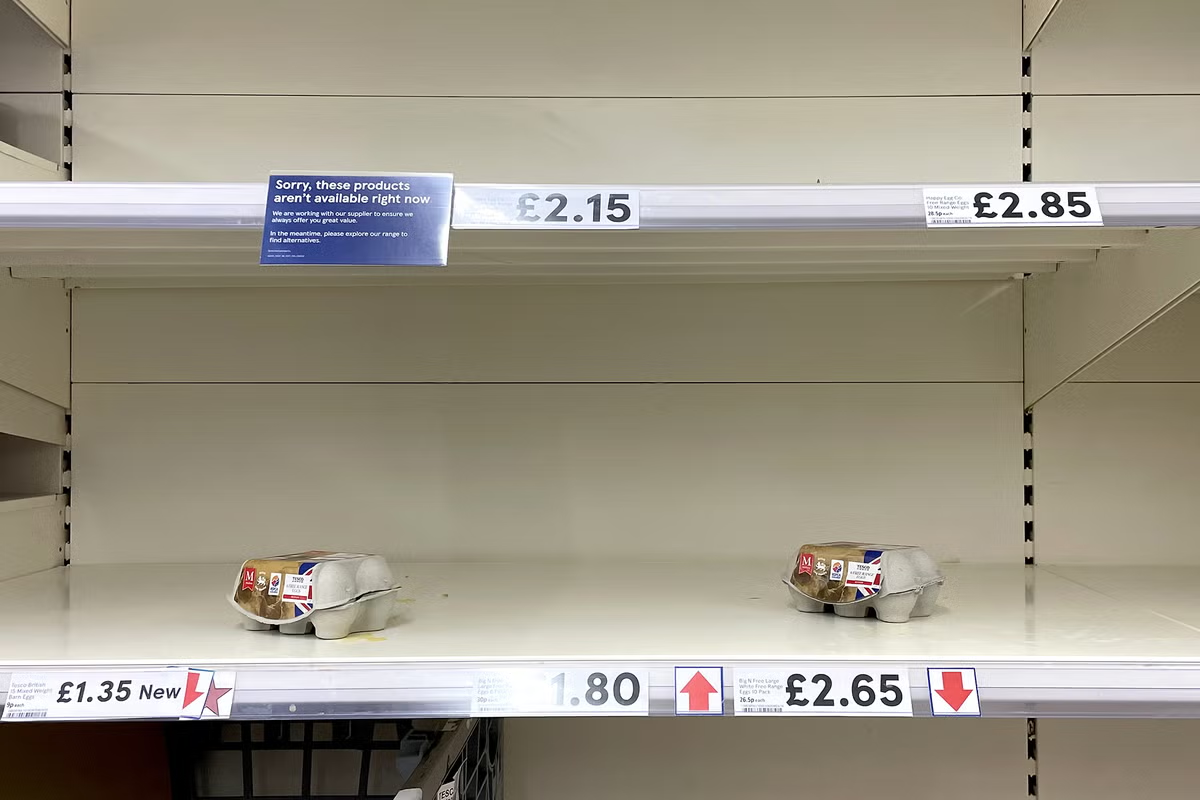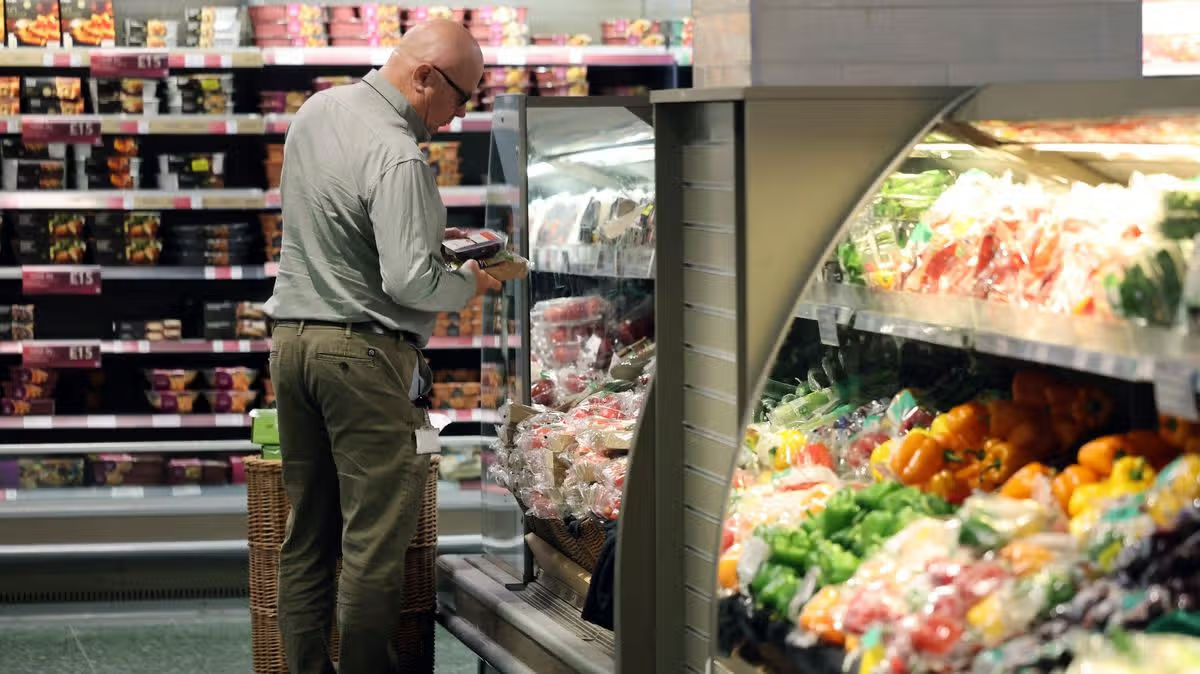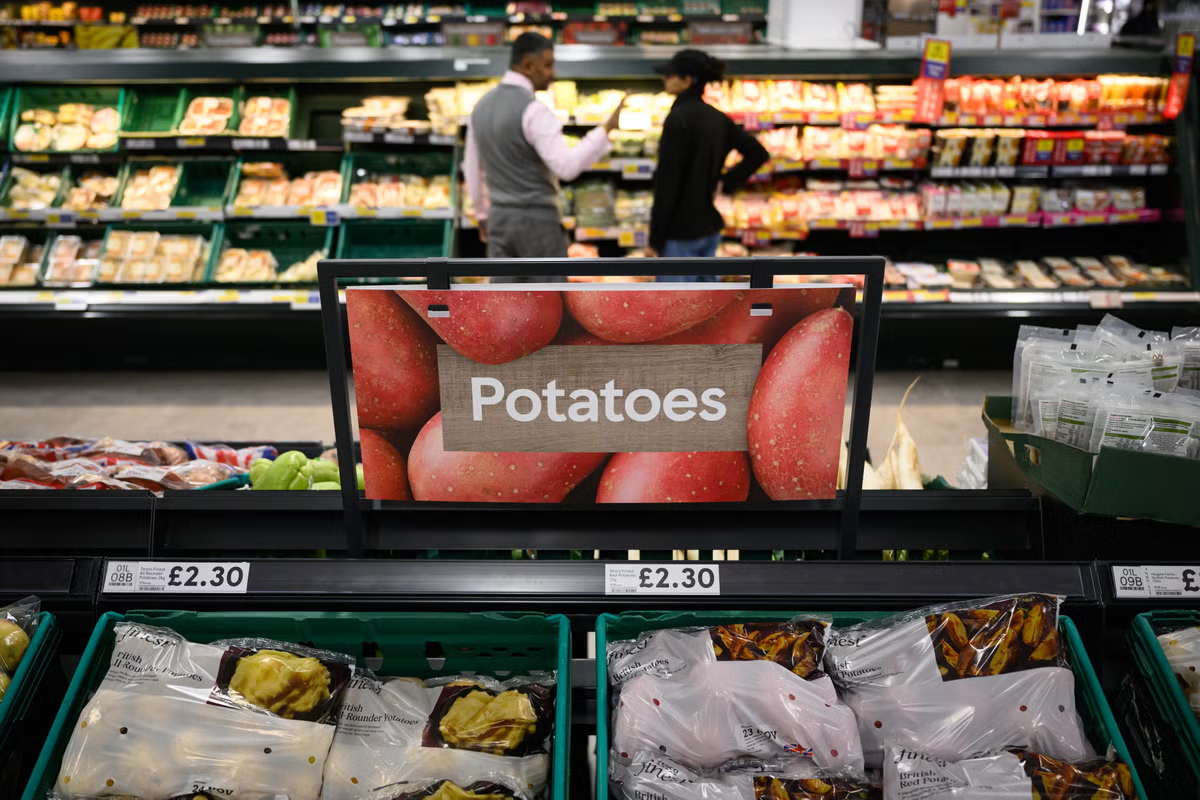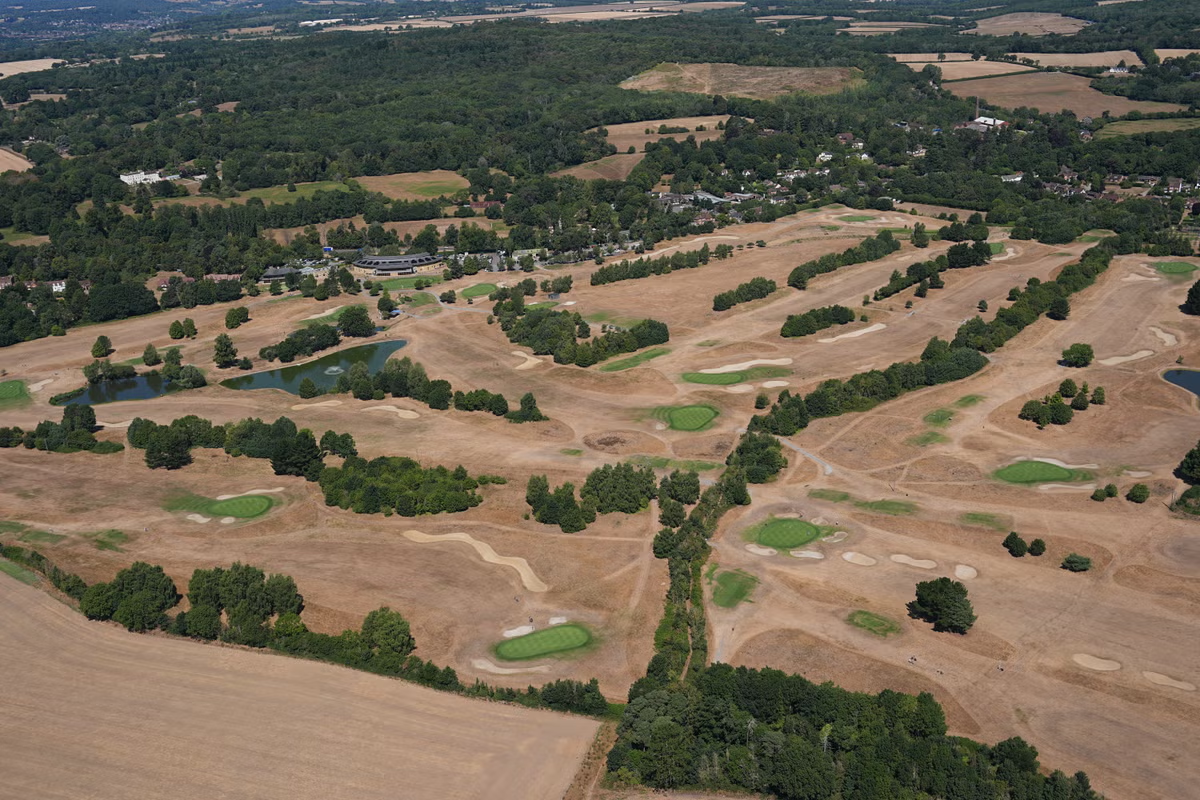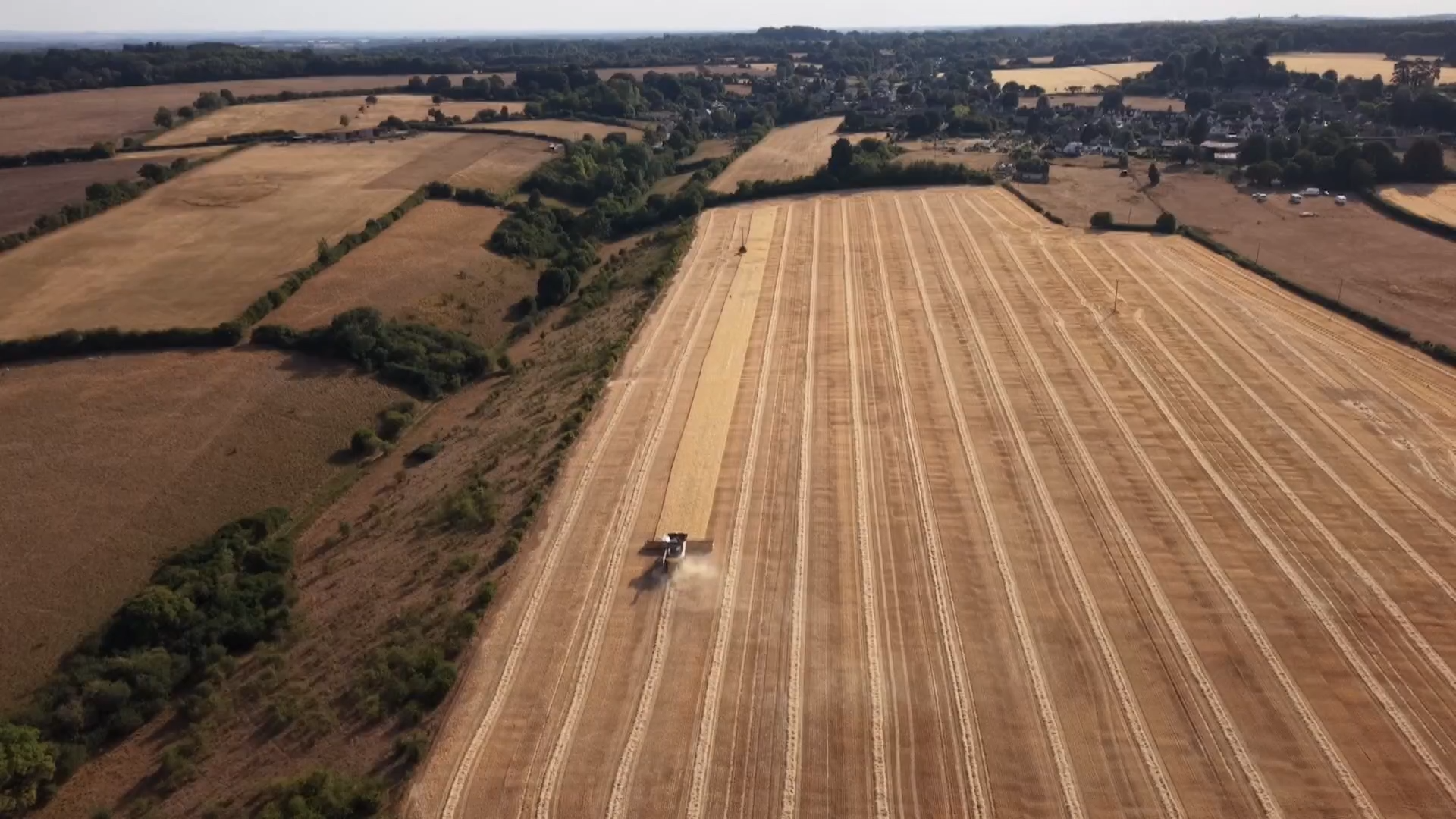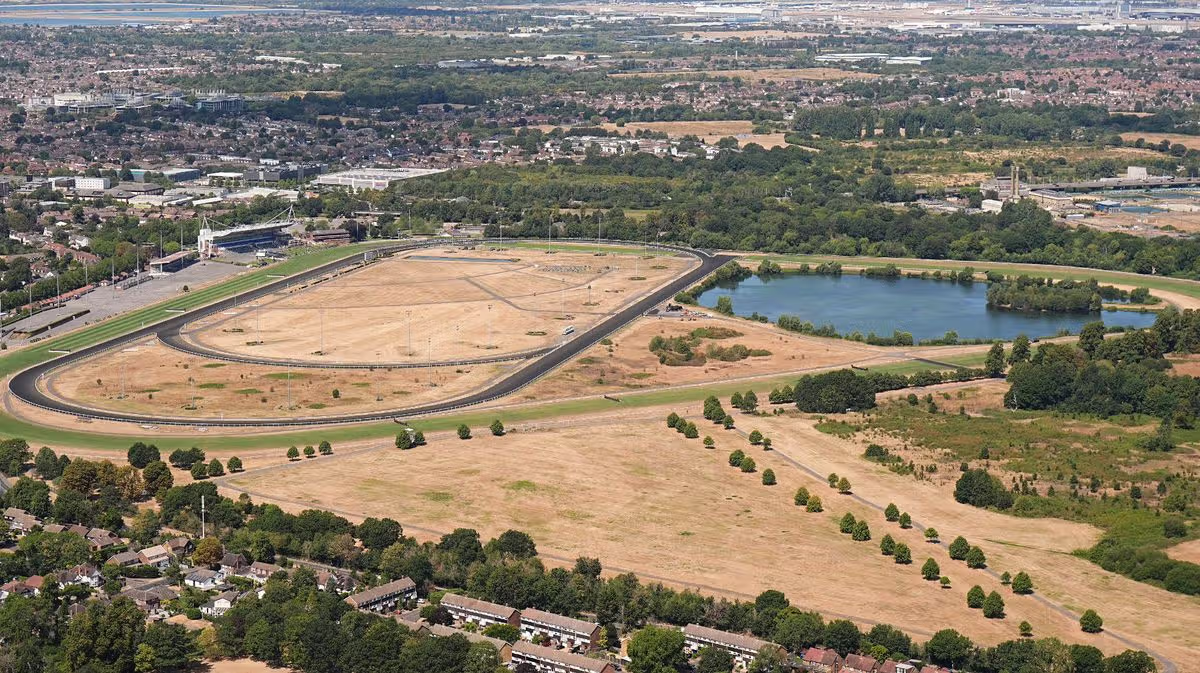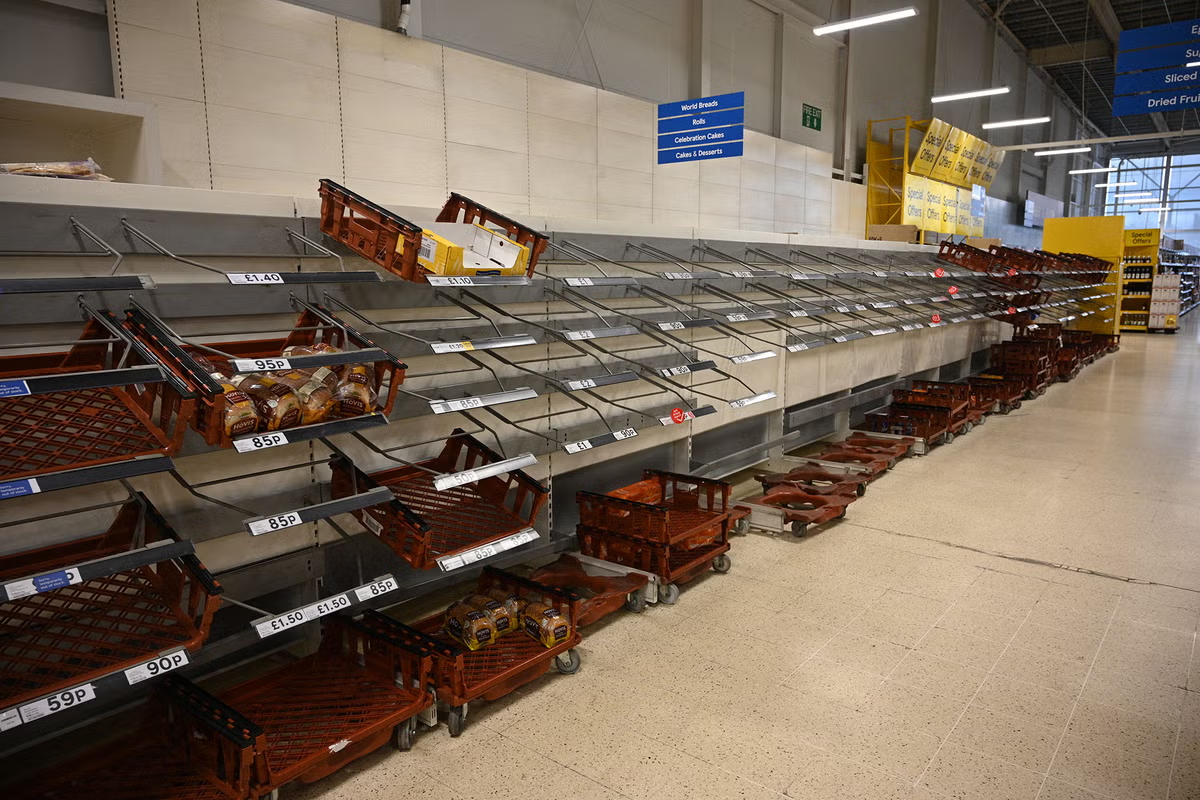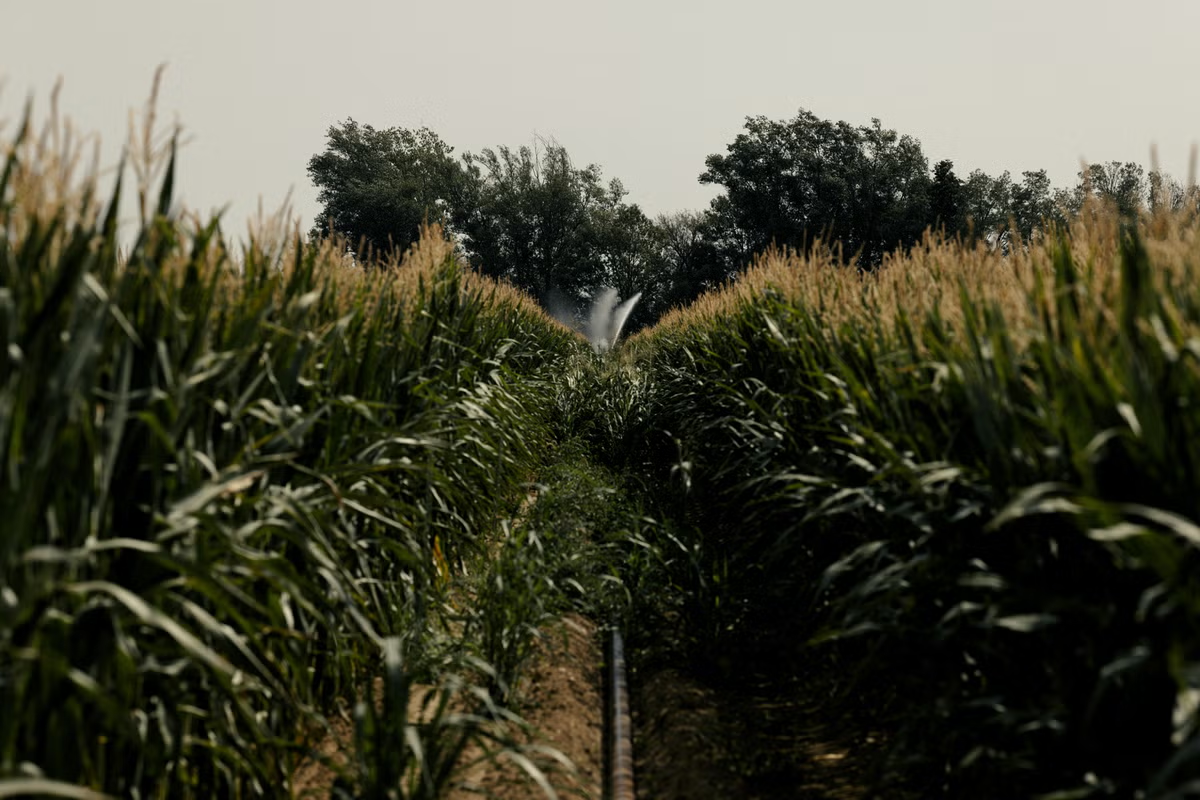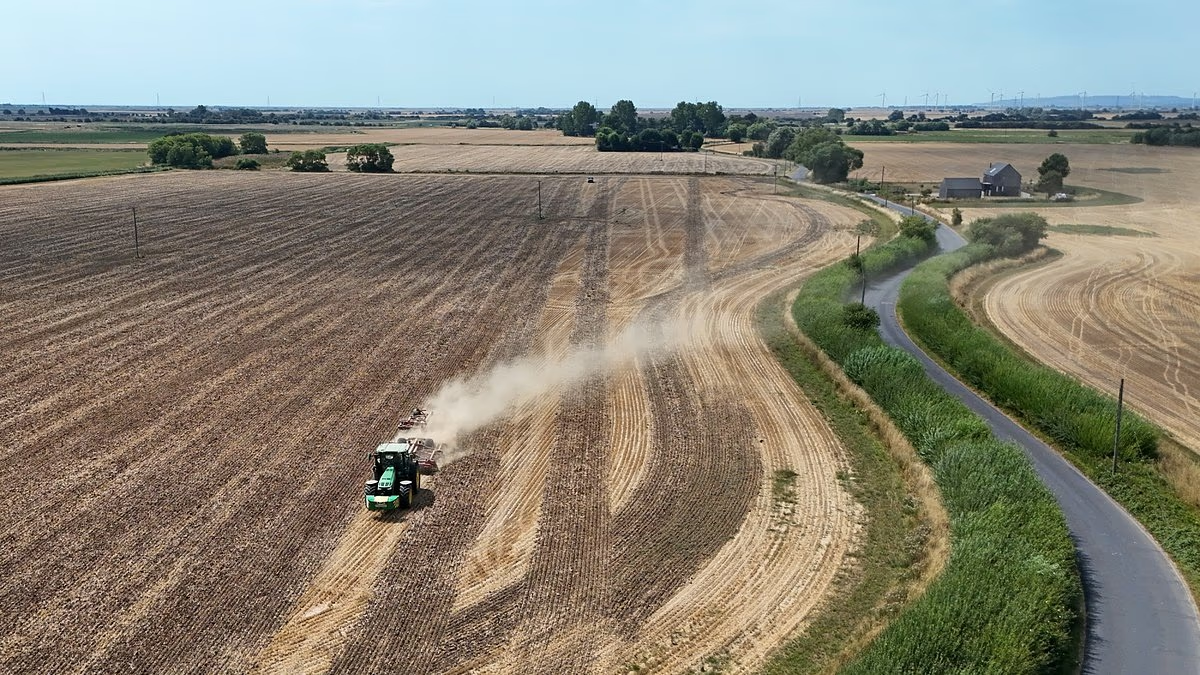
Britain's record-breaking heatwave and dry weather could lead to crop shortages, farmers warned today as some areas entered a 48th consecutive day without rain.The National Farmers' Union said low rainfall and very hot weather have dried soil - with some farmers in drought-hit areas also now having water access restricted.Potatoes are particularly under threat because they stop growing in temperatures over 30C, with one farmer saying putting water on them was 'like watering a corpse'.Bramley apples are even being sprayed with 'suncream' to stop them scorching during the relentless heatwaves amid the country's third drought in five years.The UK is enduring its fifth heatwave of the year this week with UK Health Security Agency amber heat health alerts in place for the South and East until tomorrow.Another record tumbled yesterday when the temperature reached 33.5C in Wisley in Surrey, marking the 20th day of 2026 when 32C or higher was recorded in the UK.Wisley is also the UK's driest spot with 47 days in a row without measurable rainfall up to yesterday, while some other areas have had almost zero rain in June and July.Despite some heavy rain and thunderstorms hitting northern England and Scotland today, the latest hot weather in the South is another blow to British farming. A tractor tows a disc harrow across a dry field during the heat near Ashford in Kent yesterday Drivers on the M80 near Cumbernauld in North Lanarkshire endure heavy rain this morning Beachgoers shelter from the rain during a downpour today in Tynemouth, North Tyneside The Elveden Estate reservoir in Suffolk is running low of water less than a year after being built A wildfire on the cliffs at Basset's Cove between Portreath and Gwithian in Cornwall yesterday Farmer Clive Baxter is applying 'suncream' to apples at Amsbury Farm in Maidstone, KentFarming leaders have warned it is 'one of the most severe droughts many farmers and growers have lived through', with poor yields, struggles to access water for fruit and vegetables and livestock keepers using winter feed for their animals.The industry has already been affected this year by winter flooding which made planting difficult – and the NFU this week demanded urgent action to secure water supplies for homegrown food production.NFU president Tom Bradshaw said the ongoing hot and dry conditions could lead to food shortages.He told BBC Radio 4 that Prime Minister Andy Burnham should give farmers tax breaks for water storage systems on their land to prepare for future hot weather.Mr Bradshaw said: 'Those other countries around the world that we currently rely on to produce our food and vegetables, their climates are changing as well.'It does feel like there is going to be shortages of [food] products.'Wheat farmers have said their crop is half its normal height, and England is experiencing its earliest-ever harvest as farmers bid to salvage their lacklustre yield.Farmers are also warning that many of the countries the UK imports food from in Europe are also being hit by weather extremes and wildfires.Mr Bradshaw continued: 'This is one of the most severe droughts many farmers and growers have lived through.'Harvest yields are looking poor, farmers are struggling to access water to irrigate fruit and vegetables, and livestock farmers are having to use grass they cut this spring for their stores of winter feed for cattle as there's very little grass growing now.'If this summer teaches us anything, it is that we must prioritise food production. We can't produce food without water.'The NFU is calling for more flexible abstraction regimes so farmers can take and store water when it rains, and planning changes and financial support to make it easier to build on-farm reservoirs.Jim Wayman from 3Ms, an East Anglian potato-growing group which supplies major supermarkets, told The Telegraph: 'We've been chucking water on them, but in this heat they're not growing. It's like watering a corpse.'We're being accused of scaremongering, and the big retailers are saying their customers expect a certain standard of size, but we're saying we can't do it.'Cedric Porter, a potato market analyst, added that most of the crops had stopped growing and urged the public to 'eat your spuds while you can'.Meanwhile farmers in Kent have started spraying their Bramley crops with 'suncream' to stop the fruit scorching in the heat. UK weather in July: The records broken around the country Here are the key weather statistics for July 2026, including the records broken around the country.All figures are provisional and have been published by the Met Office.– EnglandEngland had its driest July since rainfall records began in 1836.Just 6.5mm of rain was measured across the month, or 10% of the long-term average for the month, less than half of the previous record of 13.4mm set in 1911.Southern England saw not only its driest July since data began but also its driest month ever recorded.Just 1.9mm of rain was measured across this part of the country, narrowly beating the previous record low of 2.0mm in February 1891.Some 19 counties recorded less than or equal to 1mm of rainfall in July: Berkshire, Dorset, East Riding of Yorkshire, East Sussex, Essex, Gloucestershire, Greater London, Herefordshire, Isle of Wight, Kent, Leicestershire, Lincolnshire, Northamptonshire, Nottinghamshire, Oxfordshire, Rutland, Surrey, Warwickshire and West Sussex.Last month was a double-record breaker for England, as the nation experienced its sunniest July as well as its driest.England clocked up 305.6 hours of sunshine across the month, surpassing the previous July record of 294.8 hours set in 1911.It was the sunniest ever calendar month in England.Met Office sunshine data begins in 1910.England saw its second warmest July on record, with a mean temperature of 19.2C, just below the previous high of 19.3C set in 2006.Southern England experienced its warmest July on record, with a mean temperature of 20.1C, beating the previous high of 19.8C in 2006.It is the first time in southern England that any month of the year has seen a mean temperature above 20C.Met Office temperature data starts in 1884.– WalesAs with England, last month was both the driest and sunniest July in Wales since respective records began.Wales had 9.3mm of rainfall across the month, or 9% of the long-term average, well below the previous record of 22.6mm set in 1911.There were 308.0 hours of sunshine, beating the previous record of 297.5 hours set in 1955.It was the sunniest ever calendar month in Wales.Wales also equalled its record for the highest mean temperature across the month, at 17.8C, matching the figure reached in 2006 and 1983.– Northern IrelandWhile no records were broken in Northern Ireland, last month ranks in the nation’s top 10 driest, warmest and sunniest Julys.It was the eighth driest July, with 26.9mm of rain across the month, or 30% of the long-term average.The driest July in Northern Ireland was recorded in 1898, when 15.8mm of rain was measured.Last month was Northern Ireland’s ninth sunniest July on record, with 194.2 hours across the month.The sunniest July since records began occurred in 1955, when 246.9 hours were measured.It was also Northern Ireland’s joint fourth warmest July, with a mean temperature across the month of 16.4C, matching the figure in 1983 and a little below the record high of 17.0C in 2013.– ScotlandScotland was the only nation not to trouble the record books last month.The nation received 72.0mm of rain in July, or 69% of the long-term average, along with 178.6 hours of sunshine, with a mean temperature of 14.5C.The driest July in Scotland was in 1863, with 24.4mm of rain; the sunniest July was in 1955, when 240.9 hours were measured; and the warmest July was in 2006, when the monthly mean temperature was 15.6C.– UKThe UK as a whole saw one record broken last month: it was the sunniest July since data began, with an average of 258.7 hours across the country, surpassing the previous high of 256.9 hours in 1955.It was the third driest July on record in the UK, with 28.9mm of rainfall, or 35% of the long-term average for the month.Only 1863 (27.8mm) and 1868 (23.2mm) saw lower totals for the month.The mean temperature across the UK in July was 17.4C, just behind the record high for the month of 17.8C set in 2006. Clive Baxter, who farms around 200 acres of fruit trees, told the BBC: 'Everything is suffering now in the heatwaves.'He said that Bramley apples were 'very susceptible to sunburn' which is why he has been spraying them with the protective coating made of clay.During the heatwave in early July, Maidstone, where Amsbury Farm is based, regularly had temperatures reach 33C.Around 23million people in England and Wales have been hit by hosepipe bans this summer – including Mr Baxter's area.He explained that English apples like Bramleys and Coxes can't handle the heat. Once it hits 30C with no wind, he says 'the juice starts to boil in the apples and cooks the fruit,' ruining the crop.The heatwave has also forced Mr Baxter to thin out his orchards, as stressed trees churn out smaller, fewer apples.During the latest heatwave, the UK Health Security Agency has amber heat health alerts in place for the East Midlands, East of England, South East and London until tomorrow morning.There are also yellow heat health alerts for the North West, South West, West Midlands, and Yorkshire and The Humber, as the agency warned the latest high temperatures could put extra pressure on the NHS, with more vulnerable people likely to require medical treatment.Outbreaks of rain and showers are forecast today in Northern Ireland, Scotland, western England and Wales – but the Met Office has forecast a dry day for much of the Midlands, the East and South-East of England with warm sunshine and high humidity.Temperatures are expected to decrease gradually in the second half of the week, and there is some more unsettled weather forecast for parts of the UK including a yellow warning for thunderstorms in Northern Ireland.But the South East will continue to see little in the way of desperately needed rain, the Met Office has warned.July was southern England's driest month ever recorded, with the whole of Wales and half of England plunged into drought.In July, 19 counties across England recorded effectively no rainfall – 1mm or less – across the whole of the month, the Met Office figures show.England as a whole had just a tenth of the average rainfall for the month, while Wales saw just 9 per cent of the average, with both countries seeing less than half of the rainfall in the previous record dry July in 1911.Southern England also had its hottest July on record, while it was the joint hottest July on record for Wales, and the UK and England had their second hottest July, the provisional figures show.And in an exceptionally sunny month, the UK, England and Wales have all recorded their sunniest Julys on record – and for England and Wales it was the sunniest calendar month ever observed, the Met Office said.The summer of extreme weather has seen two record-breaking heatwaves, in May and June, that led to more than 2,800 excess deaths, and two more heatwaves in July which have fuelled drought and wildfires.The fifth heatwave was confirmed yesterday as Pershore in Worcestershire and Cavendish in Suffolk both hit three consecutive days of threshold temperatures.More areas of the South and East are expected to meet the criteria this afternoon.In Suffolk, a new £3million mega-reservoir which can hold 200 Olympic-sized swimming pools of water has run out - less than a year after being built.The basin on the 22,500-acre Elveden Estate, in Suffolk, was built in October last year to protect its large vegetable and cereal operation during dry periods.But the reservoir has almost run completely dry - despite storing up to 500,000 cubic metres of water.Managing director of Elveden Estate, Andrew Blenkiron, said it was 'going to be tight' to support 10,000 acres of farmland.He said: 'This year has been incredibly testing. We're used to dealing with a lack of water and whatever Mother Nature throws at us.'That being said, one of the reasons for this new reservoir was to be able to cope with these incredibly long, hot, dry summers.'This is the third year out of five we've experienced these conditions and the big danger is if we have a dry winter, we've got some really serious problems next year.'The Elveden Estate is described as the largest ring-fenced arable farm in lowland Britain and has felt the full impact of the drought and heatwaves.The estate finished its cereal harvest in July and winter barley was 30 per cent down on average.Elveden, which primarily produces onions, and potatoes and carrots for McDonald's, has only seen a few millimetres of rainfall in recent months.The site is home to three reservoirs but the other two are down to their last 15 per cent of capacity and the estate is relying on their groundwater boreholes.Mr Blenkiron added: 'Those people who have put so much effort into irrigating crops deserve medals. It's been flat out here for almost four months now, with only a couple of days off from watering in early June.'It really is going to take a lot of rain to make any significant difference. People say we can import food from around the world but because of the El Nino event, we could see impact on crops across the globe in future.'Elsewhere in Suffolk, firefighters remained at the scene of a heathland blaze in Dunwich yesterday; while crews declared a major incident as they tackled a huge wildfire in the Rhondda valley in South Wales.Drone footage showed blackened ground and smoke billowing metres into the air over the valley, where South Wales Fire and Rescue Service said the fire had affected 150 hectares of land, including forest, scrubland and vegetation.A wildfire also broke out yesterday afternoon in Cornwall on the cliffs at Basset's Cove between Portreath and Gwithian.Separately, firefighters tackling a weeks-long wildfire in the Cairngorms National Park said that smoke from the blaze was travelling in the direction of Aviemore. People in the area who could smell smoke were advised to close windows and doors.In London, park chiefs are urging people to enjoy the capital's open spaces safely, by keeping out of ponds, lakes and reservoirs with no lifeguards, never lighting barbecues or open fires, disposing of cigarettes safely, carrying water and staying in the shade during the heat of the day.Helen Wakeham, chairwoman of the National Drought Group, said: 'Dry weather depletes our water, while the hot conditions mean we use more of it.'This is a difficult combination, and we are seeing the effects on our farmers, our wildlife, and the amount available for public and business use.'All sectors are taking action, and we are grateful to the public for following the restrictions, where in place, to make sure there is enough water for everyone this summer.'We want everyone to stay safe and hydrated during the hot weather but every drop we can save is a drop more for nature and agriculture.'
Fears of crop shortages as record-breaking drought continues
The National Farmers' Union said low rainfall and very hot weather have dried soil - with some farmers in drought-hit areas also now having water access restricted.
2,488 words~11 min read