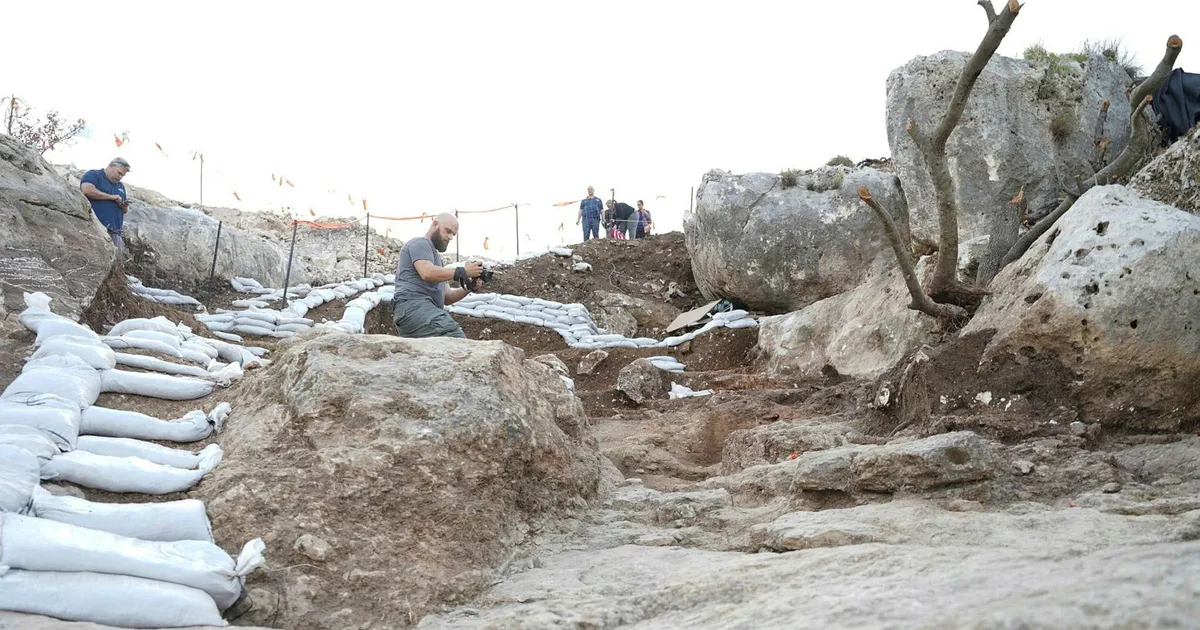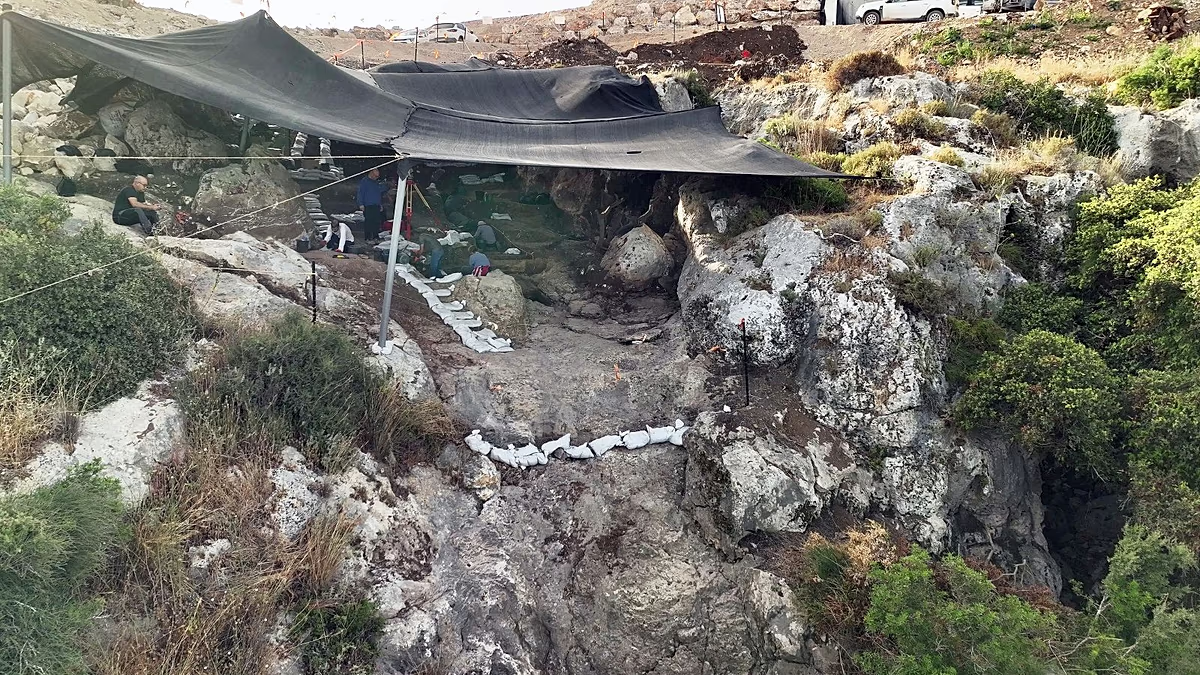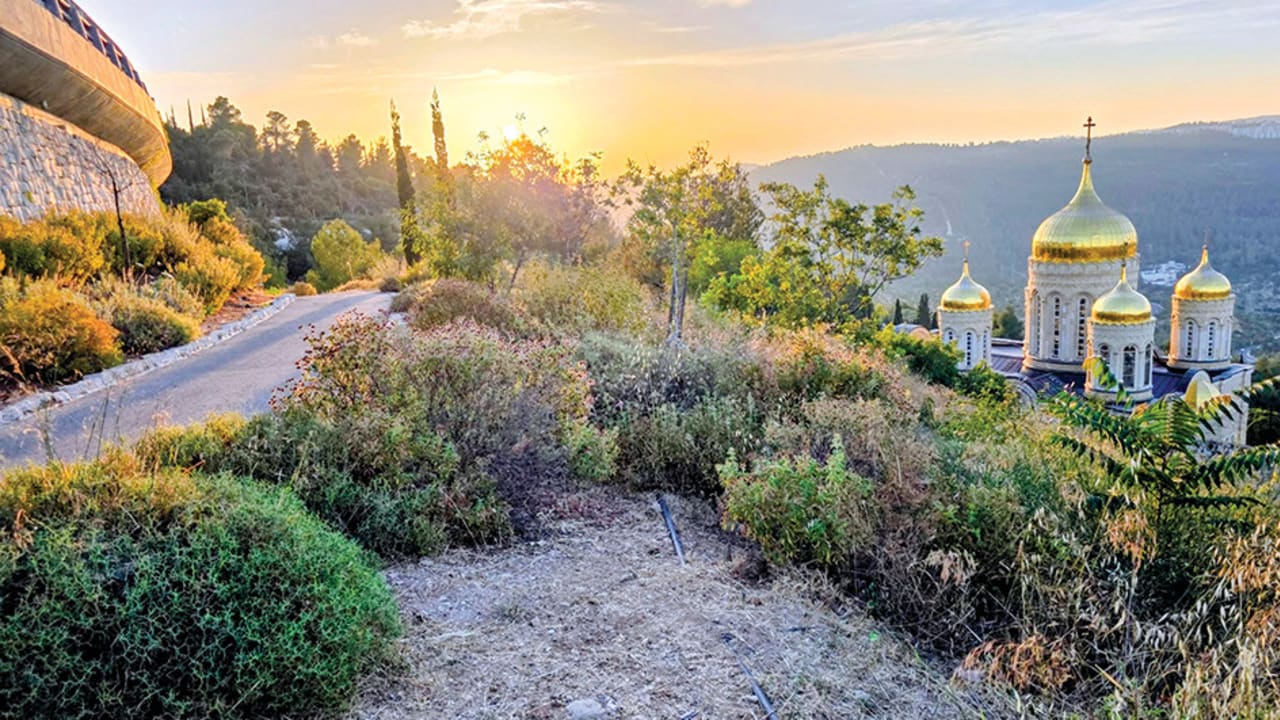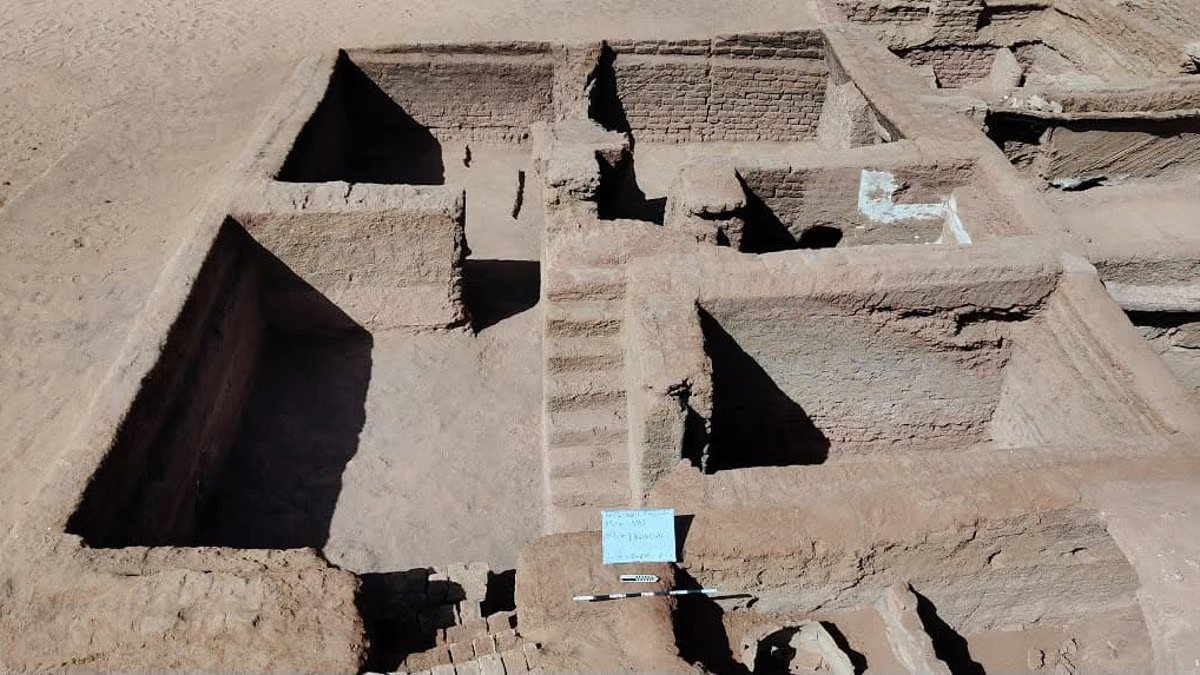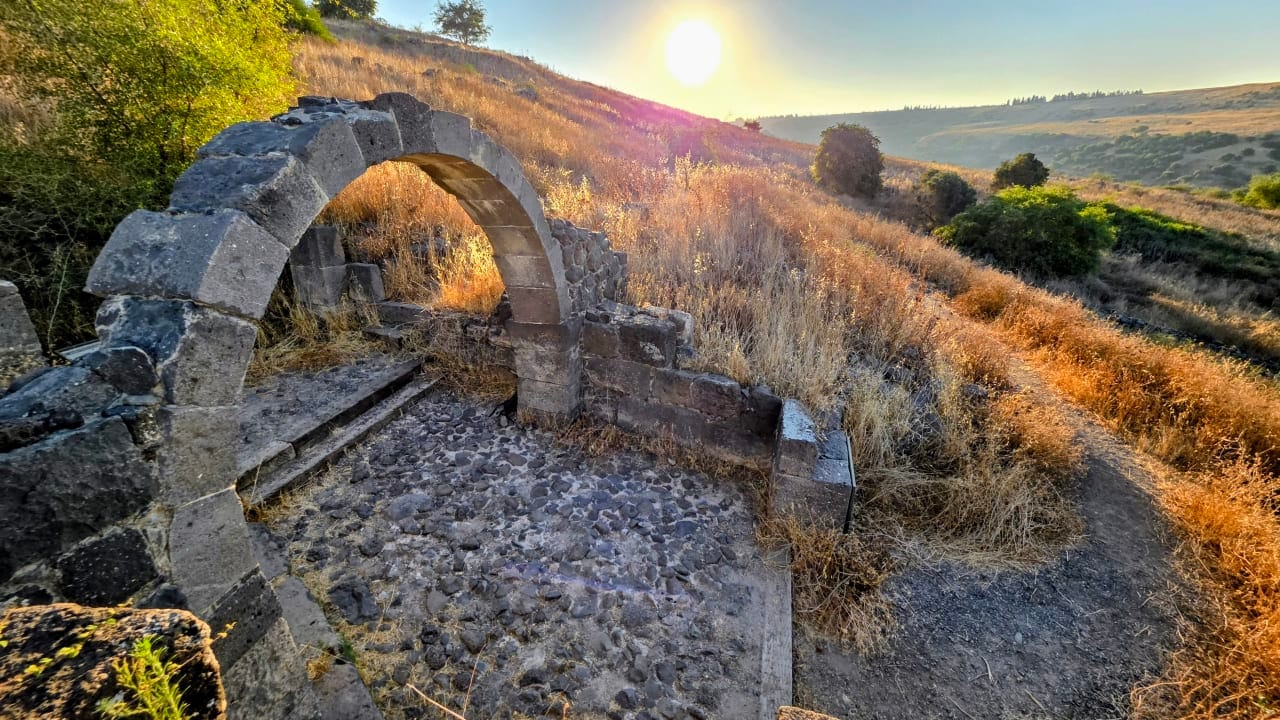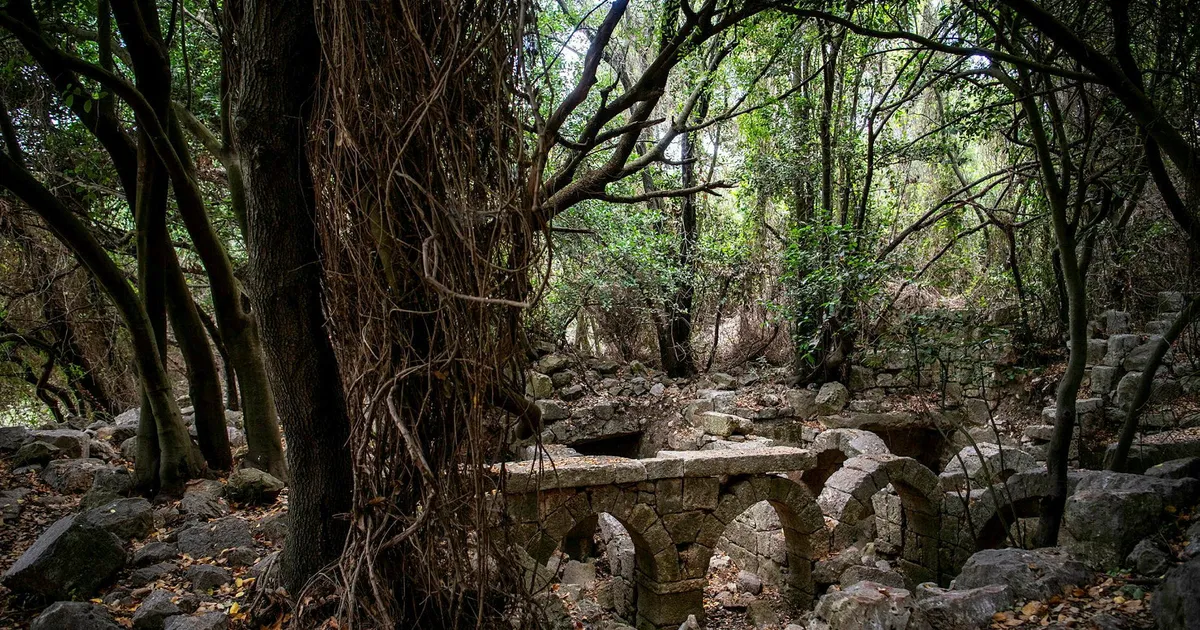
Hidden beneath a thick canopy in the western Galilee, Khirbet Tzonam, once a Byzantine town, has amazing stone arches, courtyards and ruins – and still feels like a discovery. For nowThe thought that keeps returning is: Where are the people who once lived here? Where did they go? How did a settlement that once flourished end up abandoned and swallowed by vegetation? Did they, too, believe everything was permanent, that it would last forever? They had shade and water, homes and a magnificent view – so what went wrong? Khirbet Tzonam is a wonderful place precisely because it exists and does not exist. It's there, but like a ghost. There are magnificent stone arches, houses, courtyards and ruins, but it takes imagination to connect the scattered pieces into a city. The best news from this visit is that all the "threats" to regulate, preserve and develop the site have yet to materialize. In previous articles, the prospect of rehabilitation and preservation loomed over the place. The constant fear is that yet another site, which everyone loves precisely because it feels hidden or "lost," will lose that quality – that it will be discovered, marked, signposted, perhaps even given a formal entrance. Maybe there will be a short animated video, too. So far, thankfully, there's no sign of any of that. The best news from this visit is that all the "threats" to regulate, preserve and develop the site have yet to materialize. Credit: Gil EliyahuThe best news from this visit is that all the "threats" to regulate, preserve and develop the site have yet to materialize. Credit: Gil EliyahuSeven years ago, a senior official at Keren Kayemeth LeIsrael (KKL), also known as the Jewish National Fund (JNF), told me: "We will do our best to maintain the balance between the site's unique character and the hikers." So far, nothing has been done, and the balance between the site and its visitors seems just about perfect. This week, KKL announced that work to prepare the site for visitors is expected to be completed in about two years. The path from the parking lot to the 1,500-year-old settlement winds through dense vegetation but is not signposted. The walk is short – only about 300 meters (less than 1,000 feet). Moments after leaving the parking area, we were already walking beneath the trees, nibbling on carobs. The thick greenery is the site's greatest charm. It makes everything you see feel like a discovery. The path from the parking lot to the 1,500-year-old settlement winds through dense vegetation but is not signposted. Credit: Gil EliyahuThe path from the parking lot to the 1,500-year-old settlement winds through dense vegetation but is not signposted. Credit: Gil Eliyahu Credit: Gil EliyahuYour eyes gradually adjust to the shade. First a cistern appears beside the path, then a few hewn stones, then a collapsed wall and a small water reservoir. After a few minutes, you reach a sight that feels dreamlike every time. At the heart of Khirbet Tzonam lies a vast water reservoir supported by columns, stone arches and massive beams. Its walls are plastered, and it is tempting to imagine an underground palace once stood here – but it is "only" a water reservoir. Around it are the remains of a Byzantine church, an olive press, numerous structures hidden among the vegetation, the remains of a Mamluk mosque and pottery shards dating to the Roman period. Credit: Gil Eliyahu Credit: Gil EliyahuKhirbet Tzonam was once a Byzantine town. Archaeologist Yohanan Aharoni surveyed the site in the 1950s and concluded that it had been inhabited from the Roman period through the early Muslim period. The fact that it has remained hidden ever since is a reminder of just how archaeologically rich this country is. Only millionaires, with countless archaeological sites scattered at their feet, can afford to overlook a place like this. The village of Iqrit, about 1.5 kilometers (roughly a mile) north of Khirbet Tzonam, was captured by the IDF in October 1948. Its residents were expelled about a month later after being promised the evacuation was temporary and that they would soon be allowed to return. Some were displaced to Lebanon, others to the village of al-Rama. Their efforts to hold the authorities to that promise ultimately came to nothing. Credit: Gil EliyahuThe moshavim of Shomera and Even Menachem were established on land between Iqrit and the village of Tarbikha. Moshav Goren and the community of Gornot HaGalil were also built on Iqrit's lands. Today, the Greek Catholic church is the only structure that remains from the village. Directions: Enter "Khirbet Tzonam" in Waze. The site is about one kilometer south of Even Menachem and roughly 3 kilometers from the Lebanese border. According to the IDF Spokesperson's Unit, there is no security restriction on visiting the site. It is clean, but the trail is not suitable for strollers.
The ancient city in Israel that survived by being forgotten
Hidden beneath a thick canopy in the western Galilee, Khirbet Tzonam, once a Byzantine town, has amazing stone arches, courtyards and ruins – and still feels like a discovery. For now
812 words~4 min read