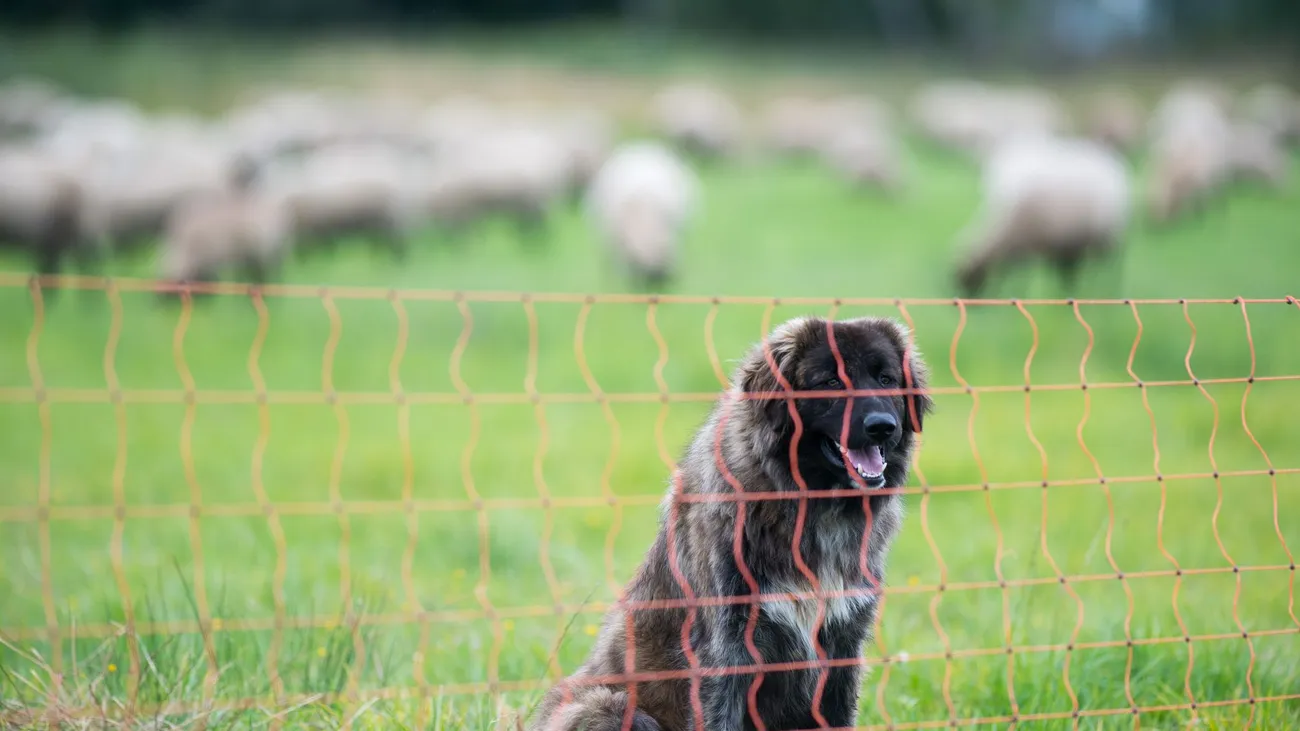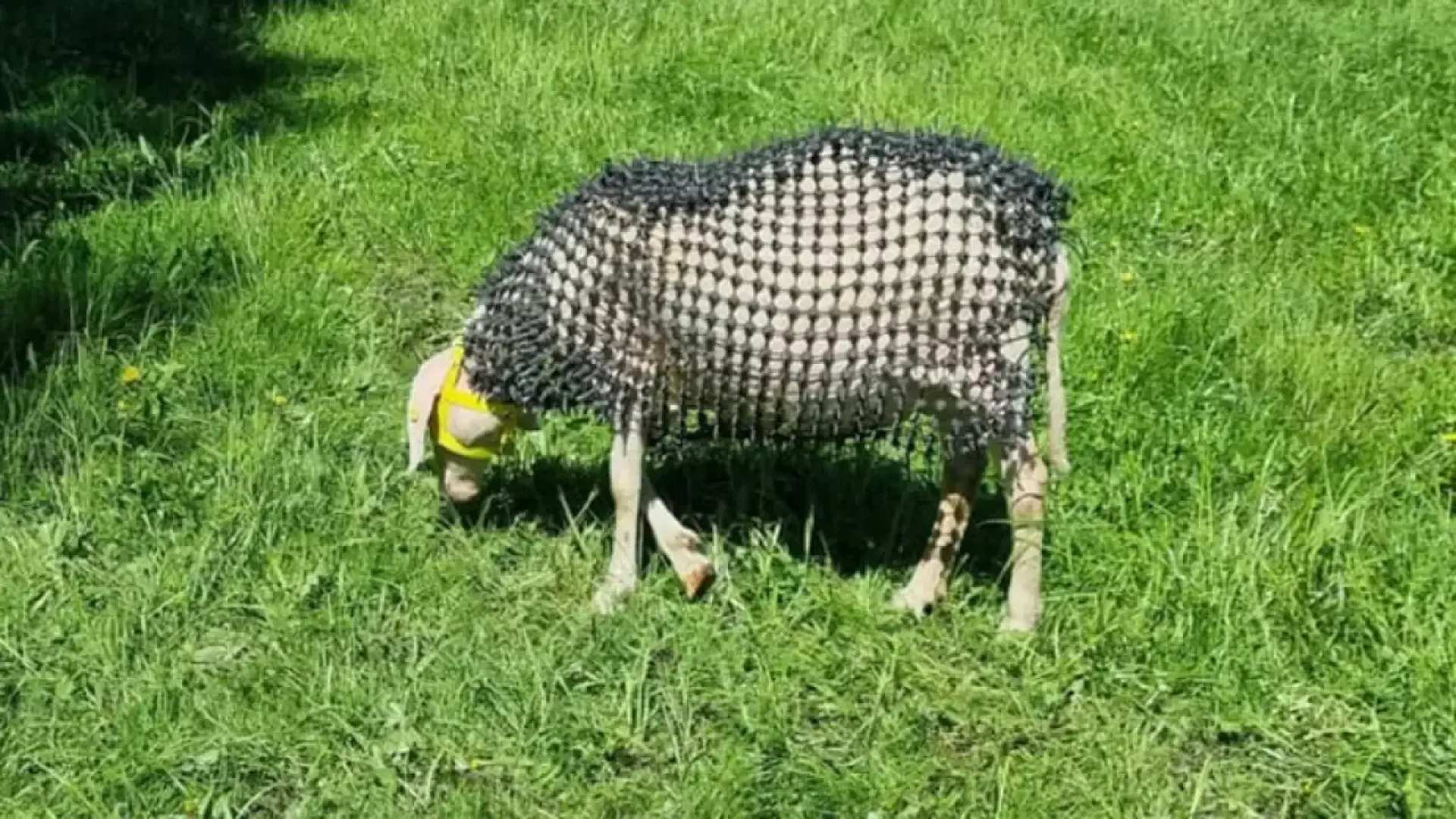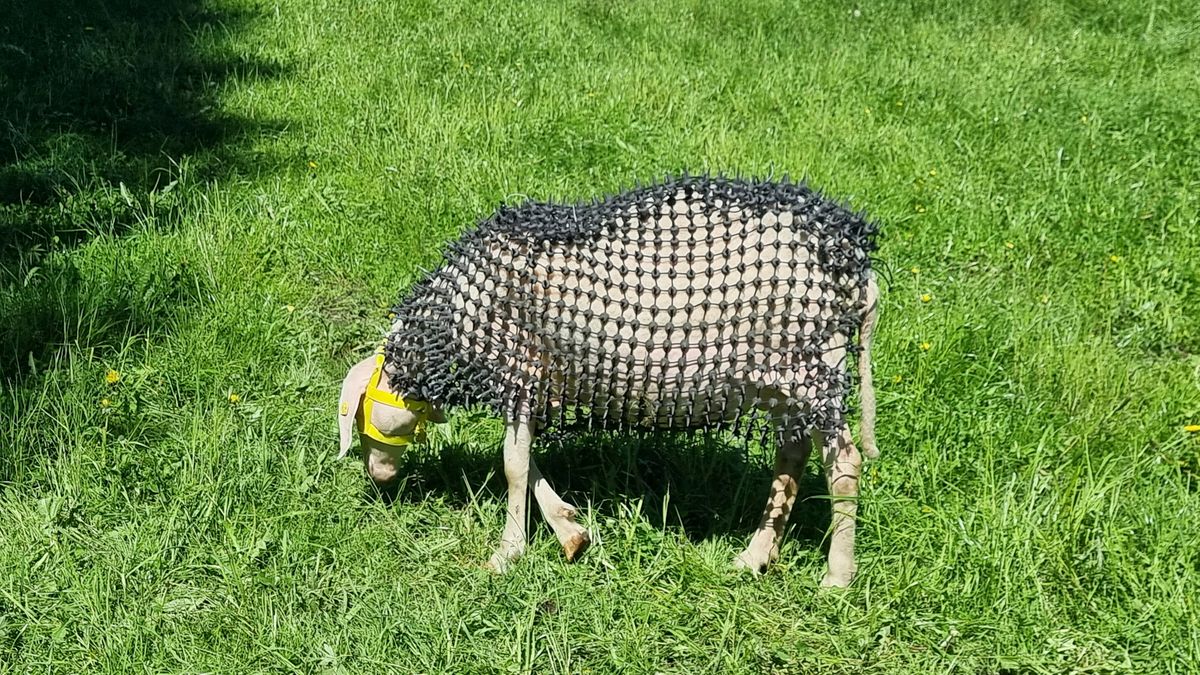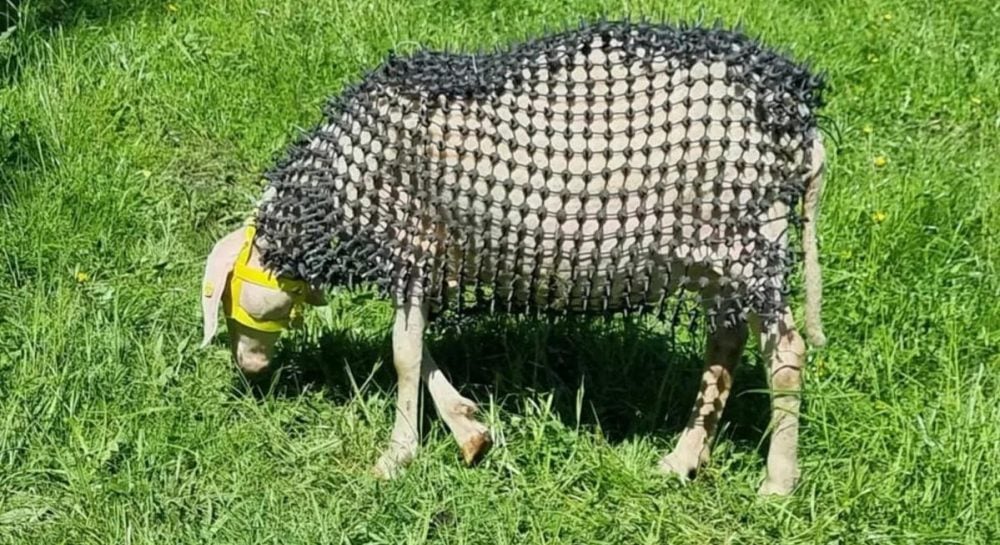
There have been no controlled field tests involving wolf attacks, which means there is currently no scientific evidence showing that the armor can successfully prevent predation | Wikimedia CommonsAustrian inventor Rudolf Schaubach invented a lightweight plastic vest covered with outward-facing spikes for his sheep, and hopes it could become a new line of defense against wolves. It was developed in Villach, southern Austria, and resembles a flexible suit of armor designed to shield a sheep’s neck, back, and flanks, the areas wolves typically target during an attack. The concept has attracted widespread attention across Austria, where wolf sightings and livestock losses have become an increasingly contentious issue. According to ORF Kärnten, Schaubach believes the armor could discourage predators by making it difficult to grip or bite vulnerable parts of the animal without causing serious injury to the wolf itself.There have been no controlled field tests involving wolf attacks, which means there is currently no scientific evidence showing that the armor can successfully prevent predation | Wikimedia CommonsA modern version of chain mail for livestockThe protective vest is made from lightweight plastic mesh reinforced with rows of blunt spikes that project outward from the surface. The material is intended to remain flexible enough for sheep to graze and move normally while adding a physical barrier around the body, unlike rigid armor. Schaubach says the design was inspired by medieval chain mail, and was adapted with modern materials to reduce weight and improve comfort. Early demonstrations have shown sheep wearing the vest without obvious difficulty, but the invention has yet to face the main threat it was built for. There have been no controlled field tests involving wolf attacks, which means there is currently no scientific evidence showing that the armor can successfully prevent predation. Schaubach has expressed interest in arranging such trials, and argues that livestock owners need additional options as wolves continue returning to parts of Central Europe.A lamb being attacked by coyotes with a bite to the throat | Wikimedia CommonsExperts question whether the idea is practicalThere have been mixed reactions from veterinarians, wildlife specialists and farming organizations regarding this particular invention. Some animal welfare advocates worry that the additional weight, retention of heat or snagging risk could create new problems for sheep grazing in rough terrain, while others question whether frightened animals would react naturally while wearing protective equipment during an actual predator encounter. Agricultural officials have also stated that modern livestock protection already relies on measures with documented effectiveness, including electric fencing, livestock guardian dogs and supervised grazing. According to ORF Salzburg, several experts argue that any new protective device should undergo independent scientific testing before being promoted as a solution for wolf attacks, particularly because predator behavior can vary considerably between individual animals and environments.Encounters with livestock have increased in several countries as wolf populations recover after decades of legal protection, which has reignited disagreements between conservation groups and rural communities. Farmers argue that existing protective measures are not always practical in mountainous landscapes or on remote alpine pastures where sheep roam freely during the summer. On the other hand, conservationists counter that wolves play an important ecological role and that coexistence depends on proven non-lethal management strategies. Schaubach’s armored sheep may never become a common sight in European fields, but the invention has indeed resulted in drawing attention to the growing challenge of protecting livestock while managing the return of one of the continent’s most controversial predators. Whether the unusual vest eventually proves effective will depend not on its appearance, but on the results of carefully monitored field trials that have yet to take place.
An Austrian inventor has built armor for sheep to protect them from wolves, but the idea is dividing farmers and animal experts
Austrian inventor Rudolf Schaubach invented a lightweight plastic vest covered with outward-facing spikes for his sheep, and hopes it could become a new line of defense against wolves. It was developed in Villach, southern Austria, and resembles a flexible suit of armor designed to shield a sheep’s neck, back, and flanks, the areas wolves typically target during an attack.
600 words~3 min read