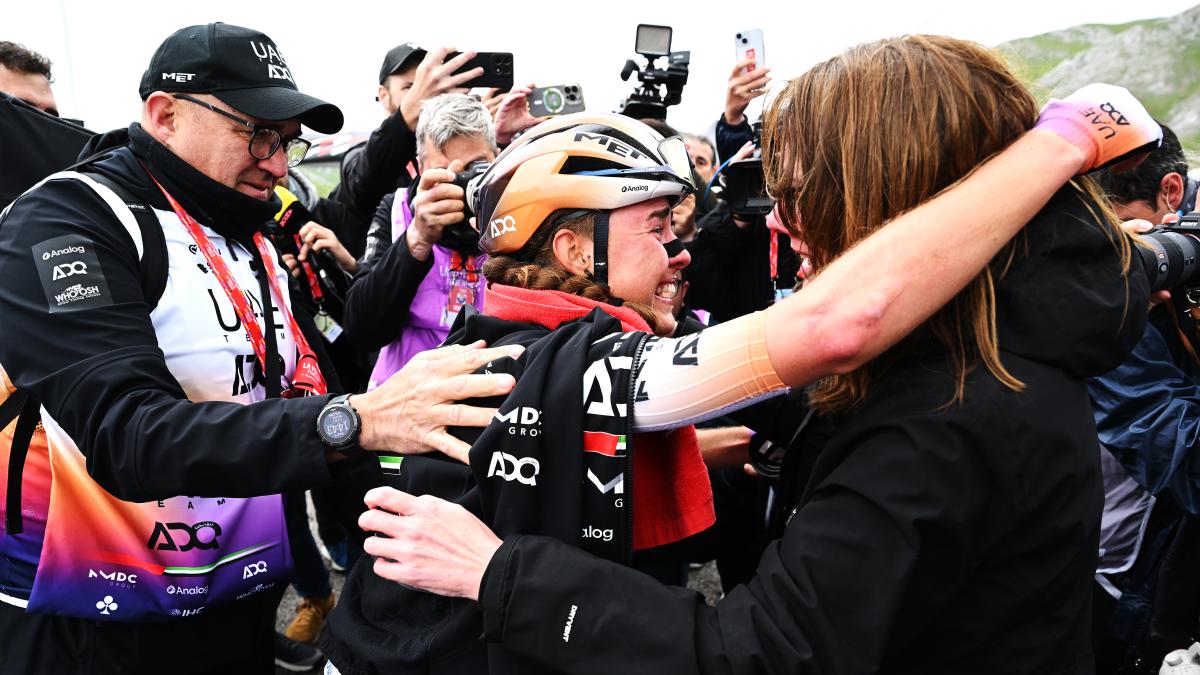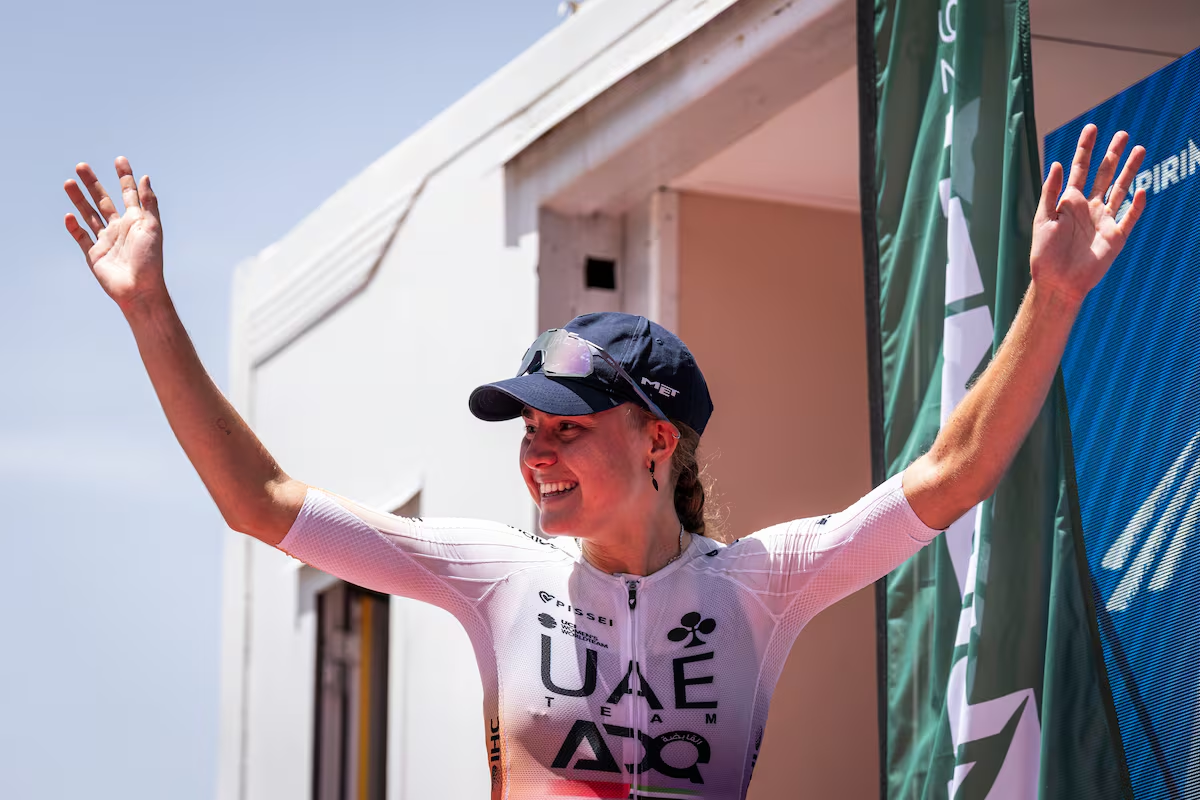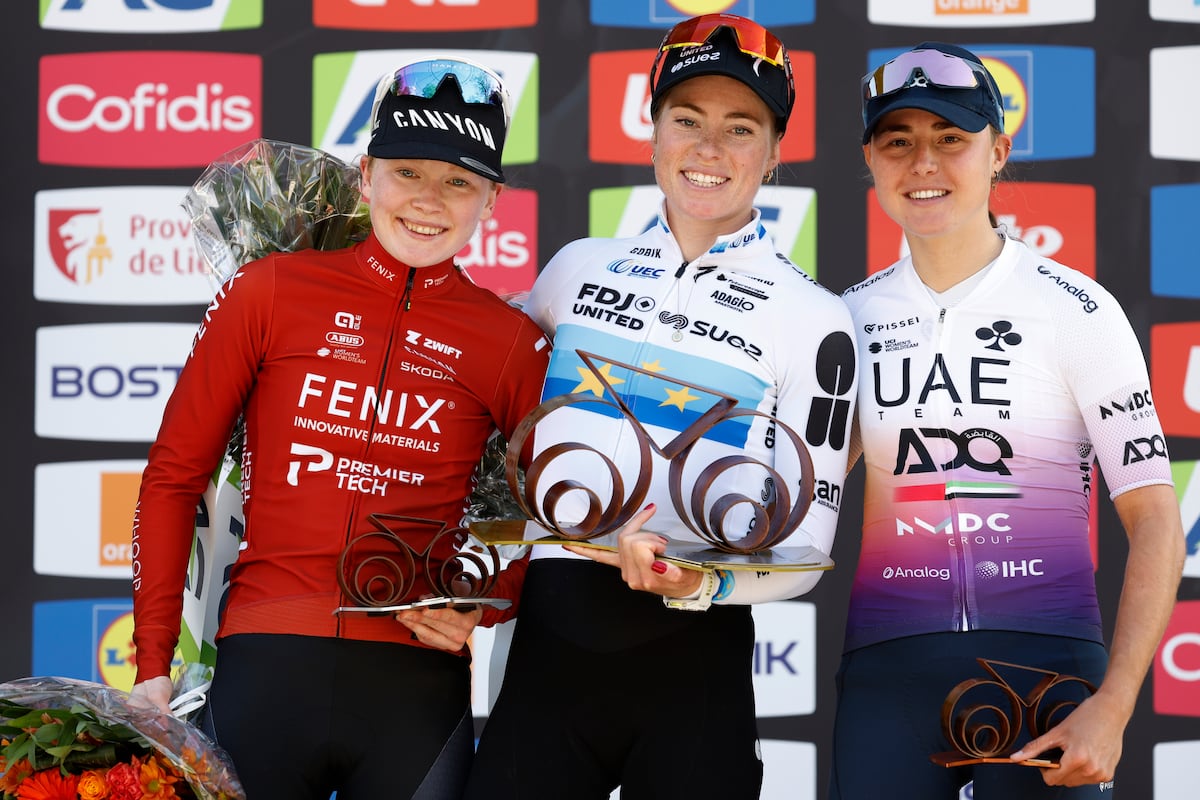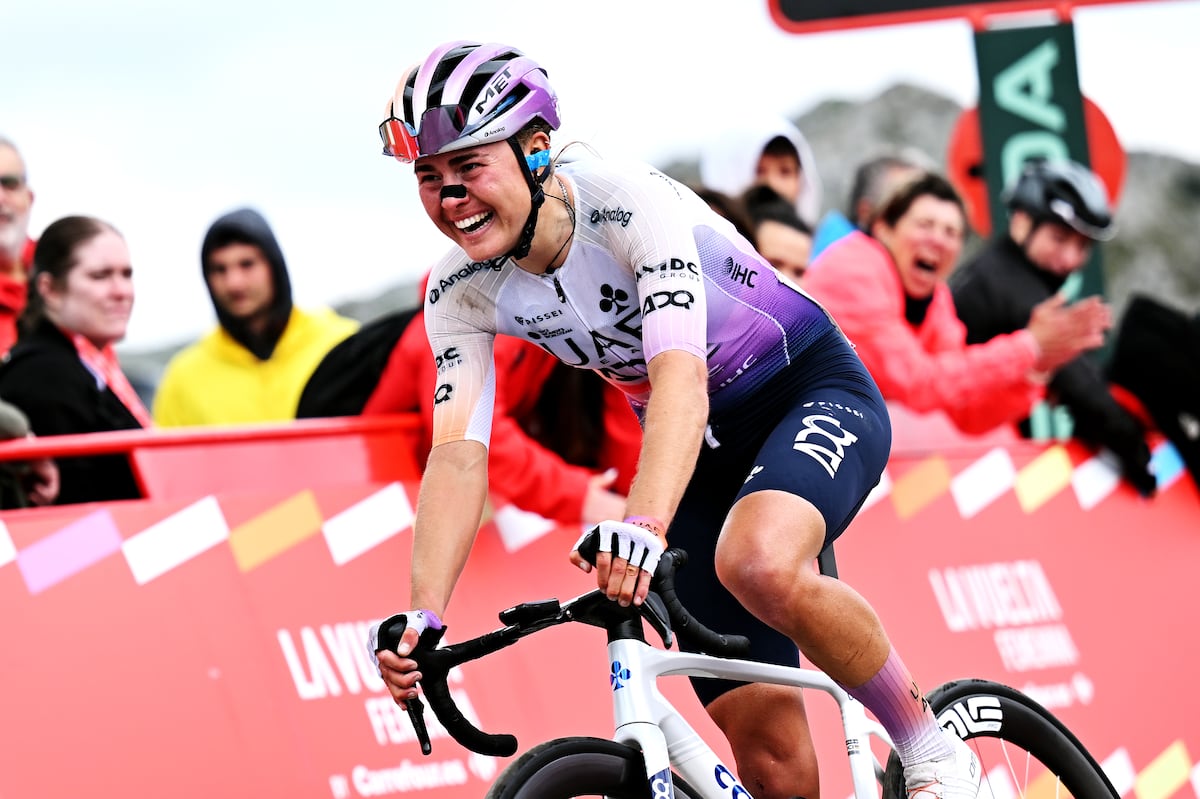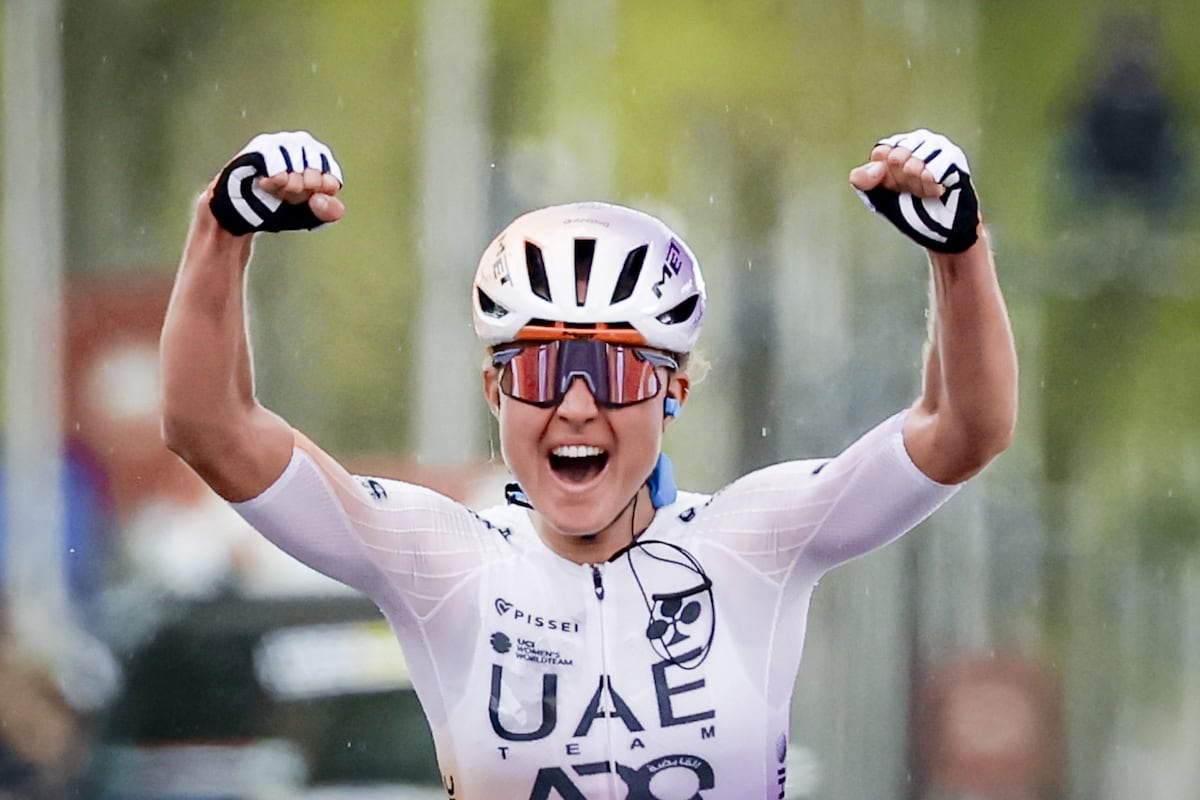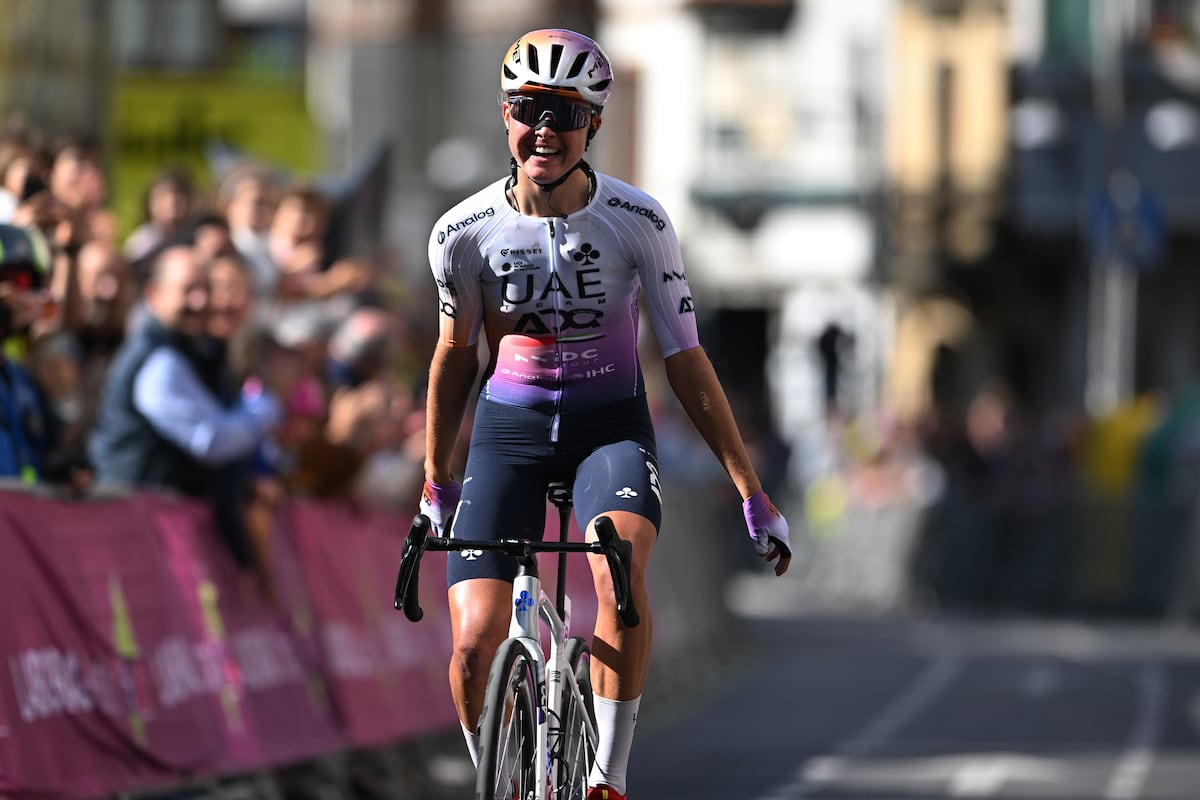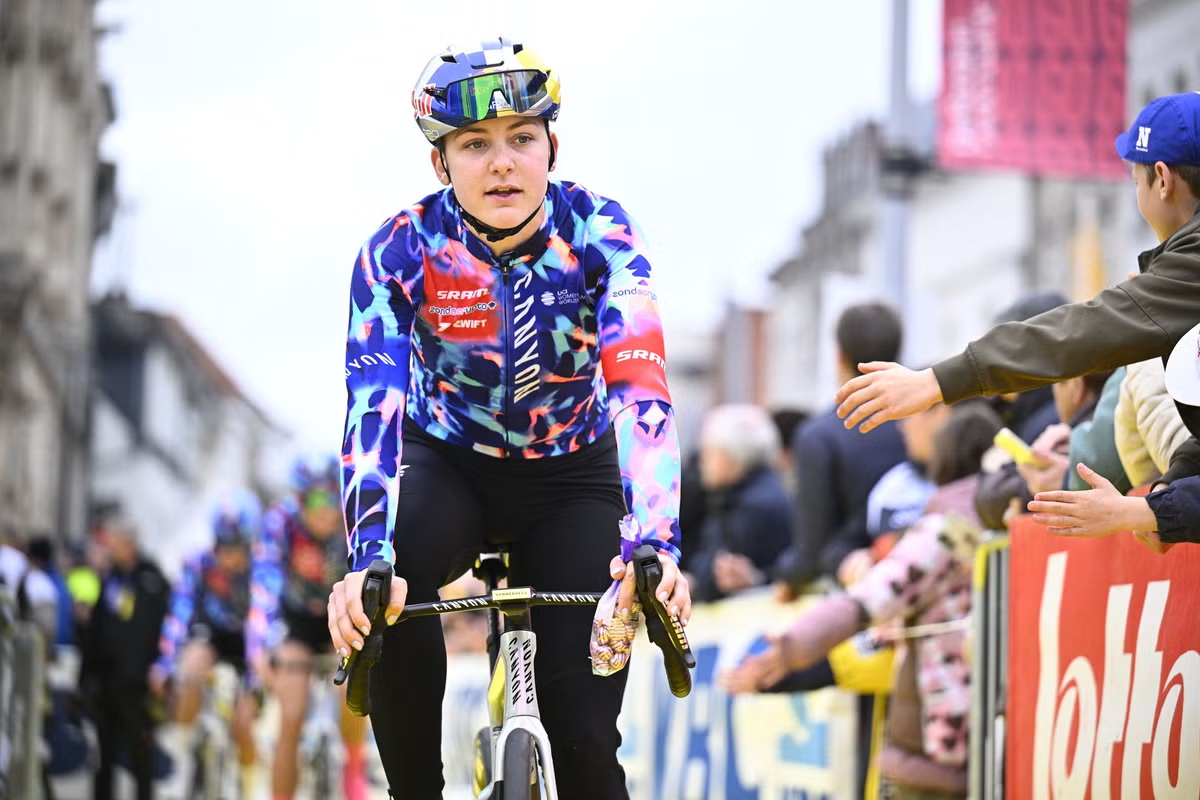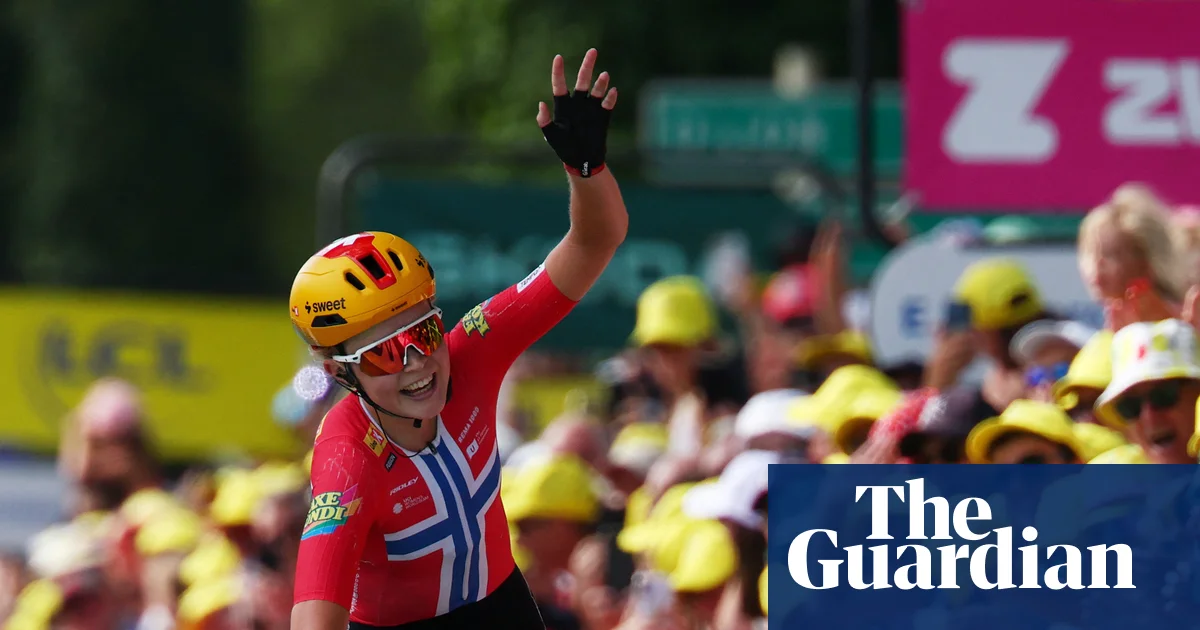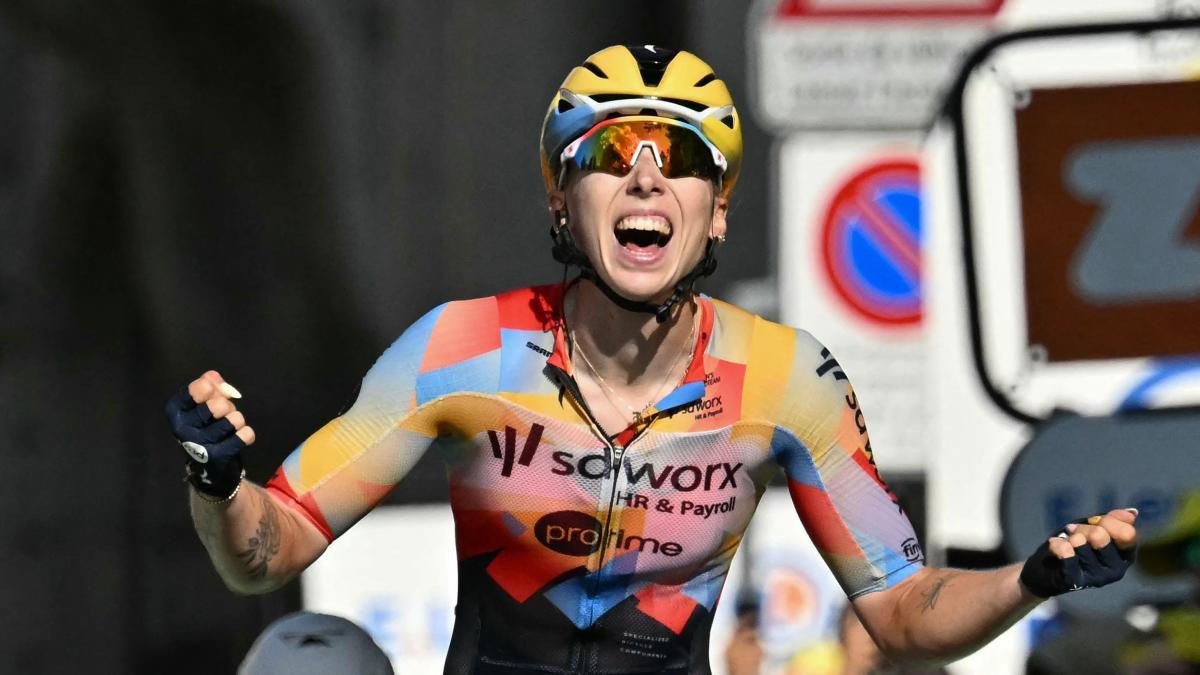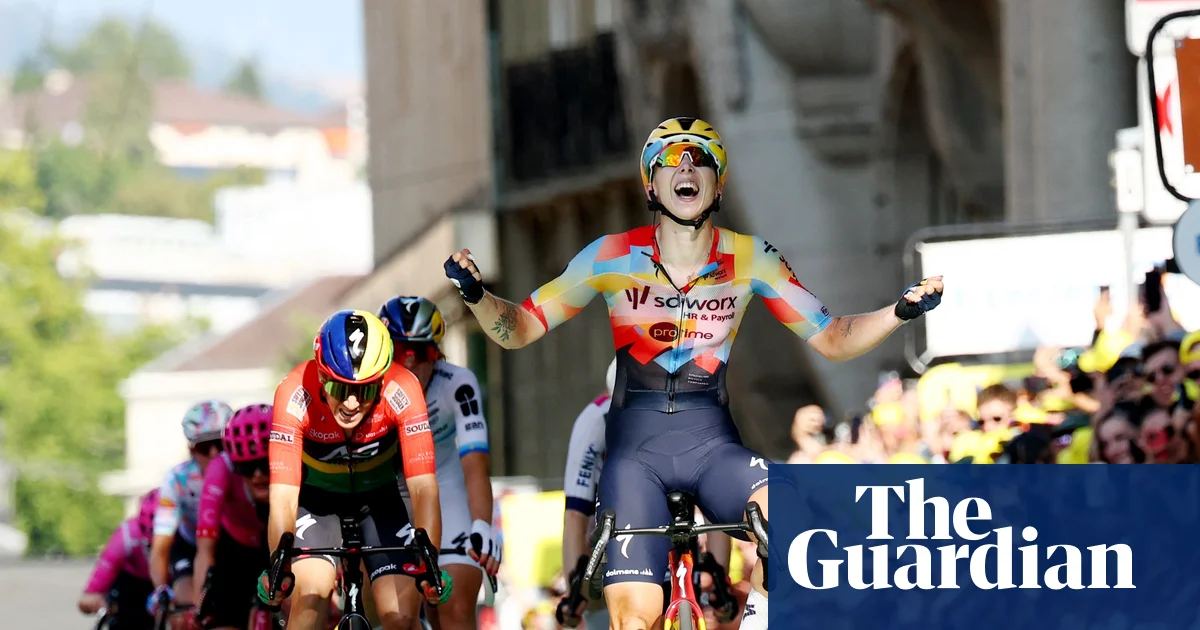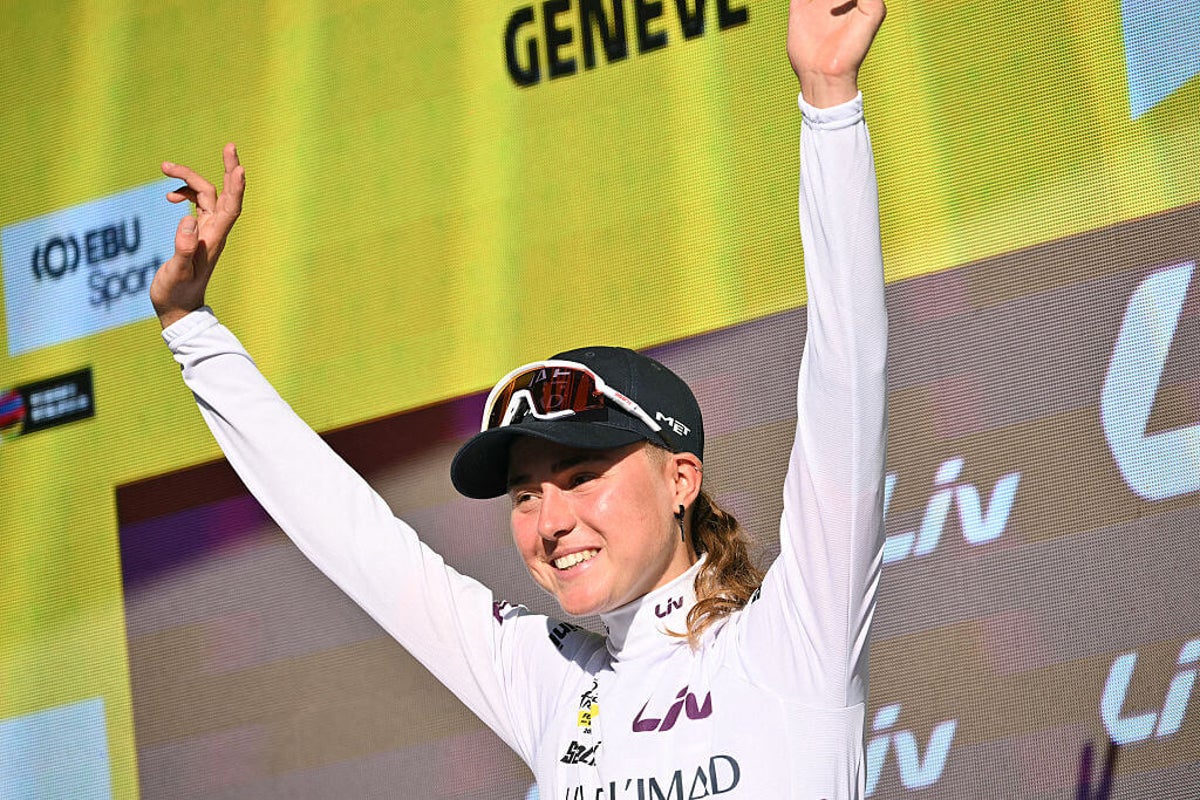
“Sometimes I forget I have limits.”Paula Blasi is 23 years old.Earlier this summer, competing in her maiden grand-tour race, the Spaniard won the Vuelta a Espana Feminina, her fourth victory of the season.Hers is a spectacular rise — a list of remarkable achievements for someone who only started road cycling in the past few years, having previously competed nationally in duathlon (triathlon without the swimming).This is her first full season as part of a WorldTour team, but you wouldn’t know from her palmares — race victories which also include the Amstel Gold, a one-day classic held in the Netherlands this spring.Despite her tender age, Blasi displays an unflappable desire to pedal towards suffering on the bike, knowing that despite the demands of the Vuelta she “didn’t even get close to my limit” while winning it.Currently debuting at the Tour de France Femmes, women’s cycling’s biggest road race, Blasi is four days in and is wearing the white jersey for best youth rider. Little wonder she has a permanent smile when The Athletic speaks to her.“I’m still excited, I’m still expecting,” she says, seated on the UAE Team L’Imad bus in the Swiss town of Aigle ahead of Sunday’s stage two. “Everything is open. I really want to get over the first few days because they are kind of the easiest ones, I really want to get to the big mountains.”After the time trial today (Tuesday), she will get her wish as the peloton will climb further than ever before in this year’s Tour, including a visit to the formidable 1,910m (6,270ft) Mont Ventoux on day seven.But Blasi is under strict domestique duties for her leaders, two-time Giro d’Italia Women winner Elisa Longo Borghini and Dominika Włodarczyk, a Polish national champion, which has led to much public debate about her role. Some argue she should be a co-leader.“We go day by day, but for sure the dynamics are quite clear in this team,” she explains. “We have two strong leaders, so I don’t really think I will have this free card, but I’ll be there to help the leaders and try to get the best position.“The pressure from the people is different than what I can actually do because, they say, ‘Are you going to win?’ Yeah, actually, I will not even try. So it’s a bit hard, but I really enjoy it. I come here for the experience, and I already know all my capacities. I’m just trying to be silent, really listen and observe what people are doing, because you can really learn from that.“I really feel that maybe this year is a nice year to do the transition, to learn a bit and then for the next years know what all of this is about and know how to approach it the way they approach it.”Does that mean challenging for a Tour de France win next year? “Ah, if I’m allowed!”Such a question to a young rider who doesn’t yet have a full WorldTour season under her belt would normally be considered outlandish. But not so to Blasi, someone who defeated two-time world champion Anna van der Breggen on Spain’s gruelling 1,570m Alto de l’Angliru mountain on the Vuelta’s final stage to win a grand tour at her first attempt.Her sporting director, Aina Nuno, goes even further.“She doesn’t put limits to herself, and then this means that she doesn’t have any,” Nuno says.“I don’t know when, but she can be a Tour de France winner. And, honestly, I already heard this (idea) from her the first season that she was in the team. I really think that she has the potential to be a rider that achieves anything, that can really set an era in cycling.”Paula Blasi celebrates winning the 2026 La Vuelta Femenina in May. (Miguel Riopa / AFP via Getty Images)There is danger to heaping expectations on a rising star. Even a prodigious young talent can be inconsistent, exacerbated by the sudden increase in attention. Blasi appears unflappable, however.“There is a misunderstanding sometimes with the pressure because (people say), ‘Oh, now you will get more’ but, at this moment, I feel it’s a good pressure because I was missing it,” she says.“I would say it’s easier when no one expects it from you because if I don’t do it, nothing will change. But now that you already did it, the hardest thing is to repeat it. So that’s also what really moves me forward. For me, this is so much fun.”This mentality is not new to her. It all stems back to when Blasi was a child, competing against her fiercest rival — her twin brother Victor. They were born three minutes apart. Summers would be spent in sports camps, windsurfing, sailing, playing tennis. Weekends were for basketball, the winters for skiing.The pair would compete and Paula would frequently win, until her brother hit puberty and she couldn’t comprehend the switch in fortunes.“I learned how to take it in a good way. Scientifically, I will never be able to be as strong as him, but take it as an advantage to try to get as close to him as possible,” she says.Nuno believes those years helped create Blasi’s “really special character”.“You can sometimes see how she speaks about her mum and about her brother, it is like this special light in her eyes,” she says.After playing several team sports, including football — she was a winger or a striker — Blasi settled on track and field, and eventually duathlon, which replaces triathlon’s swimming section with additional running either side of the cycling part. She has a 34 minutes, 59 seconds 10,000m personal best on the road, and a 17:09 for 5,000m on the same surface.“I knew I was never a collective-sport player because already coming from running, for example, you run full gas, you finish the race completely dead, and I saw afterwards in football I would finish the match and would be not even tired, because maybe the ball didn’t even come to my side for 90 minutes,” she says“I would say people that do cycling, we are kind of selfish a bit, so we really want to feel that we perform well.”The Vuelta Feminina victory was Blasi’s fourth win of the season. (Miguel Riopa / AFP via Getty Images)After periostitis, an inflammatory injury to her tibia, curtailed her track career, Blasi turned to cycling — a valiant answer to the personal limit-pushing she craved without the high impact of running.“I just did one race, I DNFed. It was so cold, it was like maybe two degrees (Celsius — 35F), snowing, and I was in shorts because I didn’t have clothes,” she remembers. “I don’t even know why I wanted to come back.”Within a year, she was on UAE’s development team. But initially she found things difficult.“I couldn’t understand. They said, ‘Today, you have to work for your team and then when you are done, you stop, and you finish with the groupetto’. I said, ‘No! I should be winning’,” Blasi remembers with a smile. “It was hard to understand that the win maybe can come from the team, not only from you. But now I really enjoy it.”Earning promotion to the WorldTour squad didn’t take her long, but despite her inexperience, she wanted more responsibility. Told the team would be happy if she just carried out the usual domestique duties, such as collecting drinks bottles for teammates, Blasi was unsatisfied.Perhaps a carryover from her track and field days, she always wants to empty the tank.“I really enjoy the suffering on the bike. Sometimes I wake up and I say to my coach, ‘Put the hardest thing you ever put someone (through). I really feel like suffering today’,” she explains.“Sometimes I forget I have limits, so I just go and go and go because really I feel good, but you also need to have this invisible training — resting and taking days easy.“I haven’t done it yet, because I don’t know how to do it. The more I rest the more sh–ty I feel, because I feel more low on energy. So on my rest days, I go for a hike in the mountains or something. I really enjoy running. These nine days during the tour, I miss running.”Luckily for Blasi, the Tour de France Femmes does not have a rest day this year.After today’s time trial, the race moves on to the harder mountainous stages. She has consistently spoken of her desire to ride well for the team’s general classification goals, and is planning to ride for Longo Borghini, who is in seventh place after three stages.But after Sunday’s finish in Nice? First, there’s the Road World Championships in Montreal, Canada, from September 20-27. “There we have a really good team, and we really have cards to play,” she says.And then there’s next year.“I have big ambitions,” Blasi says. “I know I have 1,000 things to still improve; my shape, the way I race, the way everything works. I’m not scared, I’m super-excited to see how far I can go, because I know I’m not even close to my limit.”
The spectacular rise of Paula Blasi, cycling’s prodigious talent: ‘I enjoy the suffering’
After three of the nine stages at the Tour de France Femmes, the 23-year-old is wearing the white jersey as best youth rider.
1,516 words~7 min read