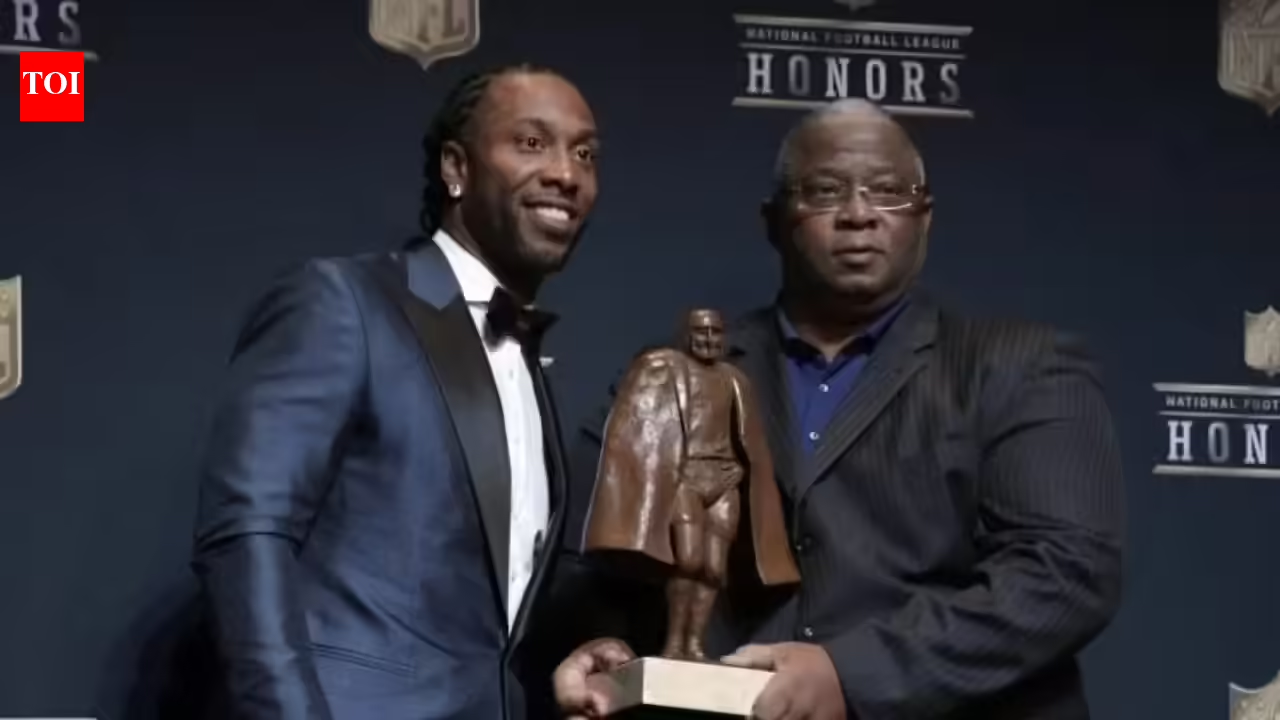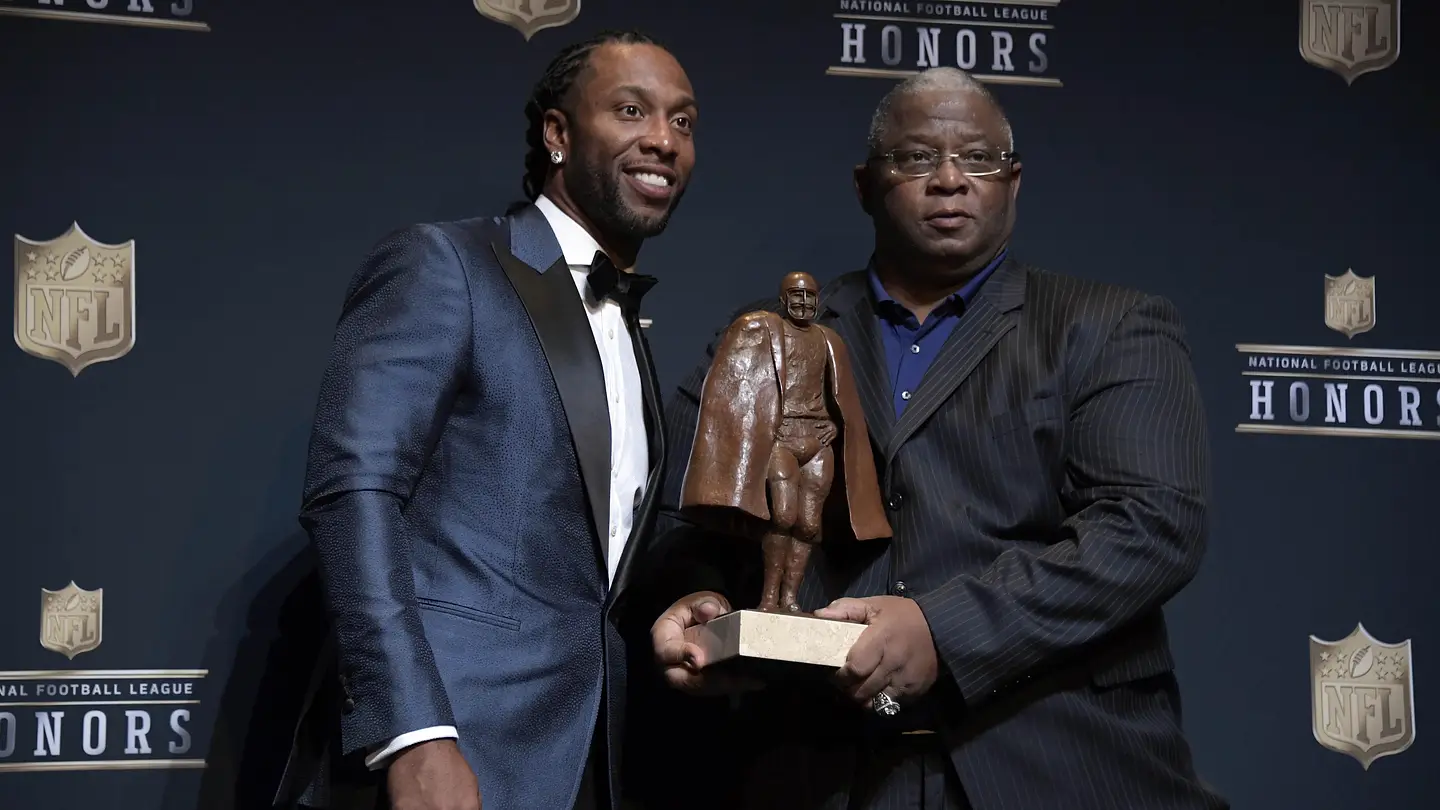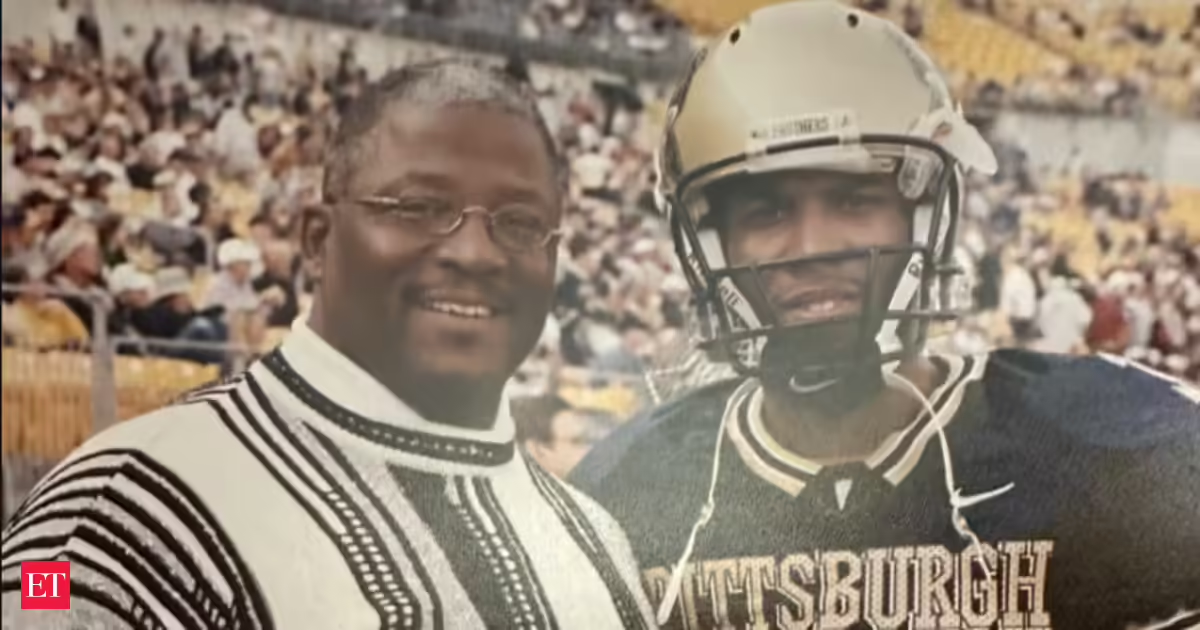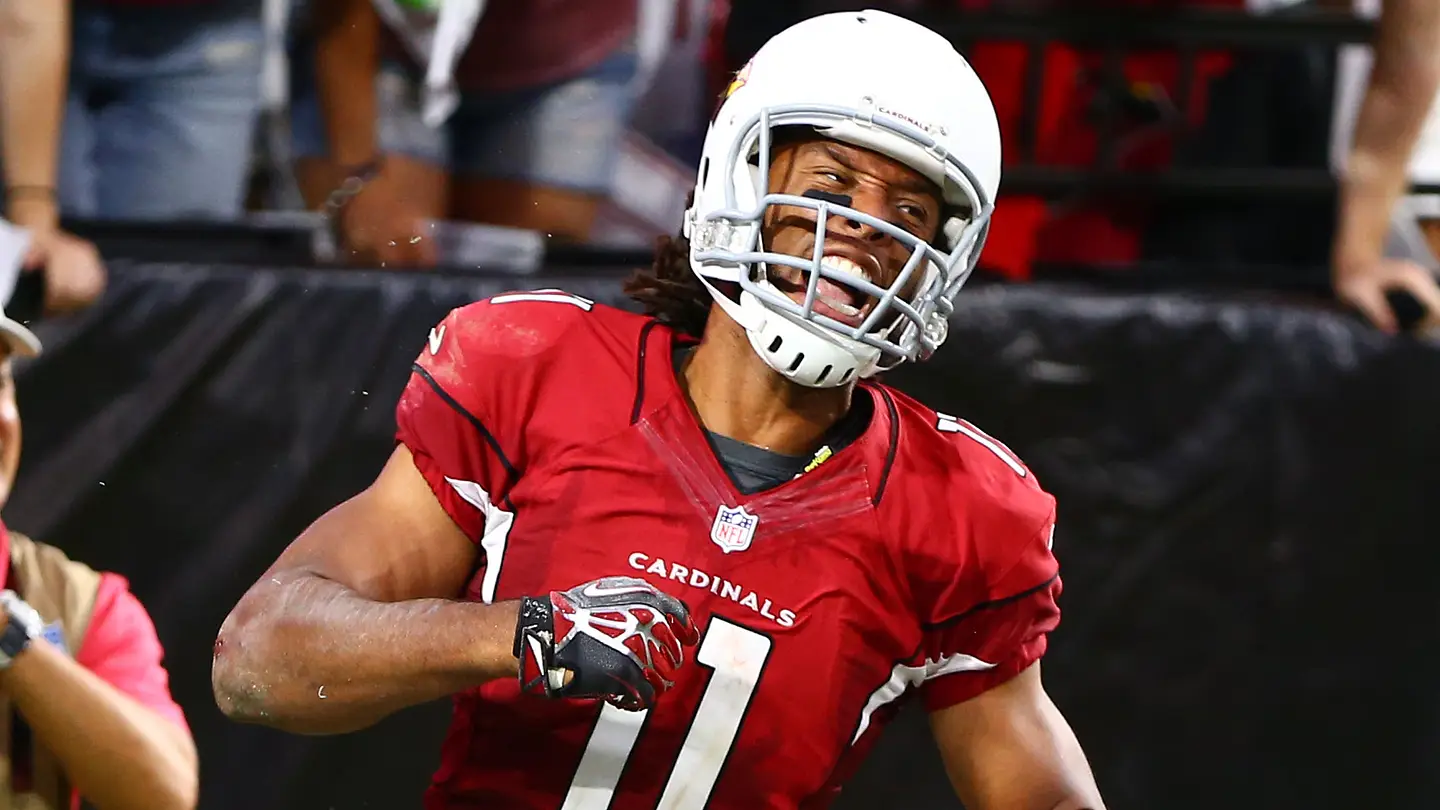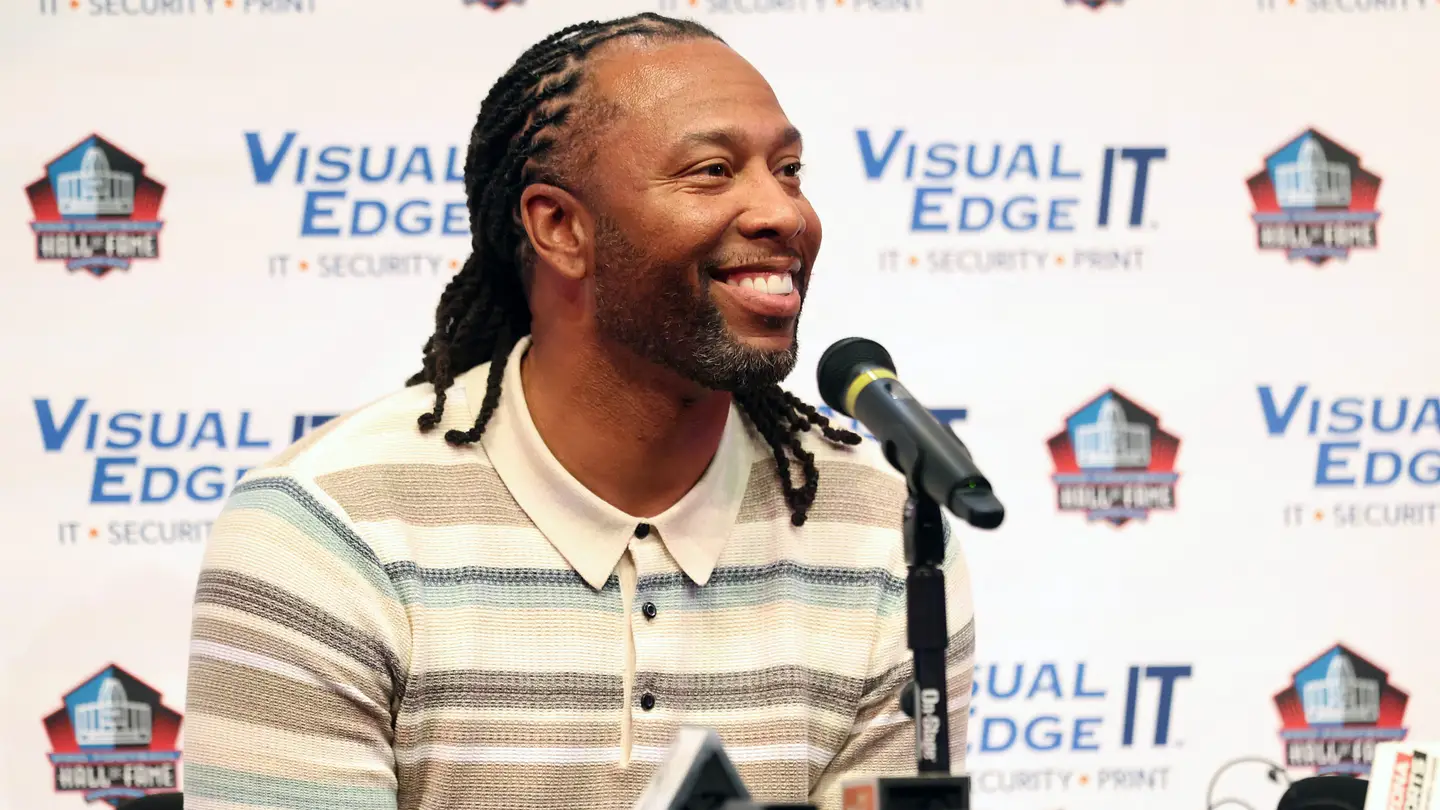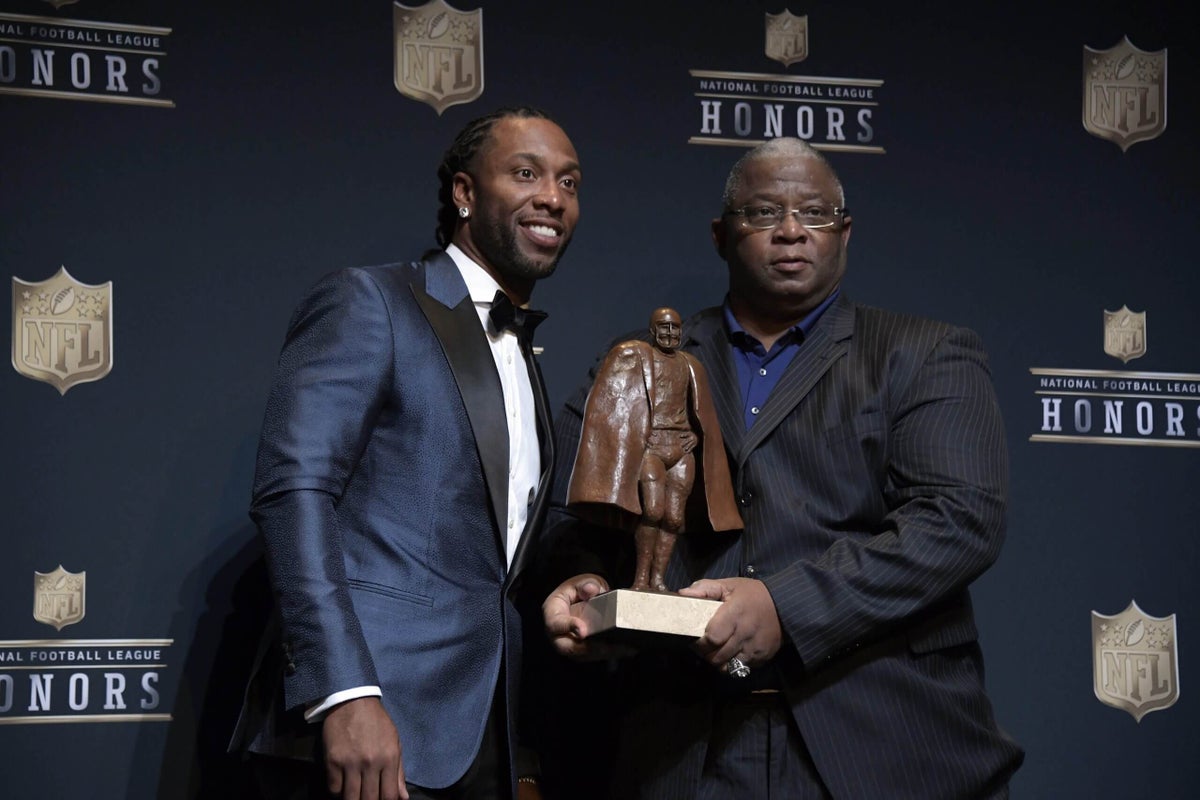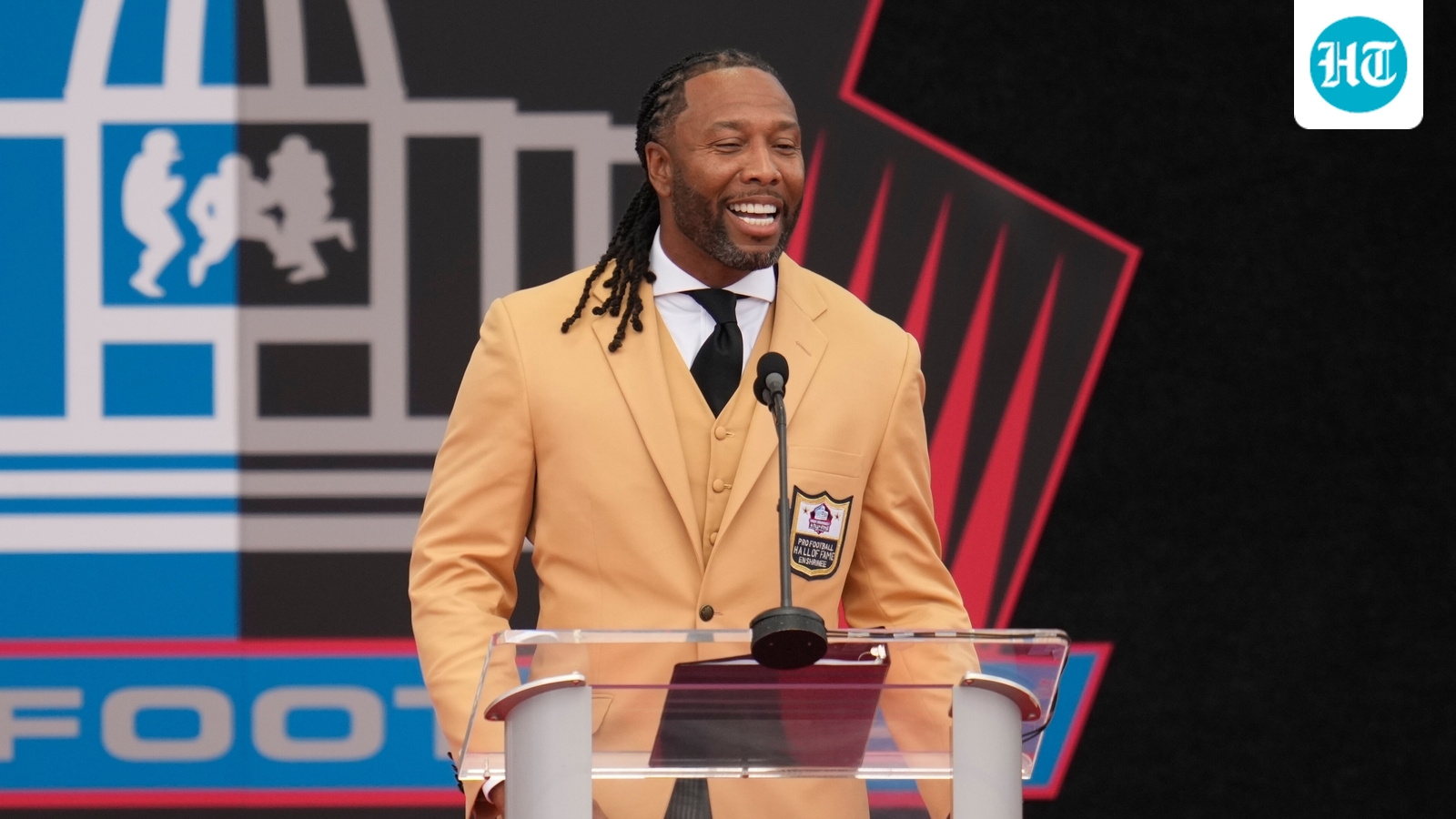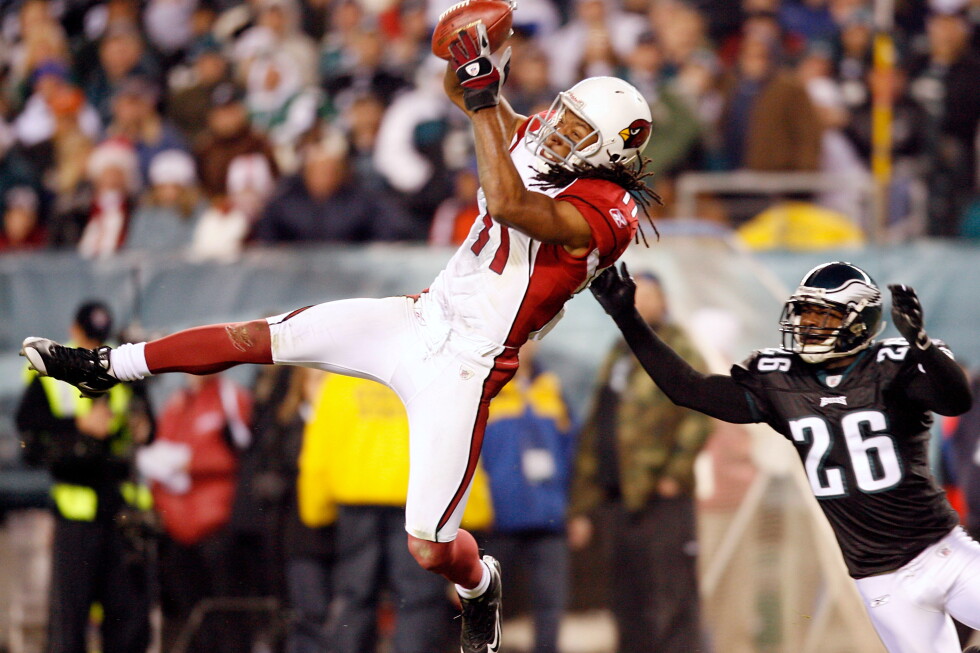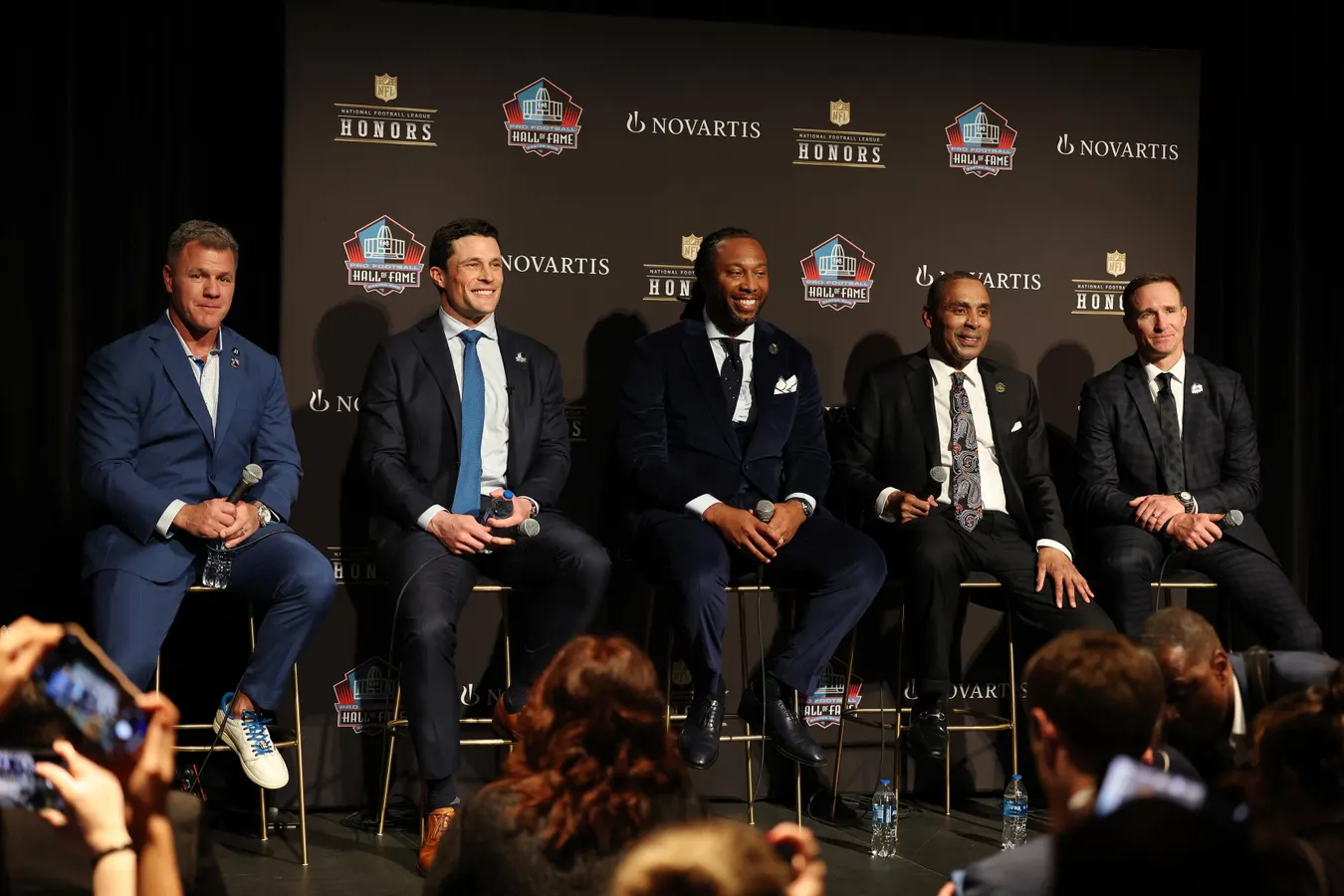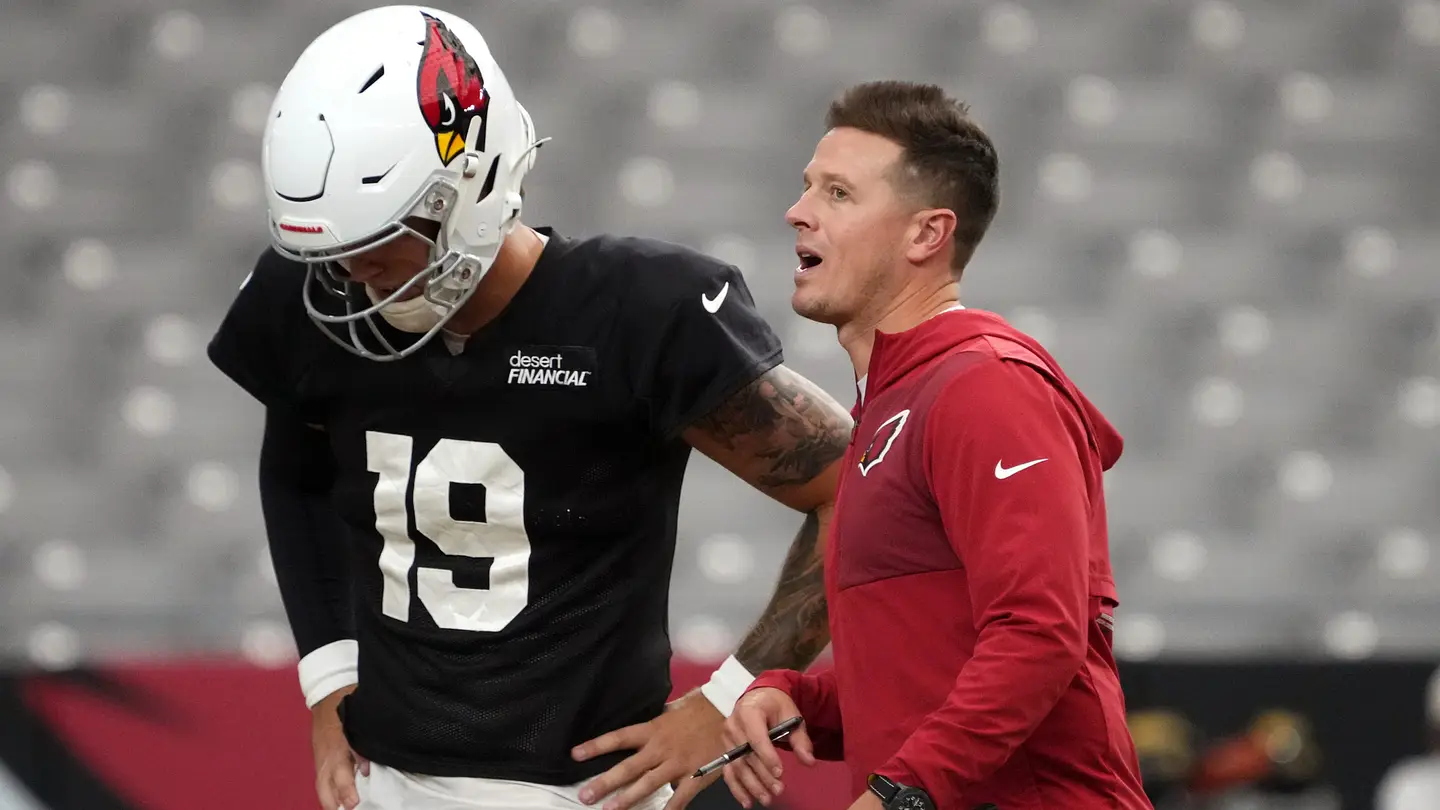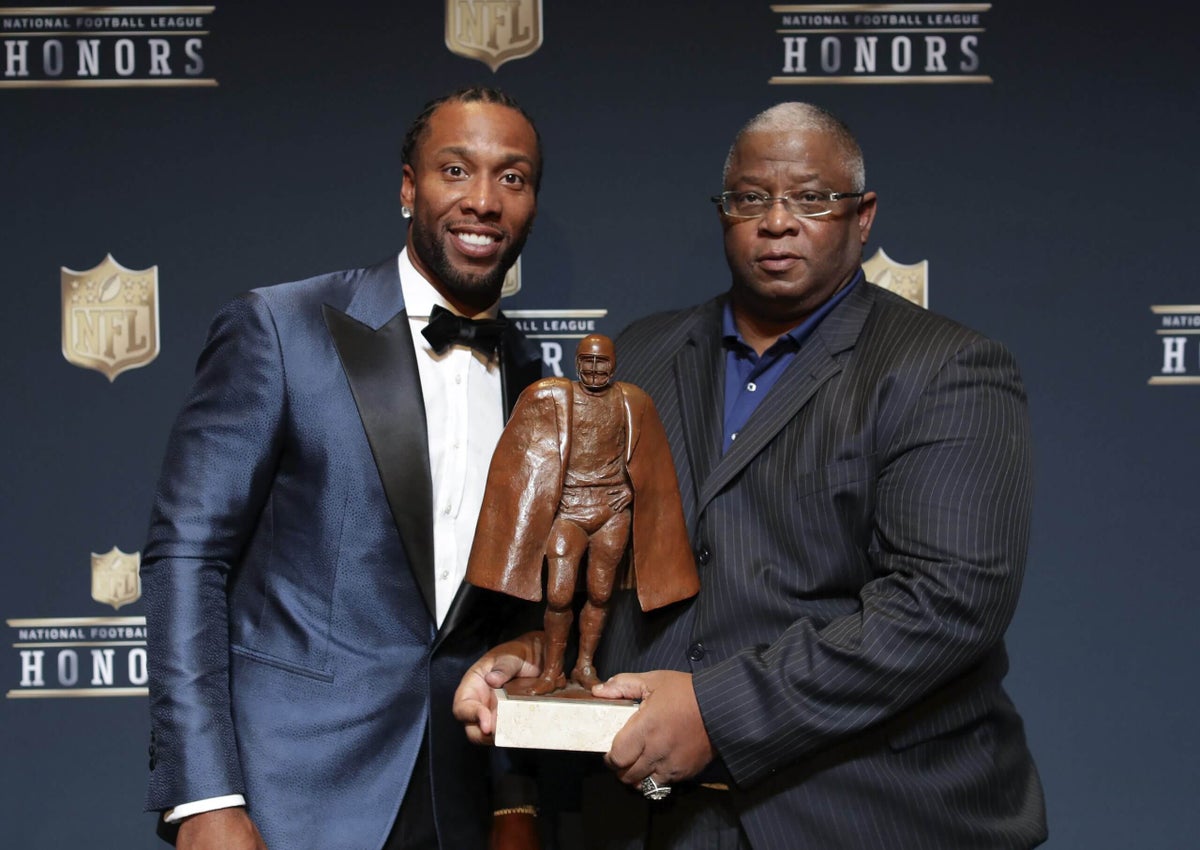
GLENDALE, Ariz. — A few weeks before his Pro Football Hall of Fame enshrinement, Larry Fitzgerald was finalizing a speech that would be the most memorable of his football career. A meticulous planner, Fitzgerald had reached out to more than 20 Hall of Famers for advice on what to expect in Canton, Ohio. During a phone conversation, the former Arizona Cardinals star began listing all those who offered advice, a group that included Peyton Manning, Warren Moon, Emmitt Smith and Randy Moss.“It’s changed significantly from what I had in April and May with everything that’s transpired over the last month,” Fitzgerald said of his Hall of Fame speech. “I was practicing it over and over, but then Pops took a turn.”On June 1, Fitzgerald lost his father.Before, as he rehearsed his speech, Fitzgerald wondered how he would react in front of the crowd, discussing 30 years of football and all those who had helped him. He compared it to practicing at the Cardinals facility in Tempe versus going out and playing in front of 70,000 people at State Farm Stadium. Two completely different levels of emotion. Then this happened. Fitzgerald had planned for his dad to present him at the enshrinement. (Son Devin, a Notre Dame freshman receiver, will now do the honor.) Suddenly, he had to think about his father being there only in spirit.Why is it harder than ever to become a Hall of Famer?Mike SandoA respected Minnesota sports journalist, Larry Fitzgerald Sr. died at age 71 of an illness he wished to keep private. He had attended the Super Bowl in February and watched as his son was introduced as part of the 2026 Hall of Fame class, a first-ballot selection. In an interview with a Phoenix television station that night, Big Fitz, as he was known, called it a “dream come true.” His voice was weak, his breathing labored.Fitzgerald, 42, was thrilled his dad got to witness the announcement, but as his father grew weaker, he realized the odds of him making it to Canton were not good. Larry Sr. no longer had the energy to walk around the lake or hit the golf course. He also stopped covering sports, which was his passion.“He lived to cover sports,” said Fitzgerald, mentioning all the teams his dad covered, from University of Minnesota hockey to the Twins, Timberwolves and Vikings. “He kind of stopped doing all those things, and my dad lived for the interaction and association all that stuff provided him.”Larry Sr. was a pioneer, bringing a Black voice and perspective to a profession that often lacked both. He provided sports reports for KMOJ-FM and WDGY-AM, once hosting a radio show with then-Vikings coach Dennis Green, believed to be the first time an NFL head coach had a weekly show on Black radio. He also wrote a sports column at the Minnesota Spokesman-Recorder. Over his career, Larry Sr. covered 40 Super Bowls, including one in Tampa, Fla., in which his son played, a family affair that turned into a national story.Charles Hallman worked with Larry Sr. for years. He called his former colleague curious and fiercely competitive. In his home office, Hallman has a front-page story that he and Larry Sr. co-bylined about an investigation into the University of Minnesota women’s basketball program. Hallman and Larry Sr. had both uncovered important details. They wanted to write separate stories, but an editor told them to work together on one. Hallman insisted his name come first in the byline. Was Larry Sr. cool with that? “No, he wasn’t,” Hallman said, laughing.Fitzgerald said he got his dad’s competitiveness, which is a blessing and a curse. It was a driving force in his career, one that made him an 11-time Pro Bowl selection and led to 1,432 receptions, second only to Jerry Rice in NFL history.“I think it’s what keeps me motivated to keep striving and reaching for new heights, but it’s also one of the things that keeps me from celebrating the things that I’ve already accomplished,” Fitzgerald told The Athletic.Larry Fitzgerald blows a kiss to the crowd after his last NFL game, in December 2020. The 11-time Pro Bowler will officially go into the Hall of Fame on Saturday. (Christian Petersen / Getty Images)Larry Sr. knew how to motivate his son, and how to scold him if necessary. After high school, Fitzgerald attended Valley Forge Military Academy in Pennsylvania because he had lacked the academic discipline to get into a four-year college. Larry Sr. gave young Larry a white folder with an NFL logo, a reminder of his goals. Fitzgerald placed the folder in the bunk above him, facing down, so it was the first thing he saw every morning. Not so much a reminder, Fitzgerald once wrote, but a lifeline.After Fitzgerald made it to the NFL, he produced on the field, but shied from responsibility off it. After games, he would run to the Cardinals locker room at State Farm Stadium and leave before news reporters had a chance to talk with him. Fitzgerald admitted it was immature, but he thought his reasoning was solid.“I felt like it was better for me early on to establish myself with my play as opposed to what I say,” he said.His dad looked at it differently.“You’re acting like a b—,” he said, according to his son.Fitzgerald quickly became a star, a Pro Bowler in his second season. He teamed with Anquan Boldin, which could have been difficult. As a first-year player in 2003, Boldin had shown star potential, winning AP Offensive Rookie of the Year honors. The next year, the Cardinals selected Fitzgerald with the No. 3 pick of the NFL Draft.“It was a pretty big sacrifice on his part because if the shoe was on the other foot, I probably would have been offended,” Fitzgerald said.Boldin said he just wanted to win, and he knew Fitzgerald could help. Plus, he knew with Fitzgerald’s talent, defenses could no longer key on him.“I’ve never seen somebody track the ball the way that he does,” Boldin said. “I mean, for him it wasn’t a 50-50 ball. It was more like an 80-20 or 90-10.”Quarterback Kurt Warner said he had to “re-train” his brain when it came to throwing to Fitzgerald. Early on, Warner would look off the 6-foot-3 receiver because he didn’t think Fitzgerald was open. Warner said fellow Cardinals quarterback Josh McCown one day set him straight: “He said, ‘Hey, with your accuracy and Larry’s skill, that’s open for Larry. Just put the ball where only he can get it, and I promise you he’s going to make that play most of the time,'” Warner said. He soon realized McCown was right.Another thing that impressed Warner: Fitzgerald’s willingness to change his game. The Hall of Fame quarterback recalled one season in which Arizona offensive coordinator Todd Haley challenged Fitzgerald to be the best blocking wide receiver in the NFL.“And for most (talented receivers), it would have been like, ‘I don’t have to do that,'” Warner said. “But you can go back and find tape of the effort that Larry gave to help his teammates spring for big plays.”Larry Fitzgerald Sr. asks a question to Cardinals running back Edgerrin James ahead of Super Bowl XLIII in February 2009. Fitzgerald’s son would catch two touchdown passes in the game. (Ross D. Franklin / AP)In 2008, the Cardinals won a weak NFC West and caught fire in the playoffs. Fitzgerald led the charge, setting NFL postseason records for most receiving yards (546) and touchdown catches (seven), marks that still stand. Late in the fourth quarter of Super Bowl XLIII against the Pittsburgh Steelers, Fitzgerald caught a Warner pass over the middle and broke into the clear. He raced 64 yards into the end zone, giving Arizona, among the more hapless organizations in sports, a 23-20 lead with 2 minutes, 37 seconds left.Reality hit hard. Ben Roethlisberger led the Steelers on a winning drive, but most everyone knew the star of the postseason was in the losing locker room.“Nobody really knew how good Larry was (before the Super Bowl) because we were never on TV,” Warner said. “Nobody ever saw us.”Larry Sr. continued covering Fitzgerald, flying into Phoenix for Cardinals home games, often wearing his son’s No. 11 jersey, trying his best to stay objective and professional as the job required. Fitzgerald twice led the NFL in receptions and twice led the league in touchdown catches. He was elite at his position.“And it wasn’t always just what he did on the field,” Boldin said. “It was the things that (Fitzgerald) did in the community. I remember Fitz would have a celebrity weekend, he would have the softball game, and his dad would participate. Just talking with him, you could see him beaming with pride for what his son was doing, the kind of contribution that he was making in the community.”Not long ago, with his dad in town to visit the grandchildren, Fitzgerald shared an idea he had been considering. Over 17 NFL seasons, all in Arizona, Fitzgerald had built relationships with members of the local media. He told Larry Sr. he wanted to host an event to show his appreciation. Larry Sr. loved the idea.On a pleasant night in May, Fitzgerald invited beat writers and columnists past and present, broadcasters, sports anchors and radio hosts (one flew in from Buffalo, another drove up from Tucson) to a restaurant near Camelback Mountain. Before dinner, Fitzgerald gave a short speech. With emotion in his voice, he thanked everyone for telling his story. He said his grandchildren one day would not be able to watch him play, but they’d be able to read articles and watch interviews and highlight packages those in the room had produced. The reporters that night left with a gift bottle of champagne and also a question: What other sports star would do something like this?“We tell our story, right?” Fitzgerald said on the phone. “Like there’s an art form that’s associated with playing sports or being a painter or a musician. But it’s really how people interpret the art that’s created. And you all are an extension of the activities we perform. So how you interpret our art form and explain it, that’s how the public interprets it.”It was impossible not to feel the presence of Larry Sr. that evening. And it likely will be impossible not to feel him again in Canton as Fitzgerald delivers a speech about his football journey and those who helped him along the way, no one more than his proud pops.
Larry Fitzgerald’s Hall of Fame moment was always going to be emotional. Then he lost his father
A sports journalist, Larry Fitzgerald Sr. died in June at age 71. On Saturday, his son will enter the Hall of Fame with him there in spirit.
1,754 words~8 min read