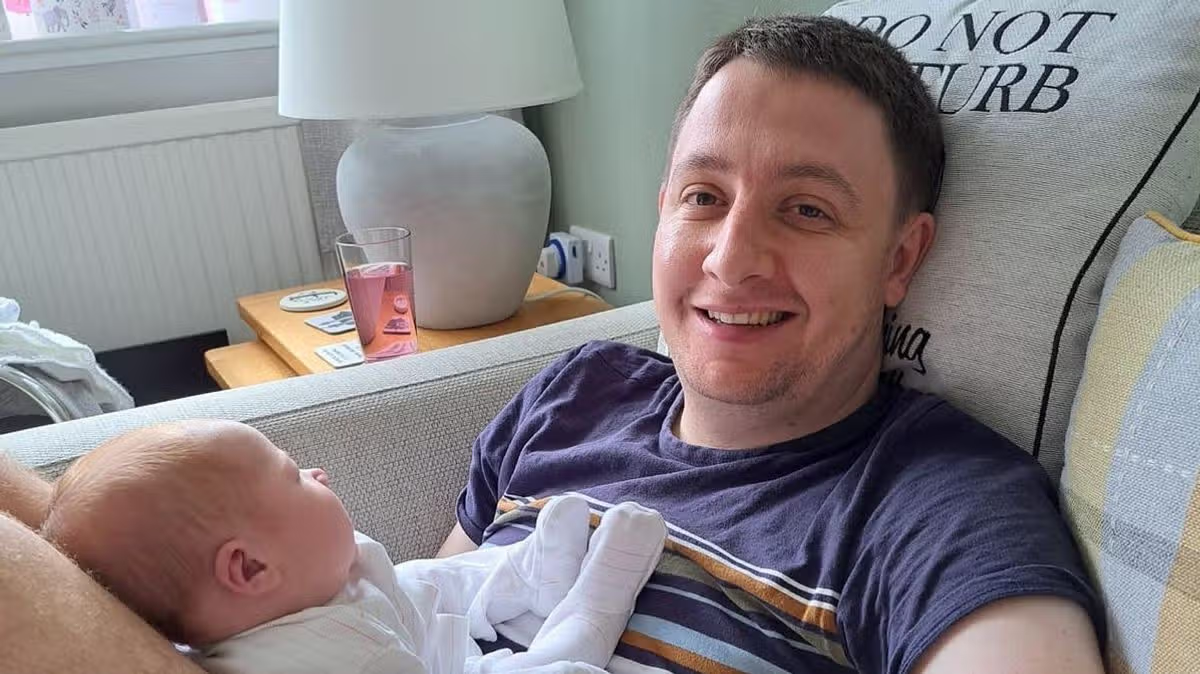
SENSITIVE CONTENT. EXCLUSIVE: Steve Sharman had no idea what was happening when he began experiencing postnatal depression following the birth of his daughter, leaving him contemplating suicide09:36, 04 Aug 2026Updated 09:42, 04 Aug 2026Father with post natal depression feared he might 'hurt' his newborn daughterThe sound of his newborn daughter crying filled him with a rage so overwhelming he feared he might hurt her. While postnatal depression is commonly associated with mothers, research suggests it affects up to one in 10 new fathers.For 35-year-old Steve Sharman, from Stoke-on-Trent, it all began when his daughter, Florence, came home from the hospital in August 2023 following a traumatic birth. Her crying triggered intense, terrifying, emotions he had never experienced before."I've never been an angry person," Steve says. "But I felt this overwhelming anger. I wanted to throw her on the floor, scream at her, harm her. I never acted on those thoughts, but they were so strong. It felt like I was becoming someone else."Despite affecting hundreds of thousands of families, many men suffer in silence due to ongoing societal expectations and a lack of support following birth. For Steve, who had never previously struggled with his mental health, the illness came out of the blue."It was the worst day of my life but also the best," he recalls.His wife, Emily, endured an 18-hour labour before doctors performed an emergency caesarean section. Although Florence was born healthy, there were concerns about her heart, keeping the family in hospital for five days.The trauma, however, didn't end when they were discharged."When we brought her home on our wedding anniversary, everything changed," Steve says. "It was the crying that triggered something in me."Alongside explosive anger came crushing depression. "I felt completely useless to the world. I'd lock myself away in the spare room and not want to do anything," Steve says. "I had moments where I contemplated suicide. I genuinely thought the worst-case scenario was I'd either end up in prison or end my own life."Steve hid what he was experiencing from everyone around him."I masked it all. I was good at pretending parenthood was a dream. A lot of the time it was lovely, but this darkness was always hovering."Like many new fathers, he felt pressure to remain the family anchor, especially when he returned to work as a Communications Officer in the NHS just four weeks later."As a dad you're seen as the man of the family - the one who's supposed to keep everything together."Dr Anna Machin, author of The Life of Dad, says that social expectations are a primary reason reasons men fail to seek help."We expect men to step into the role of supporter and emotional rock which means that they should negate their needs and feelings to support their partner," she explains."Many won't speak to their partner about their mental health because they don't want to burden her further."Male postnatal depression often manifests differently than in women."Men tend to show less obvious low mood but much higher anxiety, anger, irritation and frustration. They're also more likely to withdraw from family life or self-medicate with alcohol or drugs."Biological factors also play a role, a new father's testosterone levels can drop by up to 30 percent. Because higher testosterone appears to protect against depression, this hormonal shift can increase vulnerability during an already intense transition.The sudden rages frightened Steve more than anything else."There was one time Emily was unpacking the car and Florence had a meltdown. I screamed in her face. My wife wasn't scared to leave Florence with me, but she was worried about both of us."On another occasion, overwhelmed by the crying, Steve got in his car to pick up his brother from the station."I have absolutely no recollection of the journey," he admits. "When I got to him, I just broke down. He was the first person I told."Eventually, Steve forced himself to see a GP."I nearly walked out of the waiting room because I didn't think I deserved help."Instead, he was prescribed antidepressants and referred for NHS talking therapy. His wife Emily, a critical care nurse, stood by him throughout - though Steve admits the strain tested their marriage to its limits."Before Florence was born, we'd assumed if either of us developed depression it would be Emily because she went through pregnancy and birth. Instead, she was my rock."The experience also challenged assumptions Steve himself had held."It was completely brand new for me. I'd never had mental health problems before, so I understand why people don't ask for help."Although therapy improved his symptoms, it took almost a year before Steve fully accepted what he had experienced.The true turning point came four months after Florence was born, when Steve's sister-in-law suggested he contact the charity PANDAS, a charity supporting families affected by perinatal mental illness."I joined one of their Zoom calls for dads. I was actually the only dad on there, but I shared my story and, for the first time, someone told me what I was experiencing was normal."They shared experiences that were almost identical to mine. When the call ended, I burst into tears because it was the first time I didn't feel broken."With PANDAS encouragement, Steve wrote a letter to his parents opening up about his struggles and suicidal thoughts. He later shared his story publicly on social media to break the stigma."It was incredibly difficult admitting I'd had suicidal thoughts, but it lifted such a weight."Dr Machin says stories like Steve's are critical because many fathers never realise what they're experiencing has a name."There is currently no routine screening programme or diagnostic tool for perinatal depression in men, unlike the support pathways that often exist for mothers," she says."That means many fathers simply fall through the cracks."Elliott Rae, founder of Parenting Out Loud, says workspaces also need to step up to support men after having children.He told the Mirror: "It's really important dads have time to adjust to the massive life change of having a baby," he explains. "Many dads go through emotional and hormonal changes, including a drop in testosterone which can affect their mental health."One of the key risk factors for dads experiencing postnatal depression is not bonding with their baby. If the dad goes back to work too soon, the baby cries when they are picked up, they don't feel as confident with the baby independently. We know that can be one of the key risk factors for dads developing postnatal depression because he doesn't feel he's growing into the role of a father or building a relationship with his child."Today, three years after Florence's birth, life looks very different for Steve and his family.Florence is thriving, and toddler meltdowns no longer overwhelm him."I've got that understanding now. It doesn't faze me anymore."The couple is even discussing having a second child."It hasn't put us off. I can't predict how I'll feel, but now I know what happened to me and I know I would ask for help much sooner."Steve now volunteers with PANDAS, speaking on podcasts, contributing to research and delivering talks to healthcare professionals."If my story helps just one person, then it's worth it," he says."I want dads to know there is absolutely no shame in speaking up. Looking back, I'm actually proud of how I got through it."Article continues belowFor emotional support you can call the Samaritans 24-hour helpline on 116 123, email jo@samaritans.org , visit a Samaritans branch in person or go to the Samaritans website.
'I wanted to throw my baby on the floor - I feared I'd end up in jail or worse'
SENSITIVE CONTENT. EXCLUSIVE: Steve Sharman had no idea what was happening when he began experiencing postnatal depression following the birth of his daughter, leaving him contemplating suicide
1,238 words~6 min read