New Paragon Study Finds Nearly Half of Medicaid Expansion Enrollees Likely Do Not Meet Eligibility Requirements
PR Newswire
WASHINGTON, Aug. 4, 2026
Research estimates improper Medicaid expansion enrollment cost federal taxpayers nearly $33 billion in 2024; findings released as Paragon President Brian Blase testifies before Senate Budget CommitteeWASHINGTON, Aug. 4, 2026 /PRNewswire/ -- Paragon Health Institute released a major new research paper, Medicaid Expansion's Growing Improper Enrollment Crisis, by economist Liam Sigaud. The paper finds that nearly half of Affordable Care Act Medicaid expansion enrollees likely did not meet eligibility requirements in 2024. It estimates that improper enrollment cost the federal government approximately $33 billion in 2024, as states shift billions of dollars in costs to federal taxpayers.
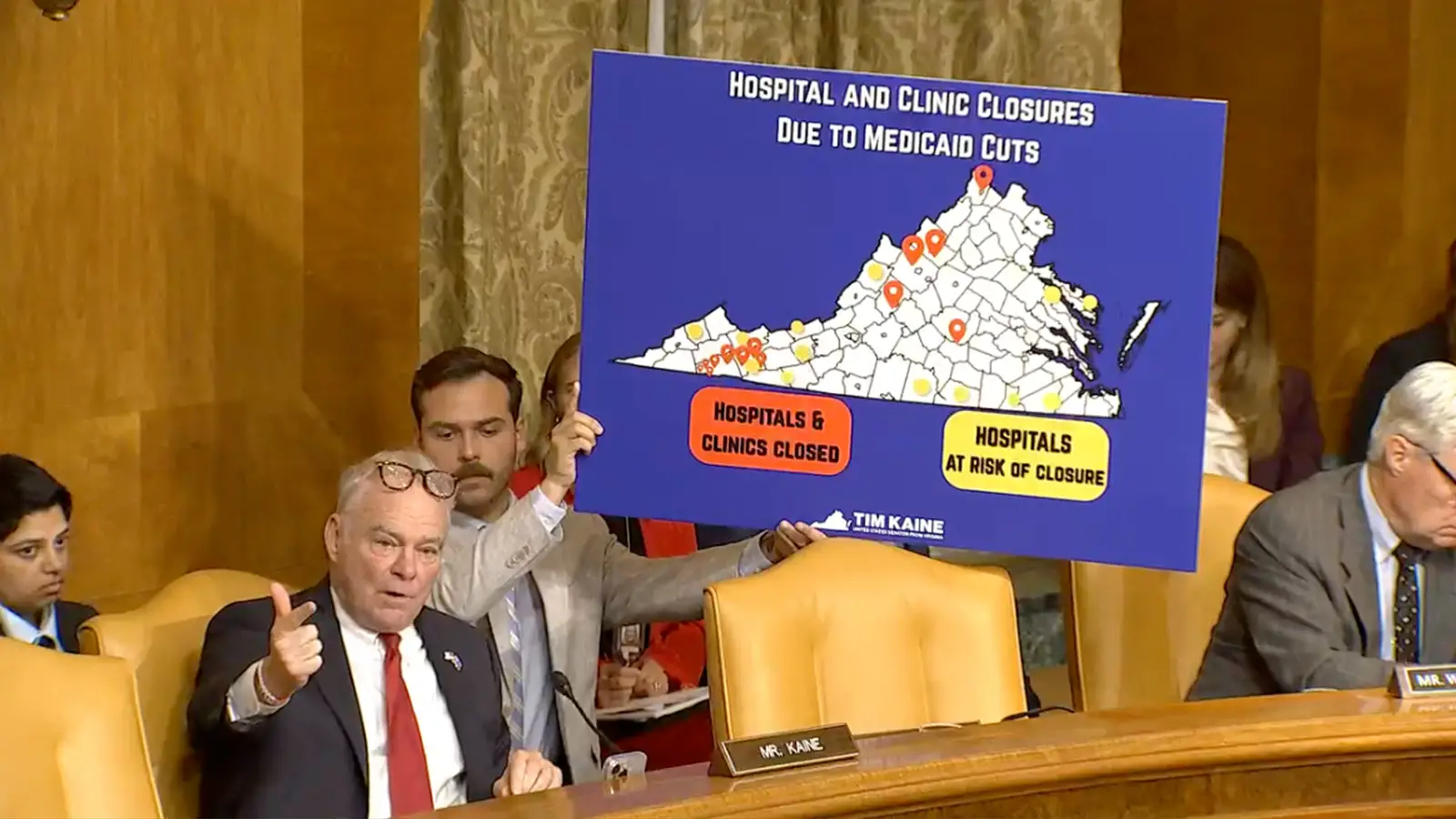
The report's release coincides with testimony by Paragon President Brian Blase, Ph.D., before the U.S. Senate Budget Committee at a hearing entitled Medicaid: The Reality. "Medicaid resources are not unlimited," said Blase. "Every dollar spent on someone who is not eligible is a dollar unavailable for children, pregnant women, seniors, and people with disabilities. Paragon's research shows that many states have allowed widespread improper enrollment in Medicaid expansion."Building on previous Paragon research, Sigaud matches Census Bureau survey data with state enrollment records and estimates that approximately 9.2 million of the 20.2 million Medicaid expansion enrollees in 2024 were likely ineligible. Even under a conservative assumption that every eligible person enrolled, the analysis identifies more than 5 million likely improper enrollees."Congress designed Medicaid expansion so Washington pays at least 90 percent of the cost, giving states weak incentives to ensure eligibility is determined accurately," Blase said. "Instead, states have strong incentives to maximize federal reimbursement."Among the report's principal findings:Approximately 9.2 million Medicaid expansion enrollees—46 percent of all expansion enrollment—were likely ineligible in 2024.Improper expansion enrollment imposed an estimated $32.9 billion in federal costs in 2024.Roughly one-third of improper enrollees appear to have qualified for traditional Medicaid but were instead enrolled in the expansion category, allowing states to receive substantially higher federal reimbursement.California accounted for an estimated 3.1 million improper expansion enrollees and more than $10 billion in improper federal spending in 2024.Improper enrollment increased substantially between 2019 and 2024, rising from an estimated 4.9 million to 9.2 million people.Medicaid's program integrity challenges are not limited to a single state or region: From 2019 to 2024, improper enrollment increased in 31 of the 32 states for which comparable data is available.The paper finds that expansion enrollment remained well above pre-pandemic levels even after states completed eligibility redeterminations and traditional Medicaid enrollment approached pre-pandemic levels.The paper argues that the ACA's financing structure gives states weak incentives to prevent improper enrollment. Because the federal government pays at least 90 percent of Medicaid expansion costs—compared with roughly 57 percent for traditional Medicaid populations—states can reduce their own spending by maximizing expansion enrollment, including through misclassifications of traditionally eligible beneficiaries.The research paper notes that Congress and the Trump Administration have already enacted several important reforms, including more frequent eligibility redeterminations for expansion enrollees and penalties tied to eligibility error rates. It concludes that policymakers should build on those reforms by strengthening eligibility verification, improving oversight, and ultimately aligning federal matching rates to eliminate states' financial incentives to favor able-bodied, working-age expansion adults over traditional Medicaid beneficiaries.The full paper, Medicaid Expansion's Growing Improper Enrollment Crisis, is available at http://www.paragoninstitute.org.The findings are also summarized in a Wall Street Journal op-ed by Sigaud and Blase, "How California Cheats ObamaCare's Medicaid Expansion," published August 2, 2026. The op-ed explains how Medicaid's financing structure encourages states to maximize expansion enrollment and shifts costs to federal taxpayers. Further amplifying the report's findings, Fox Business covered it in a news exclusive.About Paragon Health InstituteLaunched in late 2021 by Brian Blase, Paragon Health Institute provides health policy research and develops market-based policy proposals for improved outcomes in the public and private sectors. A 501(c)(3) non-profit, the organization is funded by donations from foundations and individuals. Paragon does not accept any funding from industry and does not conduct any lobbying. Journalists and health care analysts can review Paragon's latest studies and commentary at paragoninstitute.org.Contact:Anthony Wojtkowiakmedia@paragoninstitute.org703.527.2734