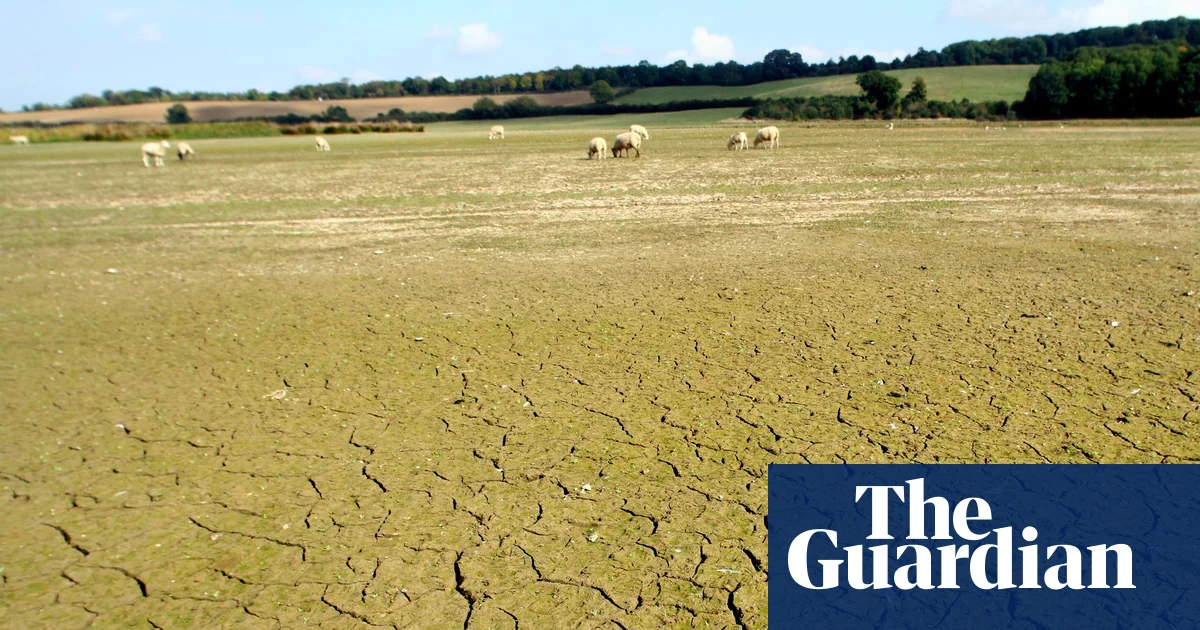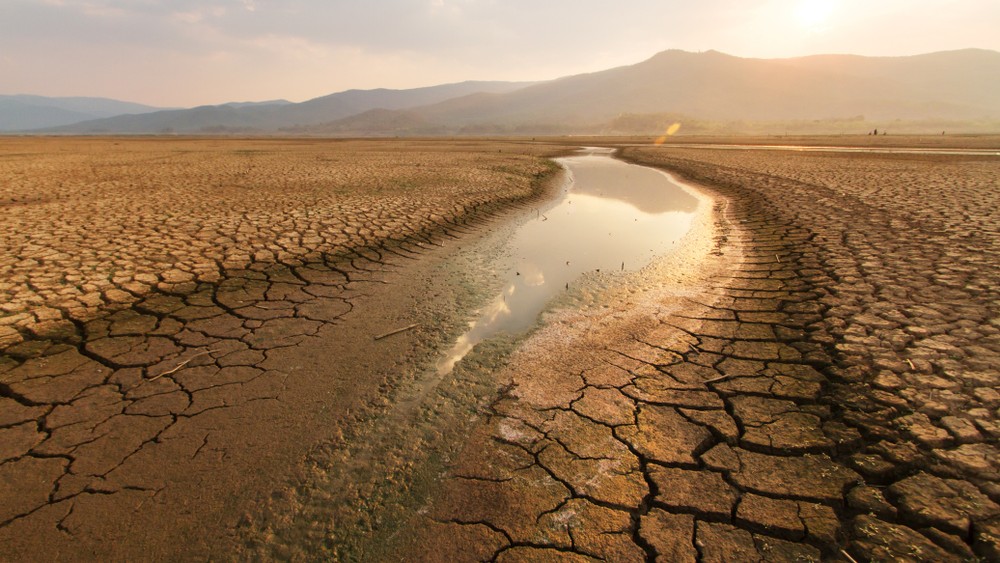
The cracks in parched soils are only a superficial, if harrowing, sign of drought. To fully understand the impact of long-lasting droughts made worse by climate change, scientists need to know what's happening deep underground – in the world's aquifers.These sponge-like freshwater reservoirs supply water for communities, agriculture, and surface ecosystems. But if there's little rain to replenish them, or too much of their water is extracted, aquifers might not recover.The Sacramento Valley aquifer system, under pressure from recent droughts, is responsible for supplying part of California's Central Valley, where, along with the San Joaquin Valley to the south, around a quarter of the US food supply is grown.According to new data, the capacity of this aquifer has now been permanently reduced due to rapid and regular freshwater extraction over the last few years.As the aquifer empties, the ground above subsides. (Larochelle et al., PNAS, 2026)As the study in PNAS shows, land subsidence above the aquifer – the drop in the layers kept in place by the underwater reservoir – has been fast and widespread enough to suggest an irreversible change."All available measurements suggest that the accelerated subsidence starting in 2021 primarily results from inelastic compaction due to groundwater extraction," the researchers write in their paper."On average, the ground surface does not rebound to its pre-2021 state even as groundwater levels recover with seasonal recharge at the end of 2021, indicative of irreversible deformation."The pressure within aquifers affects the land above them. As water is extracted, the compaction of surface layers can be reversible (elastic) as the aquifer is naturally recharged, or irreversible (inelastic). That latter scenario means the amount of water lost and subsequent subsidence is too great for the geological stacking to recover. The aquifer's capacity is permanently reduced, which affects how much water it can supply in the future.Analyzing the magnitude, timing, and extent of deformation in the Sacramento Valley, the researchers think that inelastic compaction has become the dominant mechanism affecting the area. "Such rapid and extensive land subsidence indicates severe inelastic compaction and loss of storage capacity of the underlying aquifer system, which pose a serious threat to California's water resources and infrastructure," the team writes.The shaded areas show accelerated subsidence from 2021-2022, with the red lines indicating reversible decline. (Larochelle et al., PNAS, 2026)To reach that conclusion, the team analyzed data from satellites equipped with navigation systems and radar instruments, giving them a wider and more accurate look – down to millimeter-level accuracy – at how the ground was deforming over the years.Crucially, the satellite data spotted aquifer compaction that wouldn't have been detected based on groundwater measurements alone.Across 2016-2020, the data showed the ground levels largely bouncing back to their earlier position. After 2021, the dip in some areas was as large as 50 centimeters (almost 20 inches) per year, which is many times higher than the reversible levels seen in the years prior – around 2 centimeters (0.8 inches) per year."By imaging this sharp transition at the regional scale, our analysis demonstrates the potential of space-based monitoring for early detection of groundwater overdraft and the resulting loss of aquifer storage capacity worldwide," write the researchers.They estimate that the loss of water storage space per year jumped up to 0.2 cubic kilometers (about 7 billion cubic feet) from 2021, around a five-fold increase compared to the previous years.That's the equivalent of around 30 percent of the annual water consumption of Los Angeles being lost in terms of capacity: a shrunken aquifer that's not going to be able to store as much water going forward.Better data might not in itself reverse global warming or make droughts less frequent, but it can help with water management.
California's Drought Has Now Caused Irreversible Damage to a Crucial Aquifer
The cracks in parched soils are only a superficial, if harrowing, sign of drought.
748 words~3 min read