Nigeria’s premium crude grades are facing their stiffest competitive test in years as a flood of cheaper oil from Brazil and Guyana reshapes buying patterns in Europe, threatening to erode the country’s position in one of its most lucrative export markets despite the superior quality of its barrels.
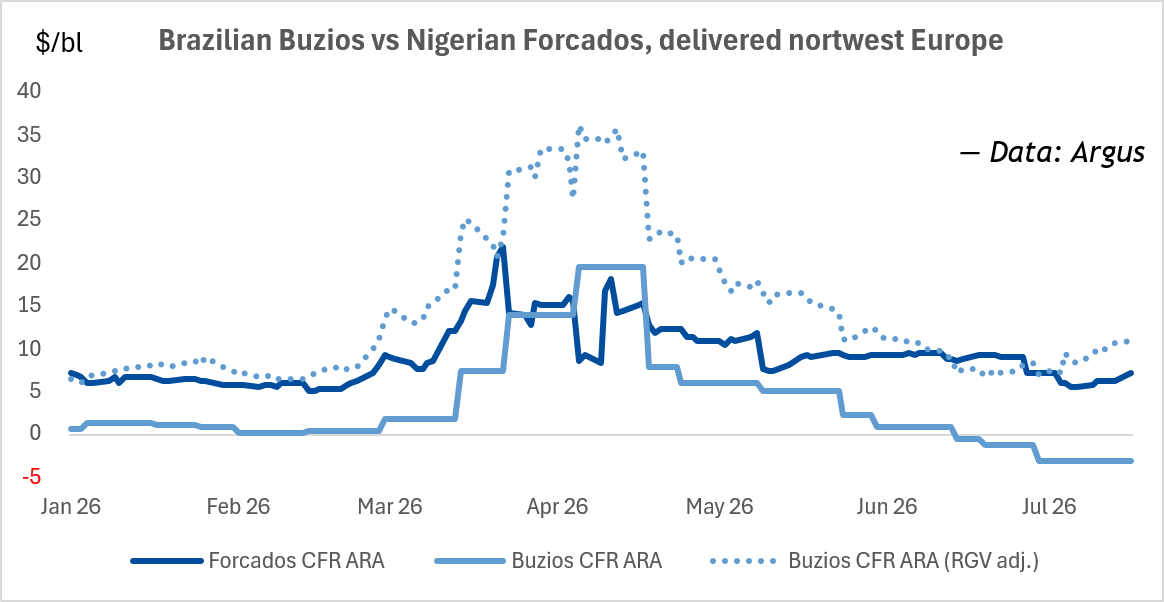
Fresh Argus Media price data showed that the delivered discount on Brazilian crude to Europe has swung from a virtual dead heat in April to nearly $9.20 a barrel by late July, indicating that a flood of cheaper Latin American oil is reshaping buying patterns, even as the quality case for Nigerian barrels continues to strengthen on paper.
For decades, European refiners have leaned on Nigerian crude for its high yields of premium transport fuels, particularly diesel.
However, that equation is being tested as rapidly rising output from Brazil and Guyana hands refiners a cheaper alternative, one that produces a less valuable slate of refined products but slashes the upfront cost of feedstock at a time when margins are under pressure.
The shift is a strategic problem for Nigeria, whose economy remains heavily dependent on crude oil exports for foreign exchange earnings and government revenue.