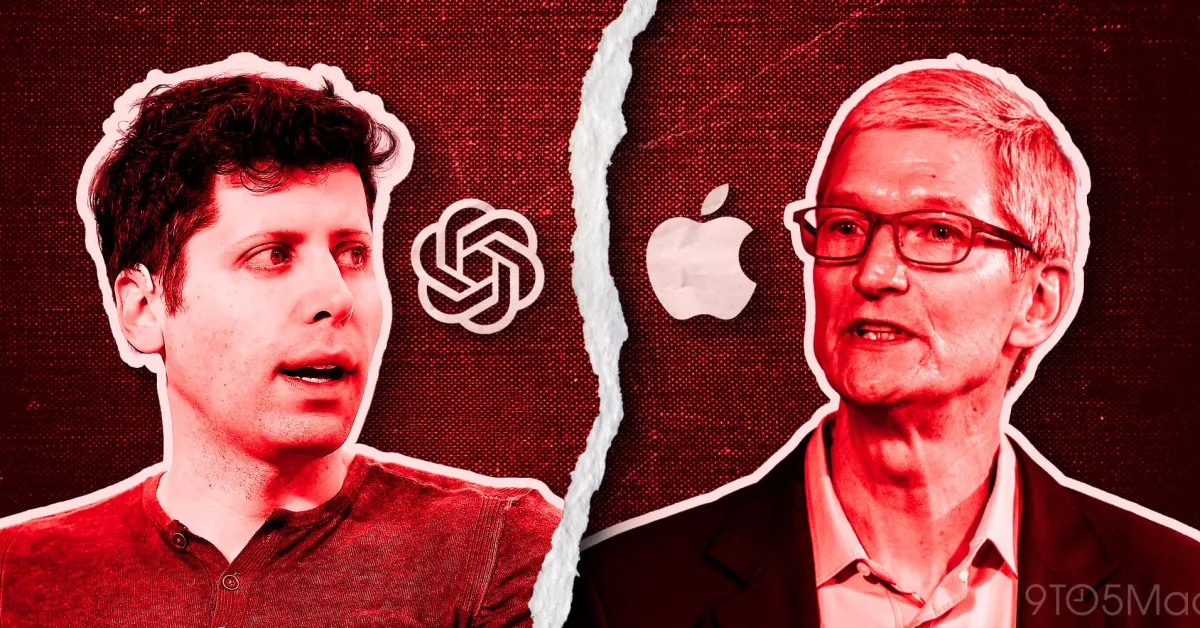
OpenAI has gone public with emails and iMessage conversations as it fights back against Apple's trade secrets lawsuit, saying the documents contradict key allegations made by the iPhone maker and insisting that it "does not have, nor want" Apple's confidential information.The company on Monday published a blog post along with email exchanges involving Apple's lawyers and messages between former Apple engineer Chang Liu and his ex-colleagues, as Apple seeks a preliminary injunction in the case.The dispute stems from a lawsuit Apple filed on July 10 against OpenAI, its hardware arm io Products and two former Apple employees — former senior system electrical engineer Chang Liu and former iPhone and Apple Watch product design chief Tang Yew Tan. Apple has alleged that OpenAI orchestrated a broader effort to acquire and exploit its trade secrets through former employees, recruitment practices and supplier relationships to accelerate its push into consumer hardware.Also Read: ETtech Explainer: Why did Apple sue OpenAI? All you need to know about the tech battleIn its latest response, OpenAI called Apple's request for a preliminary injunction "both based on false information and completely unnecessary because we do not have, nor want, any of their trade secrets."One of Apple's allegations is that it contacted OpenAI in February over concerns that Apple confidential information had made its way to the AI company but never received a response.OpenAI disputed that account, publishing email exchanges that it says show Apple's outside counsel mistakenly emailed the wrong person after confusing two individuals with similar Asian surnames. According to the blog post, the lawyer also incorrectly claimed to have spoken with OpenAI General Counsel Che Chang before later apologising for the mistake. OpenAI further said Apple's in-house legal team acknowledged the mix-up as a "miscommunication."The company argued that Apple never raised the specific allegations that now form the basis of the lawsuit during those exchanges and instead indicated it was "resolving any issues" before filing suit several months later.OpenAI also pushed back against Apple's allegations involving Liu. In its complaint, Apple alleged that Liu failed to return a company-issued laptop and later exploited an authentication bug to access Apple's internal network, downloading confidential hardware-related files after leaving the company.To counter that claim, OpenAI published iMessage conversations that it says show Apple employees continuing to contact Liu after he left the company, asking him to help locate files, transfer documents and answer technical questions related to Apple's work. OpenAI argued the messages show Apple employees themselves sought Liu's assistance and that any continued access resulted from Apple's own systems not fully revoking access after employees departed.The company also defended Tan, saying he had consistently instructed his team that OpenAI should neither seek nor use confidential information belonging to other companies. Apple has alleged in its complaint that Tan emailed himself information about Apple suppliers before leaving the company and encouraged Apple employees interviewing with OpenAI to bring Apple components to interviews for "show and tell" sessions. OpenAI has denied any interest in using Apple's trade secrets.Also Read: OpenAI finds evidence other AI agents escaped containment as it widens hacking probe"We wish Apple had raised these issues with us before they filed their lawsuit and would have been happy to clarify all of this with them," OpenAI said, adding that it had offered to work with Apple after learning of the allegations.The case is the latest flashpoint in a relationship that has become increasingly strained even as the two companies continue to partner on ChatGPT integration into Apple Intelligence. OpenAI's $6.5 billion acquisition of hardware startup io Products, founded by former Apple design chief Jony Ive, has fuelled speculation that the company is building AI-first consumer devices that could eventually compete with the iPhone.The allegations made by Apple and OpenAI's responses remain contested, and the case is pending before a US District Court in California.(With inputs from Reuters)
OpenAI says it doesn't have or want Apple's trade secrets, reveals emails and chats
OpenAI has publicly challenged Apple's trade secrets allegations by releasing emails and chats it says contradict the iPhone maker's claims in court.
TL;DRAI
OpenAI denies Apple trade secrets theft via ex-employees, publishing emails; $6.5B io Products deal fuels dispute. IP escalation signals recruitment risks: ex-employee hiring and AI-hardware competition threaten iPhone amid strained partnership.
640 words~3 min read