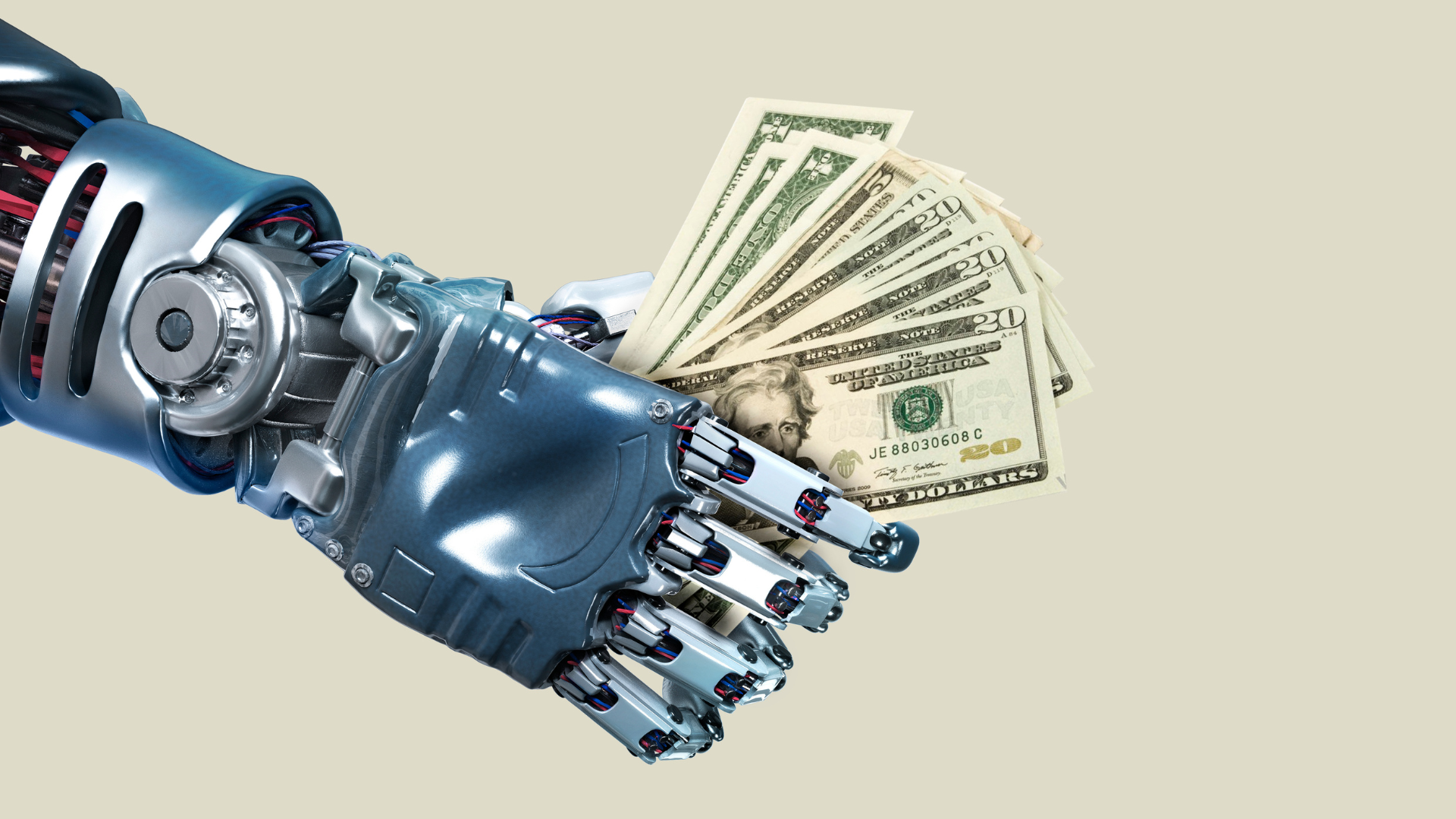
The Wall Street is quite worried, and for the simple reason that Big AI are reporting significant increase in capital expenditure. There is finally a realisation with illustration of a fear many experts had previously shared regarding a rapid (and often misdirected) forward march of artificial intelligence (AI) technology. These numbers may prove worrying in the long run. Combined, Alphabet, Meta, Microsoft and Amazon, are now guiding toward capital spending that stacks up well past half a trillion dollars for 2026, a figure that’s been revised upward at almost every single earnings call this year.Alphabet, Meta, Microsoft and Amazon, are now guiding toward capital spending that stacks up well past half a tn dollars for 2026. (iStock photo)Analysts and industry watchers are now paying more attention to capital expenditure, or capex guidance beyond usual earnings numbers—because infrastructure spending is fast becoming the biggest determinant of future profitability. An immediate fear is this massive spending will hurt cash flows, while long-term profits from AI remain uncertain. Could this be a repeat of the late-1990s telecom bubble in the US, in which companies spent billions on infrastructure that took a decade to turn profitable.Expensive worriesAlphabet, Google’s parent company, reports higher capital expenditures in its Q2 2026 earnings, hiking spending estimate for the year to between $195 billion and $205 billion; up from an earlier projection of $180 billion to $190 billion. “The increase in the range is primarily due to an acceleration in the delivery of capacity to meet growing demand. As we previously shared, we continue to expect our capex to increase significantly in 2027,” said Anat Ashkenazi, SVP and CFO, Alphabet and Google, during the Q2 earnings call.Meta’s 2026 capital expenditures have a higher estimated range, driven by investments in servers, data centers, and network infrastructure. “We anticipate 2026 capital expenditures, including principal payments on finance leases, to be in the range of $130-145 billion, narrowed from our prior outlook of $125-145 billion,” noted Susan Li, CFO of Meta, in the earnings call.Microsoft expects 2026 expenditures to be around $175 billion. They plan to extend estimated useful life of office and data centre buildings from 15 to 25 years, from FY27. “This change affects only the timing of future depreciation and is expected to have a minimal benefit to FY27 operating income. The greater impact is on capital expenditures as more of our future datacenter leases will shift from finance leases to operating leases as a result of this update,” Amy Hood, Microsoft’s CFO in the Q4 FY26 earnings call.Amazon has raised its 2026 AI infra capex guidance to $220 billion, up from an estimated $200 billion. “Even at that amount, we will still not have enough capacity to meet all the demand we have in 2026, and I believe this dynamic will also be true in 2027, too. In fact, the demand we already have for 2028 is striking,” said CEO Andy Jassy, during the earnings call, adding, “Remember, enterprises are still very early in using inference at scale in their current production applications.”This is likely to put pressure on free cash flow in the short term—and higher memory costs are also a factor.A new playbookTech giants traditionally attract investors because they generated massive amounts of pure cash. This historic AI spending binge has broken that thesis. For instance, Amazon and Alphabet both plunged into negative free cash flow territory in recent quarters due to infrastructure costs. Alphabet’s Q2 2026 capex consumed all of its operating cash flow.“While these investments are beginning to lift hyperscalers’ revenue and net income growth, they’re also pressuring their free cash flow, which we expect to weaken over the next few years as these companies continue to invest in AI-related infrastructure,” explains S&P Global, in a note to investors.Morgan Stanley’s Todd Castagno, put this starkly in a note, calling this “unprecedented”, with 2026-27 estimates up $630 billion in six months. They estimate that capex-to-sales ratios could run “as high as 38%, 44%, and 45% in 2026-28”, versus a roughly 32% dot-com-era peak. The bank described the trend as a “growing concentration of index-level investment within AI.”Goldman Sachs Research analyst Ryan Hammond sees some amount of spending headroom. “The combination of continued corporate AI adoption and growing concerns about the AI infrastructure complex has increased recent investor focus on the next beneficiaries of the ever-expanding AI trade,” Goldman Sachs Research analyst Ryan Hammond writes in a note to investors.They add AI capex has recently equated to 0.8% of US’ GDP, compared with peaks levels reaching 1.5% of GDP during other technology booms of the past. AI capex would need to reach $700 billion in 2026 to be in line with the peak of spending during the late 1990s telecom investment cycle.There are concerns that tech CEOs are over-investing out of what younger kids call FOMO, or the fear of missing out, rather than tracking actual customer demand. Data backs this up.In Bank of America’s most recent Global Fund Manager Survey, conducted in early July among 210 managers overseeing $555 billion in assets, 45% named an “AI bubble” as the biggest tail risk facing markets—up sharply from 28% just a month earlier, and overtaking inflation as the top concern. Also, 52% believe AI stocks are currently in a “boom” phase. Equally, 28% expect companies to cut capital expenses this year.Underlying concerns include AI hardware usage and replacement cycles, which move much faster, requiring repetitive expensive investments every few years. Chips bought today will be obsolete shortly.
The new maths: AI’s big four, a $720 billion bill, and a future no one knows
As Alphabet, Microsoft, Meta and Amazon push AI infrastructure spending to record levels, questions aren’t about whether AI will change the world, but whether it can justify this cost | Business News
TL;DRAI
Google, Meta, Microsoft, Amazon project $720B AI capex in 2026; free cash flow pressured as ROI remains unclear. Pattern echoes late-1990s telecom bubble (capex-to-sales 38-45% vs 32%); 45% fund managers flag "AI bubble"—hardware cycles force repetitive investment requiring demand-driven capex, not FOMO-driven spending.
910 words~4 min read