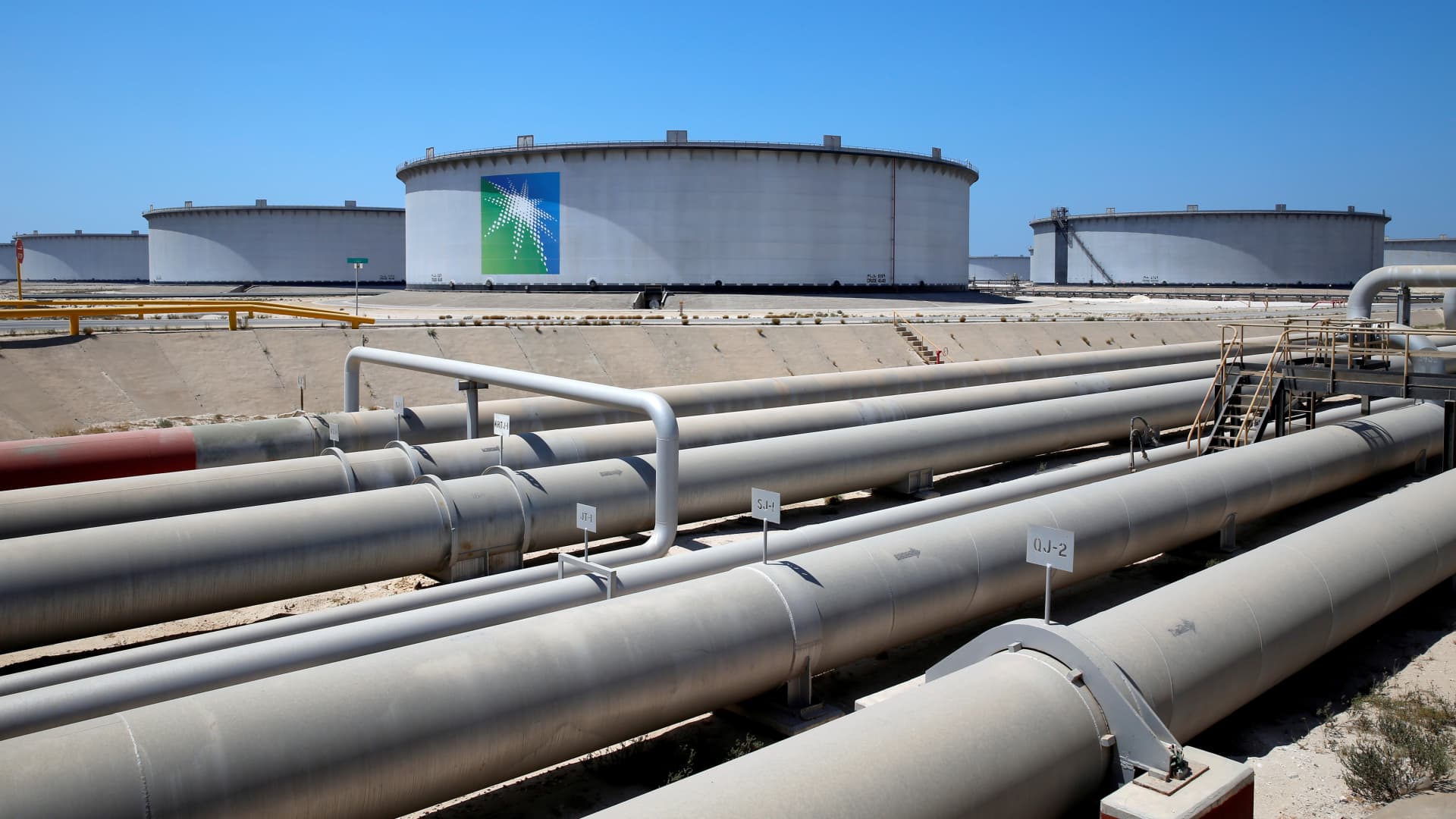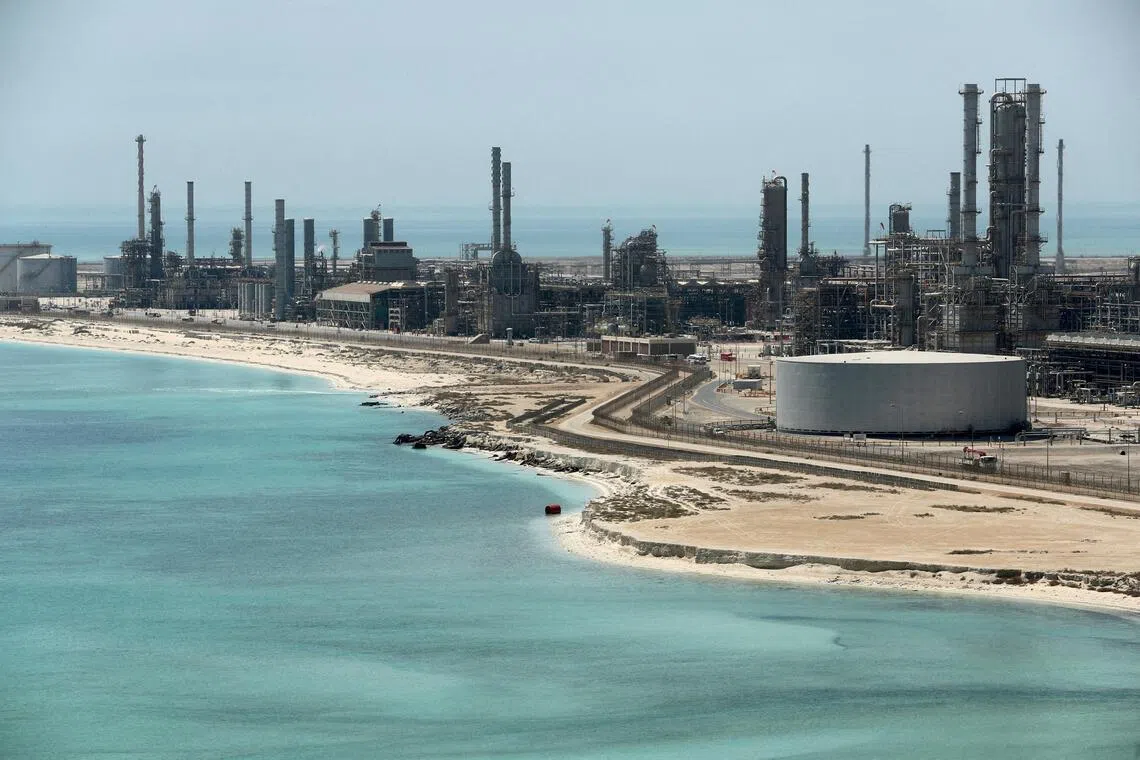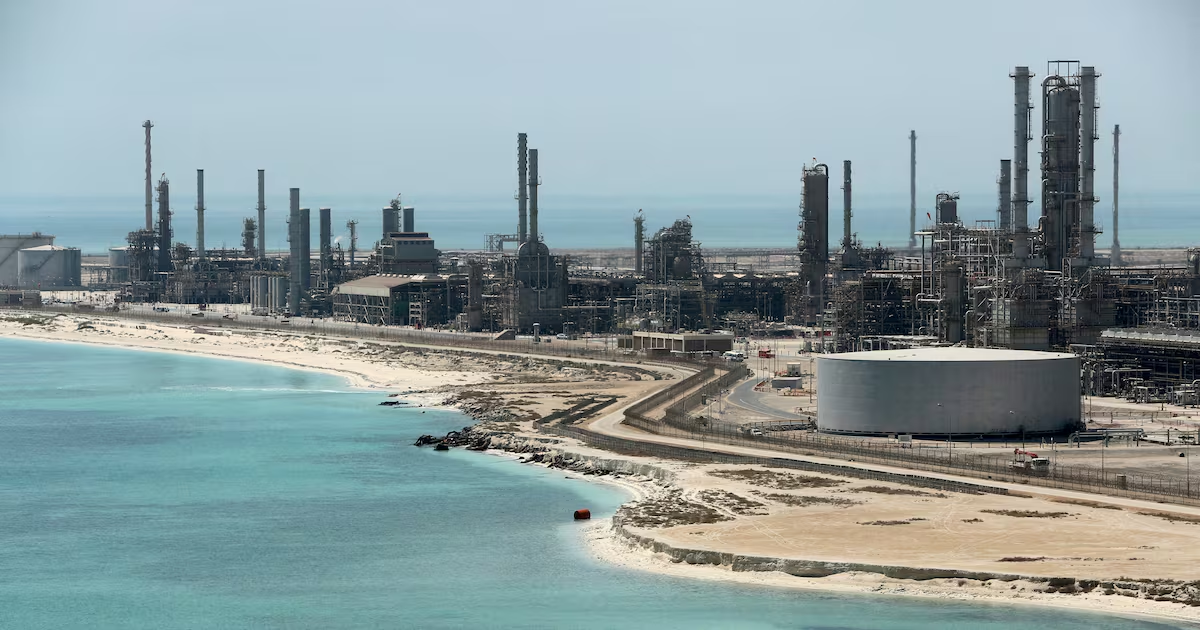
Saudi Aramco's Ras Tanura oil refinery and oil terminal in the country's eastern province. Aramco leaned on its East-West pipeline, which ran at its 7 million bpd maximum capacity in Q1, to reroute crude to Red Sea terminals. ReutersShow caption: Saudi Aramco's Ras Tanura oil refinery and oil terminal in t…Higher prices of refined and chemical products and crude oil boost revenueSaudi Aramco reported about 42 per cent annual jump in its second-quarter net profit, as the world's largest oil exporter navigated a quarter marked by regional war and repeated attacks on its export infrastructure.Net profit attributable to shareholders of the company for three months to the end of June climbed to 121.5 billion Saudi riyals ($32.45 billion), the company said in a filing on Tuesday to Tadawul stock exchange, where its shares are tradedRevenue rose 19 per cent to 450.77 billion riyals, "driven by higher prices of refined and chemical products and crude oil, partially offset by lower volumes sold of crude oil and refined and chemical products", the company said."Despite the unprecedented supply disruption through the Strait of Hormuz, we continued to demonstrate our ability to maintain business continuity by capitalising on our diverse asset base and multi-decade planning, including strategic infrastructure such as the East-West pipeline, storage capacity, and export terminals," said Aramco president and chief executive Amin Nasser."That enabled us to sustain production and exports while advancing key projects, despite the challenging regional environment."Adjusted net income rose to $33.3 billion in the April to June period as against $25 billion in the same period last year.Realised crude price averaged $108.1 per barrel during the quarter compared to $66.7 per barrel for the same period last year and $76.9 per barrel in the first quarter.Hydrocarbon production averaged 9.46 million barrels of oil equivalent per day, down from 12.61 mboed in the first quarter of 2026, after Iran's closure of the Strait of Hormuz forced production cuts.The quarter unfolded against the backdrop of the Iran war, which resumed on July 11 after a collapsed interim peace deal, with US strikes on Iran running over a dozen consecutive nights before a lull. Iran has targeted tankers transiting Hormuz in response, squeezing the kingdom's primary export route.Aramco leaned on its East-West pipeline, which ran at its 7 million barrels per day maximum capacity in the first quarter, to reroute crude to Red Sea terminals.In late July, the Houthis declared a maritime blockade on Saudi ports, threatening the Bab Al Mandeb corridor that had been vital to getting Saudi oil supply to customers in Asia.Updated: August 04, 2026, 5:53 AM
Aramco posts 42% jump in Q2 profit despite supply disruptions | The National
Higher prices of refined and chemical products and crude oil boost revenue
429 words~2 min read