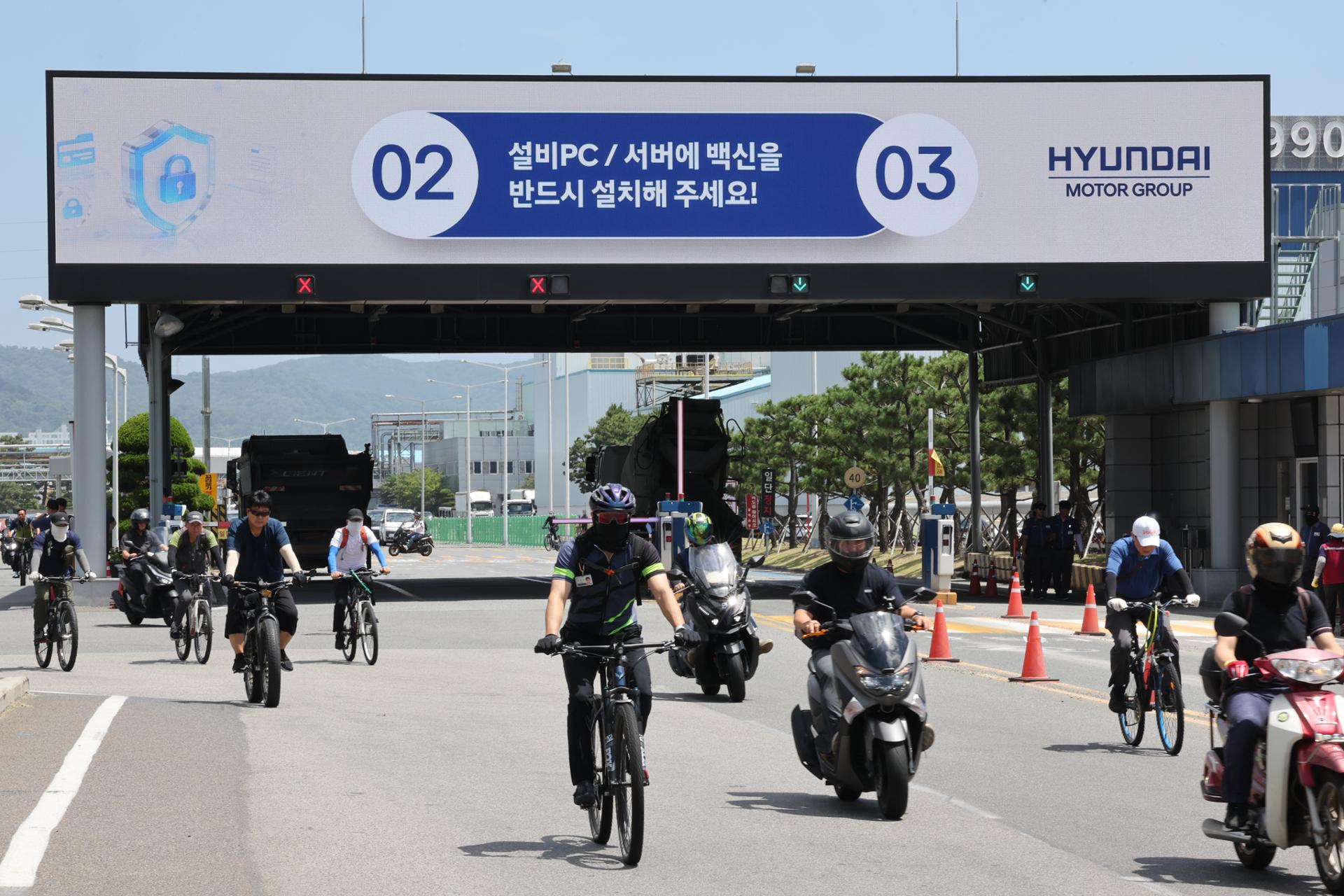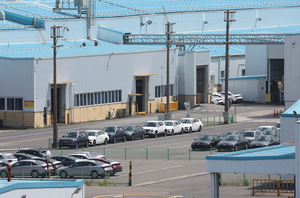
Hyundai Motor Co.’s Ulsan plant is pictured on July 20 following the labor union’s four-hour partial strike. (Yonhap) Hyundai Motor Co. reported weaker sales in July as an ongoing labor dispute disrupted production, making it the only major South Korean automaker to cite a strike as a key factor behind its sales decline.Hyundai Motor said Monday it sold 318,454 vehicles worldwide in July, down 5.1 percent from the previous year. Domestic sales fell sharply by 14.4 percent to 48,113 units and overseas sales dropped 3.2 percent to 270,341 units.A company official said, “July sales were impacted by a slowdown in overall industry demand, strike-related production disruptions and customers delaying purchases while waiting for new models.”Hyundai Motor’s union launched a third round of four-hour daily partial strikes from July 29 to 31, extending a series of walkouts that began earlier in the month as wage negotiations remained at a stalemate.With no progress made since their 15th round of bargaining on July 8, wage talks have effectively stalled for nearly three weeks. The two sides remain split over wage and bonus increases, the reinstatement of dismissed union members and an extension of the retirement age.In comparison, other automakers saw limited impact from labor strikes. Notably, Hyundai’s smaller sibling Kia, which has yet to go on a strike this year, sold a total of 298,037 vehicles in July, up 13.4 percent from a year earlier. Domestic sales rose 21.3 percent, while overseas sales increased 11.6 percent, extending its growth streak to a fifth consecutive month.GM Korea’s union also staged partial strikes in July, though unlike Hyundai Motor, the walkouts did not involve all production shifts. Following a tentative agreement reached on July 22, union members voted on July 28 to approve the deal and ended the strike.Supported by robust overseas demand and a relatively smaller impact from labor disputes, GM Korea recorded the highest sales growth among domestic automakers. It sold 42,119 vehicles in July, up 30.6 percent from a year earlier. While domestic sales fell 37.5 percent to 766 units, exports surged 33.3 percent to 41,353 units, led by strong shipments to North America.Hyundai Motor said it plans to strengthen sales momentum in the second half of this year by launching new models, including the all-new Avante sedan, and stabilizing production.However, industry watchers warn that a prolonged labor dispute could further weigh on Hyundai’s sales and earnings. With the company already facing a 15 percent US auto tariff, resolving domestic production disruptions is crucial to boosting exports and offsetting tariff-related pressures.Meanwhile, Hyundai’s union is set to hold a central strike committee meeting on Aug. 11 to discuss whether it will pursue additional labor actions.
Strikes drag Hyundai’s July sales as Kia extends gains
Hyundai Motor Co. reported weaker sales in July as an ongoing labor dispute disrupted production, making it the only major South Korean automaker to cite a stri
443 words~2 min read