Tuesday 04 August 2026 5:49 am
| Updated:
Monday 03 August 2026 3:09 pm
Narayan’s visa push builds on proposals he unveiled earlier this year
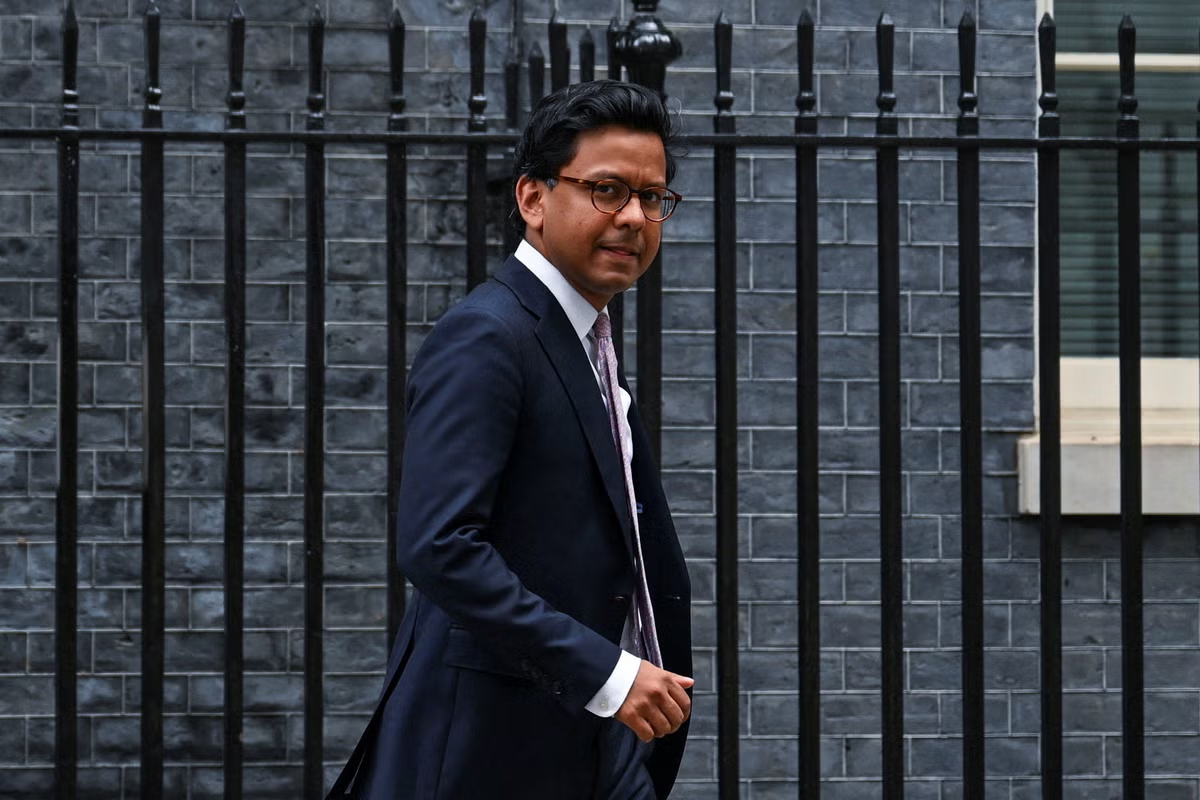
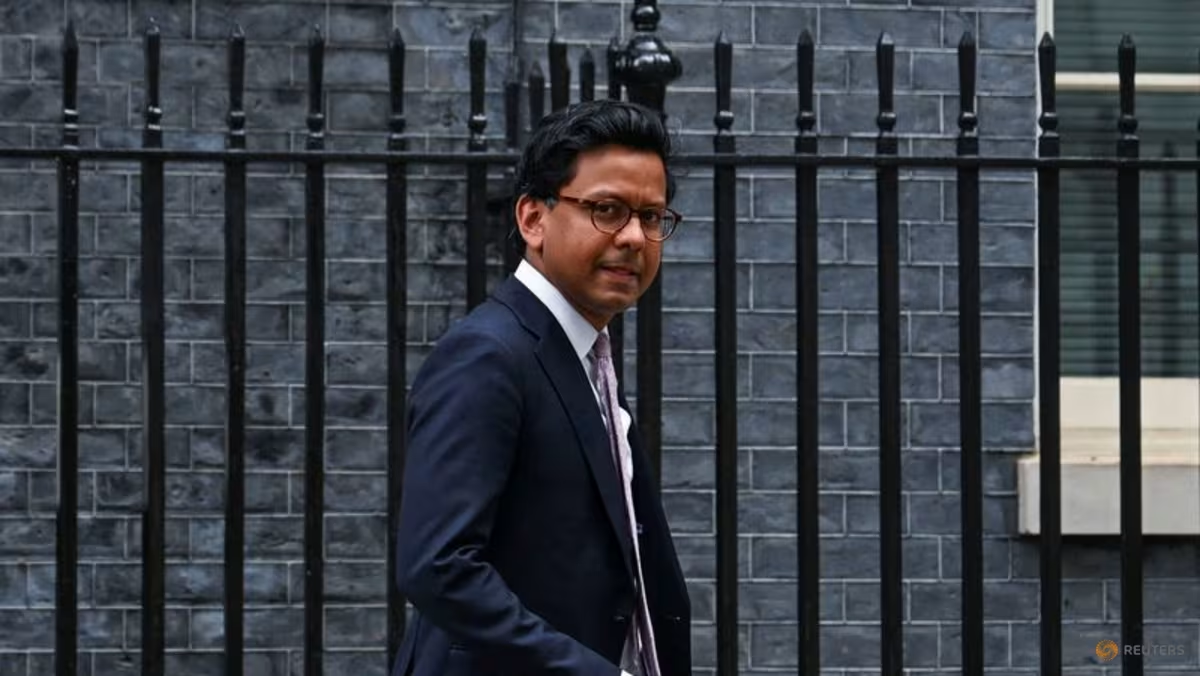
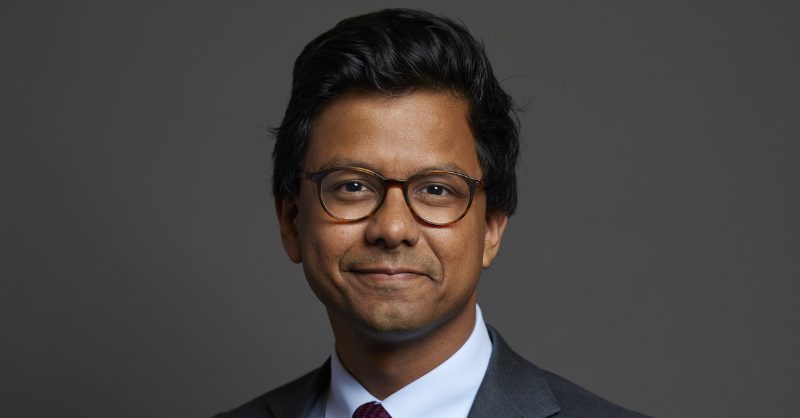
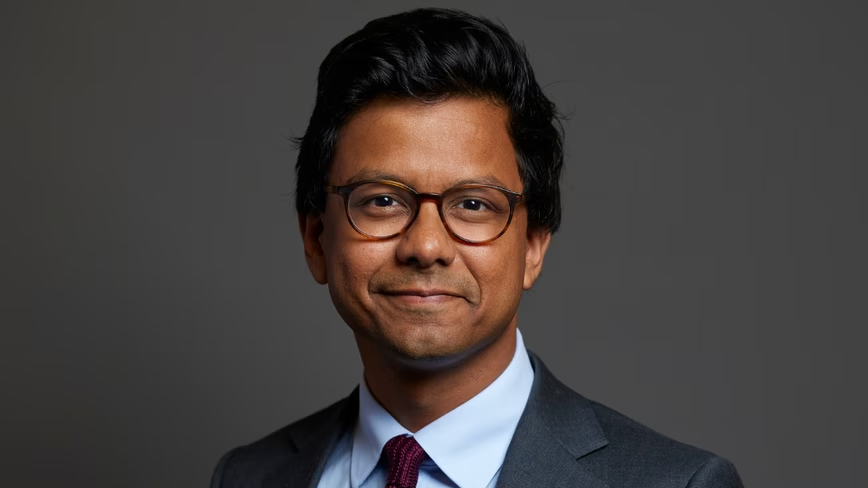
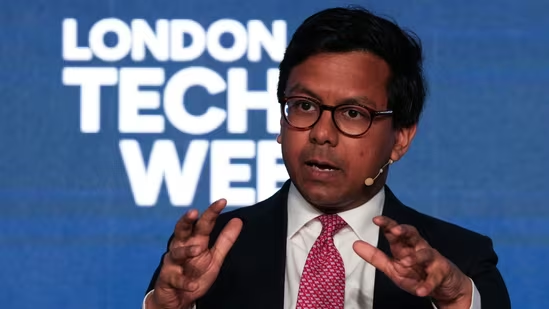
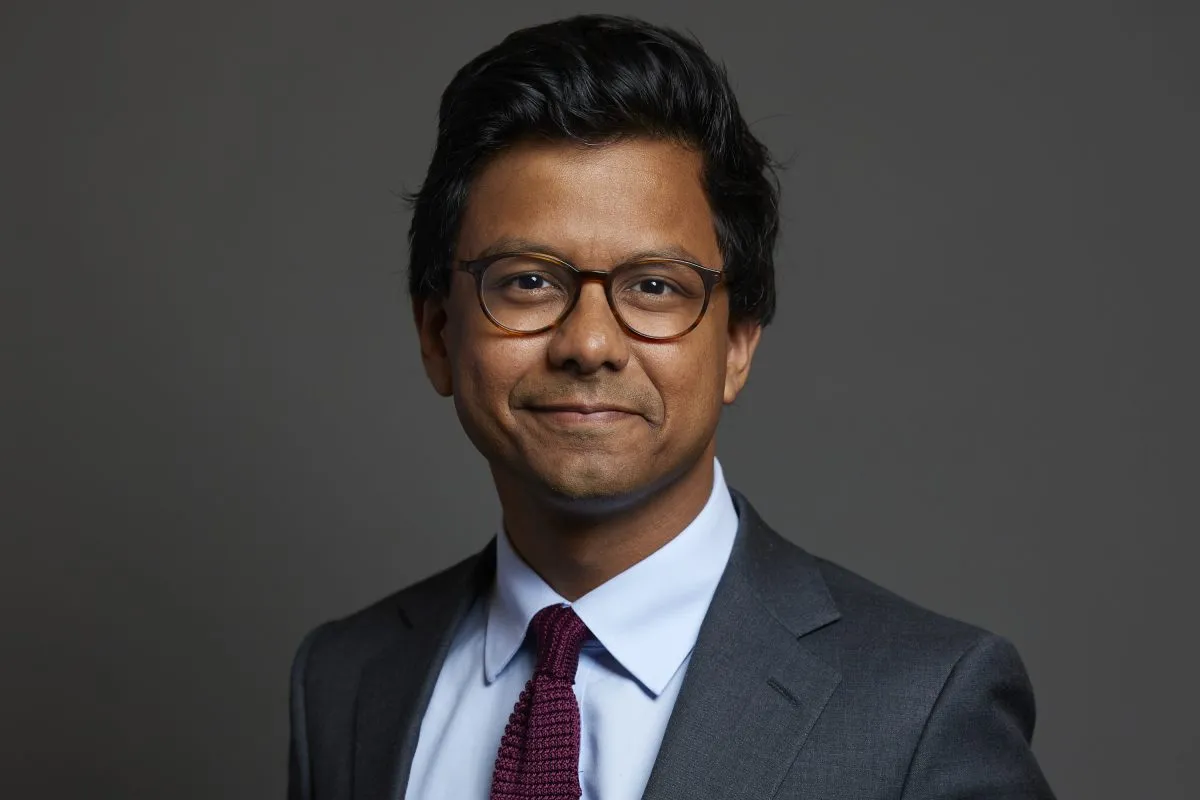
The appointment of Kanishka Narayan, Britain’s first Cabinet-level minister for AI is an acknowledgement that this technology is the central economic question of the age, but the minister’s real test is whether he continues to build durable homegrown capability or instead subsidises dependency on non-European platforms, says Stefano PasqualiKanishka Narayan’s appointment as Britain’s first Cabinet-level AI minister marks a shift: AI has moved from a technology brief to an industrial one. It’s a welcome acknowledgement that making the most of AI is, as Mr Narayan himself put it, the central economic question of our age.But AI’s importance to our future prosperity was never in doubt. What’s far less obvious is whether the UK and Europe can stand on their own two feet and offer a credible third choice in a global AI landscape increasingly dominated by a small number of players.Maker, not takerConsumer adoption has made ChatGPT and Claude household names, but many businesses are struggling to deploy AI to its full potential. Getting this right is vital: it’s how AI will translate into productivity and growth across the whole economy, rather than generating a windfall for a handful of firms.However, as AI becomes more critical to business operations, relying on infrastructure and models that businesses do not control can create new considerations around cost, data governance, regulatory alignment and strategic autonomy. The question for British companies is increasingly not where their AI comes from, but whether they can deploy and operate it on their own terms.That’s why the UK’s instinct to be an AI maker, not an AI taker, is the right one. But realising AI sovereignty – in other words, fully owned, not rented or borrowed from someone else – requires making careful choices about who builds and controls it.Whoever owns the compute, the models and the data pipelines ultimately owns the economic upside.Beyond two blocsDespite their obvious in-built advantages, American and Chinese leadership in AI does not mean the global landscape must inevitably coalesce around two dominant ecosystems.The UK, and Europe more broadly, have the talent, capital and culture to create a credible third option: AI built on European infrastructure. With its world-class universities and expertise in science and innovation, Britain should play a leading role in making this happen.Britain and Europe’s real edge is trust. In regulated sectors like financial services, key to this country’s success, trust is the product. And for these businesses to deploy AI at scale, they must own the model, know where the data sits, and who is accountable when something goes wrong.It’s this combination of strengths that will not only enable Europe to build competitive frontier models but also give businesses the tools to start building and taking full ownership of their own AI. In short, every business can become an ‘AI business’.A message to the ministerIt’s encouraging that Mr Narayan understands the urgency here. He acknowledges that there is a narrow timespan in which countries decide whether they shape AI or get shaped by it, and says Britain is “in that window right now”.The £500m Sovereign AI Fund and £1.1bn hardware plan are a start, but the minister’s real test is whether he continues to build durable homegrown capability or instead subsidises dependency on non-European platforms.His first steps should be practical and non-partisan: procurement that favours sovereign capability, compute access for scale-ups, and a regulatory posture that treats trust as the catalyst for adoption.More broadly, he must help foster an environment in which business, government, and academic institutions can work in concert to ensure the UK and Europe can build AI on a foundation of trust and openness. It’s this combination that represents a genuine competitive advantage, ensuring the continent plays a role in shaping the defining technology of our time.Stefano Pasquali is executive vice president at Domyn