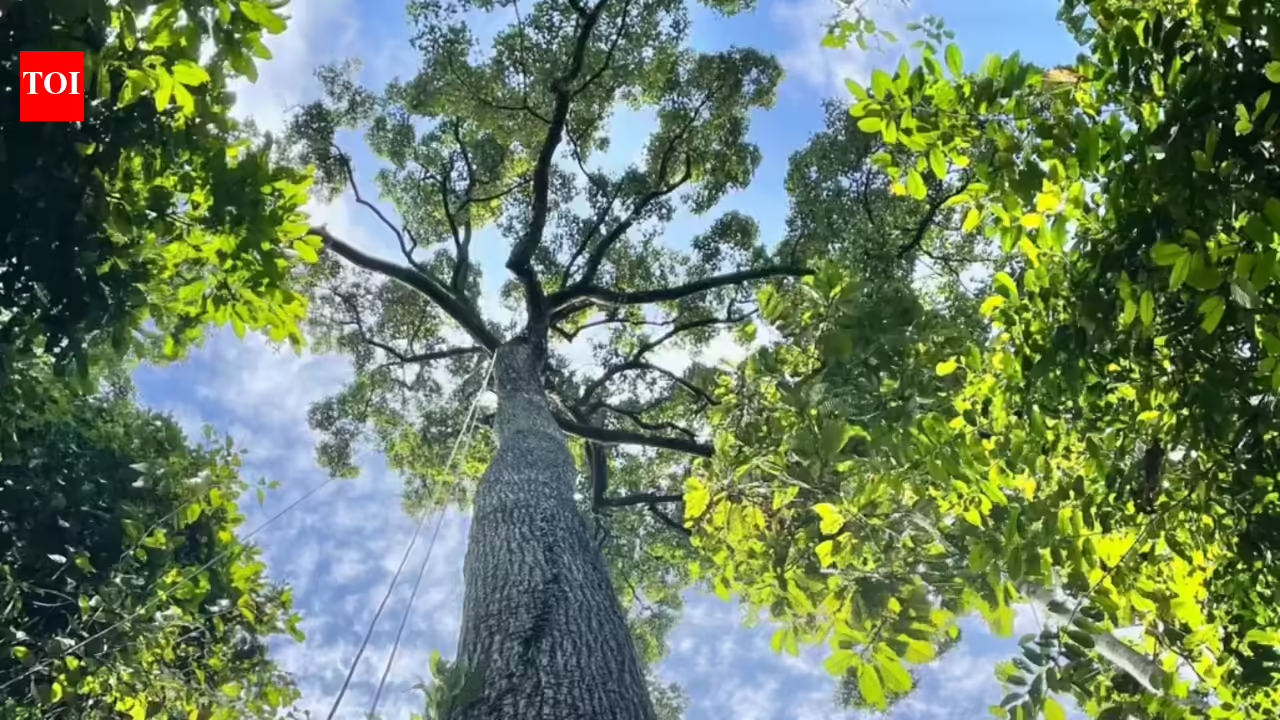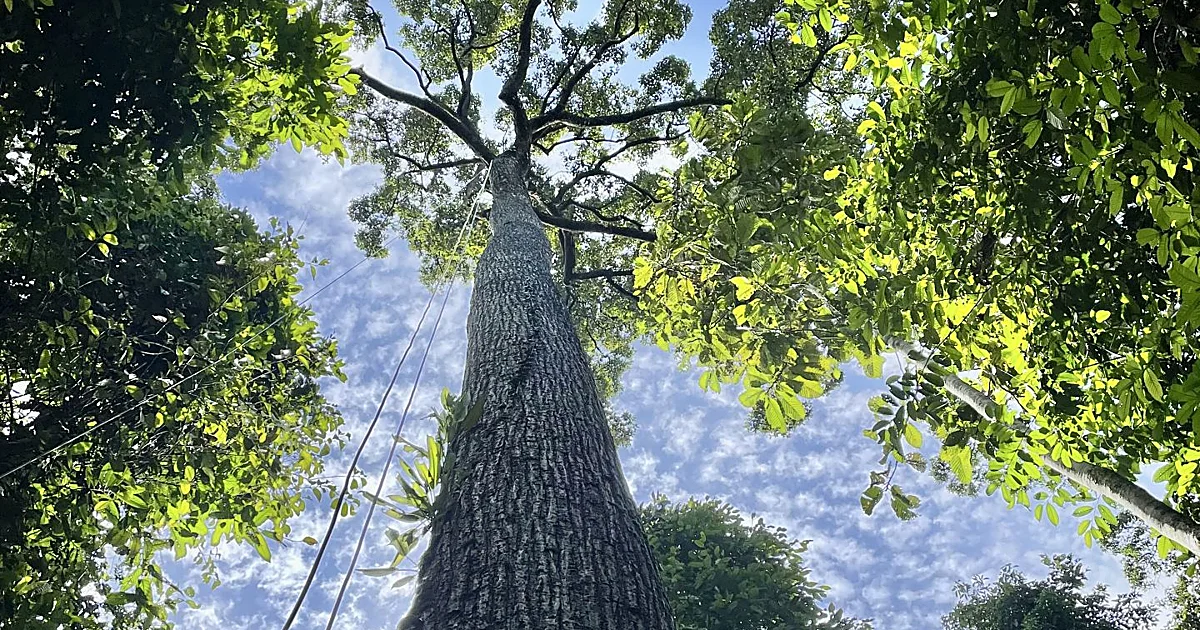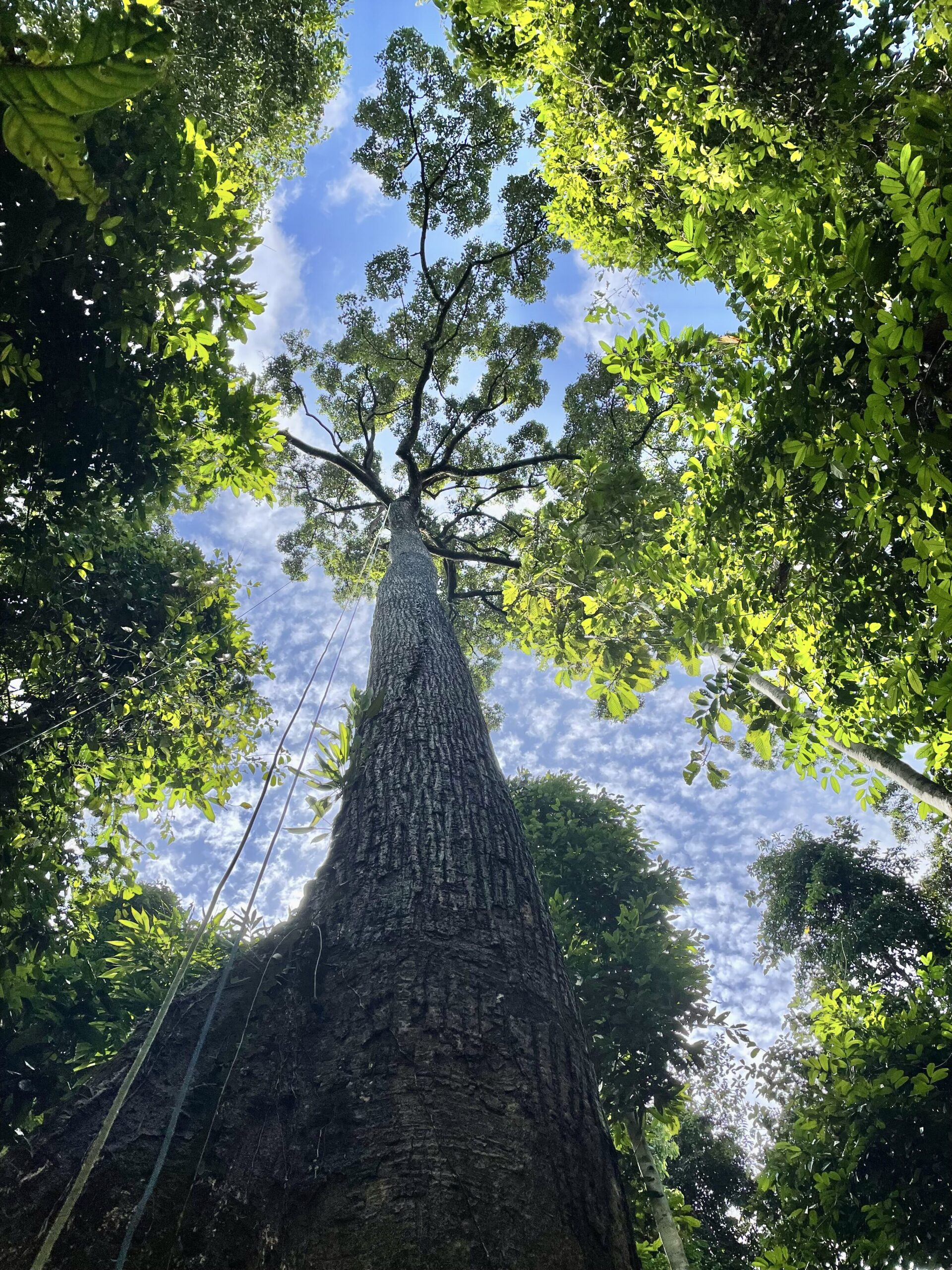
Giant tropical trees in Malaysian Borneo pump water to their highest branches just as easily as to their lower-most branches, a new study says.
Researchers say this suggests tall trees are not more vulnerable to drought than shorter trees, as was previously believed.
For decades, scientists have hypothesized that as trees become taller, the effects of gravity and the longer paths that water needs to travel hinder their growth.
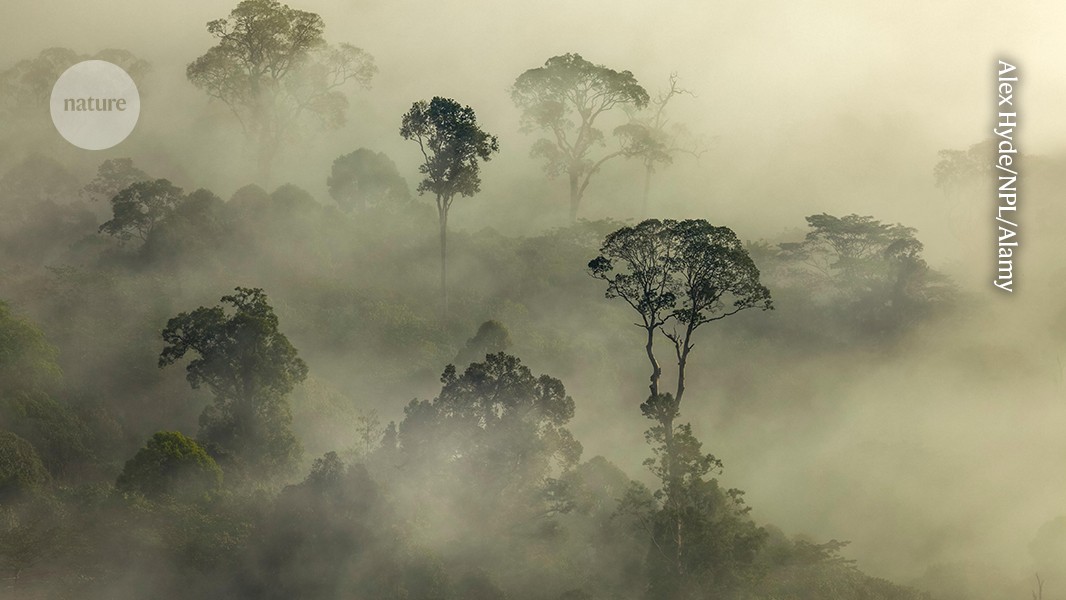
In this latest study, researchers examined 38 trees of five species from the Dipterocarpaceae family in Malaysia’s Kabili-Sepilok Forest Reserve in northeastern Borneo. The trees, including keruing putih (Dipterocarpus caudiferus), kapur (Dryobalanops lanceolata) and meranti pepijat (Rubroshorea johorensis), ranged from 7-71 meters (23-233 feet) tall. Dipterocarps are the tallest flowering trees in the world, and dominate Southeast Asian rainforests.
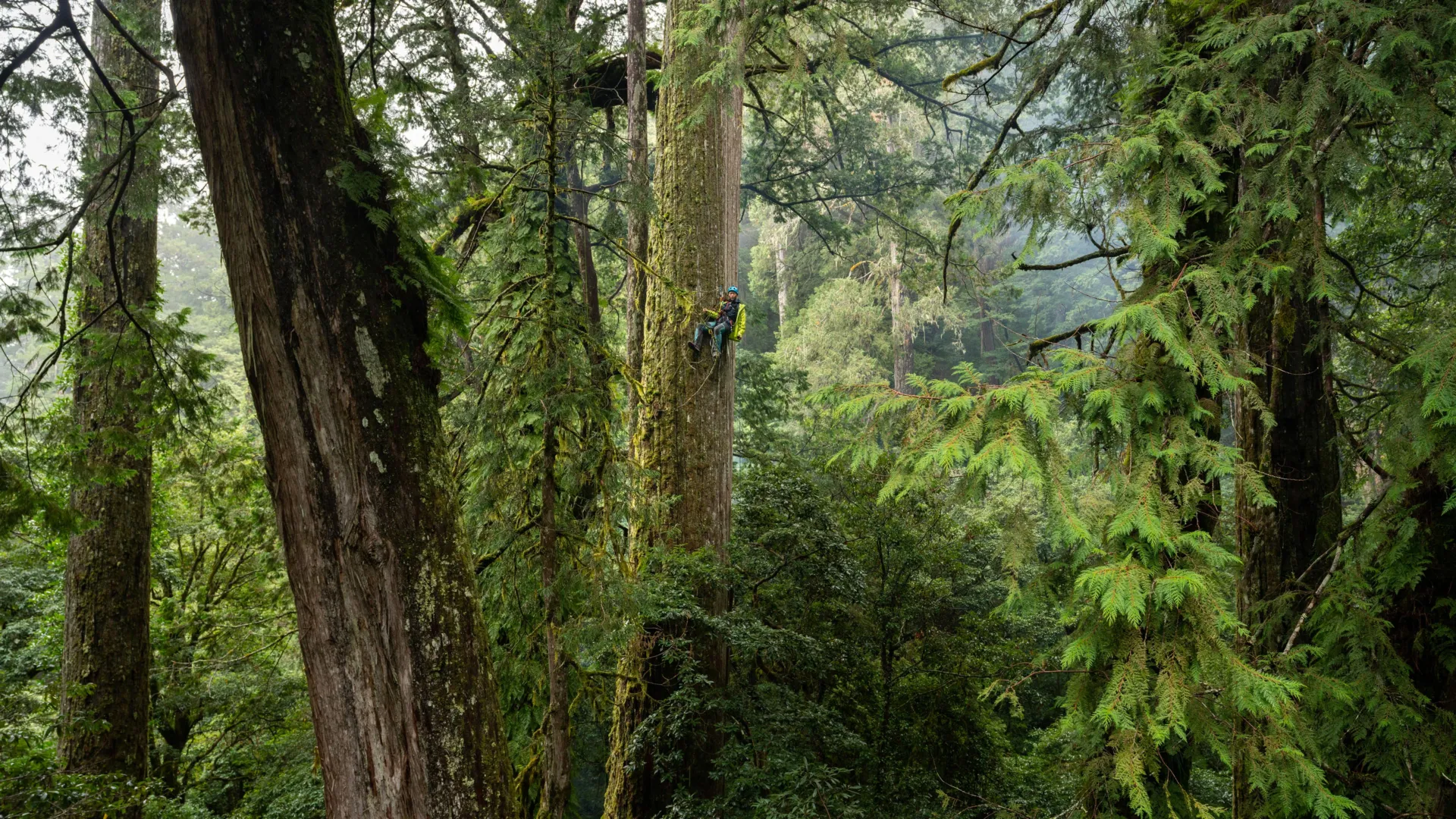
Specialist climbers scaled each tree to collect branches from different parts of the canopy. The researchers then measured several traits of the vessels inside the wood that carry water, as well as of the wood and leaves of the branches.