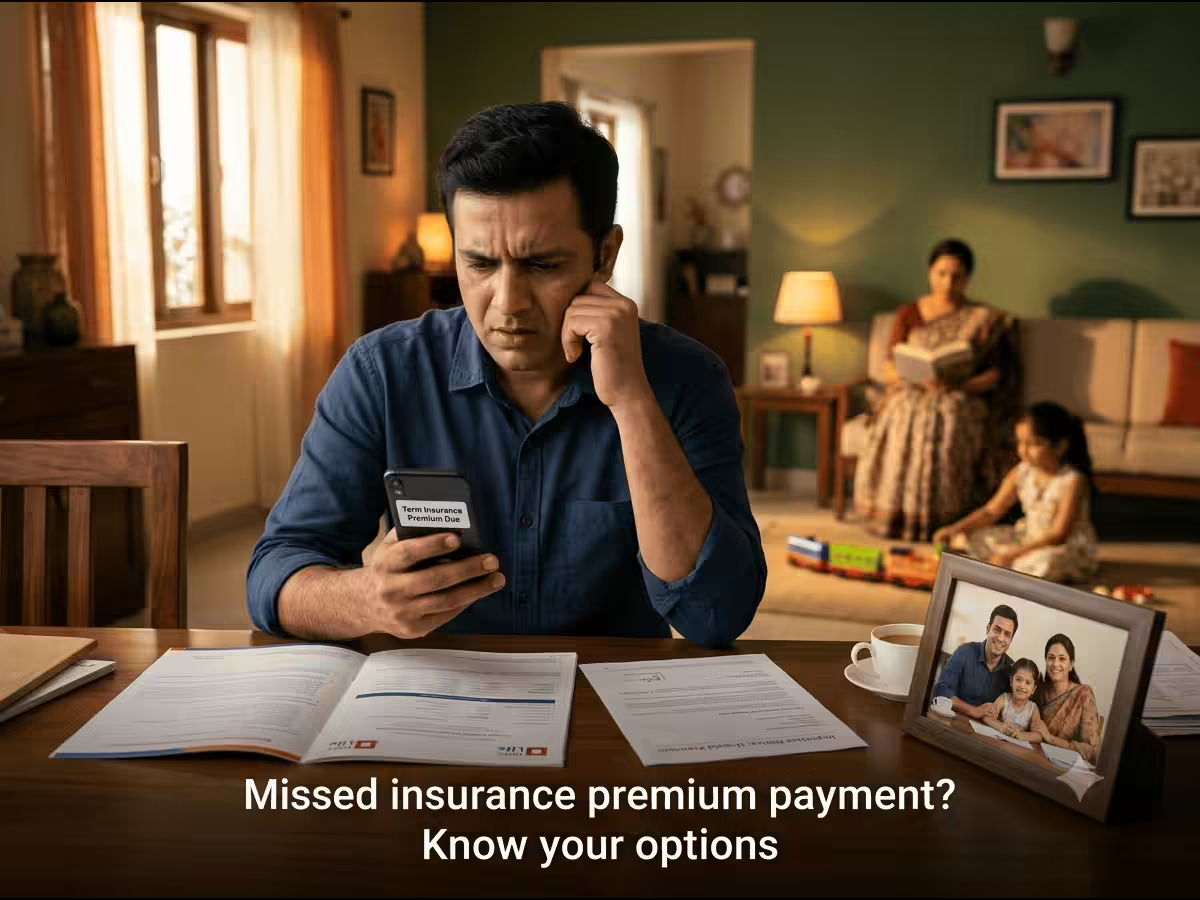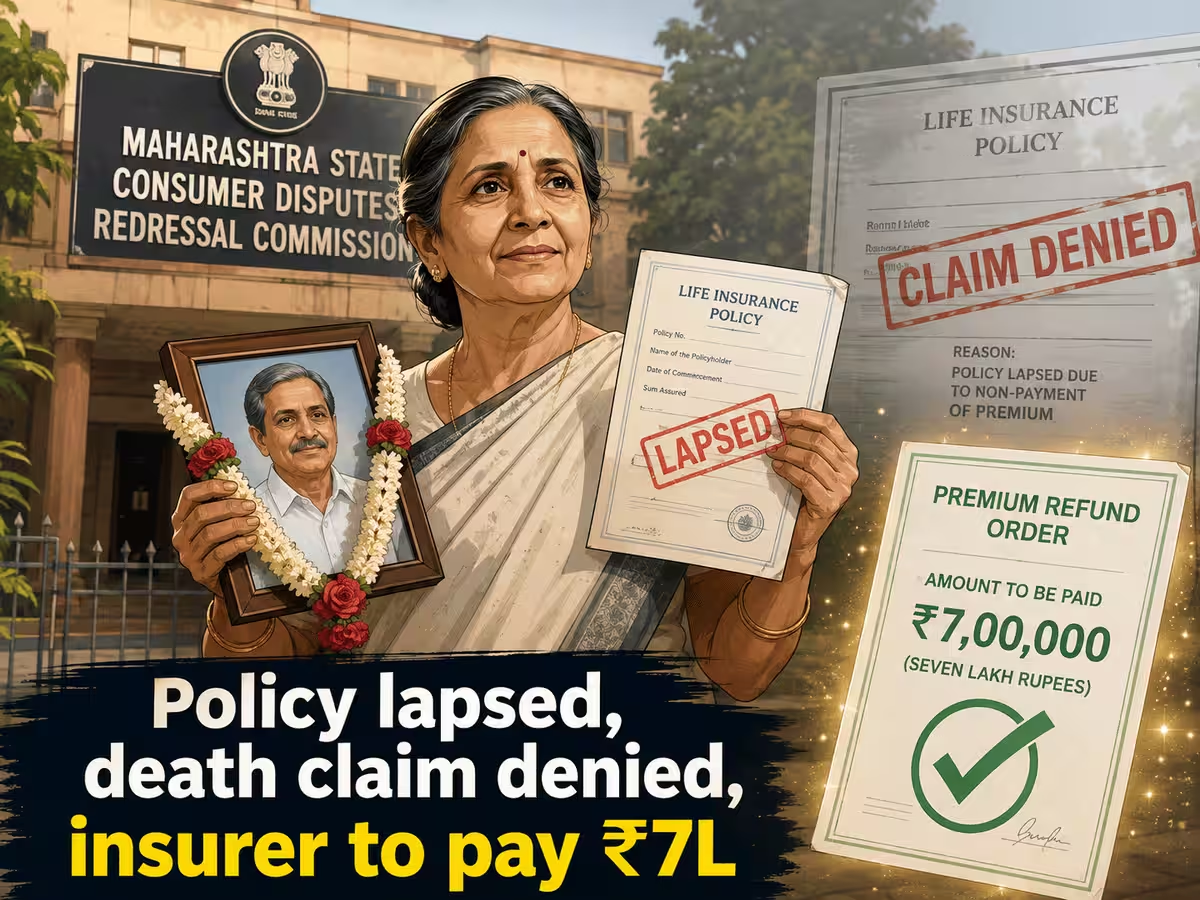
Can a life insurer reject a death claim because the policy had lapsed and still be asked to refund the premium paid by the policyholder? In a significant ruling, the Maharashtra State Consumer Disputes Redressal Commission upheld HDFC Life's decision to deny a Rs 70-lakh death claim after finding that the life insurance policy had lapsed due to non-payment of the renewal premium.However, the Commission also directed the insurer to refund the Rs 7 lakh first-year premium to the widow, observing that retaining the entire premium despite these exceptional circumstances would amount to unjust enrichment. Here’s why the consumer court ruled this way:What was the dispute?The case revolved around a complainant whose late husband had purchased an HDFC Life Classic Assure Plus policy by paying an annual premium of Rs 7 lakh. The policy offered a minimum death benefit of Rs 70 lakh.Before you continue readingHow financially free are you?Most people overestimate their financial freedom. Discover your Financial Freedom score through a quick surveyAccording to the complaint, the policyholder paid only the first annual premium. The second premium, which fell due on October 3, 2016, was never paid, even within the contractual grace period of 30 days.Therefore, under the policy terms, the insurance cover had ceased and the policy was no longer in force on the date of the insured's death, i.e., 4 July 2017, explains Vivek Kumar, Advocate, Delhi High Court.Before his death, however, HDFC Life sent him an email reminding him to pay the overdue premium and mentioned that the payable amount would remain valid until July 5, 2017. Unfortunately, he passed away on July 4, 2017, one day before that date. His widow subsequently filed a death claim, which the insurer rejected on the ground that the policy had already lapsed.Why did the widow challenge the insurer's decision?The complainant argued that since the insurer had sent an email stating that the premium amount was "valid till 05.07.2017," the policy should be treated as subsisting.She contended that while HDFC Life had asked the policyholder to pay the renewal premium and stated that the amount was valid till July 5, it later rejected the claim by stating that the policy had lapsed much earlier, from October 3, 2016. She alleged that this amounted to a deficiency in service and an unfair trade practice, and sought payment of the Rs 70 lakh death benefit or a refund of the premium already paid.Why did the consumer commission reject the Rs 70 lakh death claim?The Commission agreed with the insurer that the policy was not in force on the date of the policyholder's death. The Commission rejected this argument after carefully interpreting the email. “It observed that the email merely specified the validity of the premium calculation required for policy revival and did not extend the insurance coverage or revive the policy automatically,” says Kumar.Revival required payment of outstanding premiums along with compliance with IRDA regulations, which never happened before the insured's death, he adds.At the same time, the Commission felt that the insurer could not retain the entire premium of ₹7 lakh under the peculiar facts of the case. It noted that:the insurer had already enjoyed the benefit of retaining a substantial amount of ₹7 lakh;the insurer itself had kept the revival window open until 5 July 2017;the insured unfortunately passed away just one day before the expiry of that revival period; andAllowing the insurer to forfeit the entire premium without providing any effective benefit to the consumer's family would result in unjust enrichment and would defeat the beneficial object of the Consumer Protection Act.HDFC Life's response to the consumer commission rulingResponding to ET Wealth Online, HDFC Life said: “Sending premium reminders to keep the policy active, informing and handholding claimants and nominees, keeping contact details updated, are some of the many best practices we encourage our policyholders to follow and remind them to do so on a regular basis.” “We ensure the policyholders have a grace period for premium payment, in case they are unable to pay timely premiums which could lead to lapsation of the policy. As a standard operating procedure, these steps apply to all policies.“We cannot discuss the specifics of this case due to reasons of customer confidentiality. We respect the order passed by the Hon'ble Maharashtra State Consumer Dispute Redressal Commission that reinforces the need to pay premiums on time in order to continue with adequate life cover, and will review it closely to ensure complete compliance with all requirements.”Why was HDFC Life still directed to refund Rs 7 lakh?The rationale behind the Commission's decision was based primarily on the equitable doctrines of fairness, prevention of unjust enrichment and the beneficial nature of consumer protection law rather than on the insurance contract itself.The Commission expressly acknowledged that, under the policy terms, the insurer was entitled to reject the death claim because the policy had lapsed before the insured's death. Therefore, contractually, no death benefit was payable, Kumar explains.However, the Commission also observed that:the insurer had already retained ₹7 lakh paid by the insured;the insurer had continued issuing revival communications;the revival quotation remained valid until 5 July 2017;the insured died only one day before that validity expired; andretaining the entire premium despite these exceptional circumstances would amount to unjust enrichment and an unconscionable application of a standard-form insurance contract.Accordingly, the Commission ordered the insurer to refund the premium paid under the Consumer Protection Act, but did not allow the death benefit under the policy.What relief did the consumer commission grant?The Maharashtra State Consumer Commission partly allowed the complaint and directed HDFC Life to:Refund the Rs 7 lakh annual premium to the complainant within 45 days.Pay 9% interest if the refund is not made within the stipulated period.However, it rejected the widow's claim for:Rs 70 lakh minimum death benefit24% interestSeparate compensation for mental agony.What should policyholders learn from this judgment?The most important lesson is also the hardest one: a lapsed policy is genuinely dead.“No reminder email from the insurer, no revival window and no equity argument will resurrect the death benefit once the premium goes unpaid beyond the grace period. Families often discover this only after a claim is rejected,” says Amitraj Kaushal, Advocate at Supreme Court of India.The second lesson is to read revival communications carefully. An email quoting a revival amount with a validity date is not a confirmation of active cover. It is an invitation to pay and revive, Kaushal adds.The third lesson and perhaps the most practical one is to set standing instructions for annual premium payments on large life insurance policies. The cost of missing one premium here was Rs 70 lakh in death benefit. No reminder is more reliable than an auto-debit, he continues.Overall, the judgment reminds consumers that while contractual obligations must be honoured, consumer protection law also seeks to prevent one party from obtaining an unfair advantage at the expense of another.
Life insurer rejected Rs 70 lakh death claim, but consumer commission ordered it to refund Rs 7 lakh premium despite a lapsed policy; here's why - The Economic Times
A life insurer denied a seventy lakh death claim after a policy lapsed. The policyholder had paid seven lakh as the first year premium. The consumer commission ordered the insurer to refund this initial premium payment. This decision prevented unjust enrichment by the insurance company. Policyholders must pay premiums on time to maintain active life cover.
1,142 words~5 min read