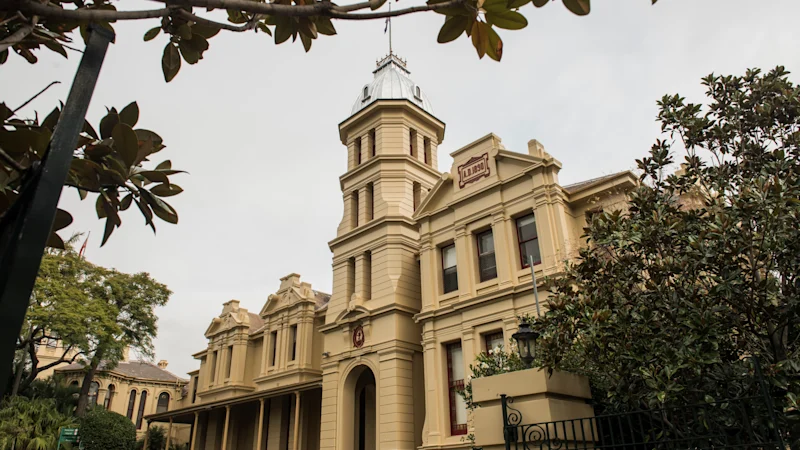
August 4, 2026 — 11:38amThe head of one of Sydney’s high-fee girls’ schools has acknowledged the “shock and hurt” triggered by a vote of the Presbyterian Church’s NSW general assembly held on its campus to exclude women from some future leadership roles within the religion.Members of the church’s general assembly met last month at PLC Sydney’s Audrey Keown Theatre and voted in a two-thirds majority to restrict women from becoming elders – mature Christian leaders within the church who are chosen by a congregation.PLC Sydney is associated with and reports to the Presbyterian Church.Steven SiewertIt prompted numerous ex-students to contact the school to complain, including former school captain Ruth Mueller who wrote that she found the decision “deeply troubling”.“The decision sends a message that no matter how faithful, capable, experienced, or called a woman may be, there remains a level of leadership she cannot attain simply because she is a woman,” she wrote.Dr Rosie Shorter, who graduated from the school in 2000, wrote a letter to school principal Paul Burgis – signed by almost 100 ex-students – asking him to respond to the vote to exclude women.“The reason I wrote to the school was because I felt there was actually a safety issue in the vote,” she said.“Obviously, the school didn’t make the decision – the general assembly did – but making the decision to reverse the opportunity for women to be elders, it is setting up a form of gender inequality.”In the face of the anger of the ex-students, Burgis wrote to the school community last Wednesday.“I am an employee of the College and external to church decisions, but I do know of the College Council’s supreme commitment to the education of young women and girls,” he said.He listed numerous high-profile ex-students who have gone on to be leaders across science, medicine, politics, sport and the arts, including University of Sydney pro vice-chancellor Katherine Belov, former Supreme Court justice Carolyn Simpson and former Australian senator Kerry Nettle.That letter infuriated several former students even further.“What disappointed me most was not only the decision itself, but the absence of empathy in your response,” wrote Susie Lawson, who graduated in 1989, in a subsequent letter to Burgis.“Perhaps what saddens me most is imagining the message this sends to today’s students. We encourage our girls to believe they can become judges, surgeons, scientists, CEOs or prime ministers, yet they now see that within the governing church of their own school there remain leadership positions unavailable to them simply because they are women.”Another former student, Dr Sandra O’Toole, also responded to the principal to say the school’s history of producing outstanding women should not be used to “soften the impact” of the decision that ultimately limits women’s authority.“The school cannot take pride in the achievements of its alumnae while remaining too cautious about a decision that diminishes women’s leadership within the church that governs it,” she said.“I would have hoped to see the school denounce the implication that women are unsuitable for particular forms of leadership, rather than seek to reassure the community while appearing to accommodate or defend the decision.”PLC Sydney principal Dr Paul BurgisDr Burgis wrote a further letter to the school community on Friday, noting the volume of emails and messages expressing dissatisfaction with the decision.“It is fair to say that there were three common elements in the feedback: an overwhelming sense of shock and hurt that this overture was supported by the Church, that it occurred on our school grounds, and that my initial communication didn’t fully cover the issue,” he wrote.He said he had very “very strong feelings” about the issue and would express them to the college council, the church at the highest levels, and via his local presbytery.Women have been allowed to serve as elders in the church in NSW since the 1960s, unlike in the Queensland and Victorian sections of the church.Under the church’s barrier act, the “overture” voted on last month would then be sent to all regional presbyteries (church governing bodies) for approval, which Burgis said was consultative and expected to take around 12 months.If the majority approve it, the overture returns to a future general assembly for final ratification before becoming church practice.“Some ex-students have been asking for me to voice my opinion clearly in the media. It is very important to recognise that the church has a wide-ranging internal consultative process that has not yet begun,” Burgis said.In response to questions from Herald, Burgis said he’d been assured it would have no impact on school governance, operations, teachings, or culture.“We will continue uncompromised in our 140 years of tradition regardless of the outcome of the next 12 months of Church-led consultation on this matter before any decision is made on whether the proposed change becomes Church law.”From our partners
‘Shock and hurt’: The religious meeting that left Sydney private school old girls fuming
The PLC Sydney principal wrote two letters last week to address the volumes of emails and messages sent in the wake of a Presbyterian Church vote.
797 words~4 min read