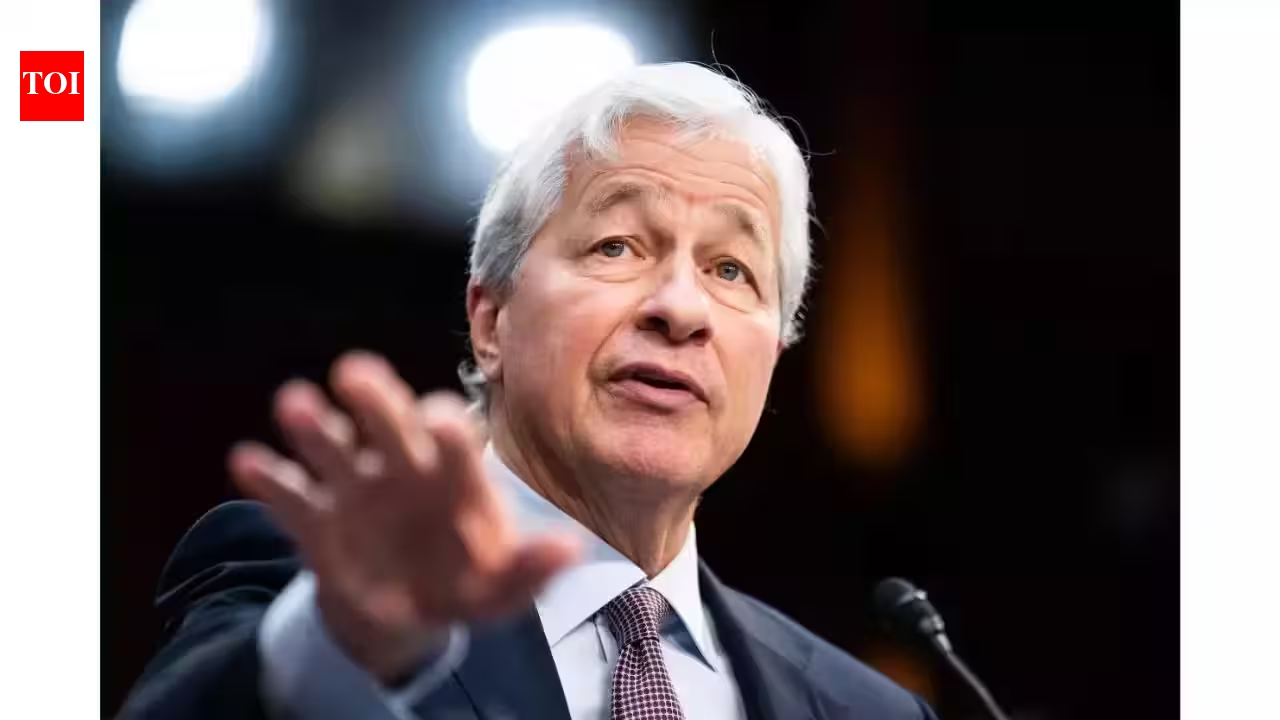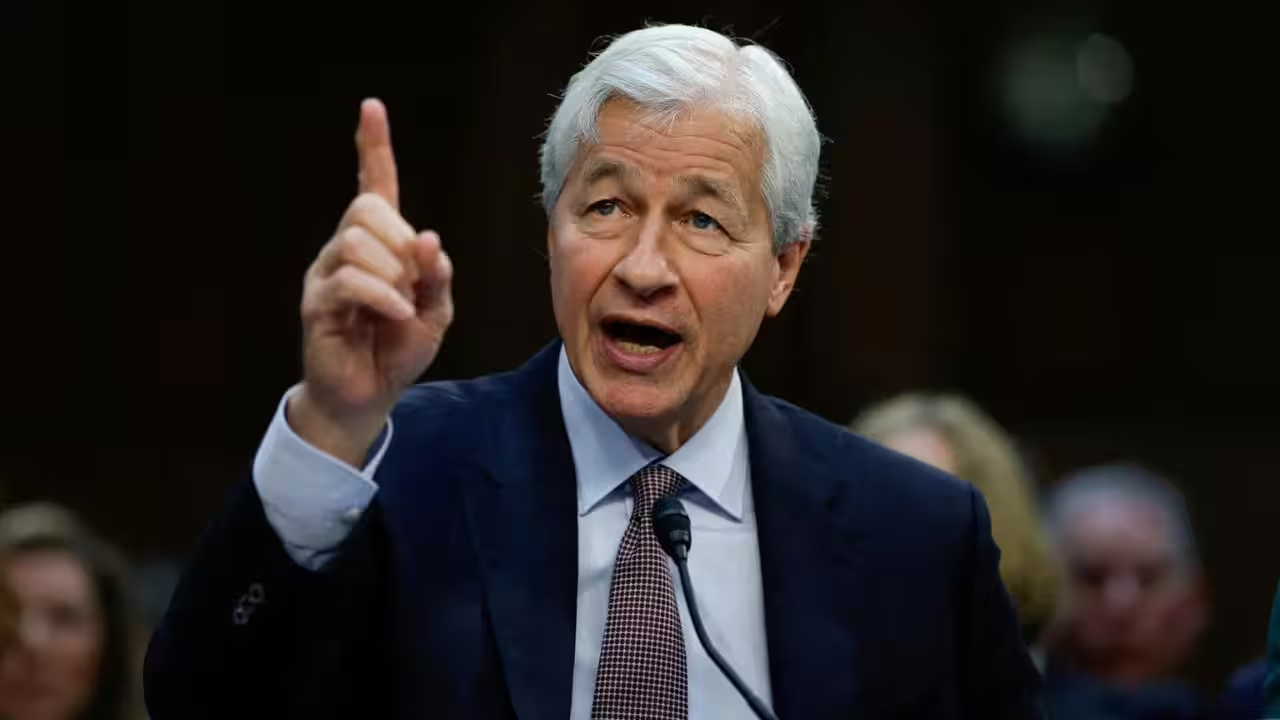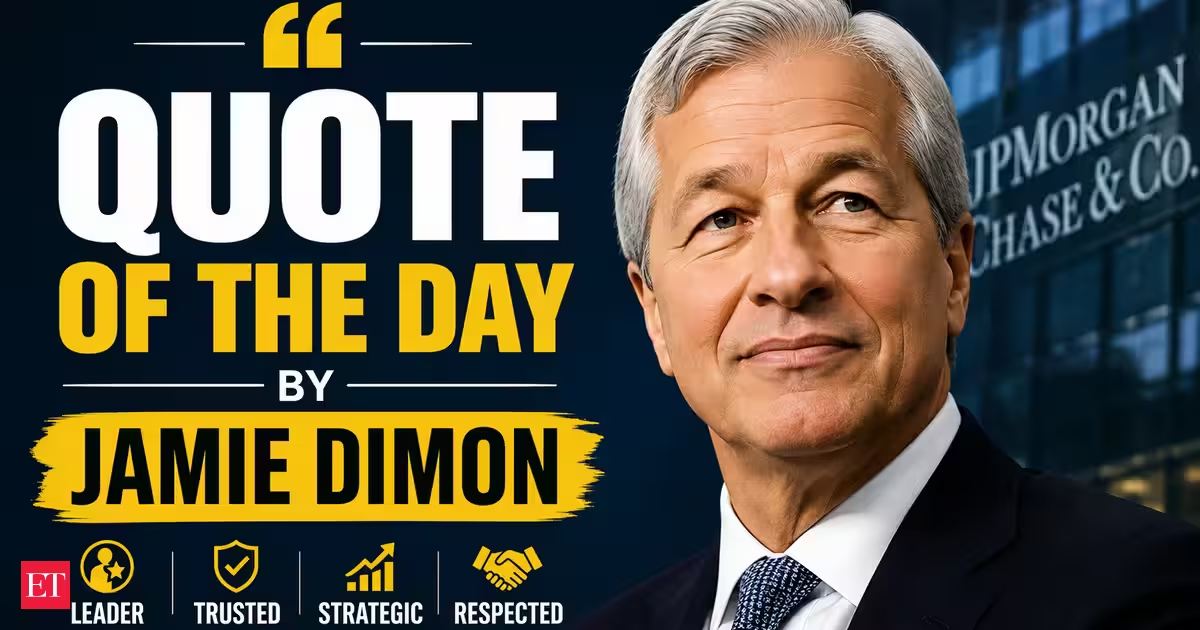
Quote of the Day by Jamie Dimon reminds us that the best leaders first look at themselves before expecting others to follow. His words encourage honesty, accountability, and the kind of character that builds lasting respect. Jamie Dimon's powerful leadership message speaks to everyone, whether you manage a global company or simply want to become a better person. His quote shows that real influence comes from fairness, integrity, and setting the right example. It is a timeless reminder that people willingly follow leaders they genuinely trust.Famous Quote of the Day by Jamie Dimon: Lessons on Leadership, Trust, Governance, and AccountabilityQuote of the Day Today by Jamie Dimon: “And if you’re going to be a leader, you know what I ask myself? Would I want to work for you in this job? Would I let my children work for you? Would I give you this job if I wasn’t there to provide oversight? If you went to run another company, would I, as an investor, invest in that company?”— Jamie DimonIt delivers one of the simplest yet most powerful lessons about leadership. Instead of asking whether people admire or obey us, he encourages a more honest question: Would I choose to work for someone like me? That single thought changes the way we think about trust, respect, fairness, and responsibility. Great leaders inspire confidence because their actions match their words.Jamie Dimon's quote is relevant far beyond the workplace. It applies to parents, teachers, entrepreneurs, students, and anyone who influences others. Real leadership is not built through authority or titles. It is built through character, consistency, and the way we treat people every day. When you become someone others genuinely want to follow, you don't have to demand respect—you naturally earn it.Meaning of Jamie Dimon's quote about leadership This widely shared quote, often attributed to Jamie Dimon in leadership discussions and business interviews, captures one of the most important principles of effective leadership.Rather than asking whether employees respect their manager, Dimon suggests leaders should first evaluate themselves. Would their own behavior inspire confidence? Would their communication make people feel valued? Would their decisions create an environment where talented individuals choose to stay?The quote shifts leadership from authority to responsibility. It reminds us that credibility comes from consistency, humility, honesty, and accountability. Employees rarely remember impressive speeches, but they always remember how leaders treated them during difficult moments.The message is timeless because leadership is ultimately measured by the trust people willingly place in someone—not by the position written on a business card.Leadership starts long before someone receives a promotion. Every person influences family members, friends, classmates, teammates, or colleagues through everyday actions.People naturally follow leaders who: Keep their promises. Accept responsibility for mistakes. Listen before speaking. Treat everyone with respect. Stay calm during uncertainty. Share success with others. Make fair decisions even when difficult. When leaders consistently demonstrate these qualities, trust grows naturally. Employees become more engaged, teams collaborate better, and organizations become stronger. Jamie Dimon's quote reminds us that influence cannot be forced. It must be earned every day.Jamie Dimon's Four Tests of Leadership1. Personal Respect: "Would I want to work for you?"2. Psychological Safety: "Would I let my children work for you?"3. Unmonitored Trust: "Would I give you this job without oversight?"4. Capital Stewardship: "Would I, as an investor, invest in you?"Why You Should Lead with Accountability and TrustIn an era dominated by rapid organizational shifts and digital transformation, technical skills can quickly become obsolete, but core character remains permanent. Adopting the principles behind Quote of the Day by Jamie Dimon allows professionals across every industry to build resilient, high-trust careers.Leading with accountability begins by aligning your personal values with your professional conduct. When team members recognize that their leader operates with absolute transparency, mutual trust flourishes, driving engagement and reducing operational friction.Furthermore, prioritizing long-term reputation over short-term gain creates a protective moat around your career. Professionals who consistently pass Dimon’s four-part test naturally attract top talent, secure valuable mentorship, and earn the confidence of key stakeholders.Ultimately, trust is the foundational currency of modern business. By holding yourself to the standard of unmonitored reliability, you transform management from a titles-based hierarchy into a genuine practice of influence and character.Early Life of Jamie DimonJames "Jamie" Dimon was born on March 13, 1956, in New York City, into a tight-knit Greek-American family with deep roots in finance. His father, Theodore Dimon, and his paternal grandfather, Panos Dimon, were both stockbrokers at the major brokerage firm Shearson.Growing up alongside his twin brother Ted and older brother Peter in Manhattan, Dimon was immersed in business discussions from an early age. His home environment emphasized financial literacy, intellectual debate, disciplined work habits, and family loyalty.Education and Academic DevelopmentDimon attended The Browning School, an independent preparatory school on Manhattan's Upper East Side, where he demonstrated early academic talent and competitive drive. He pursued higher education at Tufts University, majoring in economics and psychology.At Tufts, Dimon distinguished himself academically, graduating summa cum laude in 1978. His undergraduate thesis analyzed major corporate mergers, signaling his early fascination with corporate structure and financial consolidation.Following a brief stint in management consulting at Boston Consulting Group, Dimon enrolled at Harvard Business School. He earned his Master of Business Administration (MBA) in 1982, graduating as a Baker Scholar—a distinction reserved for the top five percent of the graduating class.Rise as a Banking TitanUpon graduating from Harvard Business School, Dimon turned down higher-paying offers from major Wall Street investment banks to join American Express as an assistant to legendary finance executive Sanford "Sandy" Weill. This decision initiated one of the most dynamic partnerships in American corporate history.Over the next decade and a half, Dimon served as Weill's primary strategist and operational architect. Together, they executed a series of bold corporate acquisitions through Commercial Credit, Primerica, and Salomon Brothers, ultimately orchestrating the historic $76 billion merger with Citicorp in 1998 to create Citigroup, the world's largest financial services organization at the time.Following an abrupt departure from Citigroup in late 1998, Dimon re-emerged in March 2000 as Chairman and CEO of Bank One Corporation, then the nation's fifth-largest bank. Over four years, he executed a comprehensive operational turnaround, streamlining technology systems, strengthening balance sheets, and restoring profitability.Fame, Recognition, and Personal PhilosophyDimon’s career reached its defining chapter in July 2004, when Bank One merged with JPMorgan Chase & Co. Dimon initially served as President and Chief Operating Officer of the combined entity, assuming the role of Chief Executive Officer in December 2005 and Chairman of the Board in December 2006.During the 2008 global financial crisis, Dimon’s insistence on maintaining a "fortress balance sheet" insulated JPMorgan Chase from the severe liquidity crises that crippled rival institutions. Under his direction, the bank stabilized the broader financial system by acquiring Bear Stearns and Washington Mutual during the height of the panic.Dimon’s management philosophy balances rigorous risk management, radical transparency, continuous talent development, and straightforward communication. Frequently named to Time magazine's list of the world's 100 most influential people, he remains one of the financial industry's most vocal global economic leaders.Legacy and Lasting InfluenceAs the longest-tenured CEO of a major Wall Street bank, Jamie Dimon’s influence extends far beyond banking metrics. His stewardship of JPMorgan Chase has established global standards for enterprise risk management, corporate governance, and crisis management.Dimon’s leadership framework offers a clear alternative to short-term corporate thinking. By advocating for transparent governance and ethical accountability, he has influenced how corporate boards evaluate executive performance nationwide.His public letters to shareholders have become essential reading for institutional investors, economic policymakers, and business students worldwide, serving as an annual masterclass on macroeconomic trends, corporate responsibility, and strategic execution.Life lessons from Jamie Dimon's famous QuoteJamie Dimon's famous question—“Would I want to work for me?”—is more than a leadership principle. It is a daily reminder to measure our actions through the eyes of the people we influence. Whether you lead a company, a family, or simply yourself, this quote encourages self-awareness, integrity, and personal growth. Here are the most valuable life lessons hidden within his words.1. Great Leaders Lead by ExamplePeople rarely follow someone because of a title alone. They follow leaders whose actions reflect honesty, fairness, and consistency. If your behavior inspires confidence, people will naturally trust your decisions. Leadership begins with setting the standard you expect from others.2. Self-Reflection Is the Foundation of GrowthBefore asking others to improve, take a close look at yourself. Jamie Dimon's question encourages honest self-evaluation. By recognizing your strengths and weaknesses, you create opportunities to become a better leader, coworker, friend, and family member.3. Trust Is Earned, Never DemandedRespect cannot be forced. It grows when people know they can depend on your words and actions. Keeping promises, admitting mistakes, and treating everyone fairly build lasting trust that no job title can guarantee.4. Character Matters More Than PositionA leadership role may give you authority, but character determines whether people truly believe in you. Integrity, humility, and kindness leave a stronger impression than power or status. The best leaders are remembered for how they treated people, not just for what they achieved.5. Accountability Builds Strong TeamsStrong leaders accept responsibility when things go wrong instead of shifting blame. Owning mistakes creates a culture where people feel safe to learn, improve, and work together. Accountability strengthens both relationships and long-term success.6. Respect Creates Lasting InfluencePeople perform their best when they feel respected and valued. Listening carefully, appreciating different opinions, and recognizing others' efforts help create an environment where trust and collaboration thrive. Respect is one of the greatest qualities a leader can possess.7. Consistency Creates ConfidenceAnyone can make a good impression once. True leadership comes from showing the same values every day. Consistent actions build confidence because people know what to expect from you, even during difficult times.
Quote of the day by Jamie Dimon: “And if you’re going to be a leader, you know what I ask myself? Would I want to work for...” — Inspiring life lessons on leadership, trust, accountability, character, decision-making, and why the best leaders earn confidence before they demand it by the legendary American banker and CEO of JPMorgan Chase
Today's Quote of the Day by Jamie Dimon: Jamie Dimon's quote about leadership deconstructs managerial capability into four distinct human dimensions. Rather than evaluating a leader solely by quarterly performance metrics, revenue growth, or academic credentials, Dimon forces executives to evaluate candidates through personal, parental, structural, and financial lenses.
1,617 words~7 min read