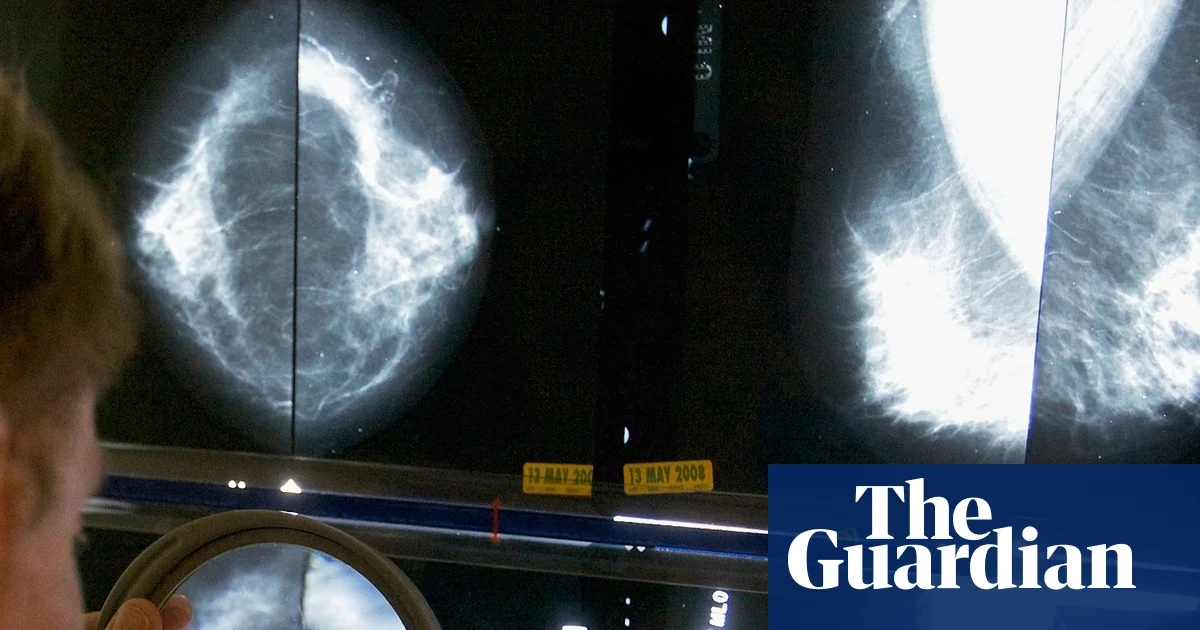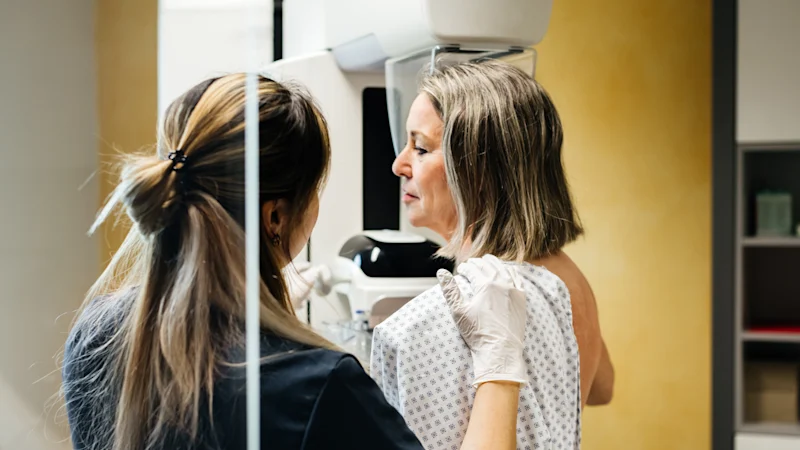
Health service breast screening misses 95 per cent of young women who go on to develop cancer, researchers have found. Once relatively rare, cases of breast cancer in women under 50 have rapidly increased in the UK over the past few decades - rising by around 1.4 per cent every year.The disease is very treatable if caught in its early stages, before it has a chance to spread. But young women are more likely to have their cancers caught late - with women under 40 nearly 40 per cent more likely to die from the condition than those over 40.Now, a concerning new study from researchers at the University of Cambridge and The Institute of Cancer Research, London, has found that the vast majority of breast cancer cases in young women are going missed by the NHS. In England, women under 50 are referred on for further breast cancer screening and surveillance on a case-by-case basis. If a woman is concerned about her breast cancer risk, but does not have symptoms of the disease, such as a lump or change in breast tissue, she can ask her GP to be referred for a breast cancer risk assessment. This specialist service provides advice and screening options for patients, depending on their risk categorisation. Once relatively rare, cases of breast cancer in women under 50 have rapidly increased in the UK over the past few decades Those who are deemed high-risk of the disease can receive tailored annual scans, clinical breast exams, lifestyle advice or referrals for genetic testing. Women at moderate risk are typically offered early annual scans and surveillance, often starting from age 40. Those determined to be at standard risk of the disease, meanwhile, return to the routine NHS Breast Screening Programme, which automatically invites women for a breast cancer scan every three years from the ages of 50 to 71. GPs use strict guidelines set out by UK medical regulating body the National Institute for Health and Care Excellence (NICE) to decide whether or not a woman should be referred on for this specialist breast cancer screening. The primary decider is family history - having a close blood relative diagnosed with the disease, particularly at a young age - which has been shown to increase the risk of breast cancer. But just three-quarters of women under 50 who go on to develop the disease have a family history of it. As a result, researchers found, just five per cent of young women who were diagnosed with breast cancer within the next decade had been eligible for referral under current guidelines. 'We need to get better at identifying women at highest risk of breast cancer so that we can intervene early, when there are more options for treating, or even preventing, their disease,' said Dr Juliet Usher-Smith, the study's lead author and associate professor at the University of Cambridge's Department of Public Health and Primary Care.
Breast screening misses 95 per cent of young women who develop cancer
Health service breast screening misses 95 per cent of young women who go on to develop cancer , researchers have found.
1,108 words~5 min read