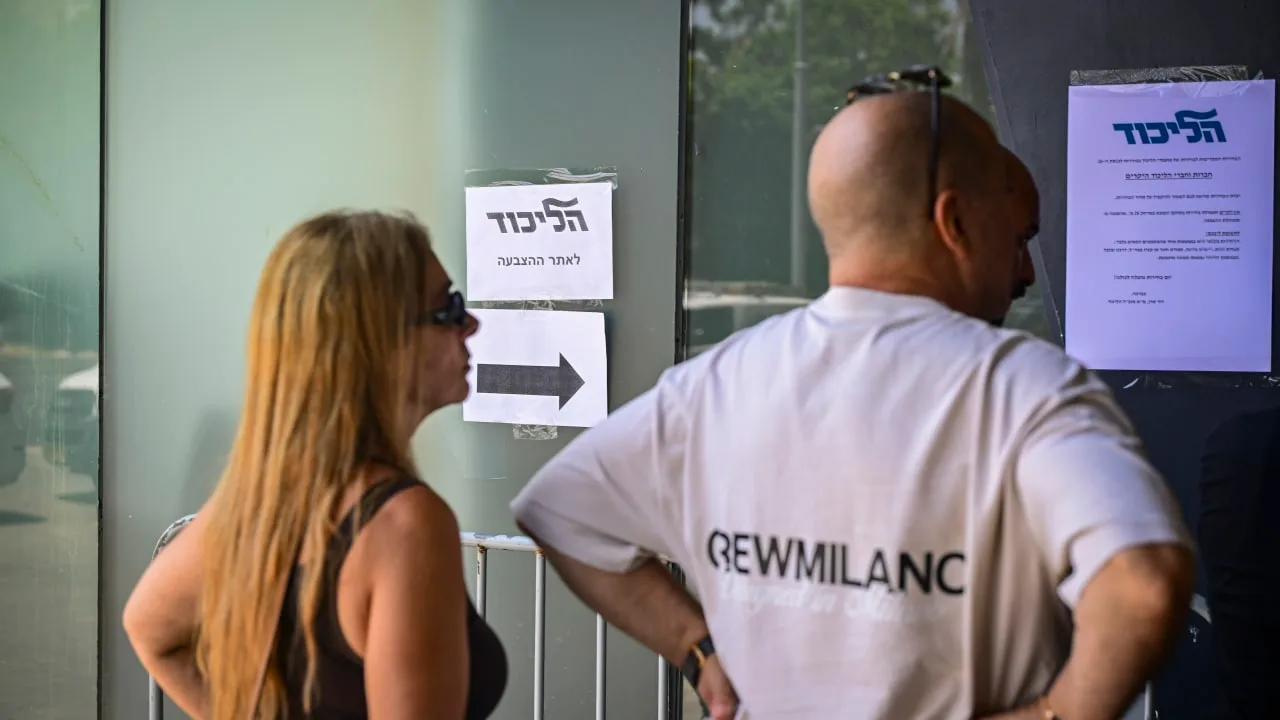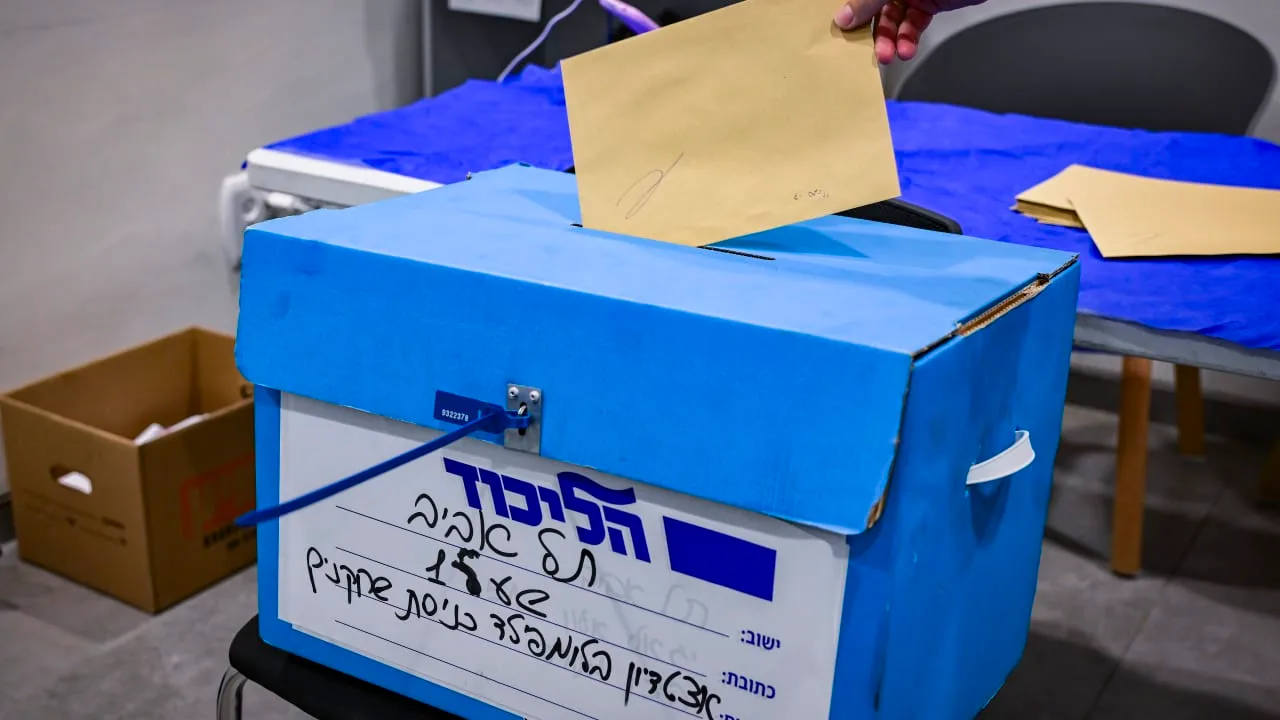
ByANNA BARSKYAUGUST 4, 2026 02:40The Likud Court overturned overnight one of the central and most dramatic decisions adopted by the Likud convention last week, ruling that current and former lawmakers, ministers, and deputy ministers will not be permitted to run in regional slots in the primaries.The ruling blocked a move promoted by Likud chairman Benjamin Netanyahu and the chairman of the party’s Constitution Committee, Minister Haim Katz, which had been approved by the convention by a razor thin majority of just five votes.In addition to canceling the decision to open the regional slots to elected officials, the court ruled that the 35th place on the Likud list would be returned to the national slate rather than reserved for a woman, that for the purpose of guaranteed representation, an immigrant would be defined as someone who moved to Israel after January 1, 1990, and that the deadline for submitting candidacies would be extended by 48 hours.However, the eight reserved slots granted to Netanyahu by the convention will remain in effect.The court also addressed one of the most widely publicized claims raised during the hearings, that Netanyahu had been recorded as having voted even though he had not legally cast a ballot.Israeli Prime Minister Benjamin Netanyahu attends a vote at the plenum hall of the Knesset, the Israeli parliament in Jerusalem, on July 16, 2026. (credit: YONATAN SINDEL/FLASH90)The judges unequivocally rejected the claim, ruling that no supporting evidence had been presented and that the polling station protocol contained orderly documentation of his vote, which was cast in accordance with security constraints.The ruling also sharply criticized leaks to the media during the consideration of the petitions.The political implications of the decision are significant. Lawmakers who had sought to run in regional slots as an alternative route to the crowded national slate have lost that option, while Netanyahu retains eight reserved slots that will allow him to shape the final list.The decision was issued by an expanded panel of five judges following a marathon hearing that lasted about 10 hours and ended close to midnight.Four members of the panel, court president attorney Michael Kleiner and judges Yitzhak Bam, Rafi Boker, and David Elbaz, supported overturning the convention’s decision, while attorney Akiva Nof issued a dissenting opinion.The panel heard nine petitions jointly.The main ruling rested on constitutional grounds. A majority of the judges found that opening the regional slots to lawmakers and ministers constituted a fundamental change to the rules established in the Likud constitution and therefore could not be implemented through a temporary provision in the election regulations.The ruling stated that the regional slots were intended to serve as a "nature reserve" for developing new leadership and to allow grassroots candidates to compete under fair conditions.Serving lawmakers, by contrast, benefit from public standing, media exposure, political machinery, and built in advantages that are not available to new candidates.Judge Rafi Boker also relied on a 2022 court ruling, which found that allowing a serving lawmaker to run in a protected slot violated the principle of equality.In the current ruling, the judges found that even had the proposal been approved by a valid majority, it was doubtful whether it would have met the requirements of the Likud constitution.Court criticizes Likud administration over voting flawsAlongside the constitutional ruling, the court listed a series of flaws in the voting process.The ruling criticized the Likud administration, which was responsible for conducting the vote, for calling on convention members to support the position of the party chairman, even though it had itself hired the external company that managed the election.The court also found that its decision to station observers at every polling station was implemented only several hours after it was issued.The judges further identified discrepancies between the number of voters, envelopes, and ballots at several polling stations.The most notable example was in Rishon Lezion, where five fewer envelopes were found than the number of registered voters, exactly the margin by which the decision had been approved.Additional discrepancies were found in Jerusalem, Ramle, and Acre.The court did not find that the count had been falsified or manipulated, but ruled that the accumulation of failures, combined with the narrow margin of victory, made it impossible to determine that the convention’s proposal had been legally approved.Judge Yitzhak Bam stressed that because the administration had publicly supported the proposal, there was particular importance in ensuring the complete neutrality of the process and the presence of observers from the outset.The court rejected the possibility of ordering a recount or a new vote.It ruled that another count could not restore missing envelopes or correct the absence of observers during the first hours of voting, while a new vote was not possible because of the tight timetable ahead of the primaries.A view of a polling station during the Likud party internal elections, which were halted following a court order, at Menora Mivtachim Arena in Tel Aviv, July 16, 2026. (credit: AVSHALOM SASSONI/FLASH90)Dissenting judge argues insufficient evidence for court rulingIn his dissenting opinion, Judge Akiva Nof argued that there was insufficient evidence to overturn the result.A majority of five votes is a majority in every sense in a democracy, he said, and if doubts had arisen, the most that should have been ordered was a recount.Alongside its central ruling, the court accepted several additional petitions.It ruled that a serving lawmaker would not be permitted to run in a guaranteed representation slot unless the lawmaker resigned from the Knesset and did not receive funding from the state treasury.It also ruled that the 35th place on the list would return to being a general national slot, after it emerged that its designation as a slot guaranteeing representation for women had resulted from an error and had not been approved by the Constitution Committee.Likud court denies division for Jerusalem, Shfela, West Bank districtThe court rejected petitions seeking to divide the Jerusalem, Shfela, and Judea and Samaria regional district.It ruled that at a stage when candidates had already registered and the internal election campaign had begun, dividing the district would cause more harm than any possible benefit.The court also rejected, by majority opinion, the court president’s position that the Haifa and northern regional district should be moved higher on the list.The court further ruled that regional candidates would be elected by all registered Likud members in their respective regions, rather than by all members of the Likud Central Committee, because the relevant constitutional amendment had not yet taken effect.In addition, the deadline was extended by 48 hours for submitting candidacies, changing the track under which candidates are running, between the national slate, regional slots, and guaranteed representation slots, and withdrawing from the race while receiving a full refund of the registration fee.Follow us on Google
Likud court overturns attempt at allowing lawmakers to run in regional slots | The Jerusalem Post
The ruling blocked a move promoted by Netanyahu and the chairman of the party’s Constitution Committee, Minister Haim Katz, which had been approved by just a five votes majority.
1,114 words~5 min read