Most multi-agent pilots stall because autonomous agents are too unpredictable, turning simple business processes into chaotic, infinite execution loops. When a $50,000 commercial contract or a regulatory compliance filing is on the line, you cannot rely on hope-based system instructions to guide agent handoffs. If you are tired of non-deterministic behavior wrecking your production deployments, you need a structured framework that enforces rigid rules while preserving cognitive flexibility.
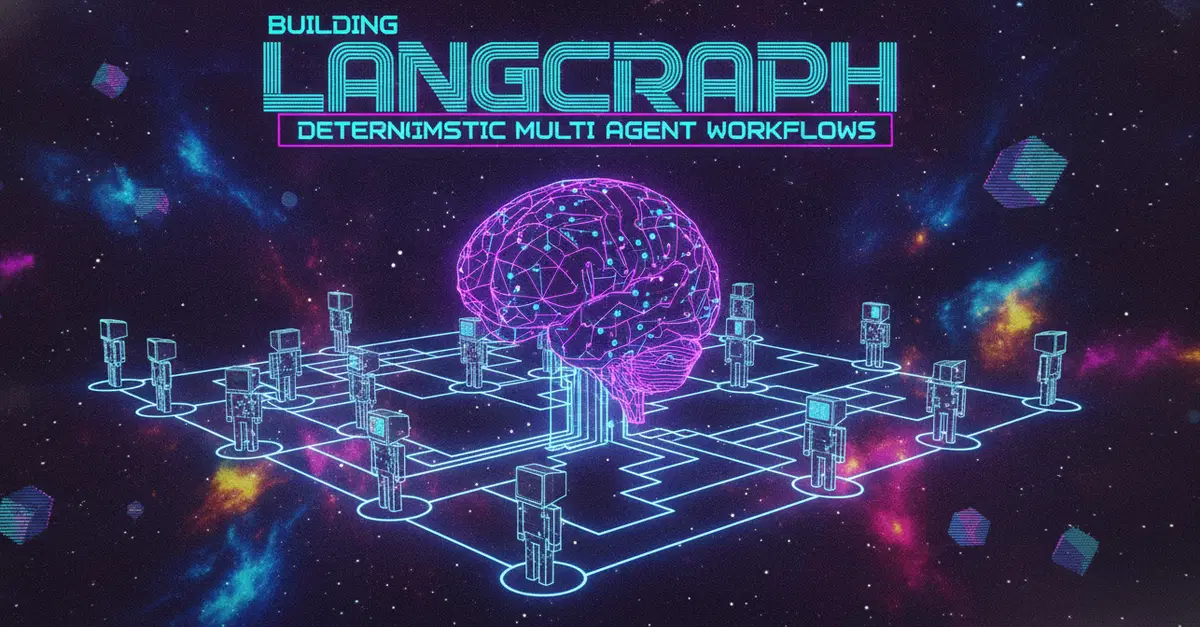
In this guide, you will learn how building deterministic multi agent workflows with langgraph turns unpredictable AI behavior into reliable, state-machine-driven business processes. We will explore how to design robust validation gates, manage complex cyclic loops, and secure your production pipelines.
The Problem with Linear LLM Chains in Production
Simple sequential pipelines assume a happy path where Node A always outputs exactly what Node B expects. In a sandbox environment, this linear progression works beautifully. In production, however, language model outputs are inherently probabilistic. If Node B receives malformed data or fails to extract the necessary parameters, a linear chain has no elegant way to recover. It cannot easily route back to Node A for correction without complex, hardcoded nested conditionals.
 aws.amazon.com