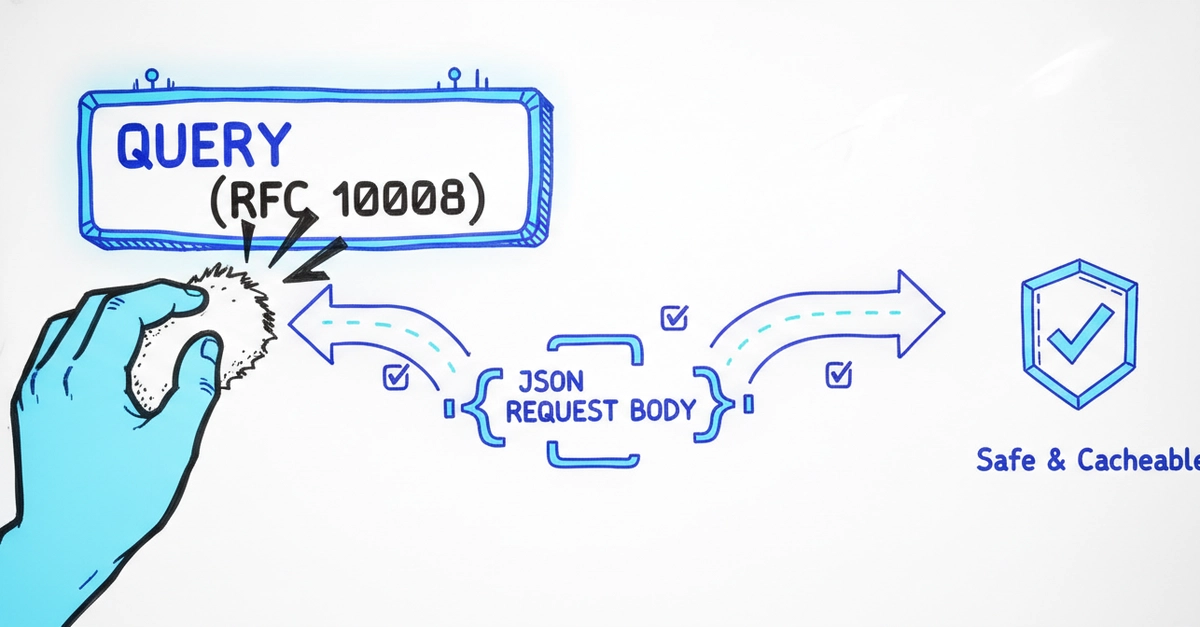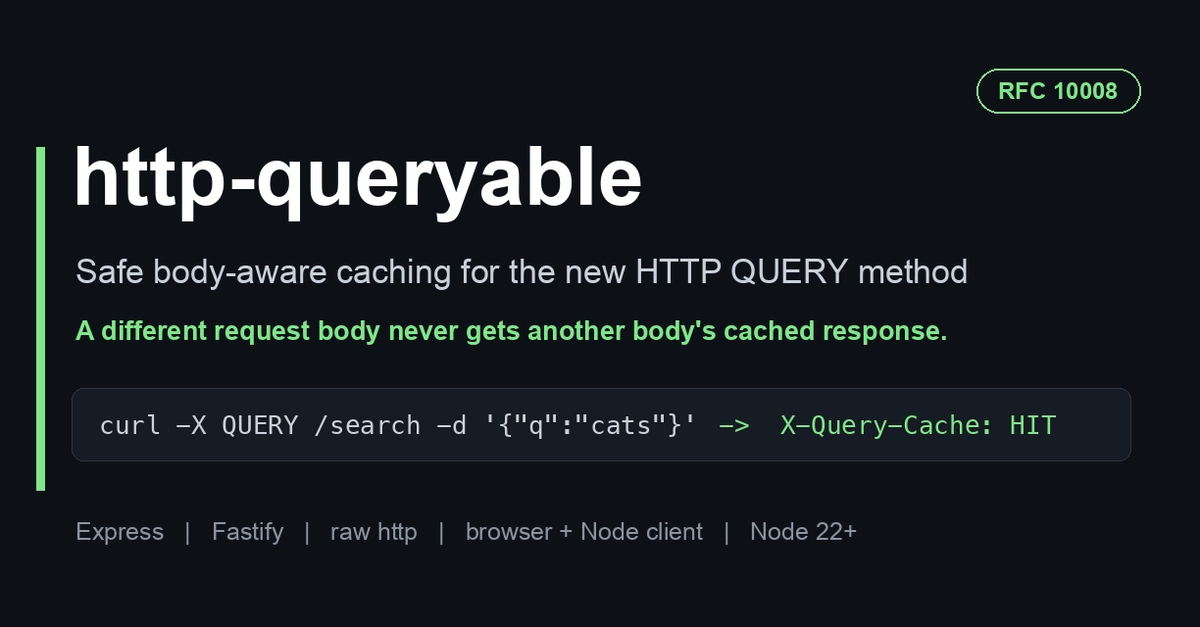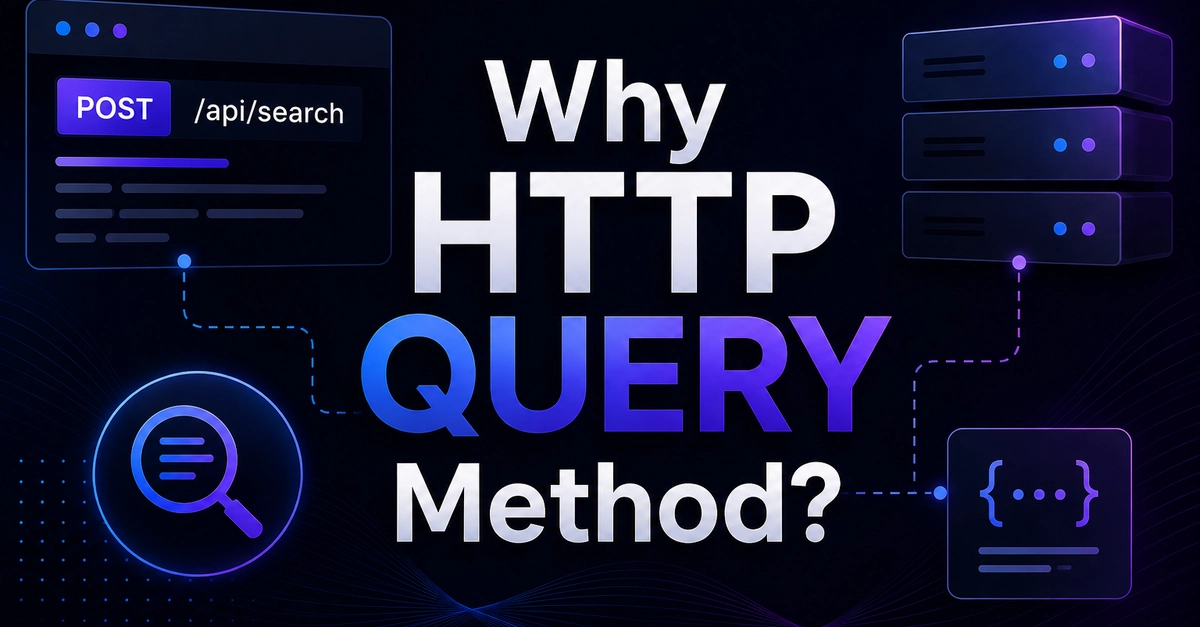
When a program needs to talk to a website or online service (e.g. to look something up, share a piece of data, or make a change to the site) it uses an HTTP method. You can think of these methods as verbs that tell the server what kind of request is coming. The two most common are GET (used to read or fetch something) and POST (used to send data in). In 2026, a new method joined the list: QUERY, defined in an official web standard called RFC 10008.
The HTTP QUERY method is a verb built for one job: asking a service a question and getting an answer back. What makes it special is where it puts the details of that question. Instead of squeezing them into the web address like GET, QUERY follows POST and tucks them into a separate part of the request called the body. It’s also designed to be a pure lookup—it only reads information, never changes that information, and can be safely sent again if something goes wrong. That makes it a strong fit for searches and other read-only requests that are too big or too complicated to fit in a normal web link.
In this article, we’ll look at why QUERY was created, how it works in plain terms, where it’s useful (especially for search), and how ready it is to use today.