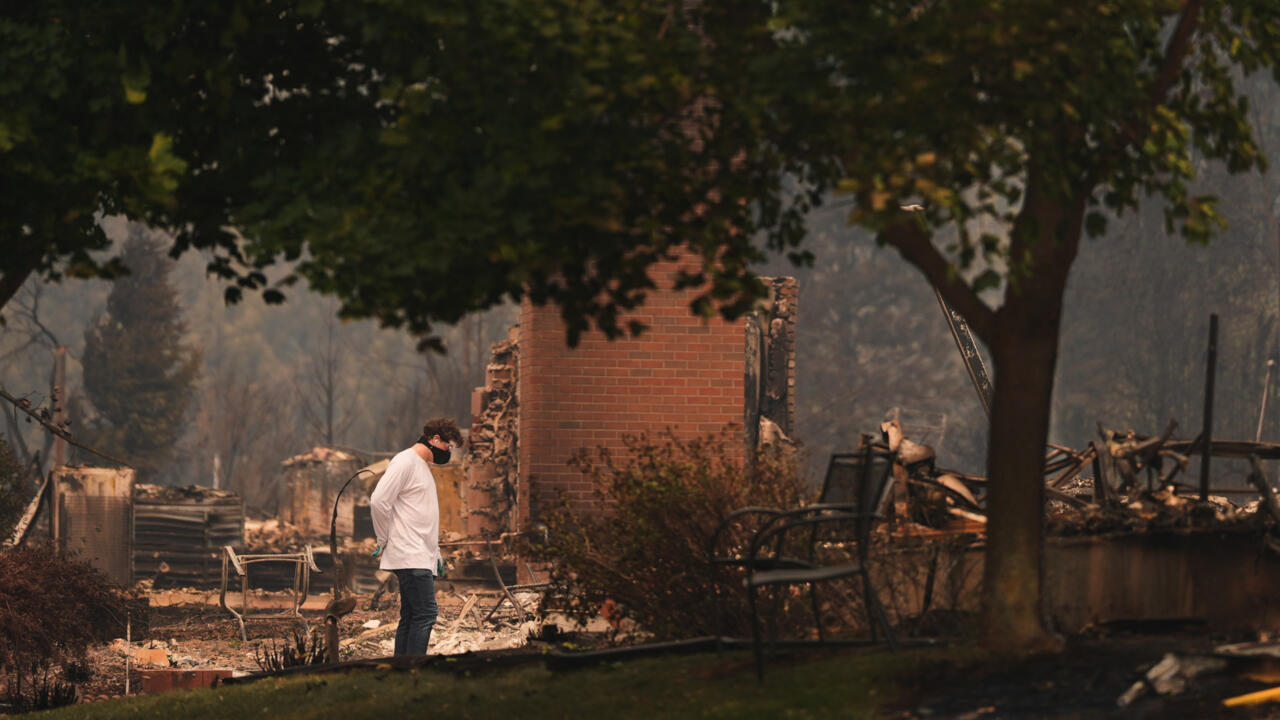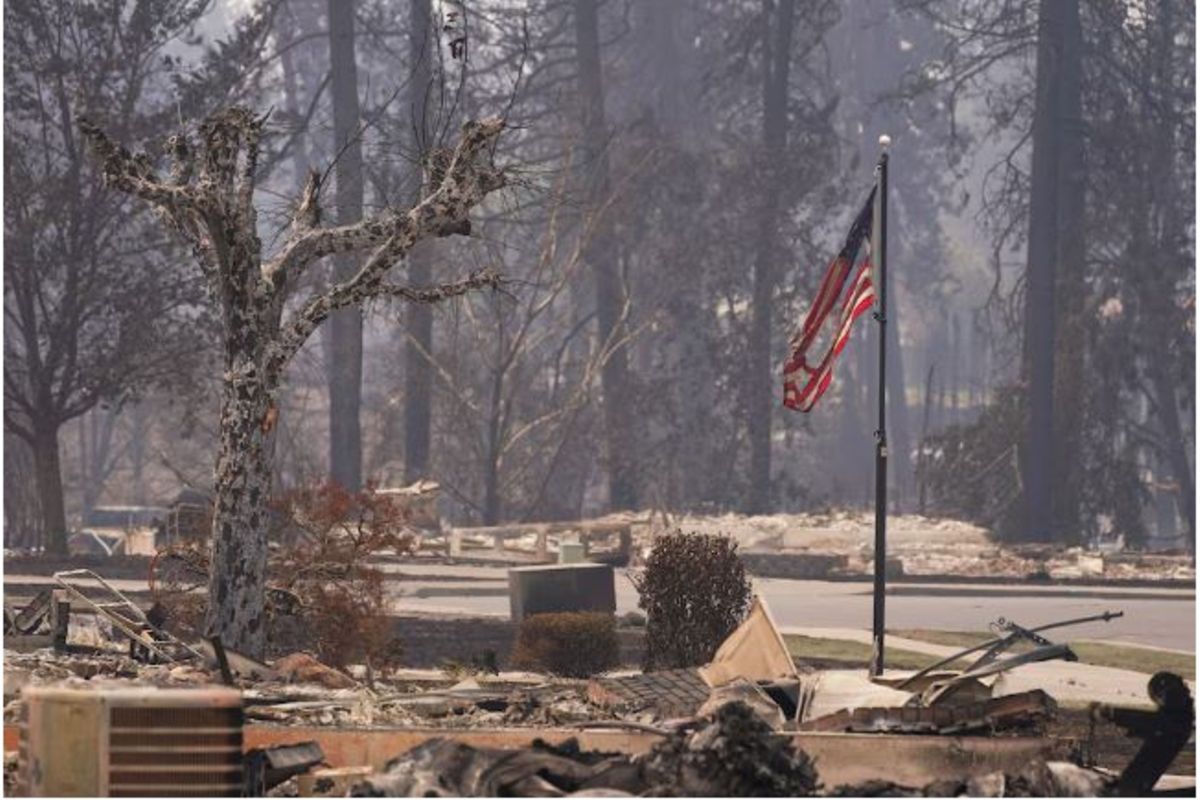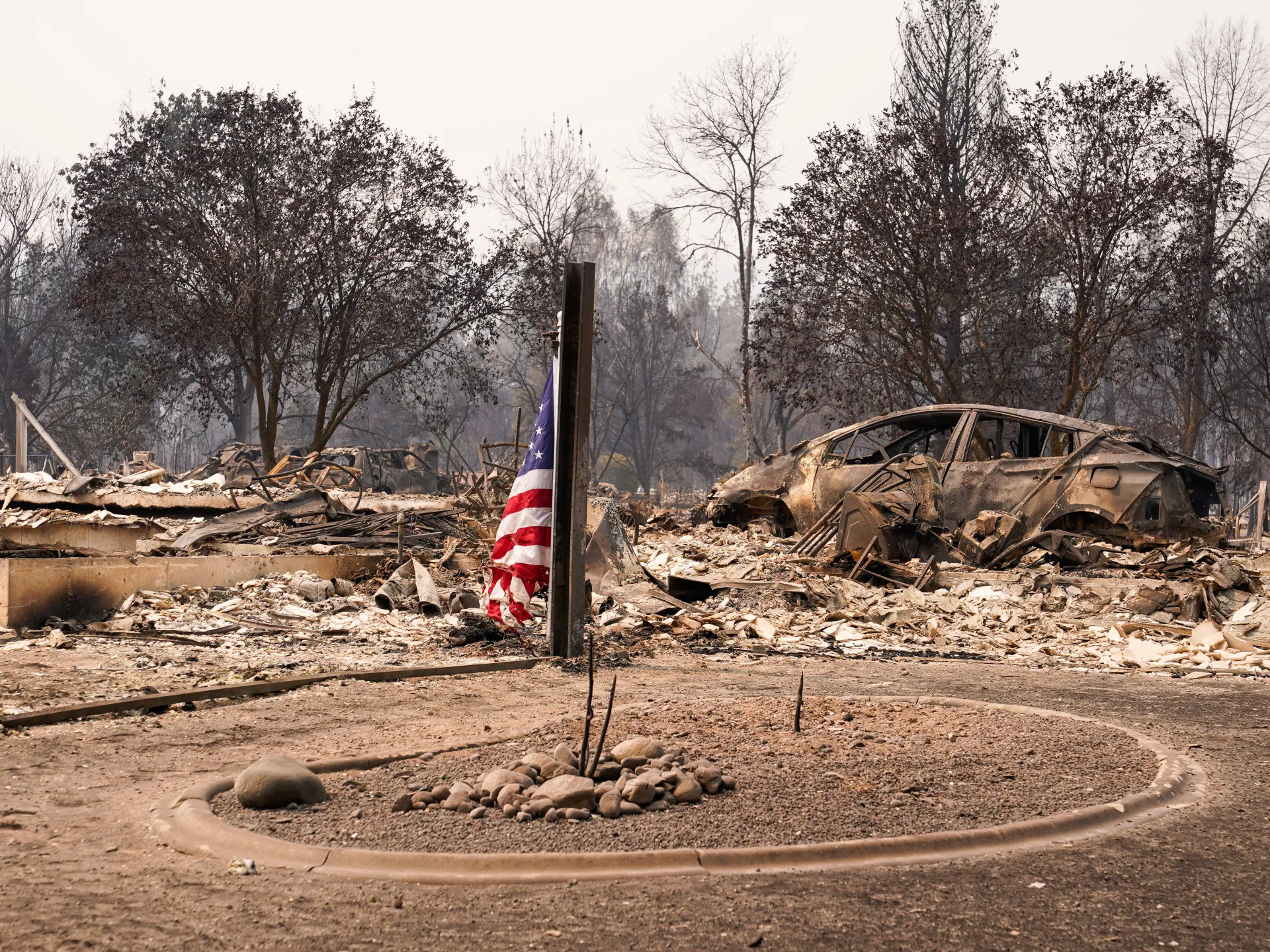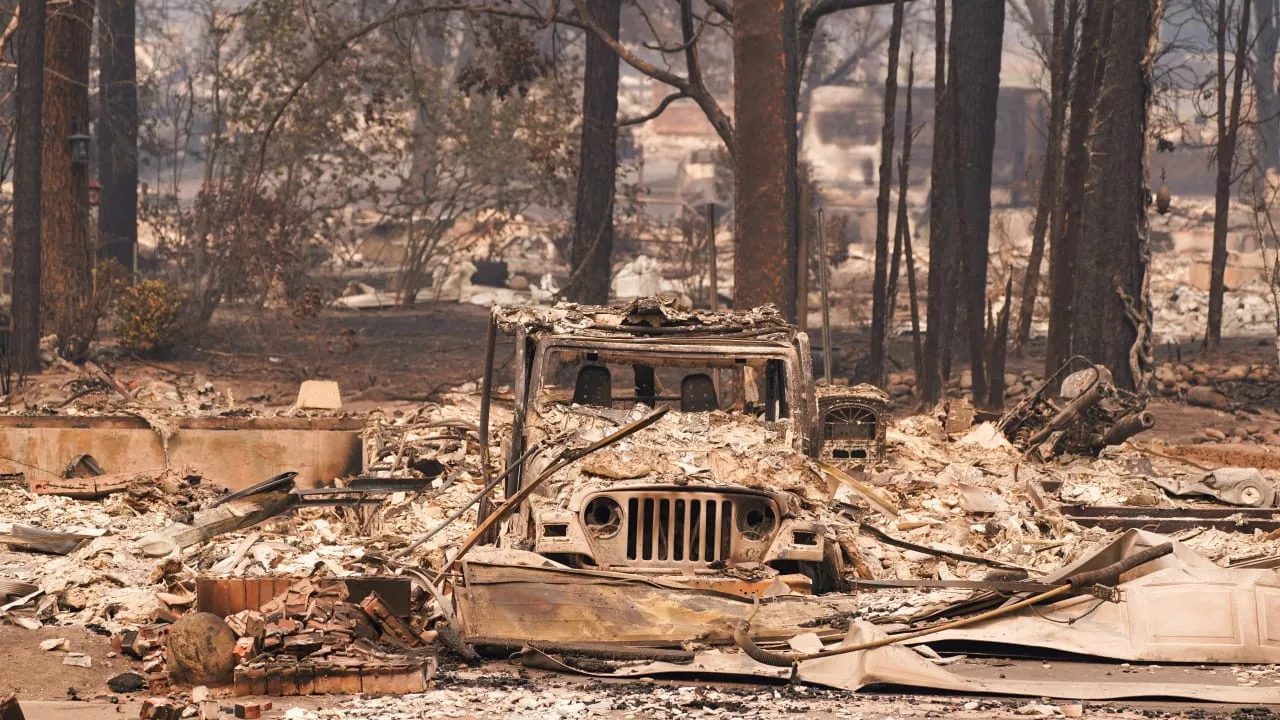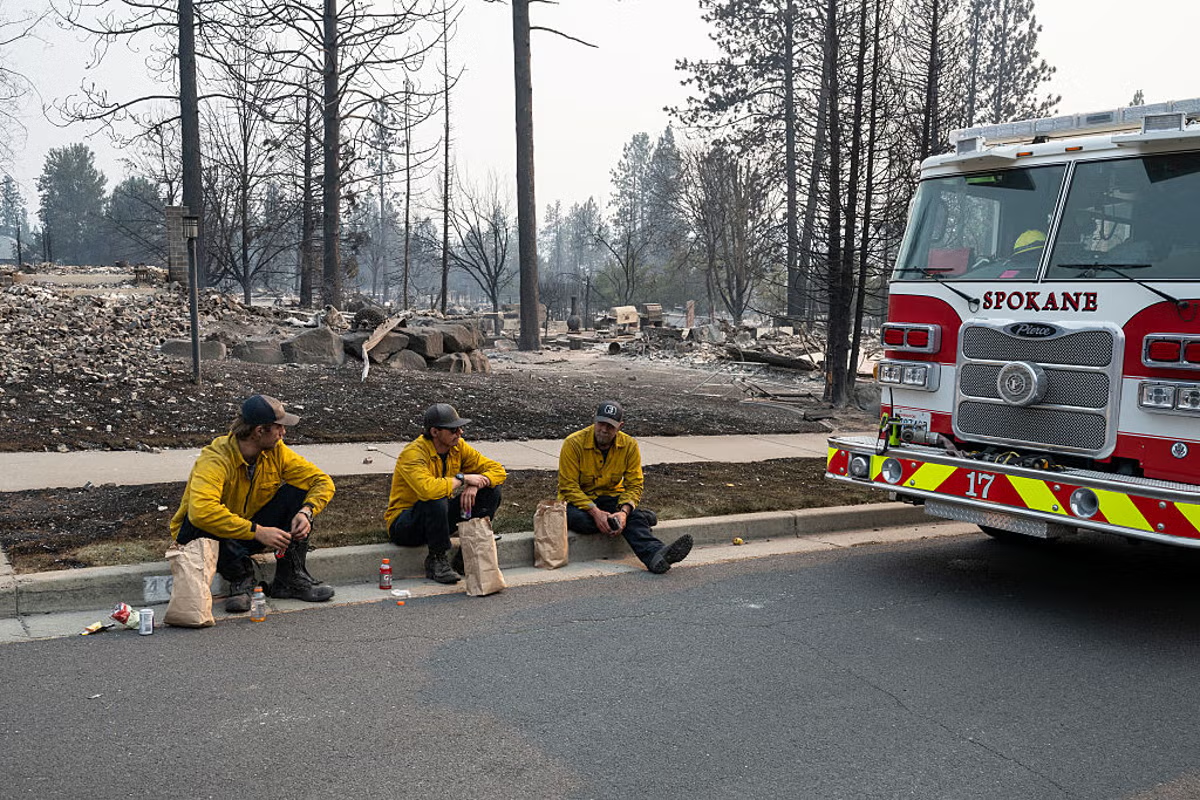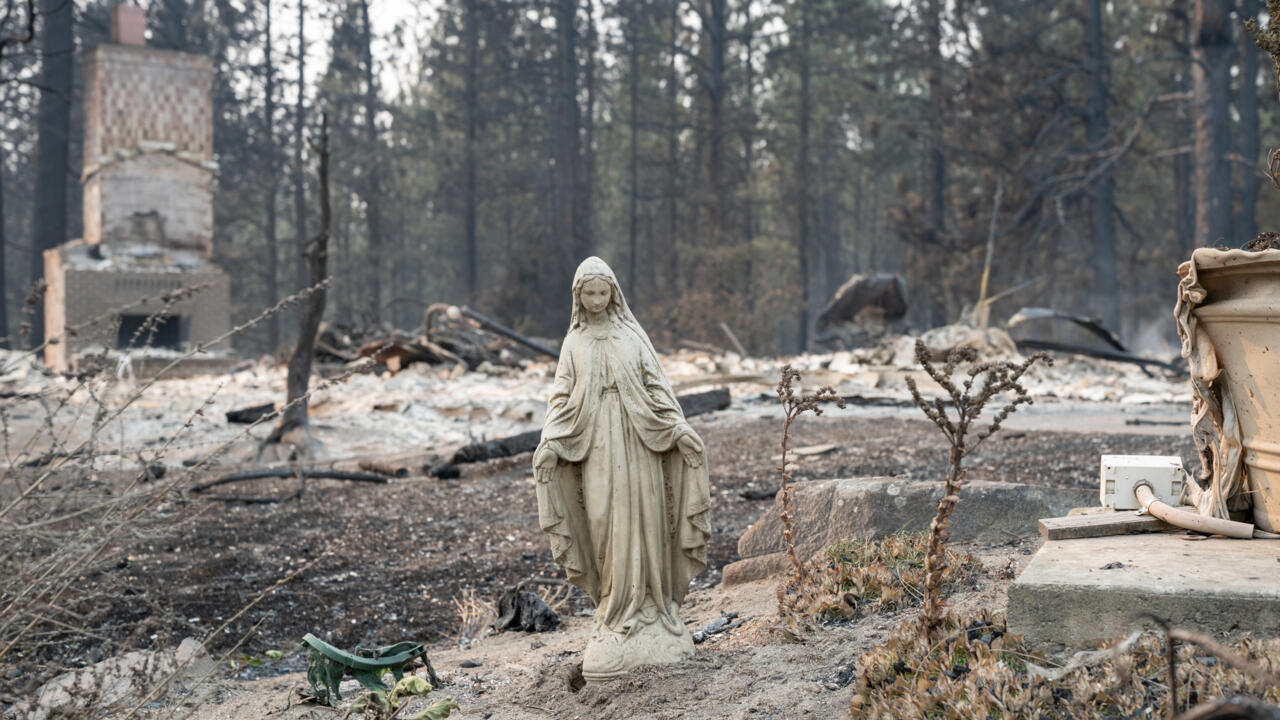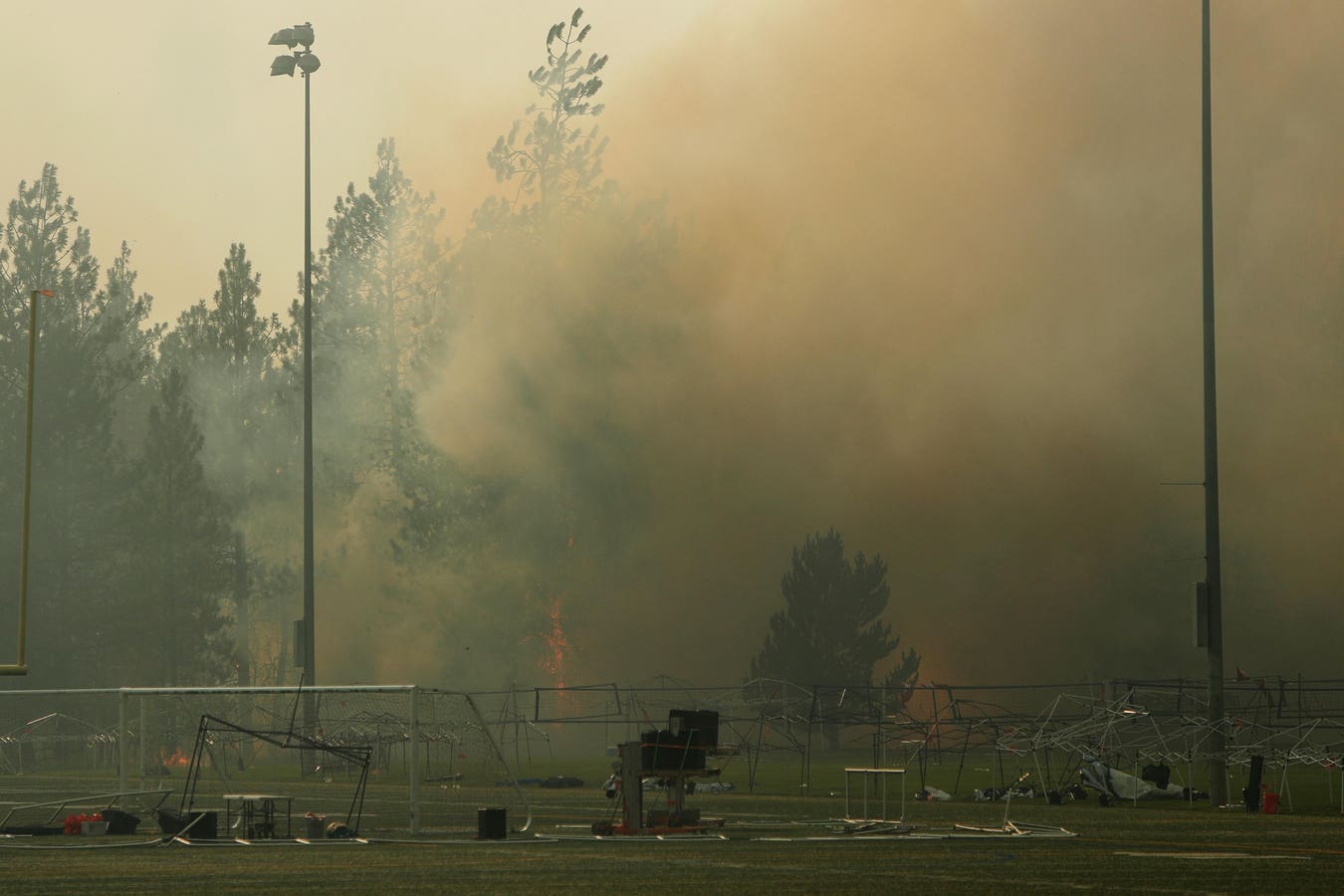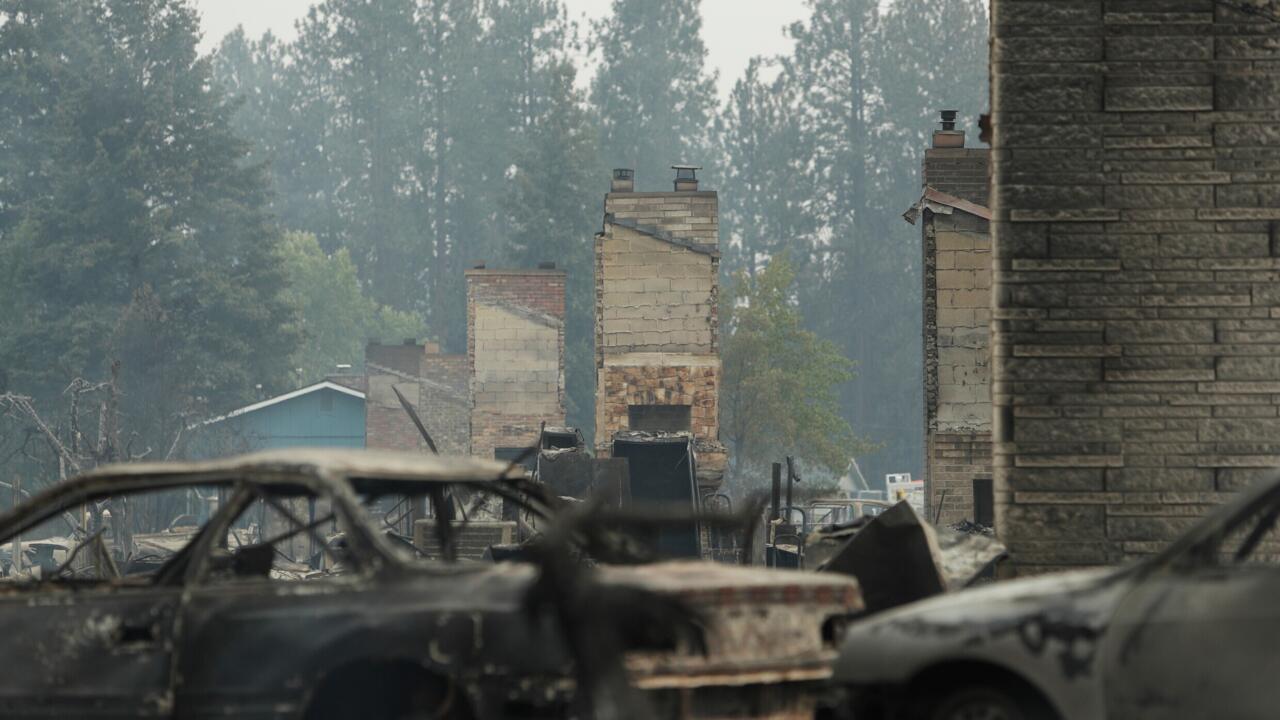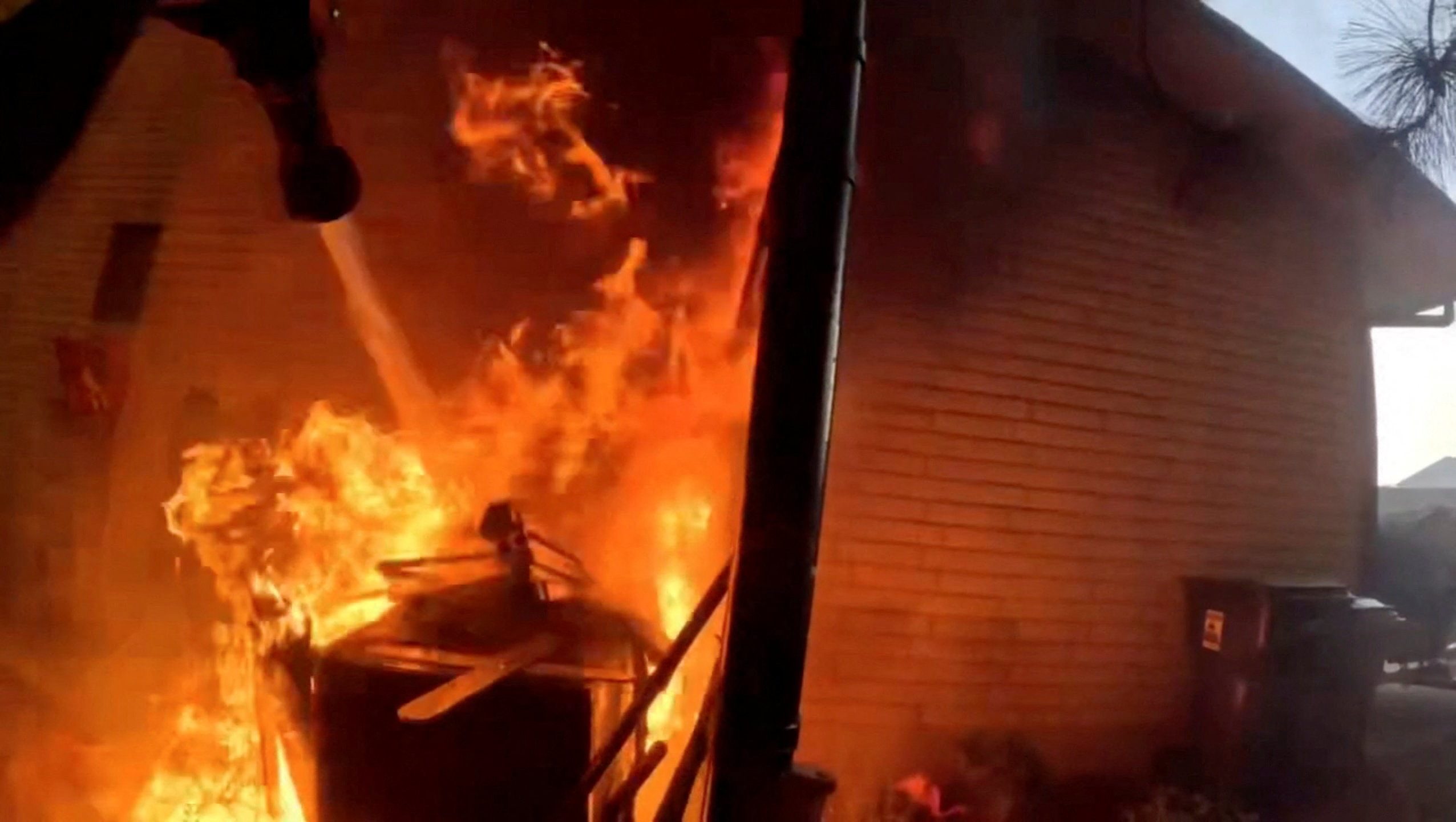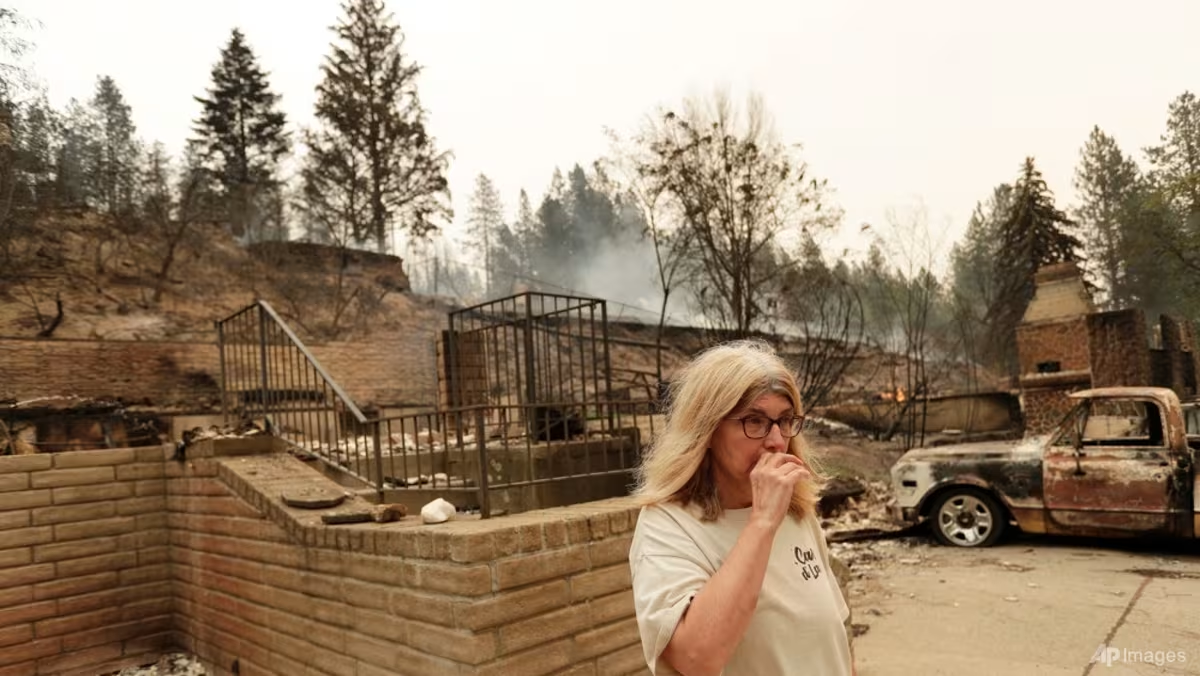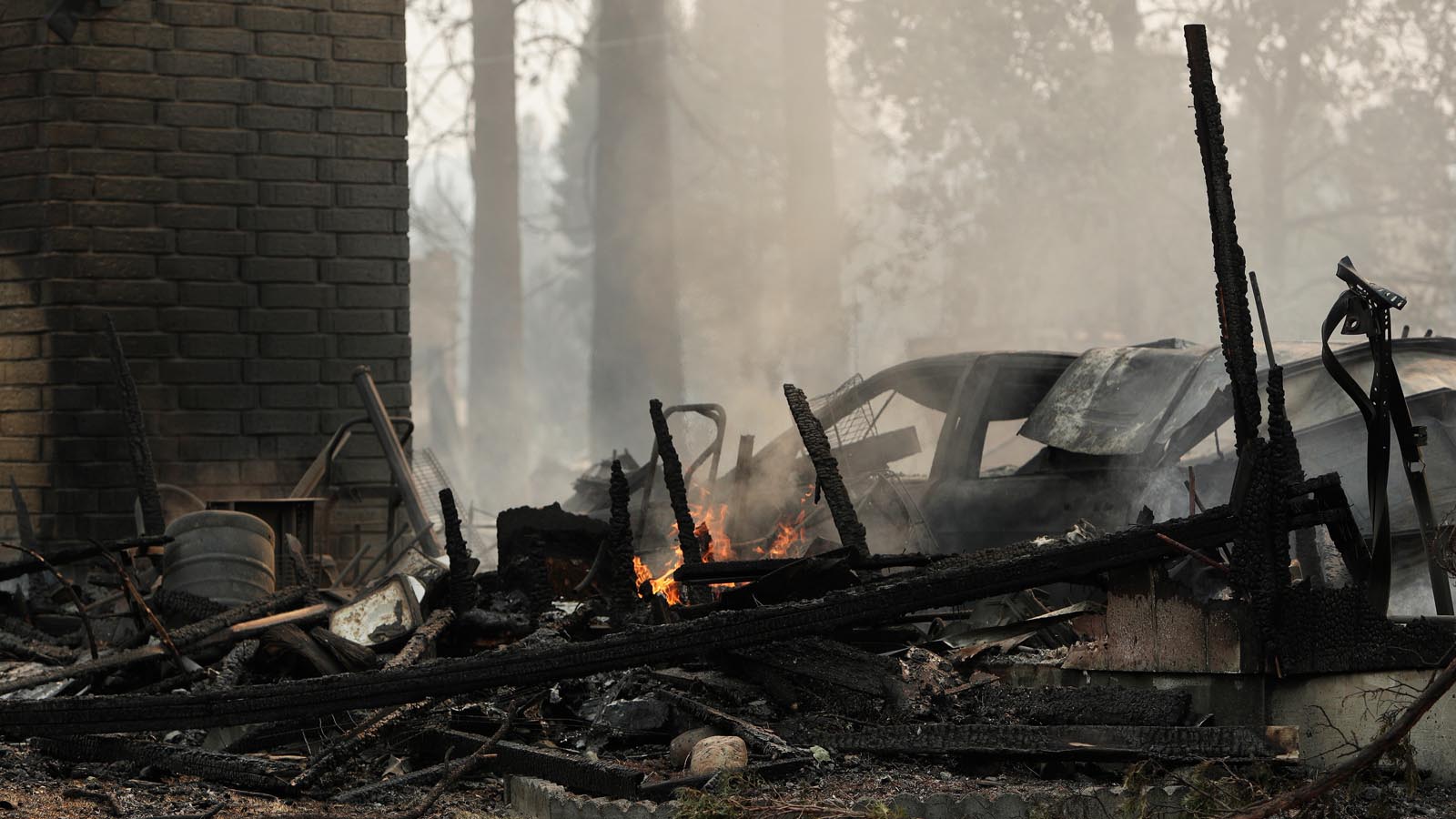
The most destructive wildfire in Washington state history roared into Spokane on Saturday, August 1, creating a horrific urban firestorm that leapt from building to building, destroying at least 700 structures and forcing nearly 65,000 people to evacuate. The fire was driven by strong winds during the passage of a dry cold front, as Spokane’s airport recorded sustained winds of 33 mph, gusting to 44 mph (71 km/h) Saturday afternoon. The strong winds were accompanied by 86-degree heat and very dry air with a relative humidity of 20-25%. Fire spread was aided by severe-to-extreme drought conditions, which were caused by a record-low winter snowpack that was followed by a hot and dry summer. At Spokane International Airport, only a trace of precipitation was recorded during the entire month of July, and temperatures averaged 2.7°F above average.
Before the fires hit, the extreme fire risk had forced the National Weather Service in Spokane to issue its first-ever “Particularly Dangerous Situation” Red Flag Warning, a rare designation reserved for the most extreme fire weather conditions. No deaths have been reported yet, but given the chaotic nature of the firestorm, deaths may have occurred.