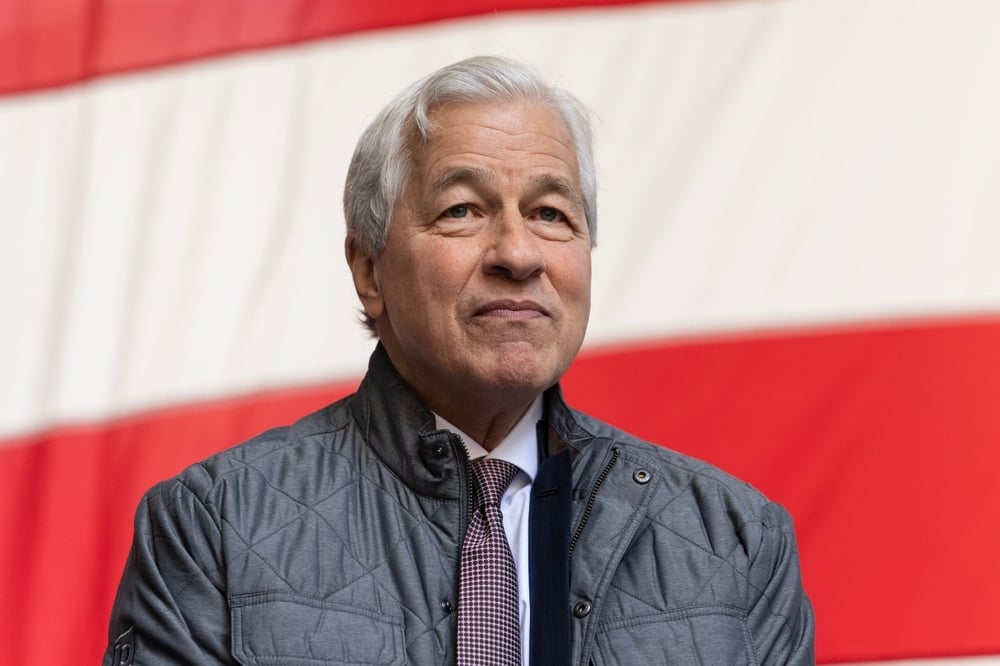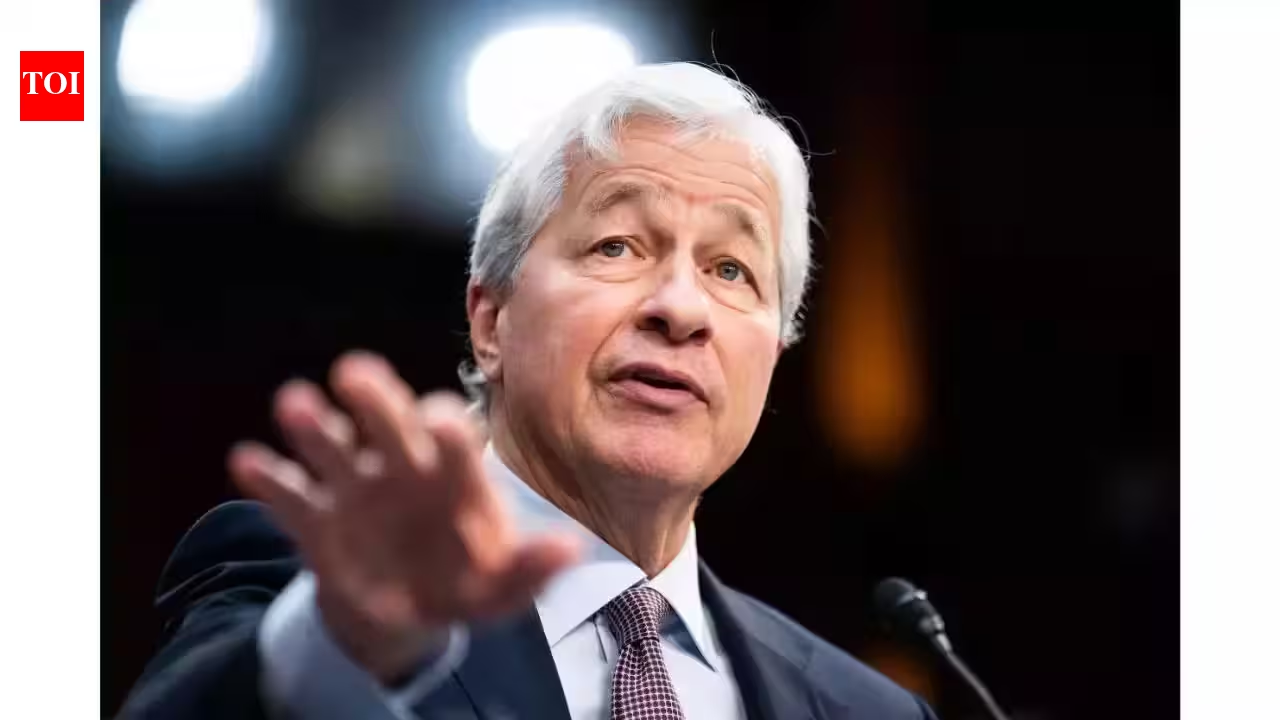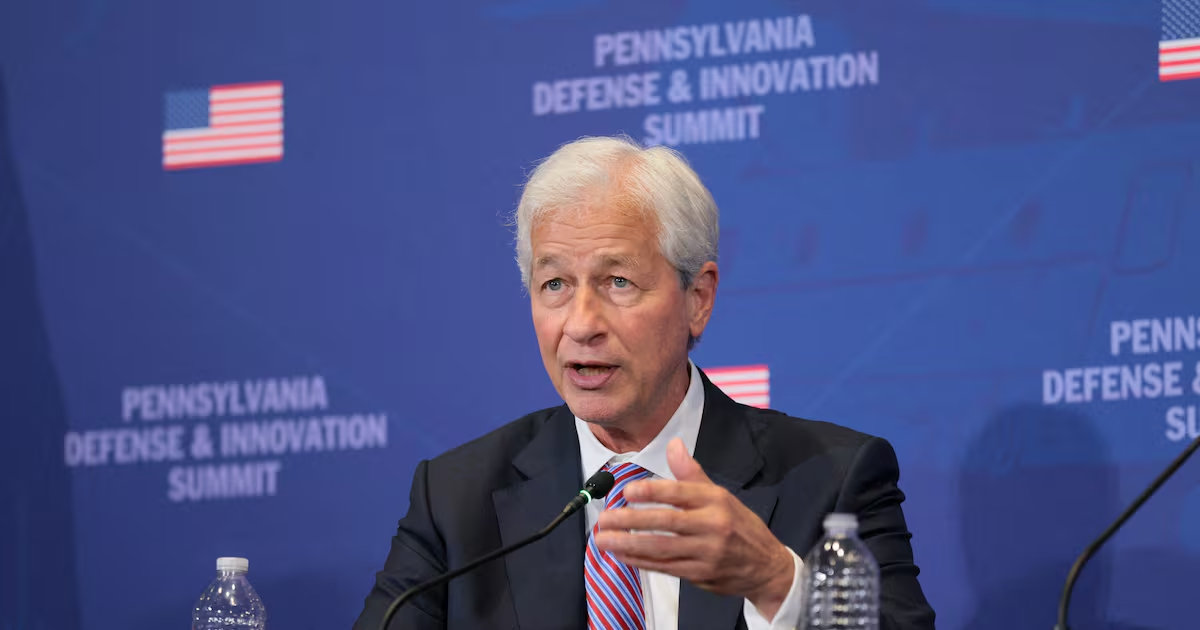
KPMG U.S. Chair and CEO Timothy Walsh has spent his entire career with the audit and advisory firm.“My last non-KPMG job was at the Olive Garden waiting tables,” he told me with a laugh.In the 34 years he’s been at the firm, he told me he’s had many roles: Making copies for more senior employees, working all over the world, auditing, running the venture capital business, directing the audit business, and since last July, CEO.“It kept me constantly learning about business and challenging me with different businesses, different experiences, different executive experiences, and then ultimately the ability as a partner at the firm to be in so many different boardrooms around the world,” he said. “It’s hard not to find that journey compelling.”Walsh is at a stage in the journey in which he leads KPMG’s internal employees and works with partner CEOs—both in finance and modern leadership. I talked with Walsh about how CEOs are coping with the volatility that’s everywhere in the business world today. An excerpt from our conversation is later in this newsletter.Until next time.This is the published version of Forbes’ CEO newsletter, which offers the latest news for today’s and tomorrow’s business leaders and decision makers. Click here to get it delivered to your inbox every week.Economic IndicatorsFederal Reserve Chair Kevin Warsh speaks at the press conference following the Open Market Committee meeting last week.Li Yuanqing/Xinhua via Getty ImagesThe Federal Reserve held interest rates steady last week, though the decision to do so was not unanimous. While the official statement from Federal Reserve Chairman Kevin Warsh was very similar to that from the June meeting—at which the decision to keep interest rates unchanged was unanimous—the three governors who voted last week against holding rates steady and one other have talked about the need for tighter monetary policy. After the Fed’s decision was announced, the markets reacted poorly. The Dow Jones Industrial Average tumbled more than 2% to its worst day of 2026. Other reports last week didn’t paint a much better economic picture. June’s core inflation—excluding food and fuel—cooled a bit, according to the Bureau of Economic Analysis, dropping to 3.3% from 3.4% in May. But the economy as a whole is slowing. In the second quarter, GDP growth was at 1.5%, the BEA separately reported—quite a bit below the 2.1% growth rate projected and seen in the first three months of the year. The slower GDP growth was not the result of changes in consumer spending, which surged 3.2%—government spending, exports and investment were all down.Big Tech buoyed the stock market, helping it largely erase any losses by the end of the week. Amazon’s stock saw one of its best days in a decade on Thursday, after a blockbuster earnings report showed net sales up 20% year-over-year to $200.6 billion. The biggest growth sector was its AWS business, writes Forbes senior contributor Peter Cohan, with 37.6% revenue growth—the fastest in 18 quarters. Microsoft, which reported earnings on Wednesday, also had a better-than-expected quarter, reporting $90 billion in revenue—up 18%. Microsoft’s stock climbed close to 15% after its earnings, which Cohan attributes to the fact that its revenue growth justified its AI infrastructure spending and is bringing Microsoft more business.This was not the case for Meta, which also reported earnings on Wednesday, and saw its stock drop more than 7%—largely because of an imbalanced 55% year-over-year increase in expenses and only a 28% increase in revenue. Meta is also investing in costly AI infrastructure, but Cohan points out most of it at this point is going toward internal operations. The AI investments aren’t driving new business or revenue, stoking investor fears around the up-and-coming technology. Notable NewsCEO tenures seem to be stabilizing, according to a new study from Russell Reynolds Associates. In the first half of 2026, just 101 global CEOs left their positions—the lowest number since the firm began tracking turnover nine years ago. Departures were down both among leaders of Japan’s Nikkei 225 and the S&P 500 in the U.S., which Russell Reynolds notes coincides with conditions putting less stock-market-based pressure on leaders. And CEO tenure is getting longer, with the average departing CEO holding the position for nine years—up from 6.6 years the first half of 2025.For companies hiring new CEOs, experience matters: 23% of all new CEOs globally previously held the role at another public company—including 34% of new S&P 500 CEOs. Companies on the S&P weren’t just looking for CEO experience, though: 88% of new CEOs on that index were internal hires or had been on the board.The study also found it was a good year for women to become CEOs in some parts of the world. Globally, women represented 16% of all new CEOs, which is the largest proportion Russell Reynolds has tracked. In the U.S., however, just 9% of new S&P 500 CEOs are women.Tomorrow’s TrendsHow Volatility And AI Impact Business LeadershipKPMG U.S. Chair and CEO Timothy Walsh.KPMG, Smith Collection/Gado/Getty ImagesKPMG U.S. Chair and CEO Timothy Walsh is relatively new to the CEO’s position—he was promoted to the spot just over a year ago. I talked to him about some of KPMG’s recent leadership research and how AI is changing business and strategy. This conversation has been edited for length, clarity and continuity. In the 2026 Adaptability Index, fewer than half of CEOs are using AI and technology to get to faster and clearer decisions. Why? Walsh: In order to use the technology, you need to change the way you did things before. Just putting technology on top of what you did may give you a data point, but if you don’t include it in your processes in a different way, you’re not going to get a different outcome. Management committees, CEOs, boards need to change the way they’re actually using the information to get the outputs from it.I have no doubt those statistics will change—and rapidly—because it’s early days of this technology. Think about the advancement of that technology by week to week, month to month. Some of these tools are being used in ways for the first time, and [CEOs are trying to figure out] what do I use? When do I use that? How do I put it into my decision making process? That is what’s needed to be able to make decisions faster.Large corporates, they’ve been making investments consistently. They’re seeing the output and the data points, and they’re beginning to change their processes. But there are thousands of companies that are very early in this journey. Using the tools, getting upskilled, understanding what they are is critical to be able to actually move a business forward and make these decisions quicker.How has the volatility of recent years changed the way executives look at what's in front of them and prepare, and where are they coming up short?I talk about this within our business all the time. It’s the concept of agility. It’s about changing management systems within the business to be able to move faster. That’s a theme I hear all the time. It’s set in different ways. It’s speed, it’s reducing complexity—but at the end of the day, it’s about finding ways within the business to be able to move it faster than before. The technology will help us do that, no doubt, but we’re all looking for those mechanisms to be able to respond. There’s always going to be something new, and it always seems like it’s the biggest thing ever. Every two years there’s something you weren’t expecting that’s a major disruption, and as a CEO, you have to manage through it. Tech is helping us do it faster, better.In terms of how fast this tech innovation is moving, and how quickly it’s moving into businesses, thinking about adopting new technologies was so short[–term] for such a massive innovation. What companies still need to do better is get the technology, adopt it within the organizations, and train professionals in a way that will enable them to use that technology to be more efficient and effective. This is timing, embedding the technologies within their businesses to get outcomes. There’s another piece of the technology journey that is a bit overlooked. When we talk about it, almost everyone immediately goes to efficiency. The real story is effectiveness: The abilities our businesses have with this technology to grow, to do our businesses better, to deliver better products into the market. It opens the aperture to do more with what we have currently, and that’s the story of opportunity. Yes, risk, but opportunity.What advice would you give a CEO about how to adapt and move forward through everything they have to deal with today? Stay calm and focused. Accountability is key in terms of being able to move a business faster.Governance is incredibly important. Technology thrown into a business without governance, guidelines and guardrails can ultimately open the organization up to risk. At this moment, that risk is showing itself in many ways. There’s a rush to deploy. To move fast, you’ve got to make decisions quicker. In some cases, you see organizations put the technology in quickly, without fully understanding the potential vulnerabilities of what that means. Company data is now being used in ways that are completely unique, in totally different platforms. Have they secured their environment to ensure they protect against that?Comings + GoingsBranded food company Hormel Foods elevated John Ghingo to be its next president and chief executive officer, effective October 26. Ghingo rejoined the firm in 2024, and currently works as the company’s president.AI applications and data infrastructure company Scale AI appointed Francis deSouza as chief executive officer, effective August 10. deSouza joins the company from Google Cloud, where he worked as chief operating officer and president of security products.Parenting platform and universal registry Babylist appointed Jennifer Hyman as chief executive officer, effective September 9. Hyman joins the company from Rent the Runway, where she was cofounder and former CEO, and she will succeed founder Natalie Gordon.Strategies + AdviceJPMorgan Chase CEO Jamie Dimon had this criticism for many of his peers: CEOs tend to be sloppy communicators. Dimon doesn’t consider communication to be a “soft skill,” it’s necessary to show that a person is a disciplined and thoughtful leader. Here are ways to improve your communicating skills. There are so many pressures facing businesses today, many of them may need to make some kind of pivot to stay viable. But before you make any decisions, ask yourself this vital question, which can set your course for the future: What kind of business are you in?Quiz“Spider-Man: Brand New Day” took the box office by storm last weekend, tallying the second top-grossing opening weekend of all time. Which movie is still No. 1?A. “Avengers: Endgame”B. “Star Wars Episode VII: The Force Awakens”C. “Jurassic World”D. “Titanic”See if you got the answer right here.
Why AI Governance Is More Important Than Speed
Also in the Forbes CEO newsletter: Interest rates remain steady, but quarterly GDP drops; CEO tenure stabilizes; why Jamie Dimon says CEOs can be ‘sloppy.’
TL;DRAI
KPMG CEO Timothy Walsh: fewer than 50% of CEOs leverage AI for faster decisions because most add technology without redesigning workflows. For tech decision-makers: governance and process transformation are prerequisite to AI infrastructure investment—technology alone without organizational alignment yields no different outcomes.
1,800 words~8 min read