Running a dedicated Kubernetes cluster per team often results in more isolation than an organization requires. While one cluster can be successfully shared across many teams, the coordination costs increase as the number of teams grows. Challenges include conflicting CRD versions, overlapping RBAC, and no clean way to carve GPU capacity into team-level budgets. At a certain scale, teams might start asking for their own clusters just to regain autonomy.
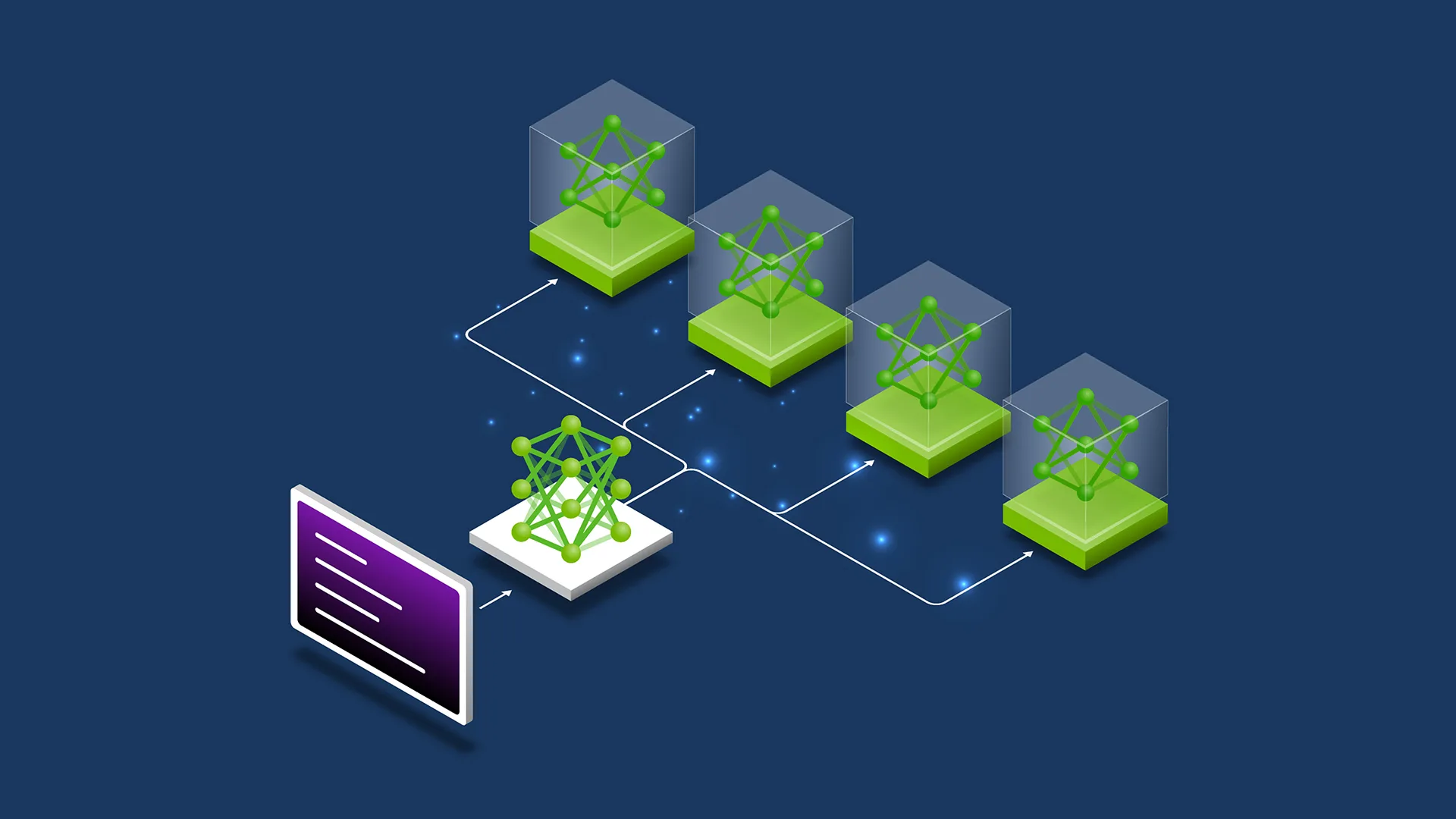
This post provides a pattern that preserves team autonomy without splitting the hardware. This solution involves a single control plane cluster with a GPU pool, GPU sharing with per-team quotas, and isolated Kubernetes control plane per team including an API server, controller, data store, syncer, and scheduler. This can be achieved using two open source tools: KAI Scheduler and vCluster.
Follow along with the tutorial steps and you’ll have three teams running real GPU Kubernetes pods in their own tenant clusters, all sharing a single physical GPU. You’ll also be able to verify that each team only sees their own workloads.
Tutorial prerequisites and notes
To keep the process reproducible for users that have limited resources, this tutorial uses a cluster with one NVIDIA L40S GPU and three teams sharing fractions of it. This makes the moving parts easy to see and try. The process works the same way on a larger cluster with hundreds of GPU nodes and dozens of teams. You can scale the node pool, the queue hierarchy, and the number of tenant clusters.