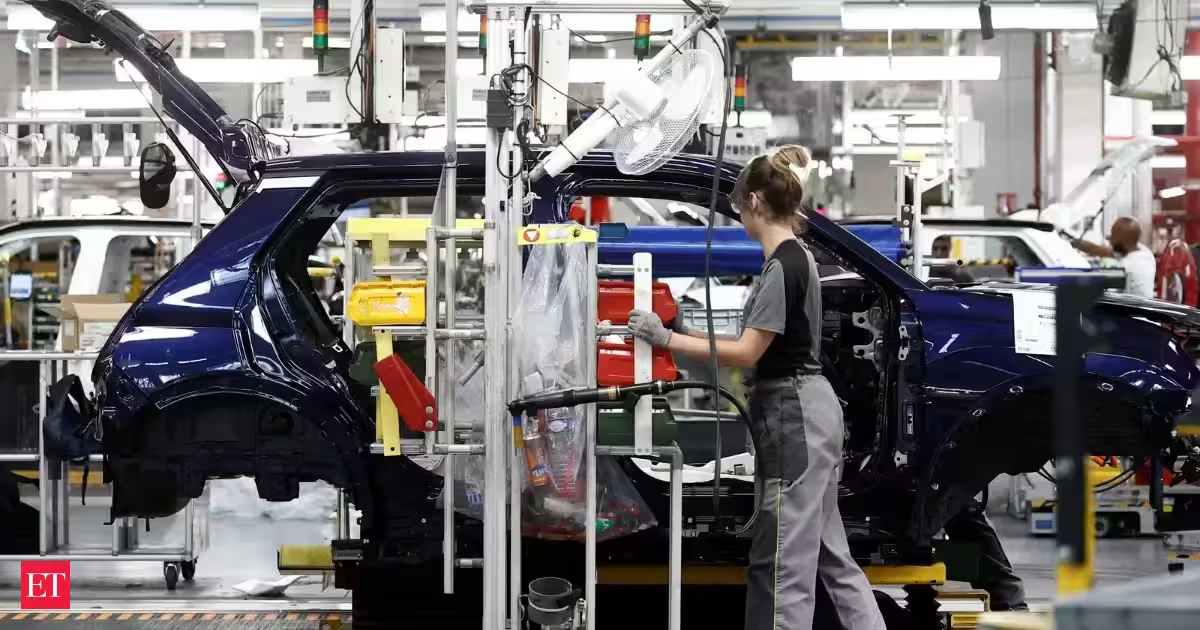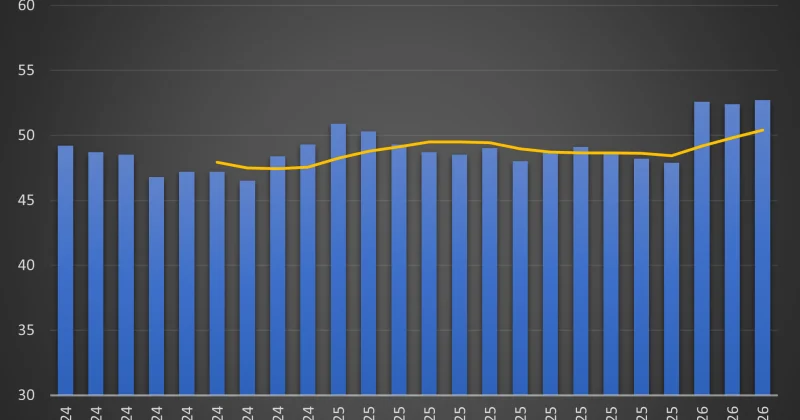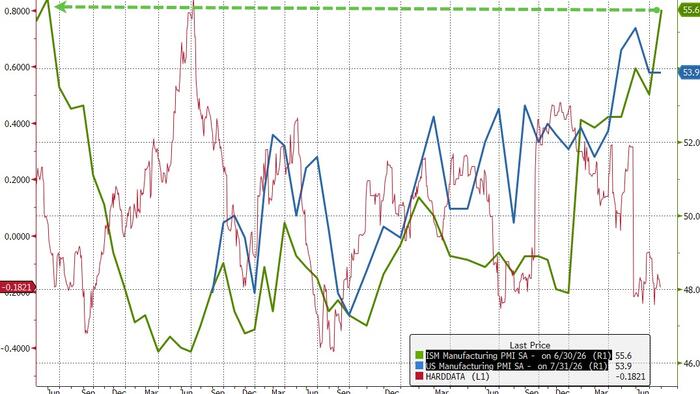
SynopsisUS manufacturing activity grew faster in July, reaching a four-year high. The Institute for Supply Management's index rose to 55.6 percent, exceeding expectations. Employment in manufacturing entered expansion territory for the first time in nearly three years. Price volatility and geopolitical tensions impacted some respondents negatively. However, artificial intelligence infrastructure buildout boosted demand for certain sectors.ReutersUS factory activity accelerates, uncertainty remains high: surveyWashington: US manufacturing activity grew at an accelerated pace in July, survey data showed Monday, with the sector showing robust growth over the last seven months despite elevated uncertainty from price pressures and the war in the Middle East.The Institute of Supply Management's (ISM) manufacturing index came in at 55.6 percent, up 2.3 percentage points from a month earlier and registering a four-year high."In July, US manufacturing activity remained in expansion territory, growing at its fastest rate in more than four years," said ISM survey head Susan Spence.Also Read: US manufacturing activity jumps to more than four-year high in July"Of the five subindexes that make up the PMI, four grew faster compared to the previous month," she said.US manufacturing growth has been sluggish, but ISM's index has remained above the 50-percent figure that separates growth from contraction for seven months.Monday's reading was the highest since May 2022, ISM said in a statement. It was well above market expectations, with economists polled by Dow Jones Newswires and the Wall Street Journal expecting a reading of 54.ISM's manufacturing employment index entered into expansion territory for the first time in almost three years, the survey showed.The survey gathers comments from across a range of industries, with 62 percent of respondents listing negative sentiment, ISM said.Price volatility was mentioned in 57 percent of negative comments, with US President Donald Trump's war on Iran referenced in 43 percent of such comments.The war on Iran has sent energy prices skyrocketing and snarled supply chains for some input materials.Trump has also upended international trade by imposing a flurry of tariffs on US imports, increasing production costs for manufacturers in the world's largest economy and prompting trading partners to impose their own levies on US products."We are seeing a very opportunistic and reactive marketplace. If shortage items become available, we opportunistically buy. Some customers are reducing inventory; others are pulling forward demand," said one respondent in the chemical products sector.Others referenced the buildout of artificial intelligence technology infrastructure across the United States, which has buoyed the US economy through uncertainty in other areas."Now that it seems the buildout of AI infrastructure globally is nearing real activation, products going into data centers are at full procurement and manufacturing ramp-up," said one respondent in the machinery sector."Thus, demand for our semiconductor end products and connectivity (power, networking and photonics) is booming. Similarly, defense is at an all-time high, with most of our product orders going to these two industries."Still, some sectors have seen the tariffs, snarled supply chains and high energy prices play havoc with their ability to plan."No normalcy in sight in the world of metals," said one respondent. "It makes me yearn for the coronavirus pandemic chaos, which was more manageable than whatever this is that we are in."Read More News on
US factory activity accelerates, uncertainty remains high: survey
US manufacturing activity grew faster in July, reaching a four-year high. The Institute for Supply Management's index rose to 55.6 percent, exceeding expectations. Employment in manufacturing entered expansion territory for the first time in nearly three years. Price volatility and geopolitical tensions impacted some respondents negatively. However, artificial intelligence infrastructure buildout boosted demand for certain sectors.
TL;DRAI
US manufacturing hit four-year peak (ISM 55.6%), employment expanding for first time in three years. AI infrastructure buildout boosting semiconductor demand, but Trump tariffs and energy volatility eroding supply chain predictability for manufacturers.
526 words~2 min read