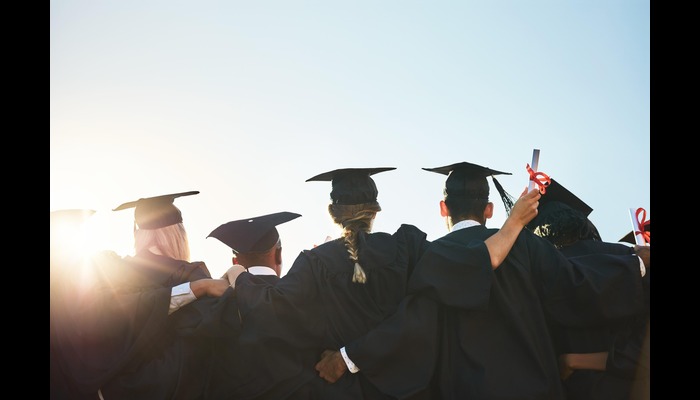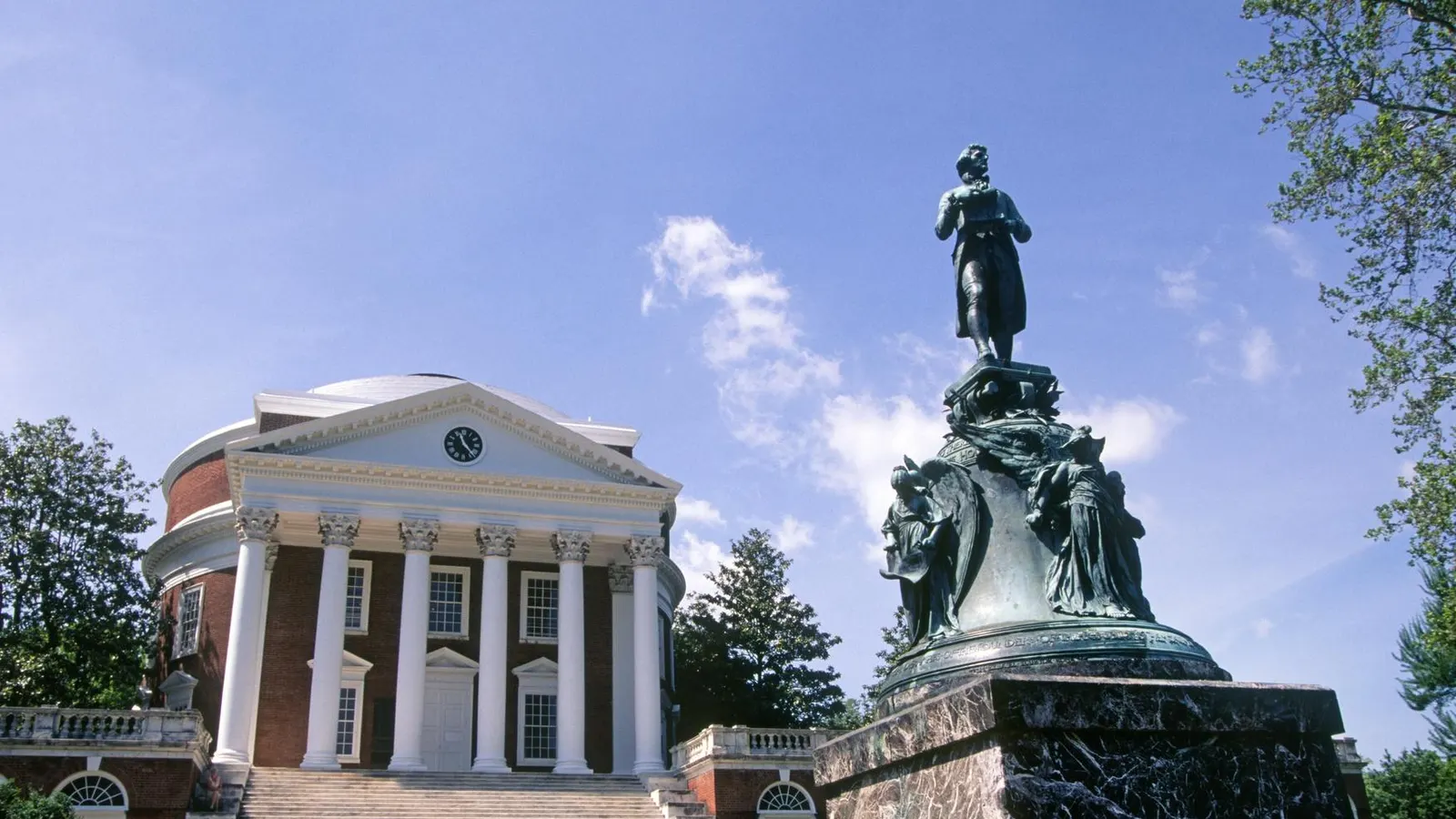
An exterior view of the steps and columns of the Rotunda at the University of Virginia, in Charlottesville, Virginia. The Trump administration is considering imposing a $100,000 fee for Optional Practical Training to prevent international students from working in America after graduating.Getty ImagesThe Trump administration is considering imposing a $100,000 immigration fee for Optional Practical Training to prevent international students from working in America after graduating. Such a policy would run counter to the perspectives of educators, economists and businesses who see the students as a vital source of talent and innovation. The policy also would ignore the views expressed by Donald Trump, who has argued international students should receive permanent residence (or green cards) after graduating because they strengthen the economy and help many U.S. universities survive by boosting enrollment. Attorneys and technology experts question how the administration could legally enact such a fee and warn it would devastate America’s technology leadership and competitiveness.Educators say many international students will choose destinations other than the United States to attend university without the ability to work and gain practical experience in their field. Even before adding a potential $100,000 fee, countries competing with the U.S. for international students offered more generous post-graduation policies than under U.S. law and regulation. Engaging in Optional Practical Training also allows students to earn money, which would not be possible if the Trump administration imposed a $100,000 fee.Optional Practical Training permits international students to work for 12 months in their field of study before or after completing their course requirements. STEM OPT allows students to gain practical experience through working an additional 24 months (beyond OPT) in a science, technology, engineering or math field. The George W. Bush administration hoped that by providing more years in the United States, STEM OPT would improve students’ chances of being selected in the annual H-1B lottery.Research has concluded that students working on Optional Practical Training and STEM OPT do not harm the employment prospects of Americans. According to a National Foundation for American Policy study by University of North Florida economics professor Madeline Zavodny, “There is no evidence that foreign students participating in the OPT program reduce job opportunities for U.S. workers.” Zavodny found, “The relative number of foreign students approved for OPT is negatively related to various measures of the unemployment rate among U.S. STEM workers. A larger number of foreign students approved for OPT, relative to the number of U.S. workers, is associated with a lower unemployment rate among those U.S. workers.”The study concluded, “Analysis of the data show unemployment rates are lower in areas with larger numbers of foreign students doing OPT as a share of workers in STEM occupations. Comparisons at the state level likewise show a negative relationship.”MORE FOR YOUOther research confirmed Zavodny’s findings on the positive impact of OPT and STEM OPT. Examining the impact of adding STEM OPT in 2016, economists found, “Native high-skilled and STEM workers experienced substantial and strengthening employment gains.” According to Seoyoung Kwon (Yonsei University), Jongkwan Lee (Yonsei University) and Joan Monras (Pompeu Fabra University in Barcelona), “This local inflow stimulated firm creation and the demand for native high-skilled workers. The program might have also boosted innovation in certain sectors and startup investment, especially in Commuting Zones hosting top-ranked universities, where, overall, the effects tend to be larger.”The Trump administration has adopted several measures aimed at restricting international students. White House Deputy Chief of Staff Stephen Miller has long opposed allowing international students to work in the United States after graduating. A final rule published in Dec. 2025 disadvantaged recent international students in the H-1B electronic registration and lottery process. Another final rule, published in July 2026, limits how long students can study in America without gaining new permission from the U.S. government by eliminating the previous policy referred to as “duration of status.” The Trump administration also has published a proposed rule that will likely price many H-1B visa holders and employment-based immigrants out of the U.S. labor market. The rule would significantly raise the prevailing wage requirement, most notably for recent international students.People walk on the campus of Massachusetts Institute of Technology (MIT) in Cambridge, Massachussetts, on April 15, 2025. (Photo by JOSEPH PREZIOSO/AFP via Getty Images)AFP via Getty ImagesAn Immigration Proposal Of Uncertain LegalityMichelle Hackman of the Wall Street Journal reported on July 30 that the Trump administration is considering adding a $100,000 fee to Optional Practical Training. “The latest fee is still under discussion at the Department of Homeland Security, the people said, and it wasn’t clear whether the White House would sign off on it,” according to Hackman. “It also wasn’t clear who would be on the hook to pay the fee: international students themselves, or their prospective universities and employers.“It likely would be attached to a new requirement the Trump administration announced earlier this month that requires international students to apply for an extension on their visas to use their OPT. Until now, student visas automatically remained valid for the duration of a student’s educational program, plus up to three additional years of work authorization.”Whether the employer or the student pays the fee, it would effectively work as a prohibition. Students cannot afford to pay $100,000 for the right to work in America, and few companies would pay such a fee to employ, in effect, interns for 12 or 36 months. If students cannot work on Optional Practical Training or STEM OPT, it is unlikely they could secure an H-1B in the annual lottery before leaving the country, which may be a primary goal of enacting a $100,000 fee. U.S. companies would likely expand their hiring overseas and shift more research and development away from the United States.When Stephen Miller worked for former Sen. Jeff Sessions (R-AL), he helped draft a bill that included a prohibition on international students working in the United States in H-1B status until they gained 10 years of work experience outside the country; the prohibition was two years for Ph.D.’s. A $100,000 fee could act similarly. The economic stakes are high. According to research by the National Foundation for American Policy, almost one in four U.S. billion-dollar companies (24%) have a founder who came to America as an international student. (I authored the study.) U.S. billion-dollar startup companies founded by international students have created an average of 1,123 jobs per company. The total value of U.S. billion-dollar companies with international student founders is $3.5 trillion; more than $4 trillion if one includes unicorns that have gone public since 2016.At U.S. universities, international students account for 80% of full-time graduate students in computer and information sciences, 75% in electrical and computer engineering, 62% in mathematics and statistics and a majority in industrial engineering, civil engineering and mechanical engineering.Luther Lowe, head of public policy at Y Combinator, a well-known startup accelerator in Silicon Valley, said on X.com of a $100,000 OPT fee: “It’s hard to overstate what a disaster this would be for the U.S.’s AI race against China.”“It is another reason for international students to reconsider coming to the United States. There is too much uncertainty,” said Dan Berger of Green & Spiegel in an interview. “Even if this never happens, it comes on the heels of the duration of status rule and changes to the H-1B visa category.”Discussions with lawyers found them unsure which, if any, legal authority the Trump administration could use lawfully to enact a $100,000 OPT fee. “I believe this is not lawful because it is a tax not created by Congress, and it would be a major change without opportunity for notice and comment,” said Berger. “But there is damage done even by floating this idea.”In Sept. 2025, the Trump administration used 212(f) of the Immigration and Nationality Act to impose a $100,000 H-1B fee via a proclamation. The 212(f) authority allowed it to use the fee against the “entry” of new H-1B visa holders, not for individuals who changed status in the United States without leaving. To use 212(f) authority for an OPT fee implies the administration contemplates requiring students to exit the United States after completing their degree. Under that scenario, the students or their employers would be subjected to the $100,000 fee if they reenter to work on Optional Practical Training or STEM OPT.In a ruling in June 2026 that applied nationwide, a federal judge struck down the Trump administration’s $100,000 fee levied on the entry of new H-1B visa holders. U.S. District Court Judge Leo T. Sorokin, in the District of Massachusetts, agreed with a coalition of 20 states, led by California Attorney General Rob Bonta, and supported the plaintiffs’ motion for summary judgment. He declared, “The Policy implementing the Proclamation is declared unlawful and is vacated in its entirety.” The judge said the plaintiffs’ argument that the president lacked the power to impose an additional $100,000 payment on H-1B applications intruded on Congress’s taxing power fell “plainly” within the scope of judicial review. According to the judge, “The Supreme Court’s reasoning in this pair of precedents supports a finding that the $100,000 payment requirement amounts to a tax, not a penalty.” The two Supreme Court precedents are Bailey v. Drexel Furniture Company and National Federation of Independent Business v. Sebelius.The Supreme Court precedent that also helped the plaintiffs is Learning Resources, Inc. v. Trump, which the judge characterized as finding that “tariffs assessed by DHS amount to taxes for the purposes of the Constitution’s Taxing Clause.” Judge Sorokin wrote, “Applying Learning Resources to the case at hand, the Court finds that INA §§ 212(f) and 215(a) do not delegate taxing power to the President.”The judge rejected the administration’s argument that the $100,000 fee was “a regulatory payment,” which is “not the same as a tax.” He wrote, “Thus, the relevant inquiry here is whether the provisions of the INA granting the President discretionary powers to regulate the entry of noncitizens reflect a delegation of Congress’s taxing power.”In July, the U.S. Court of Appeals for the First Circuit rejected the Trump administration’s motion to stay Judge Sorokin’s decision. The Trump administration has appealed.A rule on Optional Practical Training no longer appears on the 2026 DHS regulatory agenda. That further confuses the administration’s immediate immigration plans. Any administration rule that emerges may focus on making the category so burdensome for employers that they will no longer see the benefit of employing students for 12 or 36 months on OPT or STEM OPT.
New Immigration Plan Considered To Stop Students From Working In U.S.
The Trump administration is considering imposing a $100,000 fee on international students who want to work on Optional Practical Training.
1,732 words~8 min read