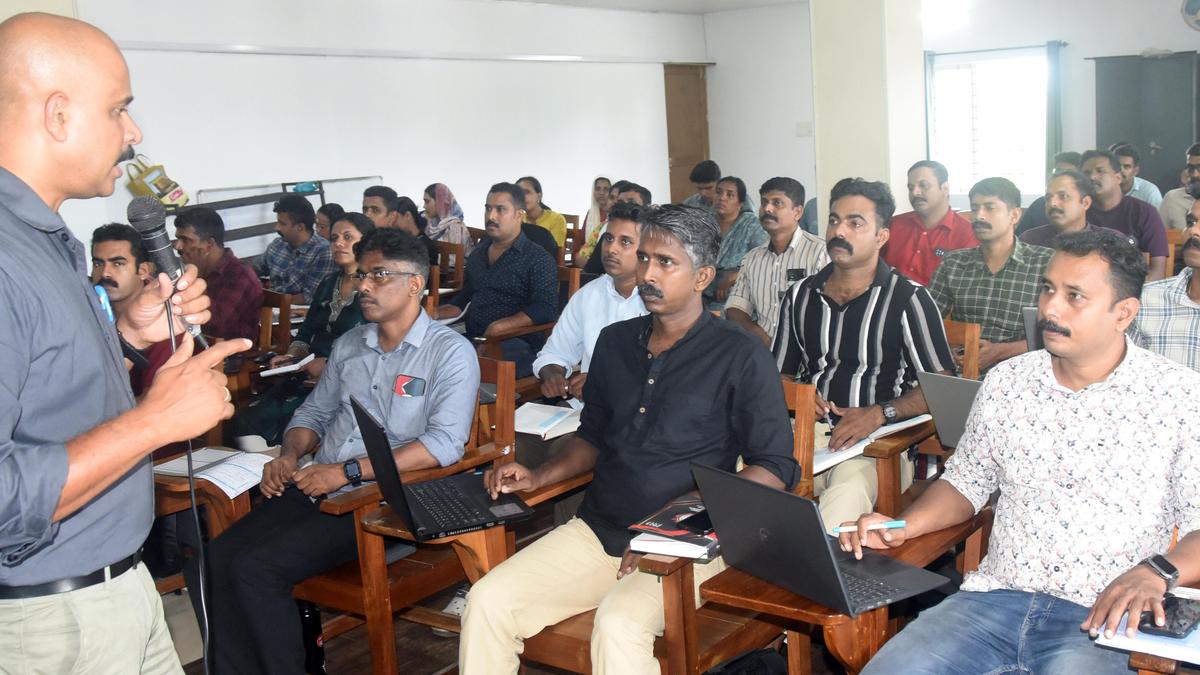
Given the growing sophistication of cybercrimes, there was a need for continuous capacity building, collaborative research, and adoption of advanced digital forensic technologies, V. Balakrishnan, Inspector- General of Police, Central Zone, Tiruchi, said here on Monday.Research organisations should disseminate knowledge about the tools they develop to facilitate their effective utilisation in criminal investigations, Mr. Balakrishnan said. He was inaugurating a faculty upgradation programme on “NextGen cyber forensics tools and technologies” organised by the departments of Instrumentation and Control Engineering and Computer Science and Engineering of the National Institute of Technology (NIT), Tiruchi, in association with the Centre for Development of Advanced Computing (C-DAC), Thiruvananthapuram.The five-day programme conducted under the Information Security Education and Awareness Phase III Project, an initiative of the Union Ministry of Electronics and Information Technology, is designed to strengthen technical expertise, competencies, and research capabilities of faculty members and research scholars in cyber forensics.Highlighting the indispensable role of forensic science in both conventional and digital investigations, Mr. Balakrishnan called for better public awareness while drawing attention to the emerging issue of cyber slavery and the substantial financial losses caused by cybercrime. He suggested that C-DAC, Thiruvananthapuram, could explore collaborative initiatives with NIT-Tiruchi and the Tamil Nadu police.A. R. Vinukumar, Head, Cyber Forensics Section (CFS) and Software Training Division (STDC), C-DAC Thiruvananthapuram, highlighted the increasing significance of cyber forensics in combating complex digital crimes. He elaborated on several indigenous cyber forensic tools and technologies developed by C-DAC to support digital investigations and cybercrime analysis. Referring to the technological race between law enforcement agencies and cybercriminals, he emphasized the importance of producing skilled researchers and “cyber warriors” capable to overcome emerging cyber threats.R. Jeyapaul, Dean (Faculty Welfare), N. Sivakumaran, Programme Coordinator. K. Srinivasan, Head, Department of Instrumentation and Control Engineering, and Kunwar Singh, Head, Department of Computer Science and Engineering, NIT, spoke. Published - August 03, 2026 07:29 pm IST
Need for continuous capacity building stressed at meet on cyber forensics
A meeting emphasized the urgent need for ongoing capacity building and collaboration in advanced cyber forensics to combat rising cybercrime.
311 words~1 min read