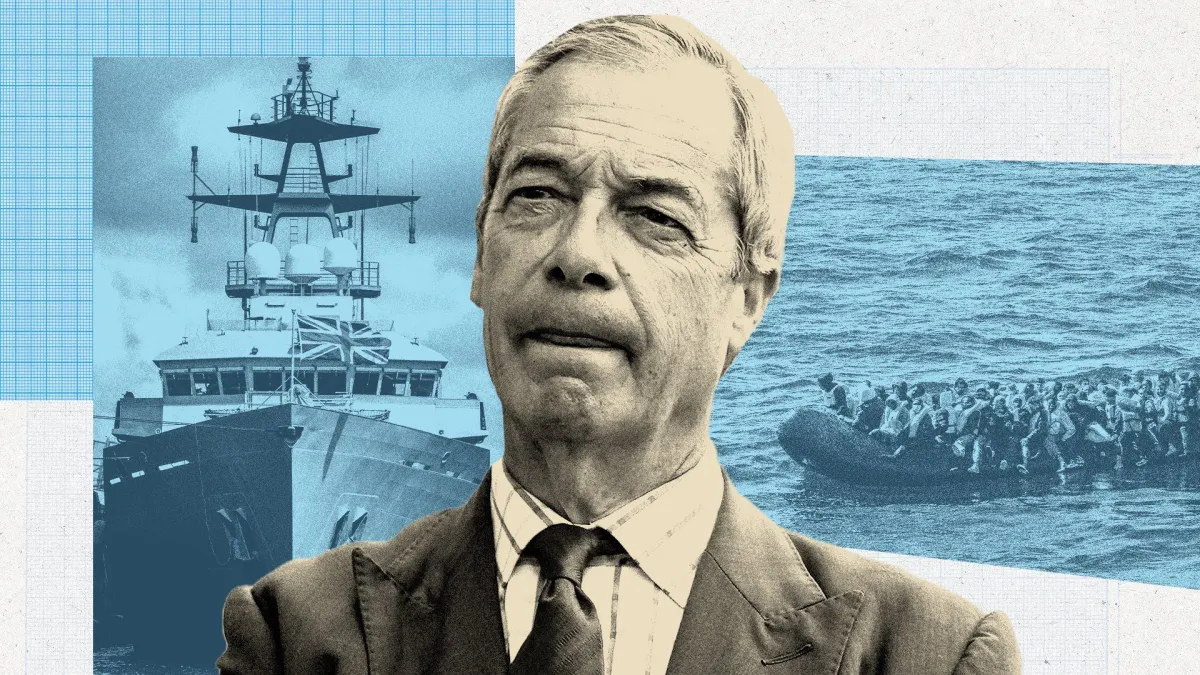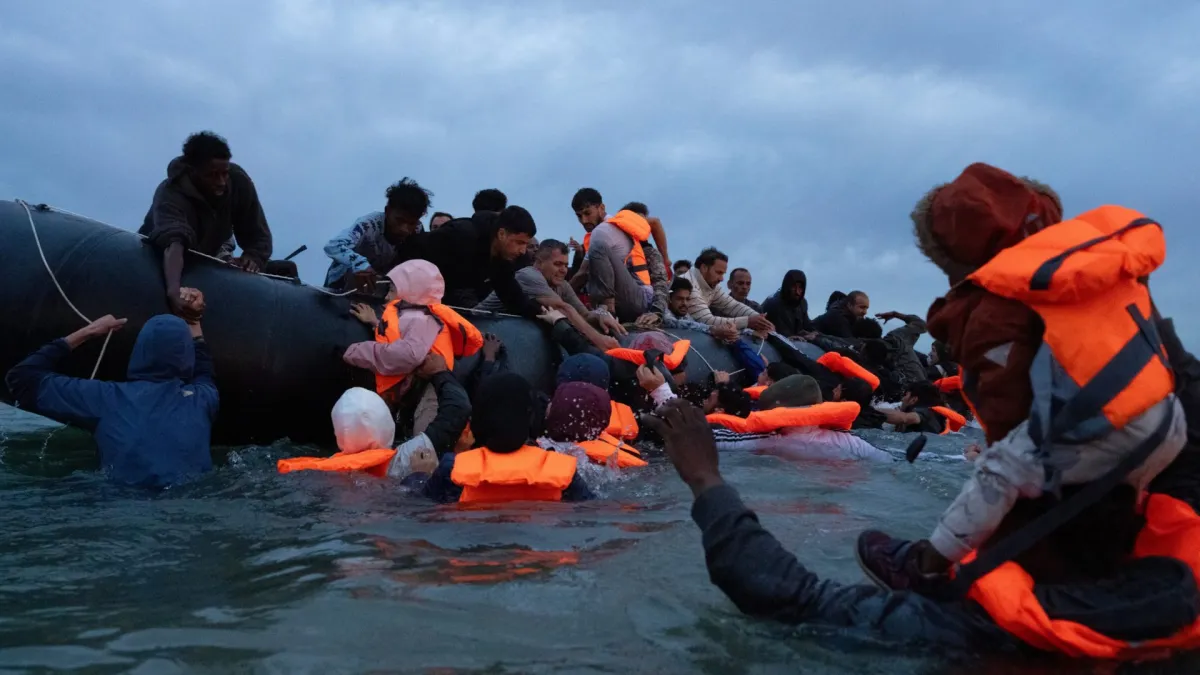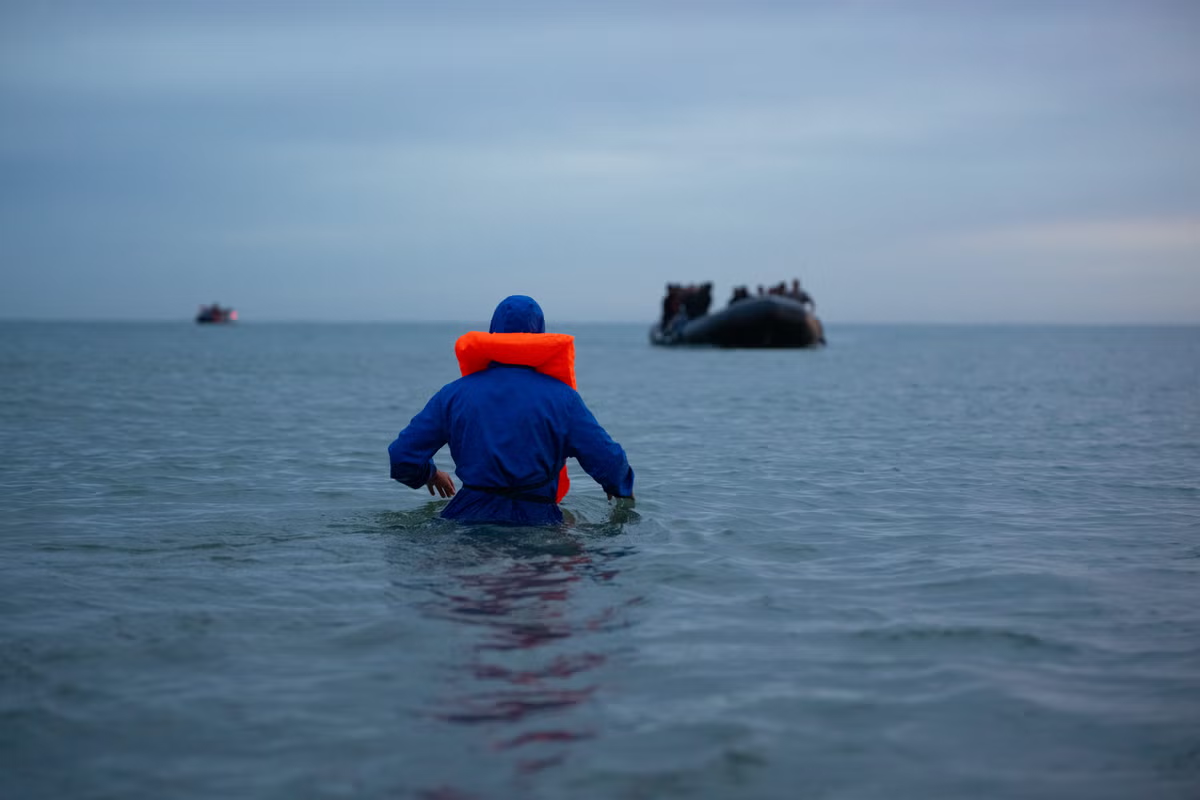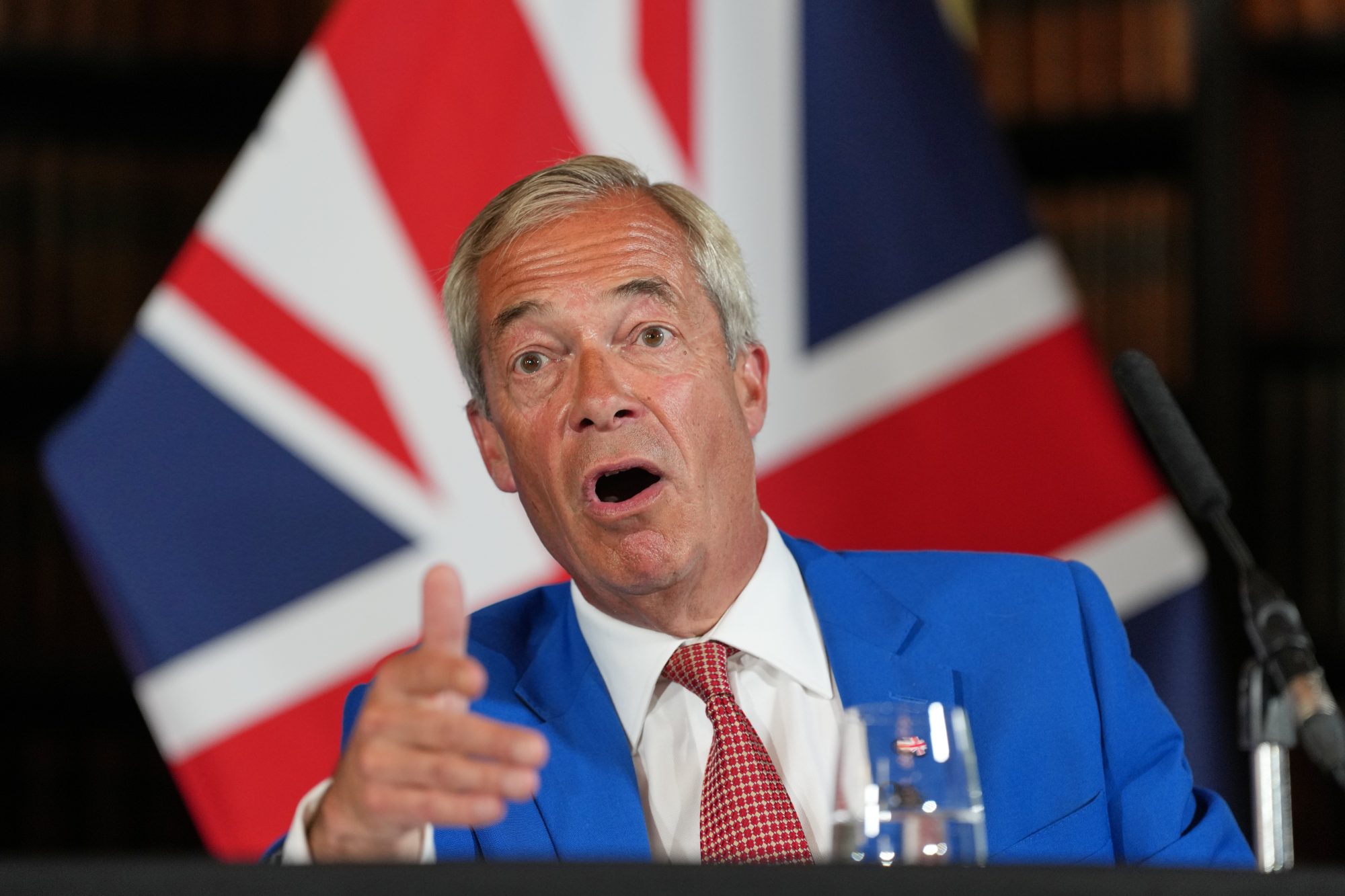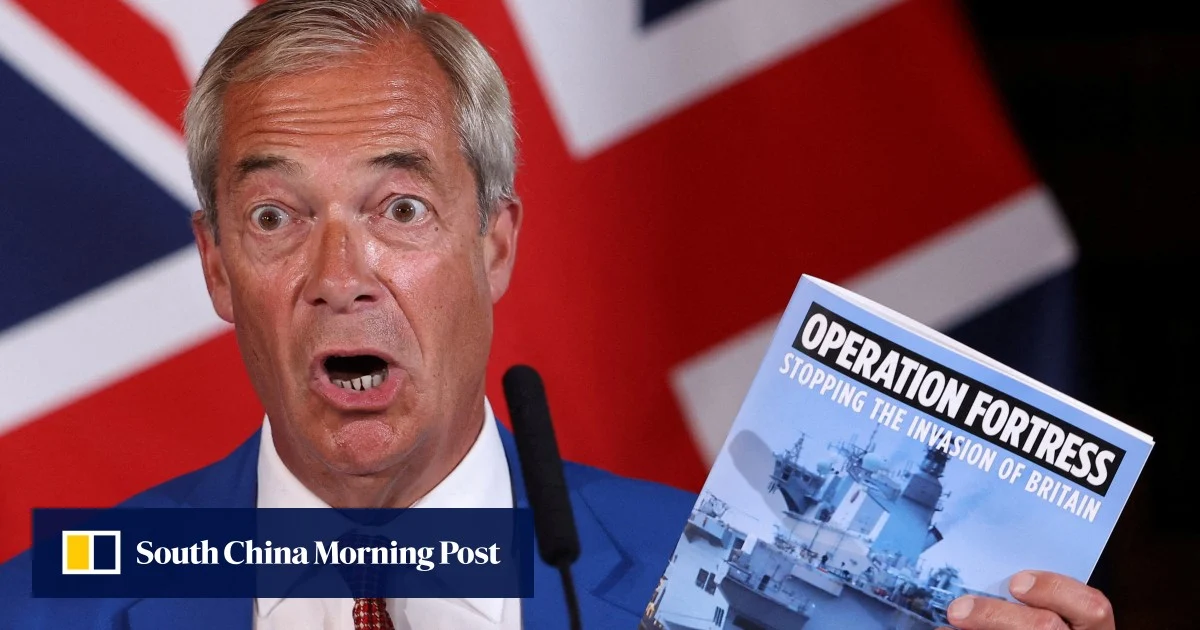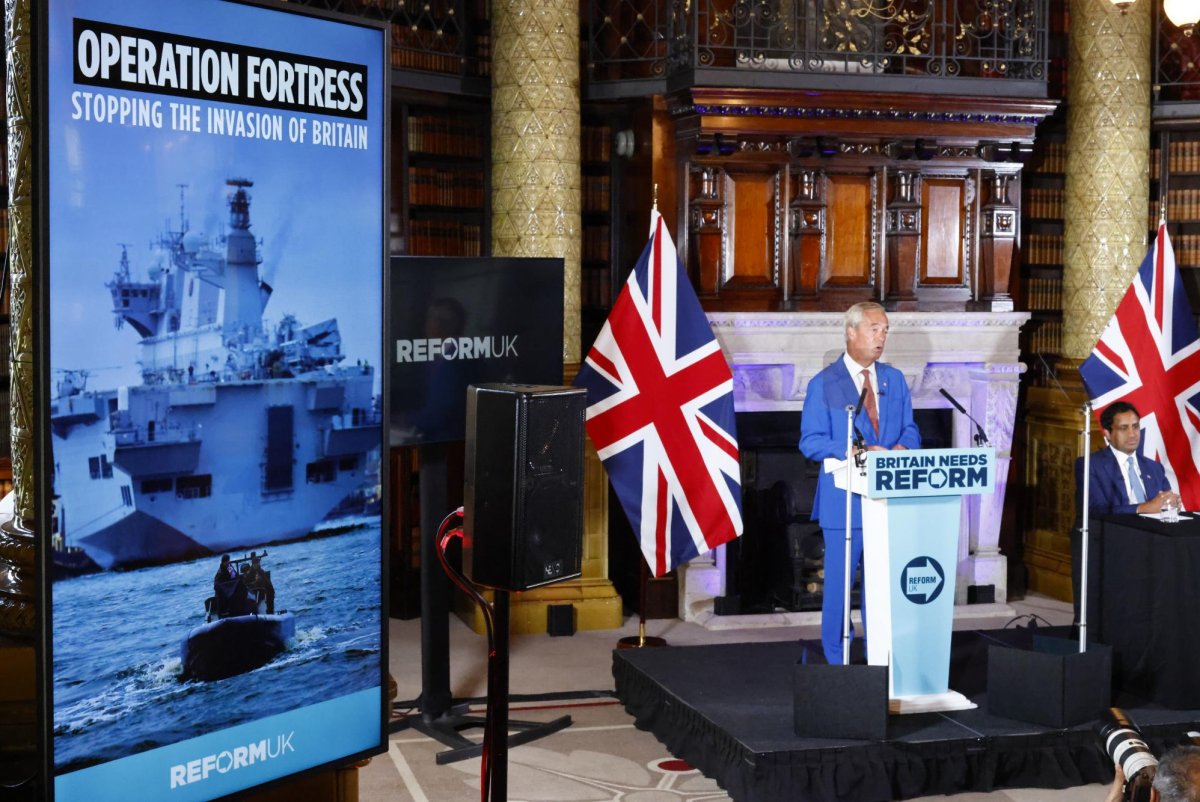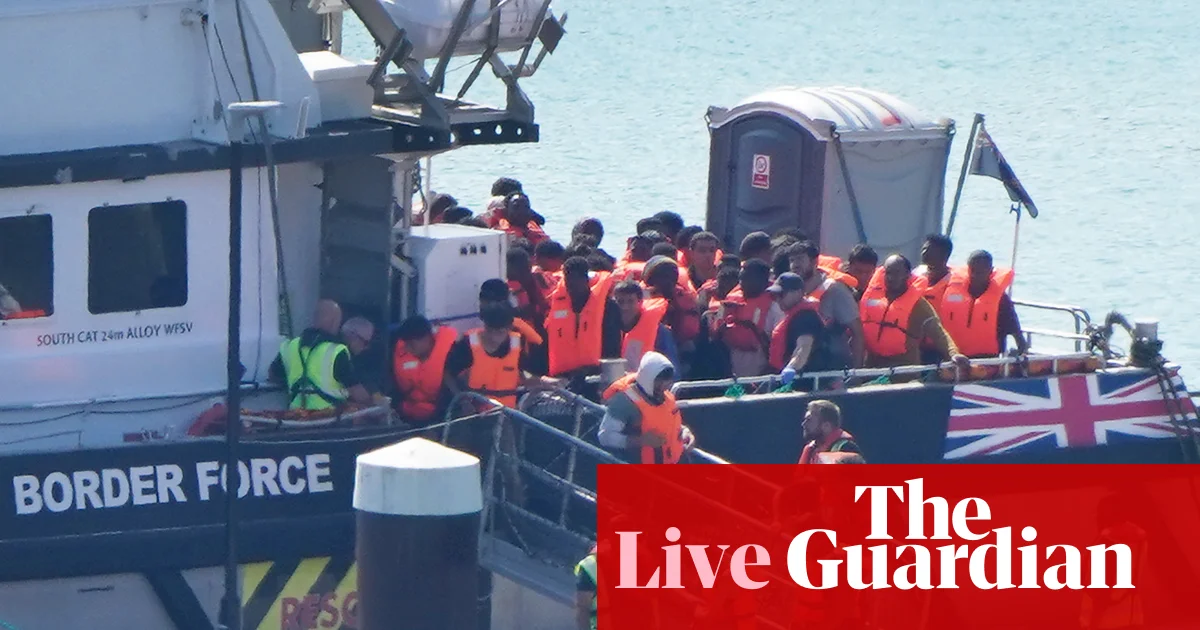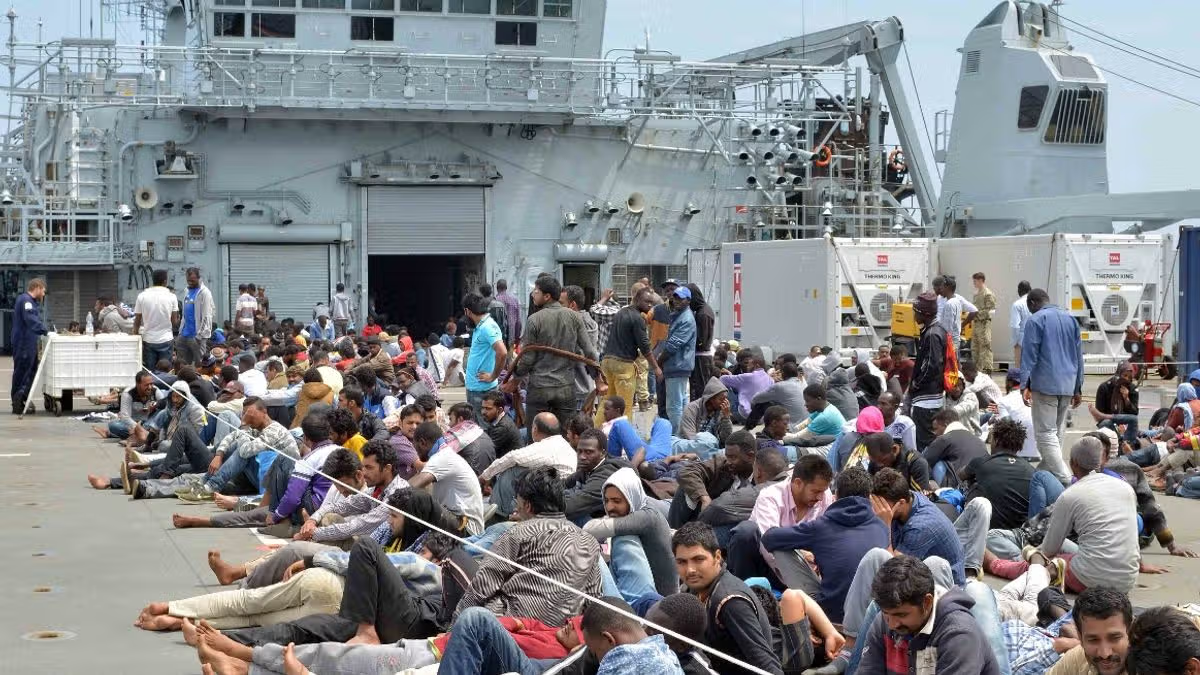
Reform leader Nigel Farage’s plan for the Royal Navy to stop small boats has been slammed as enormously difficult, logistically complex and an appalling-use of badly-needed military assets.The much-mocked idea might appeal to the far-right’s idea of quelling a so-called threat by using the military to protect the UK but experts say it would be “incredibly risky and impractical”. Maritime law suggests vessels are required to safeguard lives at sea, and as witnessed first-hand by the Daily Mirror, such an operation would be almost impossible to launch in variable conditions and with limited resources.Especially at a time when the Royal Navy is desperately short of ships and under-resourced in the face of real threats that the UK faces. A western intelligence source told the Mirror: “This is clearly an attempt to label the migrant crisis, yet again, as an invasion, a military threat that requires troops to deal with it."The messaging is disturbing, but the impracticality of such an undertaking is so unintelligent it defies belief, given the complexities of sea operations and all of the variables they entail. This is not an interdiction on stable land. You only have to witness a high-seas rescue by the RNLI to see how complex and difficult this would be and how uncertain the outcome each time.“And this is an attempt at using the military when the world is at its most tense geopolitically in years, there is a war in Ukraine and the Middle East - and both are requiring our attention.”In 2015, a Mirror team joined an international military effort to interdict small boats packed with migrants sailing precariously from Libya to Italy, in all rescuing 1,200 in a matter of hours. Just ensuring nobody drowned meant Royal Marines and sailors from the Royal Navy aboard HMS Bulwark were forced to go through a painstaking mission taking many hours.I witnessed how Bulwark, the “mother ship” stood off from the operation as smaller Commando boats approached the small boats very slowly, in order to avoid panic aboard the boats.The nail-biting operation in relatively calm Mediterranean conditions displayed just how intense an operation to rescue so many people from the jaws of a watery grave can be. Navy boats drifted slowly towards the boats as commandos gently encouraged travellers to stay calm and not to move in the boat, to take the life-jackets handed them and how to put them on.Once saved, the passengers were taken to HMS Bulwark to be processed and were then sailed to a port in Sicily from where they were taken to a camp to have asylum applications examined. That was a mission in calm seas to save lives - not to simply shunt them back to France, no matter the sea-state or condition of the boats, an act that would very likely end in tragedy. It took days. And those being rescued knew they were not going back to Libya any time soon.Many of the migrants found in the Channel may have travelled longer and from further afield, so and may not want to go back to France. A violent struggle in those packed boats could rapidly descend into a mass casualty nightmare involving women and children.The legality of taking rescued people to another country, even if they have been rescued and were being returned, would almost certainly land a Reform government in a legal quagmire. And back in 2015 there was no war in Ukraine, apart from the quiet Russian invasion of Crimea a few months previously, and nor was the Strait of Hormuz blocked in a US war with Iran. Right now British military planners are pouring over details of how on earth the UK is going to assist in helping secure the Strait of Hormuz against Iranian threat if the war ends.They are also trying to allocate very limited Royal Navy vessels for operations to intercept Kremlin “shadow vessels” illegally smuggling oil internationally and paying for the Ukraine war. And that is without being on standby to hunt down Russian vessels getting too close to the UK, shoot down missiles fired by Iran at allies in the Middle East, rescue Brits in danger in foreign parts, ward off the Kremlin maritime threat in the Far North, help out in the Caribbean during hurricane season, help secure the Falkland Islands, guard RAF Akrotiri and countless other bases.What they really need, right now as they tackle one of the biggest maritime nightmares to face the world in decades, the Strait of Hormuz, is to be told to stand down and divert ships to the English Channel. That is with a poorly-resourced Royal Navy with no vessels free for such an operation - particularly since HMS Bulwark, an amphibious assault ship was decommissioned last year.Ex-Royal Navy Commander Tom Sharpe adds: "You’re better off using an actual ferry.” But a civilian ferry would not brandish the military message of a British destroyer, the far-right thrill, the bullying image of uniformed military personnel shooing off poverty-stricken, exhausted and terrified foreigners. They would first have to find a member of our brilliant Armed Forces who would agree to such a senseless, shameful and inhumane order.
'Farage's lunatic plan to use Navy for intercepting small boats won't work'
"As Reform's beleaguered leader Nigel Farage pushed his lunatic idea to send UK warships to bear down on small boats crisis, this madness is exactly why he should be stopped"
855 words~4 min read