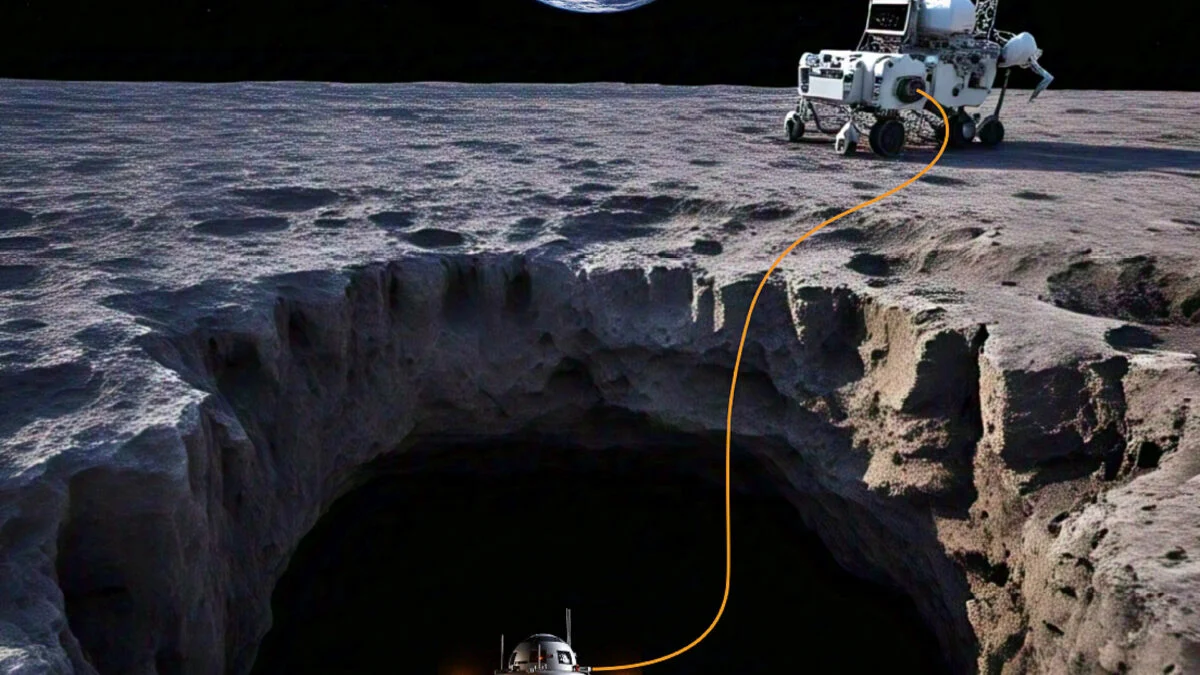
Water buried beneath the moon may be detectable by listening to how vibrations move through the lunar ground.
Researchers from the University of Maryland, Lawrence Berkeley National Laboratory and the University of Hawaii have found that seismic waves, the same type of vibrations scientists measure during earthquakes, could help locate and map ice hidden below the moon's surface.
Lunar Ice Could Support Future Moon Missions
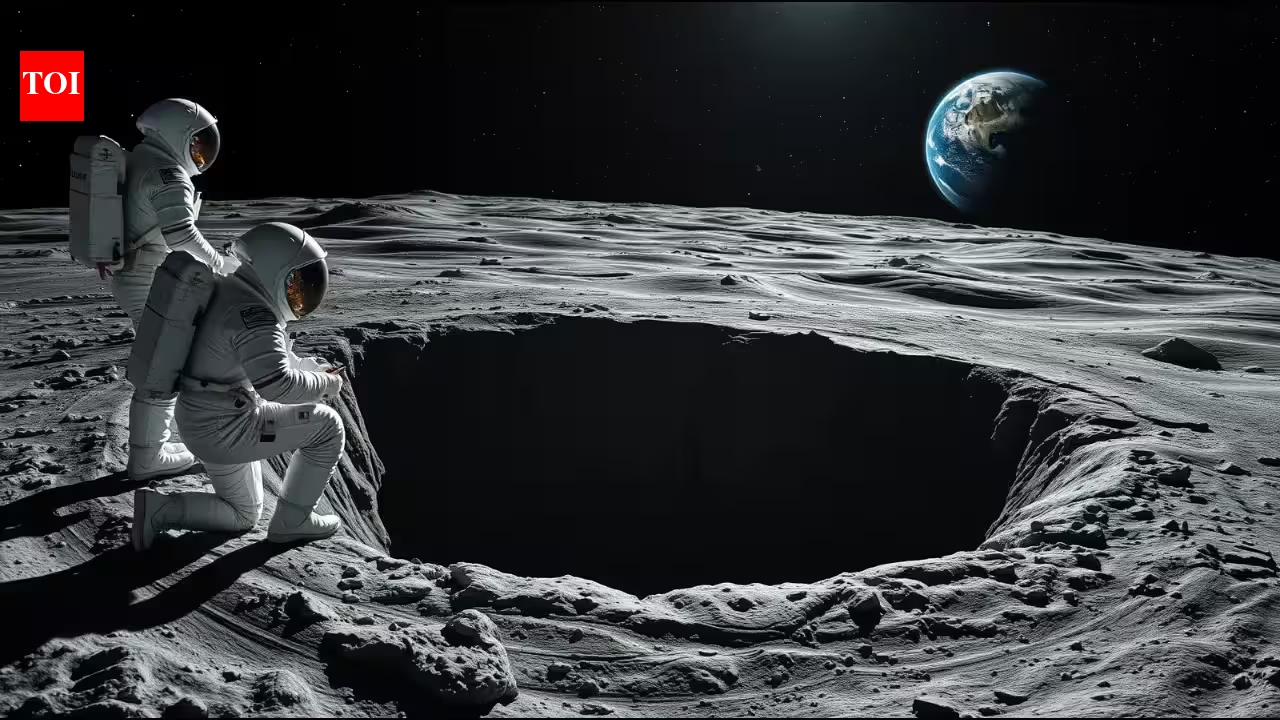
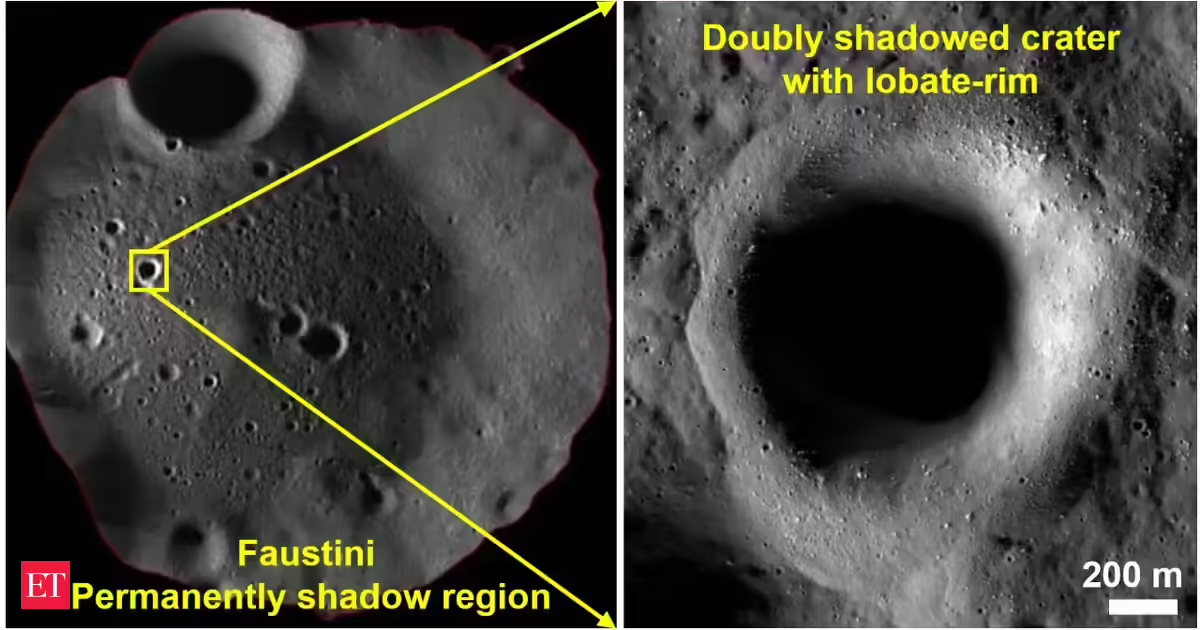
The findings were published in Science Advances on July 31, 2026, as space agencies prepare for a new era of lunar exploration. NASA's Artemis program is aiming for crewed missions to the moon's south polar region in 2028, where permanently shadowed craters may contain valuable deposits of water ice.
For astronauts, that ice could serve several purposes. Once melted and purified, it could provide drinking water. Electricity could also separate it into oxygen for breathing and hydrogen for rocket fuel. A reliable local supply would reduce the amount of material that future missions need to transport from Earth.