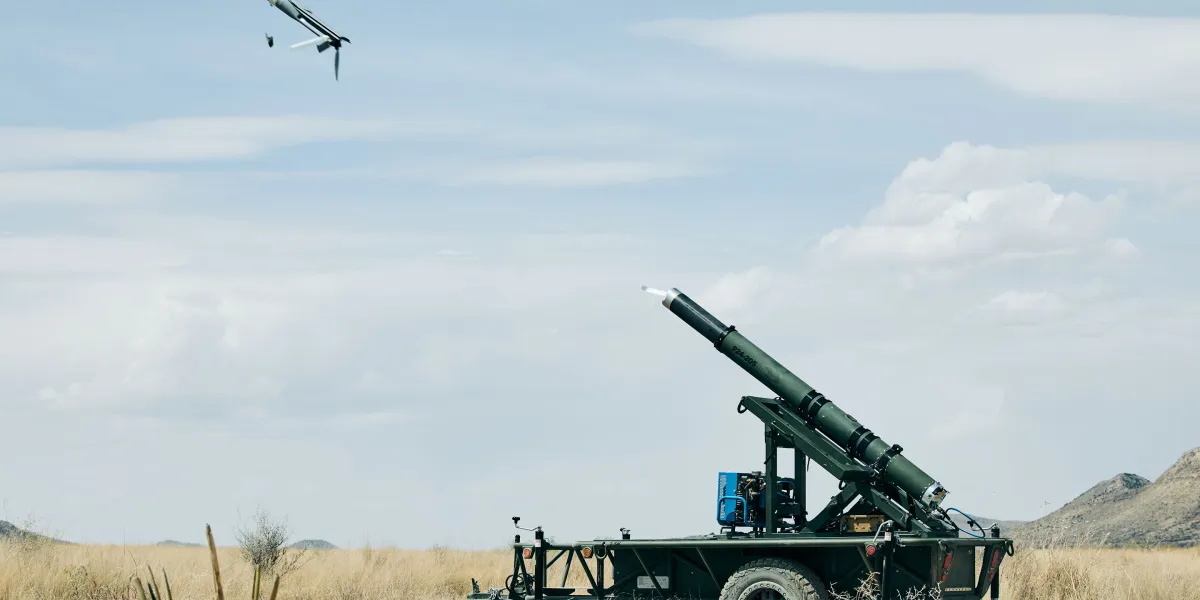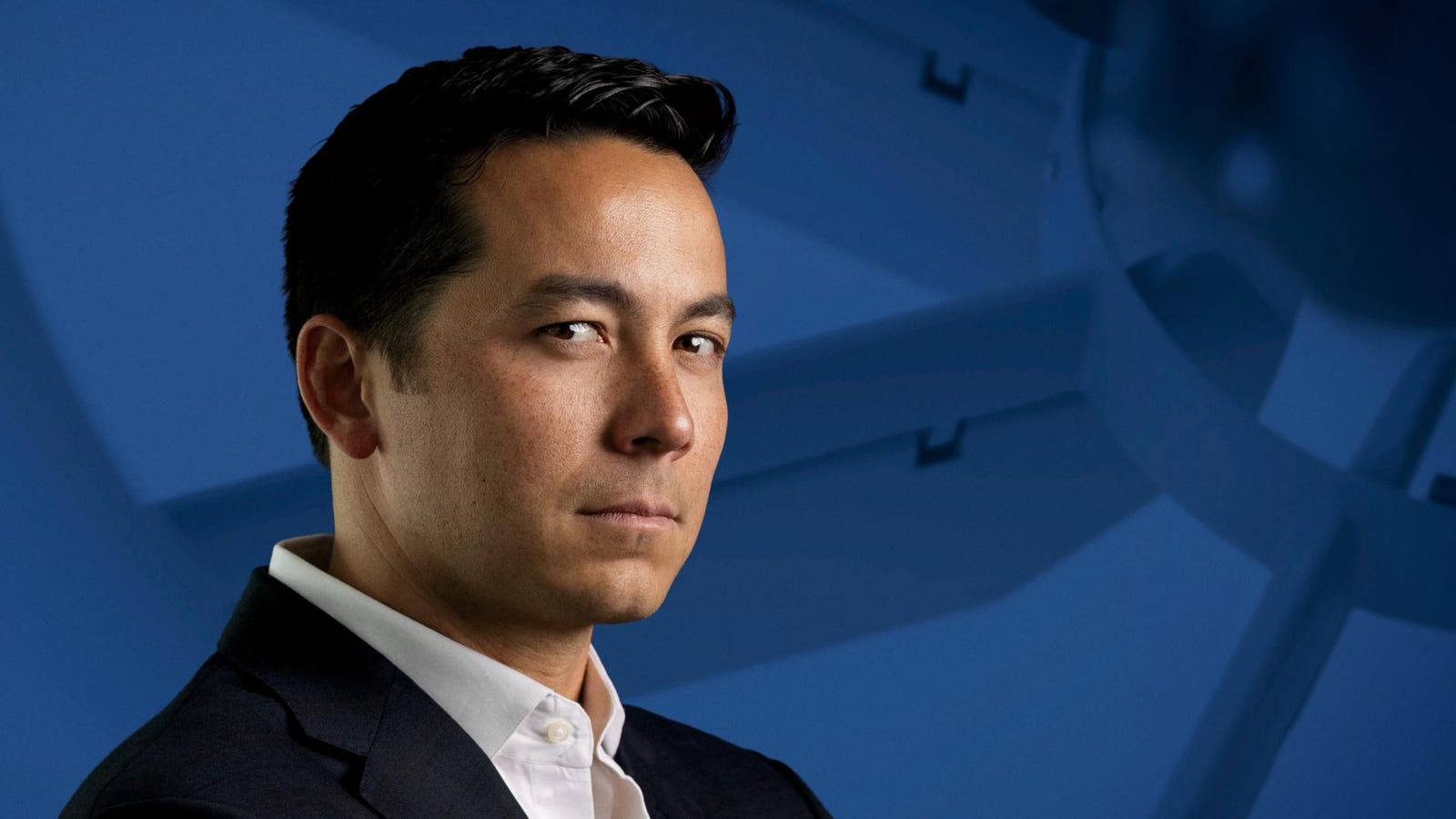
The enemy gets a vote, too. That military aphorism took on a chilling immediacy for Brandon Tseng when he was training for an Afghanistan deployment as a Navy SEAL in 2012. His team was simulating clearing a house of enemy fighters when the Naval Academy graduate was suddenly shot in the face. Fortunately it was just a paintball, not a real bullet. “I’d followed my training exactly as taught,” he remembers—but it didn’t matter. One point of the exercise was that preparation isn’t always enough, because adversaries are smart and unpredictable. “If that was real-life combat, I would’ve been killed.” Clearing hostile buildings was part of the daily grind for the United States military post-9/11. It is extraordinarily dangerous work and killed or injured several people Tseng knew. When he left the military in 2015 after seven years, he couldn’t stop thinking of ways that AI and autonomy tech could reduce risks to troops, like by letting them scan inside structures before they barged in. Tseng convinced his older brother, Ryan, already a successful entrepreneur who had sold his wireless charging company to Qualcomm, and Andrew Reiter, an engineer with a master’s in robotics from Harvard, to join him in starting a drone company they called Shield AI. (Tseng got his Harvard MBA concurrently.) Its first product was a small “Nova” quadcopter specialized for scouting and mapping buildings while sending live video back to frontline soldiers. “I’ve been to war. I never want to see my kids have to go to war,” says Brandon Tseng, who deployed to Afghanistan twice. “I thought there was a better way to help deter conflict: autonomous systems and the proliferation of drones.”Aaron Kotowski for ForbesToday Shield AI is one of the most valuable defense tech unicorns in the nation, worth $12.7 billion after its most recent fundraising in March. Israelis used the more than $400 million (revenue) company’s Novas to survey Hamas tunnels in Gaza and rescue hostages after the attacks of October 7, 2023; Ukrainians are using Shield AI’s bigger V-BAT drone to identify targets deep inside Russian-held territory. Forbes estimates that the Tsengs, who are co-presidents, each have a stake worth around $400 million. Tseng, 39, is the latest in a long line of veterans who have used lessons from the military to build successful businesses. A number of companies that helped shape the modern defense sector—such as Pratt & Whitney (1925, now part of RTX) and Grumman Aircraft Engineering (1929, now part of Northrop Grumman)—were founded by vets. So too were non-defense household names like Comcast, GoDaddy, Nike and Walmart. The service academies—West Point, the Naval Academy and the Air Force Academy—have produced disproportionate numbers of America’s corporate executives. World War II Navy pilot Jack Taylor named his rental car outfit Enterprise after the ship he served on. FedEx’s Fred Smith, who received two Purple Hearts in Vietnam, often joked that he got his business degree from the Marine Corps. In a nod to this tradition of achievement, and in honor of America’s 250th birthday, Forbes will publish a list celebrating 250 living veterans (plus 250 historical greats) online on Wednesday at forbes.com/forbes-250. Even with reports of testing mishaps, Shield AI’s V-BATs have been acquired by Ukraine, Japan, the U.S. and others for missions such as securing borders, finding threats and hunting for drugs.Aaron Kotowski for ForbesThe new generation of ex-military entrepreneurs—ushered in by the Ukraine war and the rapid development of AI—are using modern tech to build better, smarter weapons. This defense industry revolution started catching fire in 2022 and is now backed by a massive war chest. In February, lawmakers approved an $839 billion defense spending bill for 2026, a 15% increase over 2022. Next year it will balloon to $1.1 trillion if President Trump has his way. Venture capitalists are paying attention. Record sums are being plowed into buzzy defense companies like Shield AI, naval drone maker Saronic ($2.6 billion in funding) and Palmer Luckey’s AI defense outfit Anduril ($11.9 billion). According to PitchBook, in just the first half of 2026, VCs pumped $12.8 billion into the defense sector, more than five times the amount they invested in all of 2022. The number of defense companies founded annually, meanwhile, has nearly quadrupled since then. Likewise, Y Combinator incubated 32 of them last year, up eightfold since 2020. Another sign of these times: Initiatives to support vet entrepreneurship are booming. Participation in the federal government’s “Boots to Business” program rose 28% from 2017 to 2025. Applications to the Disabled American Veterans’ entrepreneurship “Patriot Boot Camp” increased 37% from 2024 to 2025 and are already up another 33% so far in 2026. The Defense Department is getting behind startups in a way it hadn’t in recent decades. Just five contractors—Boeing, General Dynamics, Lockheed Martin, Northrop Grumman and RTX—had come to dominate the industry, particularly in major weapons systems. In 2020, the U.S. military had only three airplane suppliers, down from eight in 1990, and 90% of its missiles came from just three companies, according to a Pentagon report. The “Big Five” are very good at building highly complex and expensive hardware like fighter jets and nuclear submarines. But those things are becoming less relevant. As the conflict in Ukraine has amply demonstrated, the future of warfare is more cheap drones, fewer expensive tanks. The Pentagon is scrambling to adapt. It has sped up its contracting systems and embraced innovative thinking and rapid prototyping of new weapons. Many founders say that a government procurement system famous for its rigidity and inertia is becoming friendlier at last. According to the Center for Strategic and International Studies, a bipartisan policy organization, “nontraditional” firms (effectively, those that don’t have longstanding business with the government) received $122.6 billion in defense contracts commitments in 2025, double the amount of a decade earlier, and some 10,000 new businesses have joined the defense industrial base over the past two years. “I think the reason we’re seeing more veterans [starting businesses in defense tech] now is because we’ve gotten out of their way to let them come back and serve,” says U.S. Army Secretary Dan Driscoll, who led a cavalry scout platoon in Iraq. He admits that in the past the environment was pretty hostile for new companies. “It’s not pejorative to say that you need a big balance sheet to be able to develop a new tank or a new helicopter. But whatever you think you will need for the future fight you won’t have, because it’s impossible to predict how your adversary will adapt. And that’s where startups come in; they can innovate so quickly.” Driscoll predicts that the amount of U.S. venture capital in the defense sector will “triple or quadruple” in the coming years, which is great news for entrepreneurial veterans, who understand the way the military works. “A lot of the veterans who served in Iraq and Afghanistan and have been out in the commercial sector, as they’re returning to defense and bringing the best of the lessons that they’ve learned, I would guess that venture capitalists will find that those will be the most successful bets to deliver lasting value to investors.” “Startups are stressful and chaotic, but [the military] prepares you to be very calm and resilient,” says Austin Gray, whose Blue Water Autonomy is working on drone ships. “It makes everything that people want to gripe about in civilian life seem like a privilege.”Jamel Toppin for Forbes Take Austin Gray. In the military, Gray was a Navy intelligence officer, completing three tours, including one during the withdrawal from Afghanistan and another in which he helped manage a high-profile Covid-19 outbreak on the USS Theodore Roosevelt. In 2021, he used the GI Bill to enroll at MIT Sloan. Gray first considered a consulting career (“a sane, safe career path”). But MIT was soon buzzing about opportunities in defense tech. By the time he graduated from Sloan, he was running a student club focused on defense that hosted about 30 recruiting events, up from two when he first arrived on campus. “It’s amazing to see how there was kind of no path, and then it totally took off,” says Gray, 32, who spent a summer after graduating at a Ukrainian drone factory. After a short stint at Providence, Rhode Island–based Havoc—another drone boat startup founded by Navy vets—he launched Blue Water Autonomy in Boston in 2024 with Rylan Hamilton, a Navy vet who had worked at Amazon Robotics. (A third cofounder, who built Roomba vacuuming robots, joined soon after.) His idea was that the Navy needed ship-sized drones big enough to cross the Pacific and carry big payloads like missiles. The company, which has raised $64 million at an estimated $180 million valuation, aims to create a fully autonomous warship. ★ ★ ★
Ex-Military Entrepreneurs Are Set To Cash In On Defense Tech Boom
Backed by a record $32 billion in venture funding since 2022, the AI-powered defense tech revolution is set to create generational fortunes—and change how we wage war.
3,592 words~16 min read