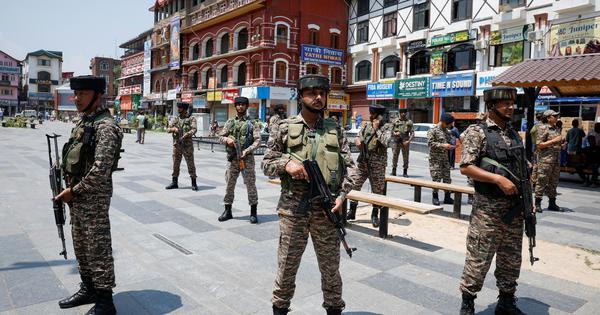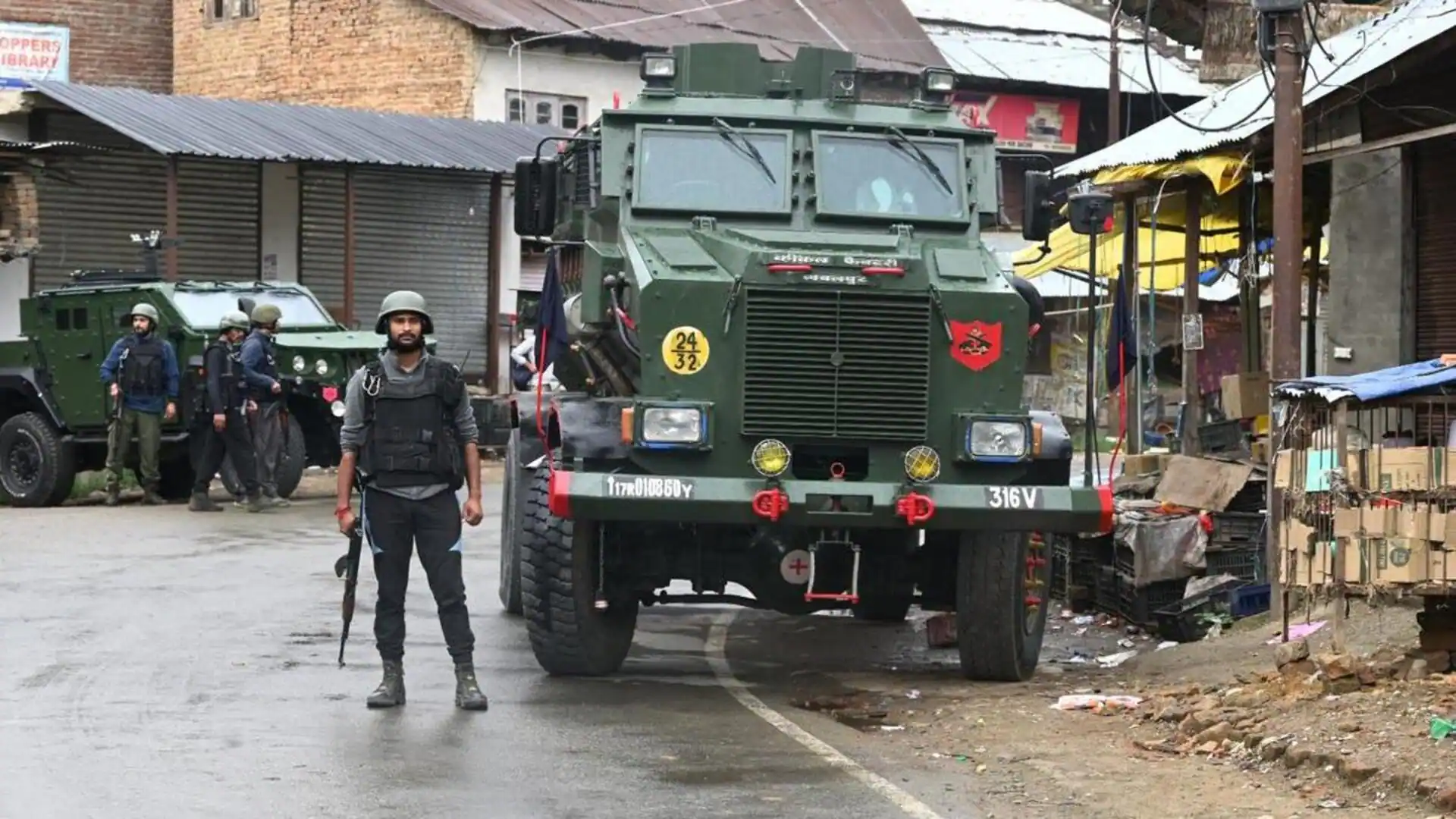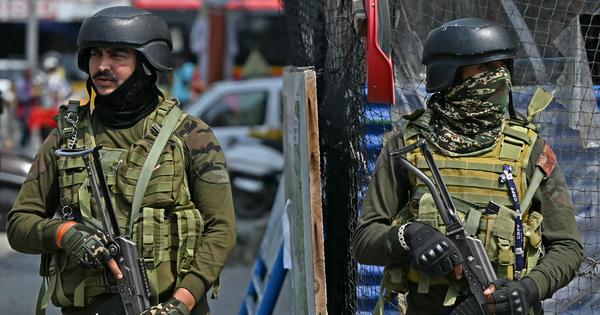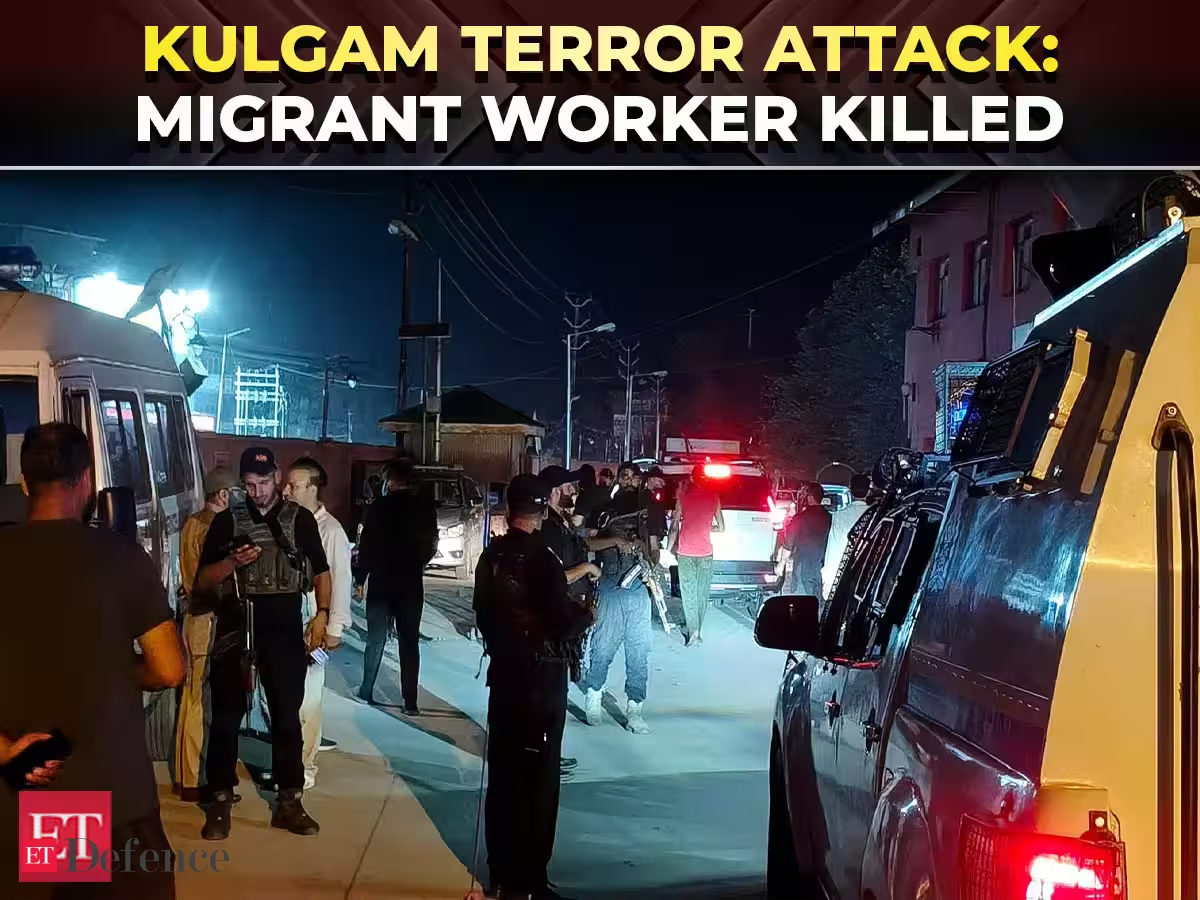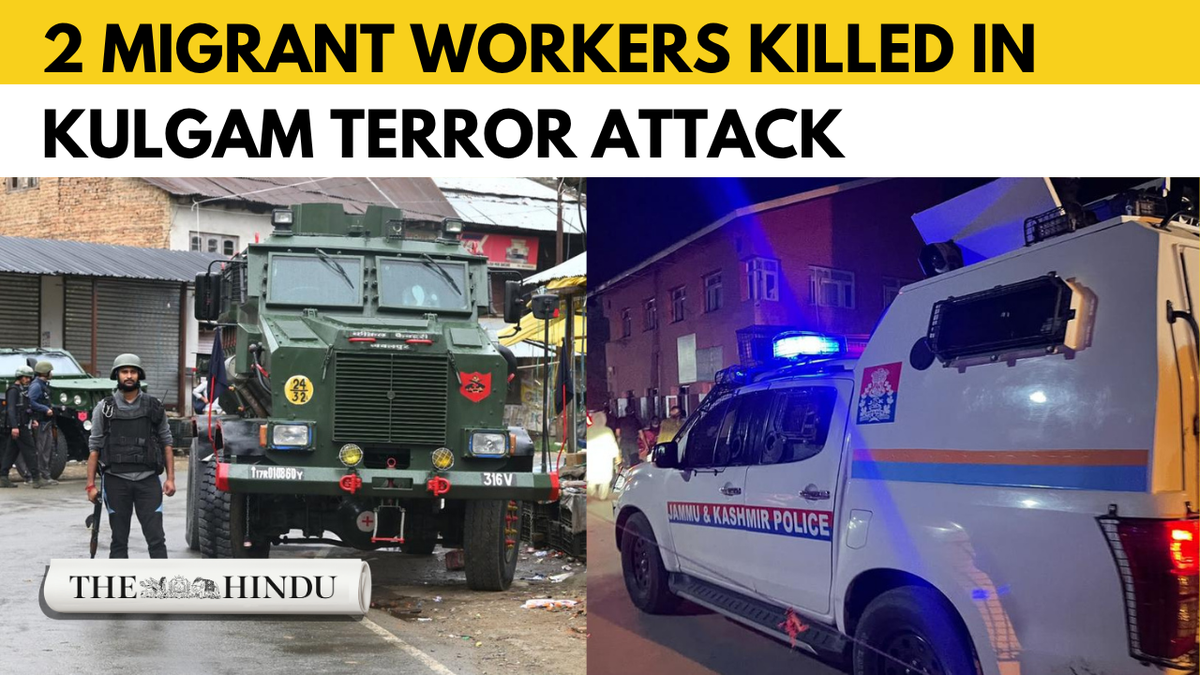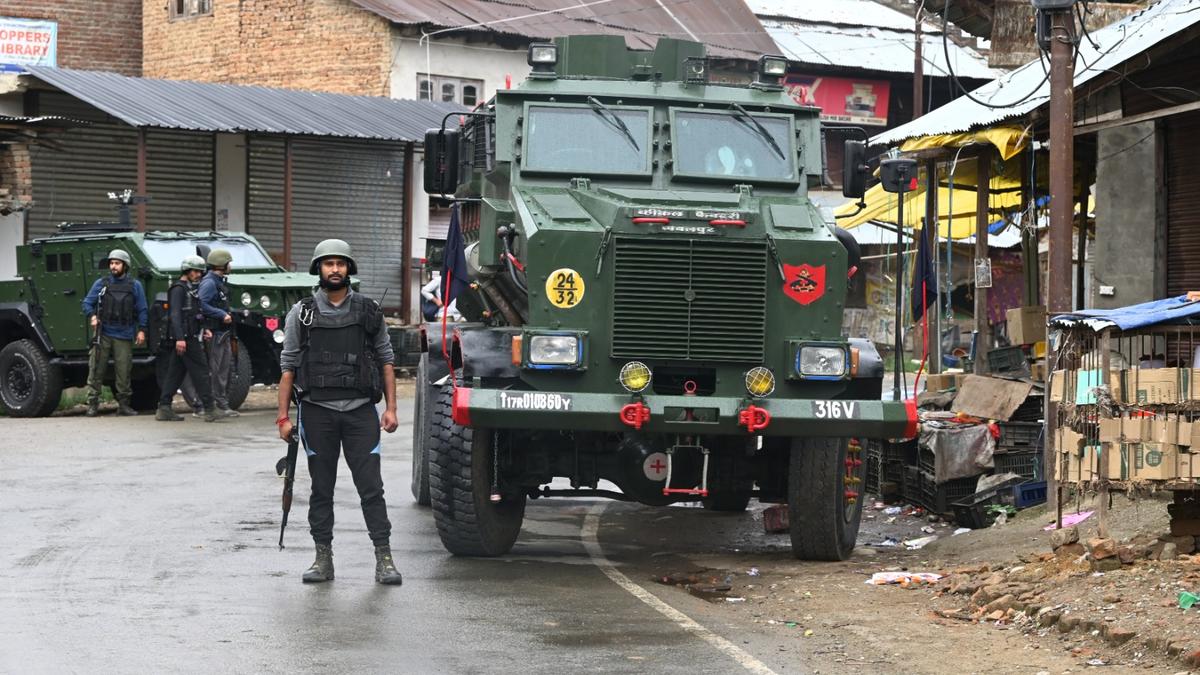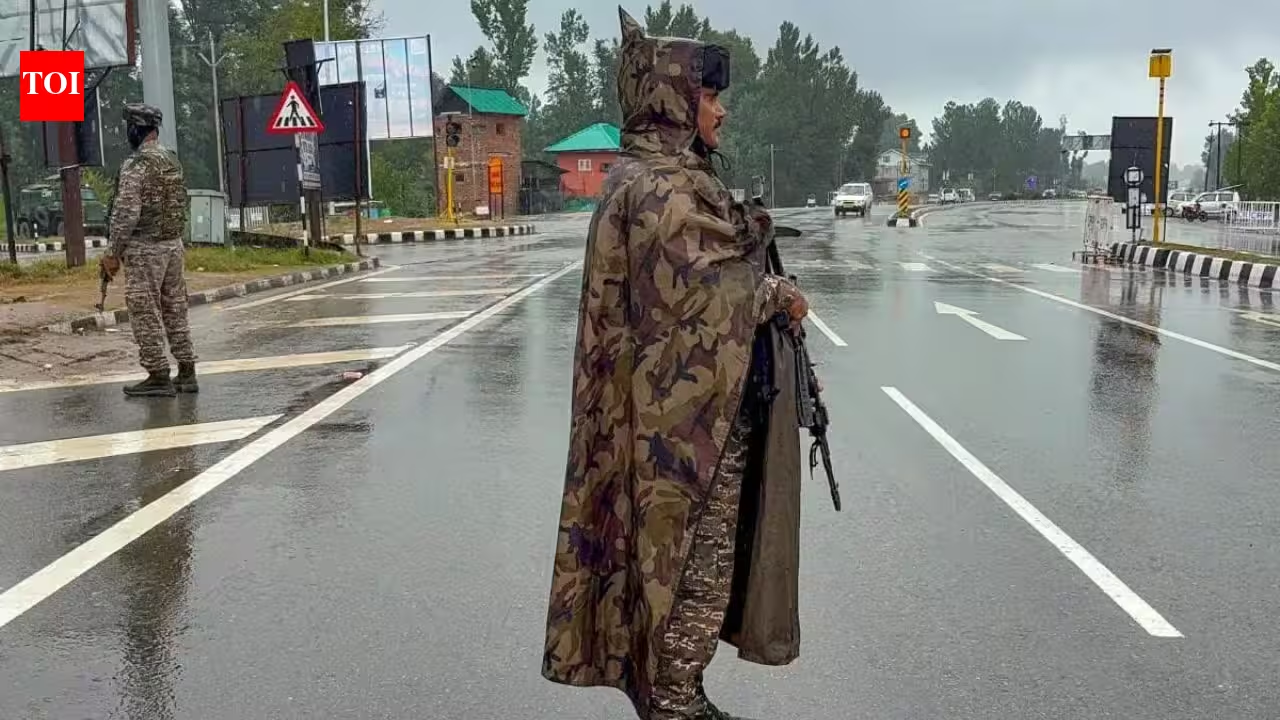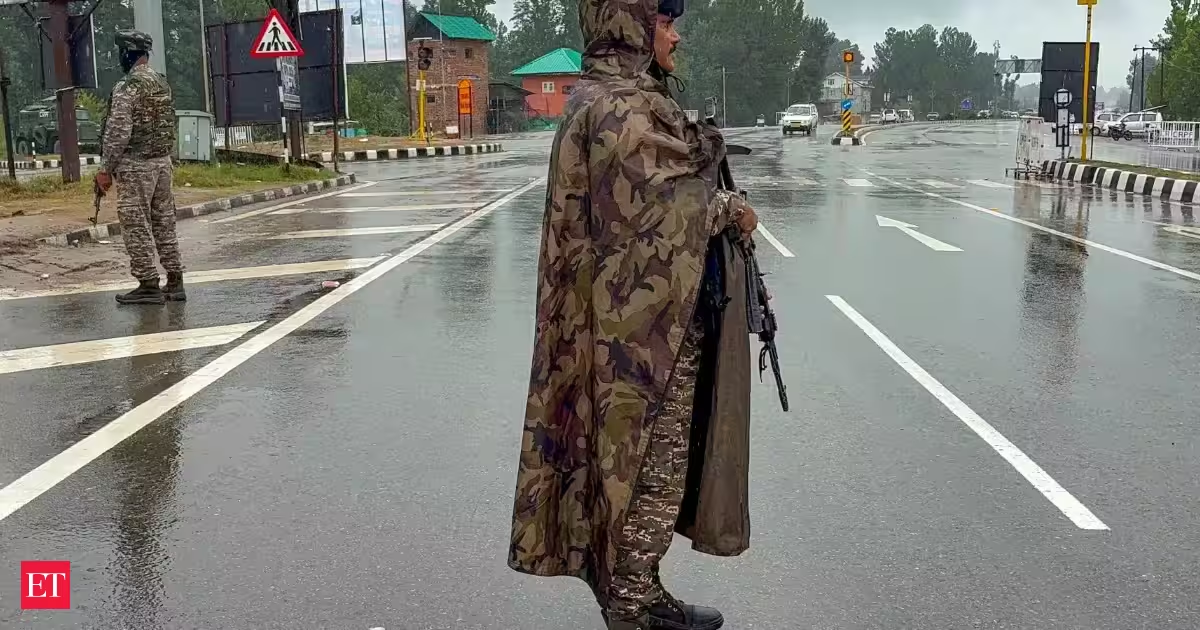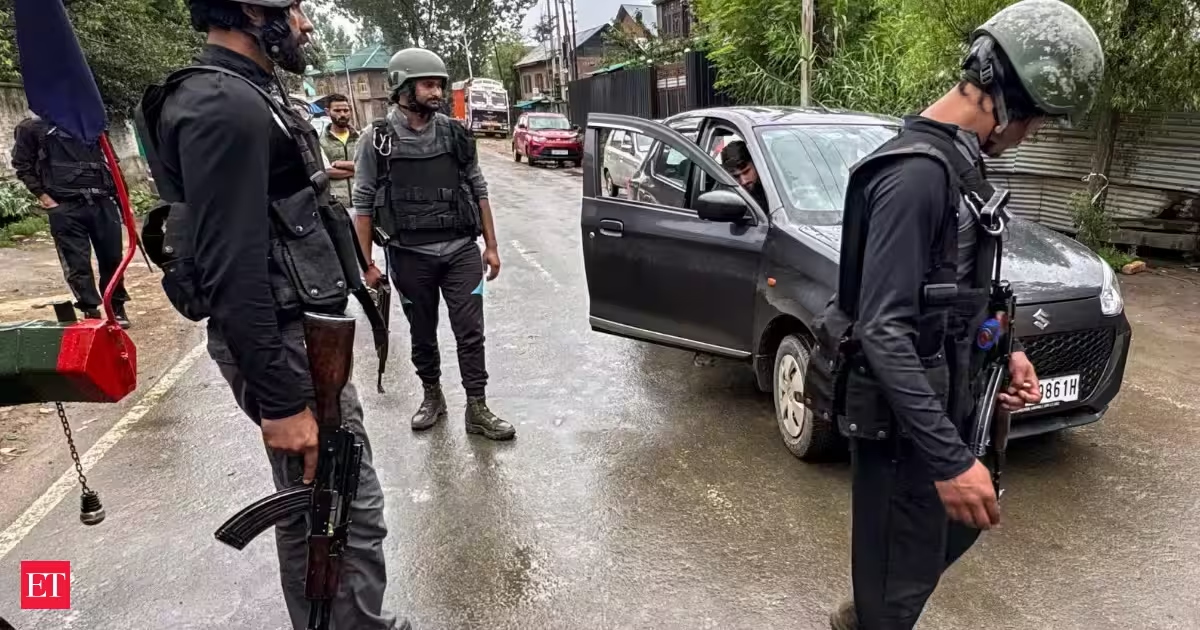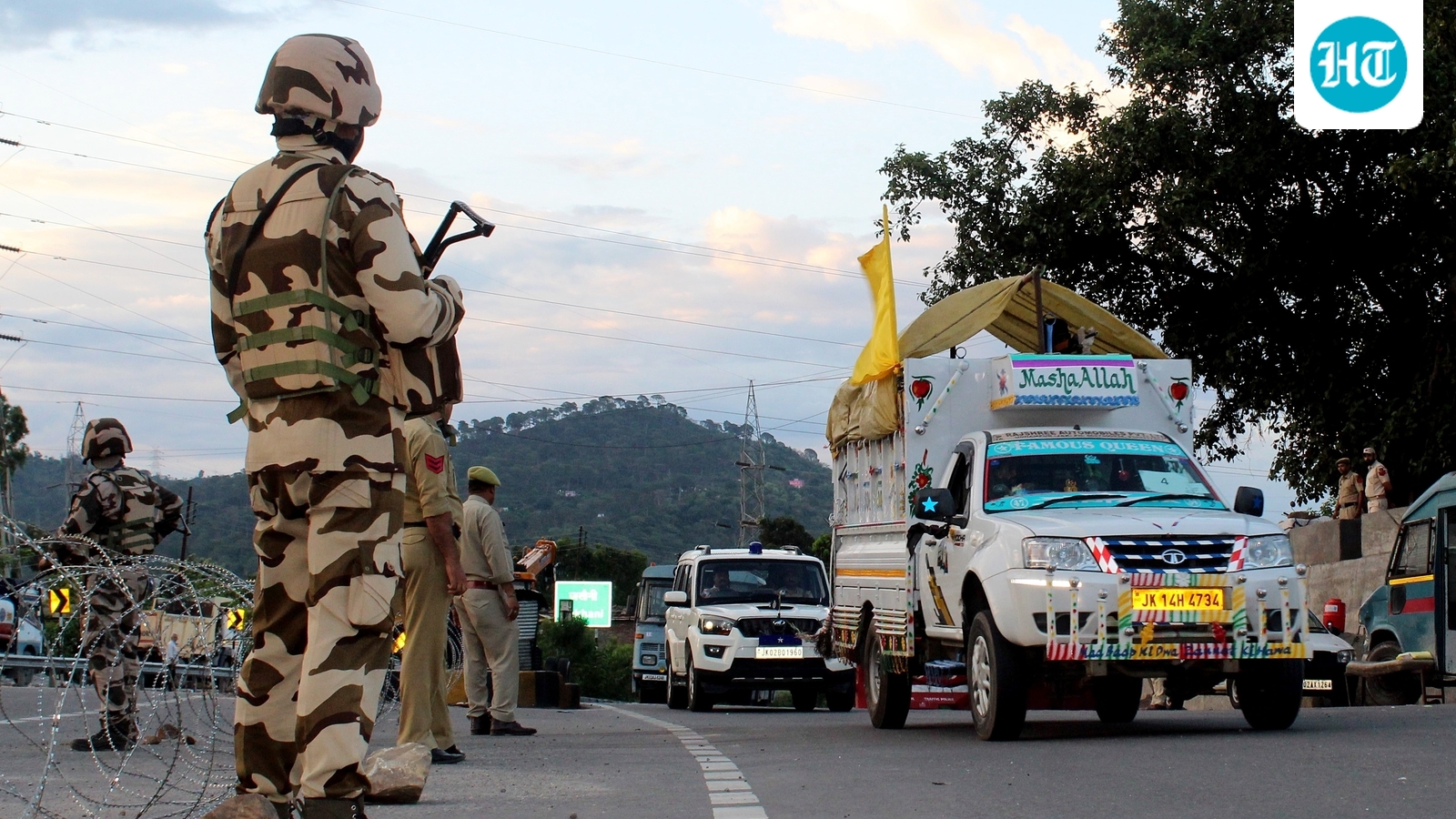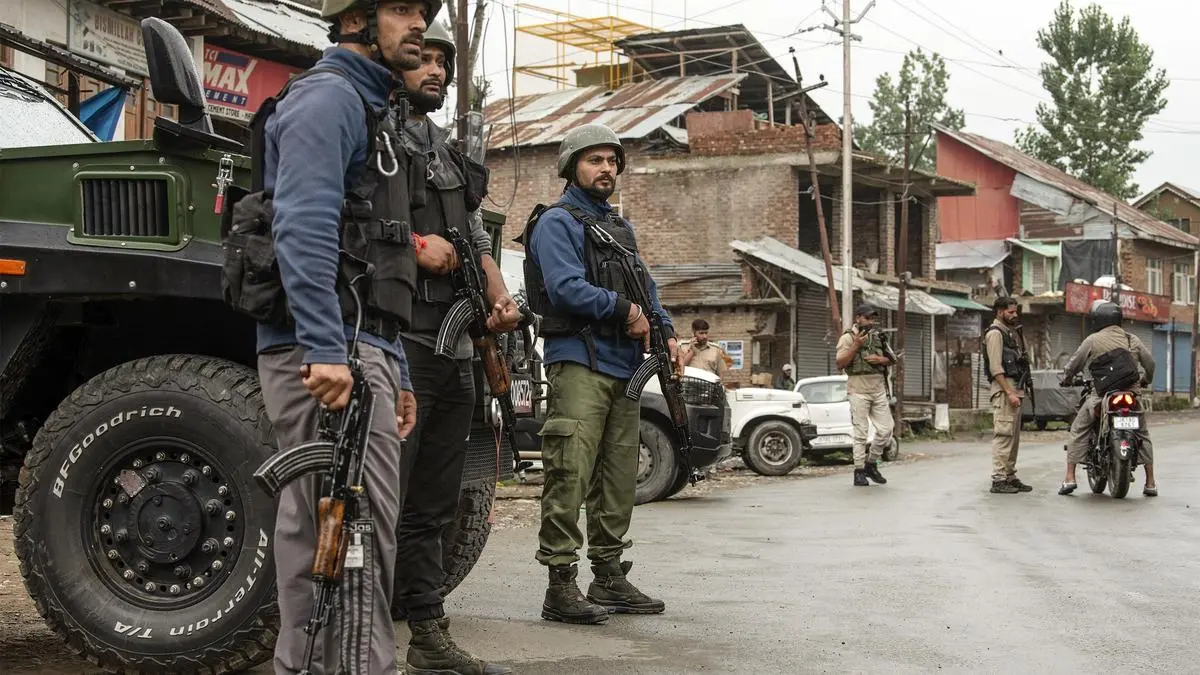
Security forces cordon off the area after suspected militants shot dead two non-local workers in the Kellam area, in Kulgam on Saturday. (ANI Photo)
| Photo Credit:
In late April, Mukesh Kumar, a migrant worker from Bihar, travelled to Kashmir in search of a livelihood. He found work at a brick kiln in south Kashmir, where he has been earning a modest living ever since.Life went on as usual until July 31, when two migrant labourers were shot dead by terrorists in a village in Kulgam district, about 65 km (40 miles) south of Srinagar.The killings heightened security across the Valley but did not deter Kumar and many other migrant workers from continuing to live and work in Kashmir, although they now exercise greater caution in their daily movements.“We are not leaving the Valley. The security agencies and the local administration here are very supportive,” Kumar said.Backbone of economyEvery year, around 400,000 migrant workers from States such as Bihar, Uttar Pradesh, West Bengal, Punjab and Rajasthan travel to Jammu and Kashmir for seasonal employment. They work in the construction, service and agriculture sectors, making them an indispensable part of the Valley’s economy.According to official data, most migrant labourers are employed in agriculture. The 2011 Census shows that the sector accounts for 29 per cent of the migrant workforce, while 12 per cent are engaged in household industries. The construction sector employs about 2.025 per cent of migrant workers in the Valley.Qazi Tauseef, spokesperson of the Kashmir Economic Alliance (KEA), an umbrella organisation representing traders, transporters, industrialists and other business bodies in Kashmir, said migrant workers remain indispensable to the Valley’s economy.“From construction and infrastructure to horticulture and controlled atmosphere stores, they play a vital role across sectors. Their contribution complements the local workforce and is essential for sustaining economic activity and development,” he said.The recent attack has revived memories of earlier targeted killings of migrant workers. In 2022 alone, at least 10 non-local labourers were shot dead in a series of attacks allegedly carried out by The Resistance Front (TRF), an offshoot of the Pakistan-based militant outfit Lashkar-e-Taiba, triggering an exodus of workers from the Valley.“Their exodus from Kashmir affected work across different sectors, leaving employers struggling to find labour,” said Mohammad Amin, a local orchardist.This year, however, many migrant workers say they are determined to continue working despite the risks. Several said they have become more cautious by avoiding unnecessary travel after dark, remaining in groups and staying in close contact with employers and local authorities.Security intensifiedAuthorities have beefed up security across vulnerable areas following the Kulgam killings. Additional security personnel have been deployed in localities where migrant workers reside, while police and paramilitary forces have intensified patrolling, increased vehicle checks and strengthened surveillance to prevent further attacks.Published on August 3, 2026