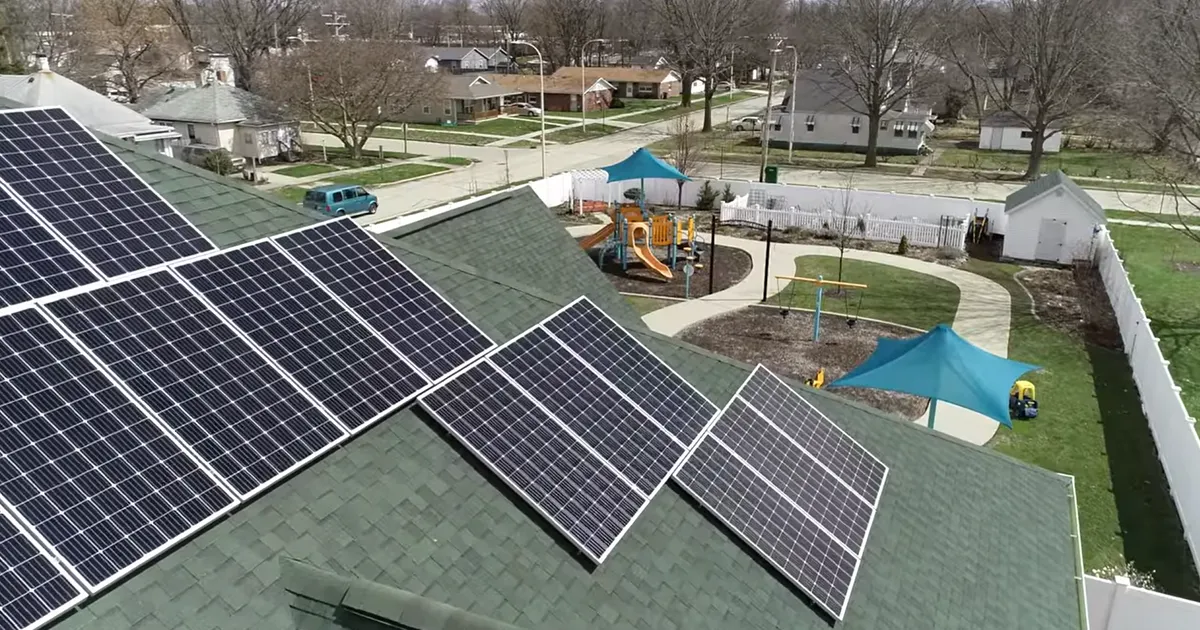
Any time, day or night, parents experiencing homelessness, domestic violence, or other emergencies can drop their young kids off at the Crisis Nursery in Urbana, Illinois, and know they’ll be safe and cared for.
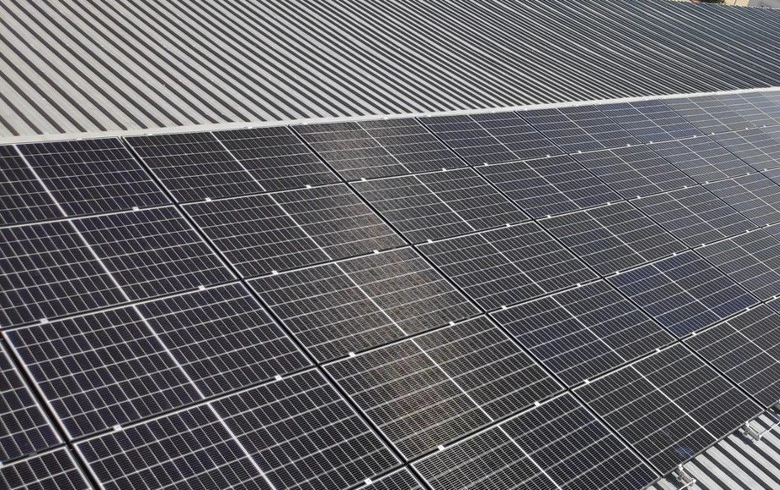
Funding is a constant challenge for the 45-year-old nonprofit organization. But it was able to create a bit of financial breathing room by putting solar panels on its roof back in 2020, leading to significant savings on its energy bills.
Crisis Nursery was one of the first beneficiaries of Illinois Solar for All, a state program to make the clean energy source accessible to households, nonprofits, and public facilities in lower-income communities and areas facing environmental injustice. Participants receive at least half the value of the energy generated by their solar array, with no up-front costs for buildings with four or fewer units, as well as no or low up-front costs for larger projects.
The program, created by a state law that took effect in 2017, was slow to get off the ground. The available funds went largely unspent for years, despite the savings on offer.
But in recent years, the program has become a success — and a lesson in the importance of long-term commitment and extensive grassroots engagement, as administrators and advocates see it.