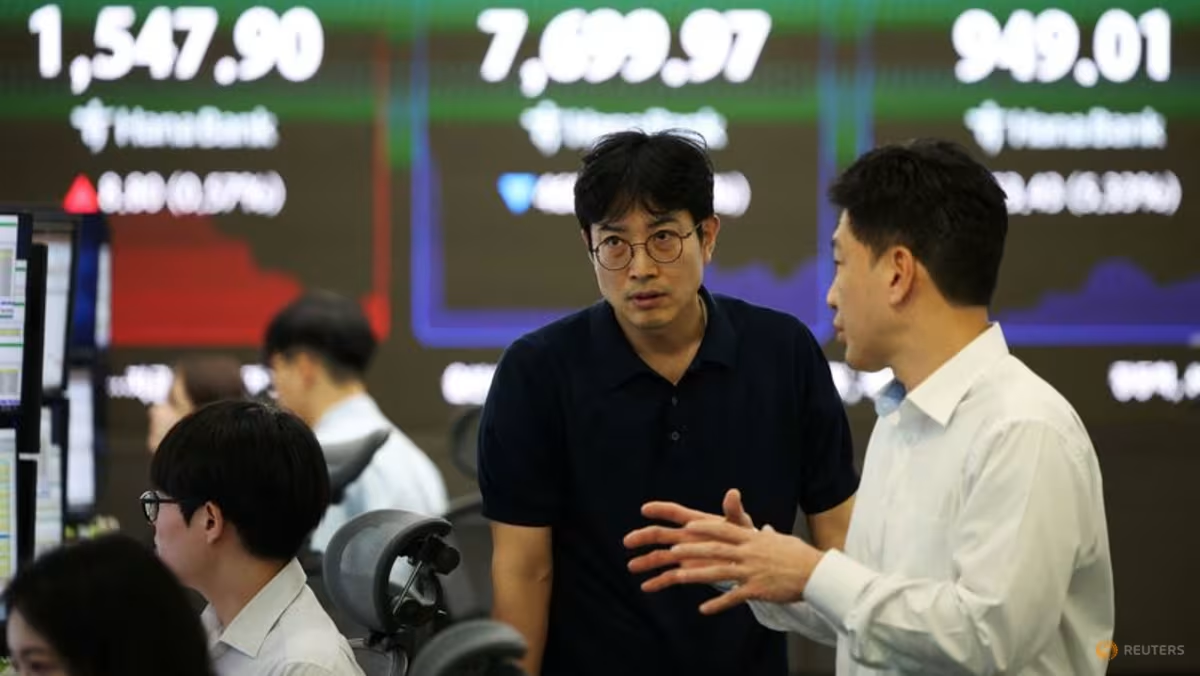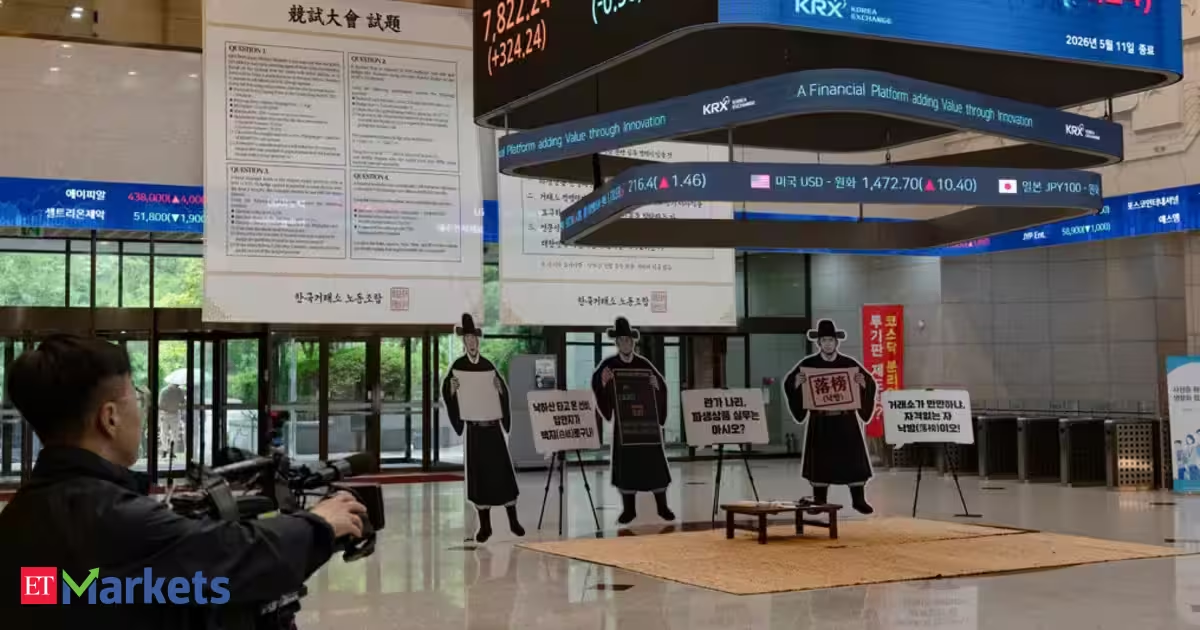
South Korea’s Kospi dropped more than 5% on Monday after a record-breaking 18% surge in the previous session, as investors resumed selling heavyweight chipmakers in the latest round of downswing amid high volatility.Samsung Electronics and rival SK Hynix, two major chipmakers which account for more than half of the Kospi index, shed around 8% each. As a result, Kospi plunged over 5% to close at 6,257. The index still remains 45% up in 2026 so far, although it has fallen more than 33% from its June peak of 9,386.Today’s selloff may have been driven by profit booking after the sharp rise in the previous session, amid prevailing concerns and fragile sentiment around AI investment, along with the outsized influence of leveraged retail bets on the heavyweight chipmakers.Kospi's seesaw movementKospi has seen massive volatility in recent days, spooking investors not only in the country but worldwide. After skyrocketing over 122% since the beginning of the year to hit a lifetime high of 9,386 in June on the back of a global AI frenzy, things began to go downhill. While South Korea’s stock market grabbed headlines as the world’s best-performing stock market this year so far, analysts were quick to point out the concentration of chipmakers Samsung Electronics and SK Hynix.The introduction of single-stock leveraged ETFs linked to the two major chipmakers seemed to further increase the concentration risks, leading to the Kospi spiralling down massively. Korean regulators have introduced measures to cap the impact of these highly volatile financial products. However, investors remain sceptical about whether these curbs will be sufficient to weather the current market downturn.The Korean government has been scrambling to introduce measures to save the stock market. During a parliamentary session last month, South Korea’s Finance Minister Koo Yun-cheol apologised for the introduction of single-stock leveraged ETFs, saying they had not been considered carefully enough.South Korea’s President Lee Jae Myung recently said, “Our domestic stock market is quite unstable.” He noted that since the country’s stock market experienced a historically unprecedented massive surge in such a short period, it would require time and fluctuation to stabilise.South Korea’s local investors, including young people, pensioners, parents and more, who borrowed money and piled in late, are hurting the most of all. The sidewalk outside the National Assembly building in Seoul was covered with nearly 40 wreaths of condolence flowers laid in protest against the government's handling of the single-stock leveraged funds. One ribbon on a white wreath read "Slaughtering retail investors". "Wait 'til payback time, I will repay next time I vote," read another.Also read | Explained: Why Kospi skyrocketed 18% on Friday after massive selloff and what’s ahead for South Korea’s 'bipolar' stock marketWhat lies ahead?Nomura believes that the heavy correction in South Korea’s equity market was driven by heavy selling by foreign investors, slowing institutional support and volatility due to the rapid growth in leveraged ETFs and newly launched single-stock leveraged products.“We believe these factors led to amplified volatility despite resilient corporate fundamentals. As market “deleveraging” progresses and foreign selling pressure eases, the next leg of Korea's rerating is likely to be supported by corporate share buybacks and treasury-share cancellations, particularly from large-cap companies, in our view,” the international brokerage said, adding that this should become a new structural source of demand and help Kospi re-rate toward a 10,000-11,000 target."The near-term path will likely stay volatile given how much leverage remains in the system, but the demand backdrop underneath the volatility is still strong,” Reuters quoted Billy Leung, investment strategist at Global X ETFs Australia, as saying. "Our discussions with investors suggest a high degree of frustration that the underlying fundamental story is being overwhelmed by the current level of market volatility," the report further quoted William Bratton, Head of Cash Equity Research, APAC, BNP Paribas, as saying."Seoul will learn to live with stock market volatility," analysts from Eurasia Group wrote in a research note, cited by Reuters. "Large daily fluctuations are mostly divorced from market fundamentals, though; corporate profits remain at record highs,” they added.Also read | 'Wait till payback time!': South Korean retail investors protest as govt apologises after Kospi crashes 40% in a month(With inputs from agencies) (Disclaimer: Recommendations, suggestions, views and opinions given by the experts are their own. These do not represent the views of The Economic Times)
Kospi slumps 5% after record-breaking 18% surge. What’s ahead for South Korea’s seesaw-like stock market?
South Korea's Kospi plunged more than 5% on Monday after surging a record 18% in the previous session, as renewed selling in heavyweight chipmakers and leveraged ETF-related volatility rattled investors. While analysts expect near-term turbulence to persist, they believe easing foreign selling and corporate shareholder returns could support the market's longer-term rerating.
TL;DRAI
Kospi -5% lunedì; Samsung/SK Hynix (-8%) via leverage retail massiccia su single-stock ETF e profit-booking. Rally 2026 sudcoreana (+45% YTD) fragile: dipende da speculazione retail, non da fundamentals; segnale di rischio per esposizione tech su Borsa sudcoreana.
715 words~3 min read