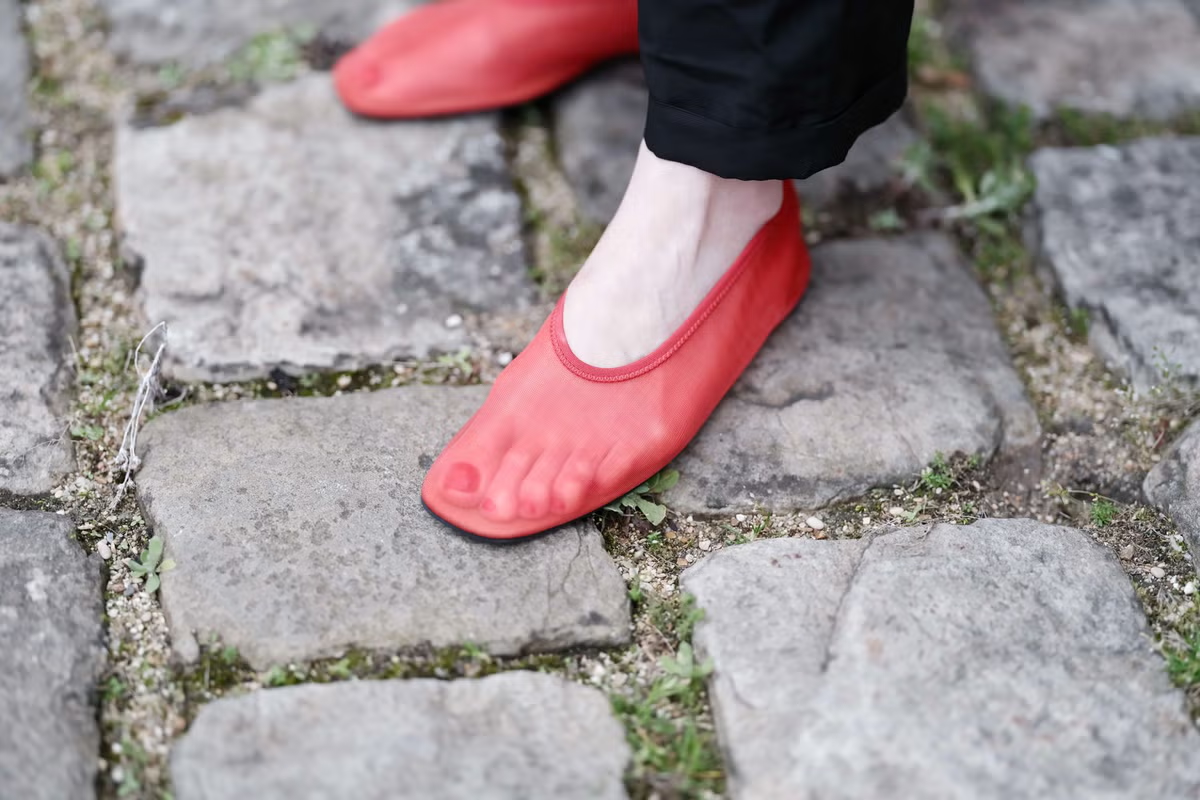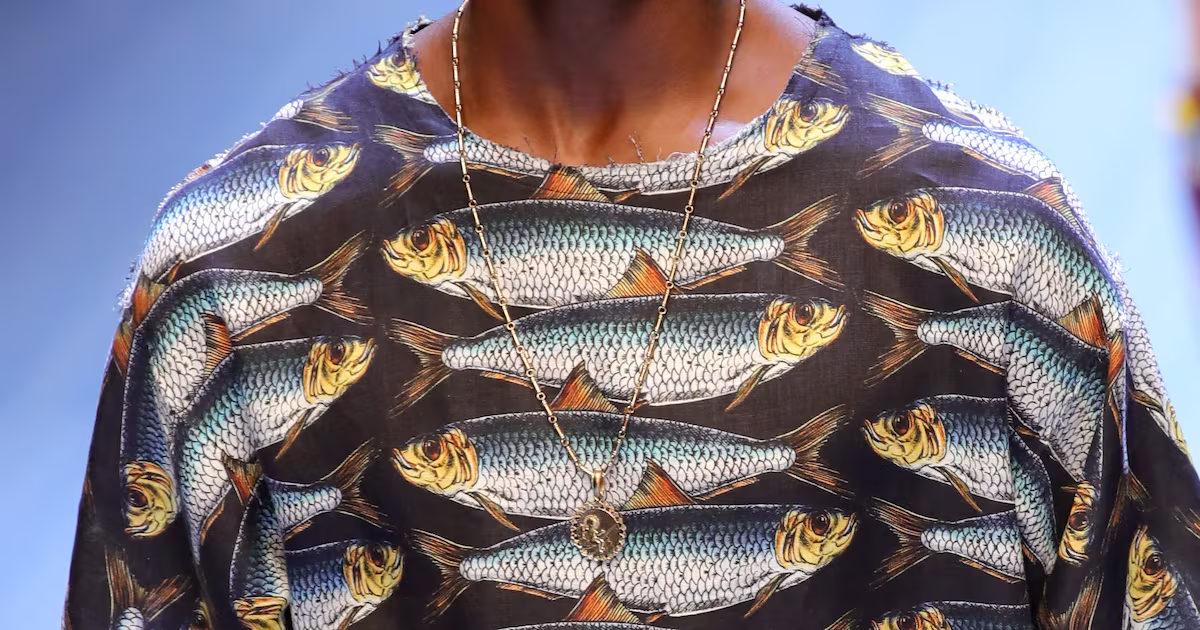
As a lover of clothes, I’ve fallen more than once for the ugly shoe trend. And I don’t mean the styling trick of pairing Doc Martens with a frothy Communion dress. I mean a different kind of trend, where I think a shoe is hideous on sight and then, through repetition or indoctrination, it becomes desirable. It happened in my 20s with Isabel Marant’s basket sneakers, a foamy block of a shoe with a hidden wedge. More recently it’s Margiela’s Tabi boot, a literal cameltoe with a split between the hallux and the rest of the foot “for balance”. They’ve always reminded me, painfully, of the tapirs in Dublin Zoo. But they’re having a moment, and repeat exposure has seen me whispering nonsense words like “elevated” and “fashion-forward” into my phone late at night. I thought of my love of ugly shoes while reading a recent piece in the New York Times. The author argues that fashion trends were once the product of creative design houses. As with Miranda Priestly’s infamous Cerulean Blue Sweater speech, taste was top-down, trickling from couture to ready-to-wear into the sad clearance bins of the hoi polloi. Today, the author argues, trends are more likely to come via AI prediction and a factory in Guangzhou. Fashion is the latest casualty of algorithmic slop. Where taste was once shaped by fashion houses, in other words, it’s now an exercise in data analytics. Thinking of all the ugly shoes I’ve loved before, despite my own best intentions, I’m not sure it’s quite so clear-cut. Wasn’t fashion always, in some way, a data-harvesting exercise? Isabel Marant’s outsize sneakers cherry-picked their aesthetic from Parisian streetwear culture. Marc Jacobs’ Spring 1993 Perry Ellis collection explicitly quoted the flannel and vintage of Pacific Northwest grunge and turned it into high fashion. By this time, researchers were being paid to go “coolhunting”, venturing into youth cultures to spot emerging styles before turning the data into products they could sell back to young people, so that an item with real valence in one subculture – the safety pins of British punk or even the O’Neill’s shorts of Irish GAA – became another product. Fast fashion has always churned data, so that a cheap facsimile of a two-piece worn by Kate Middleton in 2011 would flank an Inditex window in a fortnight. But where the industry once paid buyers and coolhunters to guess what people might want, now it’s watching us wanting in real time. And fashion has always turned other people’s tastes into merchandise. What has changed is the speed and sheer recursion. Algorithms feed our own predictions back until what is popular or simply in production is hard to unpack. I think of the 2024 #MobWife microtrend, which seemed to coincide a bit too neatly with an industry revival of The Sopranos. This season it’s, er ... Sardine Girl Summer, a mix of classic nautical influences and super ugly T-shirts with fish on them, which feels less like an industry mega-plot and more like some mad Pinterest stack overflow has us all suddenly dressing like Shrimp Jesus. And if you happen to be reading this with a tin of sardines splashed across your chest, you might find yourself asking, reasonably enough, “did I choose this?”But I’m wondering if we can ever say our taste is reliably our own. One definition of taste is “what I like”. Much of what I like as a grown-up – bougie olives, expensive Bourbon, overpriced candles that smell like salad – are acquired tastes. Sometimes, it’s hard to tell if I really liked these things to start with or just wanted to be the kind of person who did. Another definition put forward is that taste is how we locate ourselves socially: knowing what to wear and what not to wear signals we belong to a particular group. Taste has never been entirely our own, then, but it used to be possible to spot the people we borrowed it from. In an essay in PVA’s June 2026 Fashion issue, June Caldwell described the thrill of wearing clip-on earrings to the Dublin nightclub Bubbles in the 1980s. Inside, she got the nod of approval from Kristen “Doodle” Kennelly, in a mini and her own pair of clip-ons, and the night was a success. For every -core suffix or “girl” aesthetic bobbing to the surface on our #FYP, I still feel strangely hopeful. For one thing, the latest trends suggest that the terminally online are over rapidly cycling fashions. “Wearing a cacophony of mismatched items simply because they are trending will have you branded a ‘micro trend final boss’,” NCAD student of visual culture Laura McCann emails me, with an implied eye roll. On a recent trip to Edinburgh, my two friends and I swapped phones and spent a few minutes happily perusing each other’s Vinted recs in the pub. It was still an algorithmic reflection of our tastes, and I know I’m more than capable of compulsive second-hand buying in the name of sustainable fashion, but it feels different somehow. Vinted alters the rapid cycle; old garments circulate instead of being replaced with whatever is the new thing. Might some of the tools that create cycling trends also make space for moments of surprise – for desires that can’t immediately be sold back to us? I recently downloaded Indyx, a digital wardrobe app like my own version of Cher’s Clueless closet. Now I turn to styling my own clothes when I’m tempted to shop. I noticed that other users were styling me too, arranging my real-life clothes into combinations I wouldn’t have otherwise tried. It still feels like a recommendation from someone else, but it’s a far cry from AI slop. It’s more like taste doing what taste has always done: passing from person to person and changing along the way.
Rachel O'Dwyer: Sardine Girl Summer - Now AI is deciding what we wear. Is that so bad?
Taste has never been entirely our own, but it used to be possible to spot the people we borrowed it from
973 words~4 min read