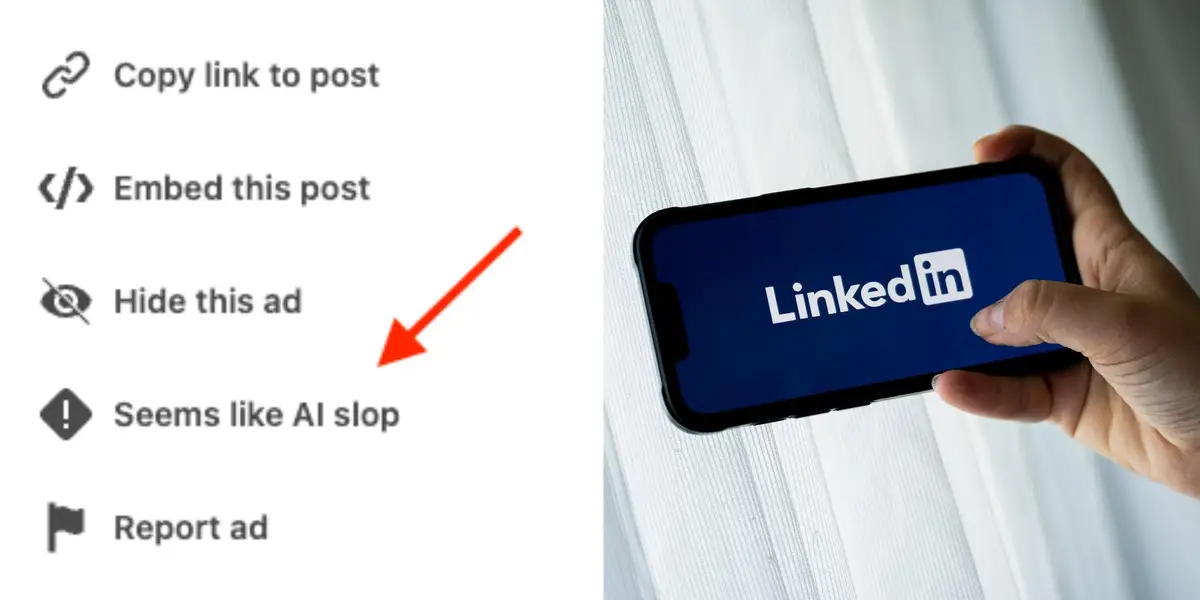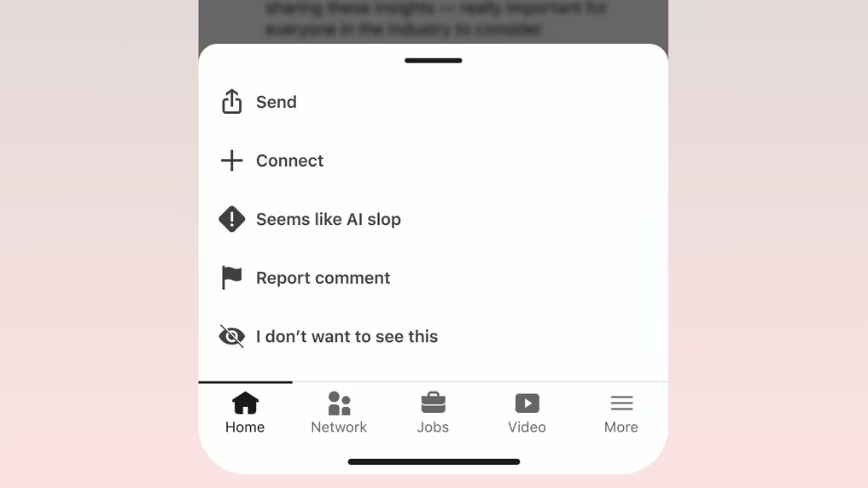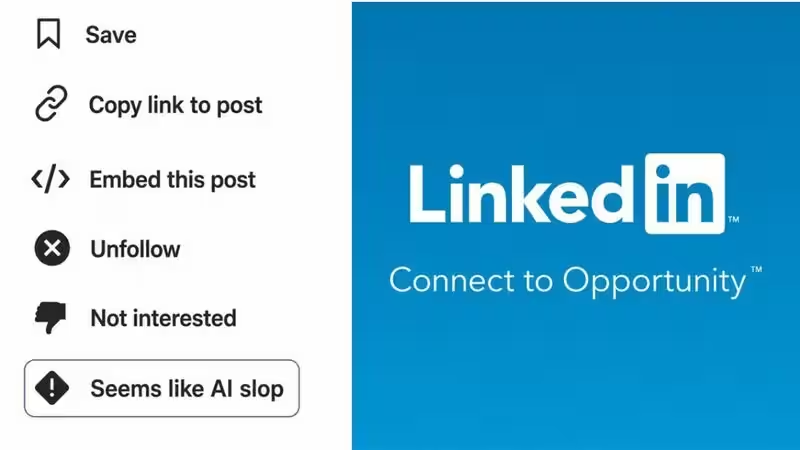
LinkedIn is taking a new step to tackle the growing amount of AI-generated and low-quality content on its platform. This professional networking site is trying out a feature where its users can confidentially mark those posts and comments which they think “look like AI slop” and provide the firm with one more way of recognizing such content which seems to be too mechanical and unnatural.This new option comes amid growing concerns of the social networking sites about the number of AI-generated posts, comments, pictures and videos being posted on the internet. This matter is especially relevant for LinkedIn due to its focus on professional networking and knowledge exchanges.About The AuthorJournalist and a writer with a strong interest in news, culture, technology, and human-interest stories. Passionate about making complex topics accessible and engaging.LinkedIn tests AI slop reporting featureLinkedIn Chief Product Officer Hari Srinivasan announced the feature in a post on the platform, saying the company is increasing its ability to let members report content they believe appears to be AI slop.Users can reportedly access the option through the three-dot menu on a post or comment. Among the available reporting choices, LinkedIn is testing an option that allows members to indicate that content “seems like AI slop”.The company says these reports will help improve its systems for identifying AI-generated and generally low-quality content. Srinivasan noted that “slop” can be difficult to define and that its meaning can change over time. Feedback from users could therefore help LinkedIn refine its models and improve the content that appears in members' feeds.LinkedIn already takes action against large-scale automated activity. According to Srinivasan, the platform detects hundreds of thousands of automated comments every day, while billions of mass-posting attempts and AI slop posts have reportedly been blocked in recent months.The new reporting system could provide LinkedIn with another layer of information by allowing real users to indicate when content feels artificial or excessively dependent on AI.LinkedIn will not ban AI-generated contentDespite its efforts to combat AI slop, LinkedIn does not intend to prohibit users from using artificial intelligence when creating or editing content.More articles by AuthorTrending StoriesSrinivasan admitted that there were legitimate applications of AI-based tools. Members may use them to check their texts for clarity or just to test arguments before publishing anything. It seems that LinkedIn's concern about AI is not so much about AI writing as it is about content that sounds inhuman and highly automated.LinkedIn is going to try out a feature which will privately alert members if some other members think that the member's posts sound inauthentic or if they contain too many traces of work with the help of AI.Rather than publicly labeling such posts as inauthentic or artificial, LinkedIn will let creators know about that feedback through their analytics dashboard.According to Srinivasan, the company wants members to receive honest feedback from actual people about whether their content sounds authentic or not. At the same time, the company does not want to fully rely on AI tools that may make a mistake at times.LinkedIn is scaling back one of its AI writing toolsInterestingly, LinkedIn's latest move comes alongside a change to the platform's own use of generative AI.The company previously offered tools that could help users enhance or rewrite posts and messages using AI. Srinivasan said LinkedIn plans to remove the “enhance your post” feature and replace it with a proofreading tool.The main point here is that the new app is designed to help users edit or improve their writings while preserving the author's voice.LinkedIn's move brings out an issue faced by social media as they introduce more and more artificial intelligence in their services. Although AI assistants make writing easier, they make it also possible for users to create tons of text with almost no efforts from their side.This may be especially problematic on a professional networking website where posts and discussion are usually the only way to assess the expertise and experience of someone.Why AI slop is a bigger concern for LinkedInThe spread of low-quality AI content could have a more direct impact on LinkedIn than on platforms primarily focused on entertainment.Trust is extremely important to LinkedIn. Members create profiles on LinkedIn in order to network, gain knowledge about the business world, find jobs and interact with other individuals based on their experience and knowledge. If AI posts and comments cannot be distinguished from genuine contributions, it will harm the credibility of the interactions.The situation also creates an interesting contradiction for LinkedIn. The platform has been adding AI-powered features across areas such as job applications, job advertisements, posts and articles, while simultaneously attempting to limit the excessive automation that these technologies can enable.LinkedIn's member verification system is another example of its efforts to strengthen trust. More than 100 million members have reportedly verified their identities, but verification alone cannot guarantee that everything a person publishes reflects their own thoughts or writing.Other platforms are also fighting AI slopLinkedIn is not alone in attempting to address the issue. Other major social and video platforms have also started taking steps against low-quality AI-generated content.Snapchat recently announced plans to stop promoting wholly AI-generated videos in its main Spotlight feed, while YouTube has been working to prevent users from monetising the most egregious forms of AI slop.Other platforms, including Pinterest, TikTok, Reddit and X, have also taken measures to address the growing volume of AI-generated material.For social media companies, however, the challenge is complicated by their simultaneous investment in AI creation tools. Platforms want users to benefit from AI-assisted writing, editing and content creation, but they also need to prevent those same tools from turning their services into feeds dominated by automated and repetitive material.LinkedIn's latest experiment suggests the industry may be moving towards a middle ground: AI can assist users, but platforms increasingly want the final content to retain a recognisably human voice. FAQsWhat is LinkedIn’s new AI slop feature?LinkedIn is testing a new reporting option that allows users to flag posts and comments they believe “seem like AI slop”. The feedback will help LinkedIn improve its systems for identifying AI-generated and low-quality content.How can users flag AI slop on LinkedIn?Users can reportedly tap the three-dot menu on a post or comment and select the option indicating that the content appears to be AI slop.Will LinkedIn ban AI-generated content?No. LinkedIn does not plan to prohibit AI-assisted content altogether. The platform recognises that users may use AI to proofread writing, refine their thoughts or test arguments.Why is LinkedIn targeting AI slop?The platform wants to reduce low-quality and overly automated content that could make interactions feel inauthentic. This is particularly important for LinkedIn, where users rely on professional conversations, knowledge and expertise.end of article
LinkedIn Now Lets Users Flag ‘AI Slop’ Posts and Comments
LinkedIn is testing a new reporting option for AI-generated content, while also scaling back its own AI writing tools in favour of proofreading that preserves users’ original voice.
TL;DRAI
LinkedIn introduces AI-slop flagging and removes auto-enhance, detecting hundreds of thousands of automated comments daily. Platform trust collapses when machine content mimics expertise; this directly impacts hiring visibility and professional credibility.
1,110 words~5 min read