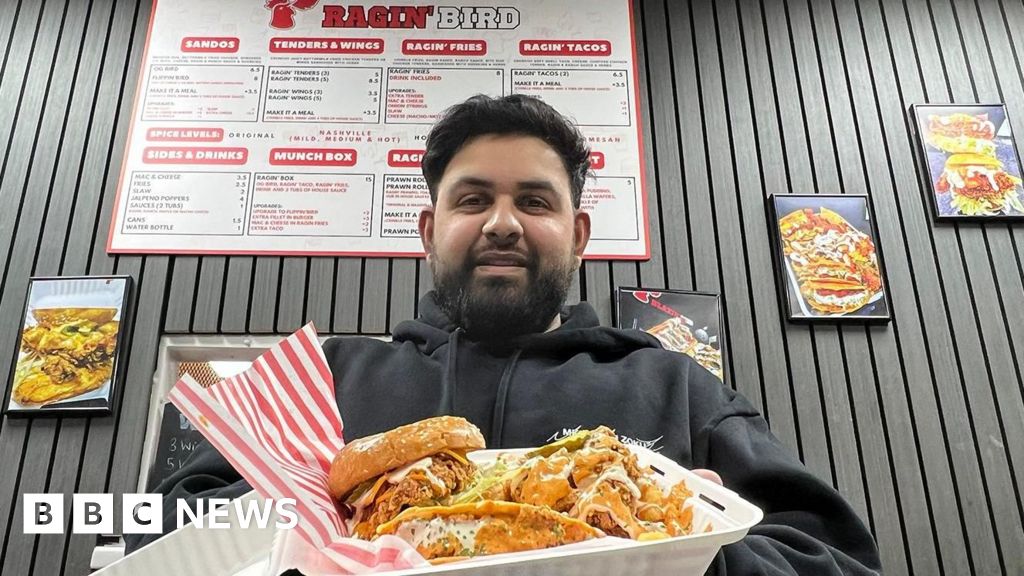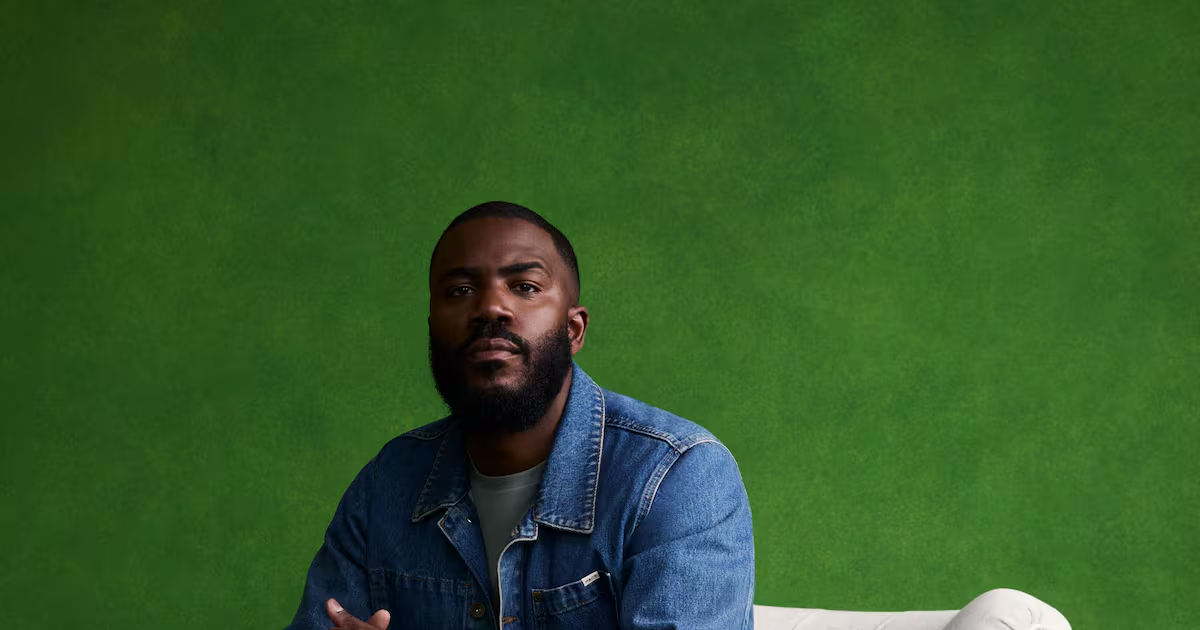
Here’s a ghoulish fact: according to the US National Chicken Council (yes, it’s a real organisation), Americans consumed 1.48 billion chicken wings while watching the most recent Super Bowl.That grim statistic doesn’t actually feature in the documentary Big Chicken: A Fast Food Conspiracy, starring British comedian Mo Gilligan, but there are plenty of other stomach-churning details. Fried chicken is now the fastest growing fast-food product in the world. That requires a lot of killing. Worldwide, 78 billion chickens are slaughtered every year. In the UK, there are more than 6,000 chicken shops, and Britons spend more than £12 million on fried chicken every day. In Ireland, Moy Park, one of Europe’s largest poultry companies, processes about 300 million chickens a year across its operations. It is the leading poultry brand, with almost half of Irish households buying its chicken.Early in the film, Gilligan jokes that there are “two things I can’t live without: making people laugh and, here comes the black stereotype in three, two, one … fried chicken". He gamely reveals that he’s previously done voiceover work for McDonald’s and Nando’s. He’s a big fan of big chicken and, to prove as much, he embarks on a 28-day, fried-chicken-only diet. His doctor and friends look suitably concerned. Within days, he was fantasising about such beloved breakfast staples as a banana. “Yes,” says Gilligan, over Zoom. “Just fried chicken. I’ll be honest, at first it was very much like: ‘This is going to be fine.’ “Once you add some chips on the side, or wings, and there are so many different kinds of chicken, it doesn’t really have to feel like you’re just eating fried chicken. I thought: ‘This is going to be a breeze.’ What turned into a dream quickly became a nightmare. I didn’t enjoy the process at all.”It’s not just the questionable menu. In Big Chicken, Gilligan branches into sleuthing with a journey that brings the comedian from south London to the United States to reveal the (often gruesome) details underlying mass consumption and the historical origins of fried chicken. This latter subplot touches on the petrol pump owner who styled himself as KFC kingpin, Colonel Sanders, and features the vile caricatures of black men in DW Griffith’s pro-Klan propaganda, The Birth of a Nation.In Big Chicken, Mo Gilligan branches into sleuthing with a journey that brings the comedian from south London to the United States. Photograph: Netflix “I always wanted to know the history of the dish,” says Gilligan.“I told a lot of friends what I was doing – and my friends are very protective of me – and their reactions were: ‘Oh chicken, that’s crazy. You’re going to be on TV and eating fried chicken. You, as a black man, I don’t know about that.’ They’d never asked questions about any my work before. I wanted to understand that.”[ Lesbian Lines director Cara Holmes: Growing up, the word ‘lesbian’ was not really being said out loudOpens in new window ]Crossing the Atlantic, after just one day in Houston, Gilligan describes his stomach complaints in epic terms: he calls a friend to recount the “s**** of Narnia”. A deep dive into the history of chicken production reveals possible causes for digestive discomfort. One illuminating segment looks back to 1948 and the Chicken of Tomorrow competition, which sought to breed chickens that grew the fastest. The results transformed the modern bird. If humans grew at the same accelerated rate as today’s chickens, a two-month-old baby would be the size of a fully grown pig.Food and flavour writer Mark Schatzker notes that these huge, modern chickens have no natural taste. “You’re not tasting chicken,” he says. “You’re tasting what they put on chicken.”He traces the problem back to the Chicken of Tomorrow competition, arguing that chicken today is more like potato chips: it’s the seasoning that provides the flavour.Mo Gilligan: 'I told a lot of friends what I was doing – and my friends are very protective of me – and their reactions were: Oh chicken, that’s crazy.' Photograph: Jenny Brough/Netflix The documentary scrutinises what actually serves as flavour in modern fried chicken. Just one spicy Popeyes chicken sandwich contains a whopping 142 ingredients, most of them additives. Laura Schmidt, a professor at the Institute for Health Policy Studies at the University of California, highlights a loophole in US law: companies are not required to disclose the ingredients that make up their “artificial and natural flavours”. By contrast, in the EU, companies are required to demonstrate the safety of food additives. One ingredient used by fried chicken chain Chick-fil-A in its chicken nuggets is dimethylpolysiloxane, a chemical also sold as Silly Putty. Another commonly used ingredient across the fried chicken spectrum also serves as a lubricant in condoms.However,the biggest shock for Gilligan was the impact that his beloved wings have on other people. Various talking heads chronicle a constellation of abuses and environmental catastrophes. [ Pure filth! Ireland’s banned films – and why the censor didn’t want you to see themOpens in new window ]Magaly Licolli, a human-rights activist, reveals that workers at a gigantic slaughterhouse in Arkansas are forced to wear diapers on a factory line that forbids bathroom breaks. Gilligan visits Delaware, where Mountaire Farms, addressing wastewater and sludge disposal practices at its poultry processing plant, settled a big environmental class-action lawsuit for $205 million, while explicitly denying all liability or wrongdoing, in 2021. “I met people whose whole lives have been changed because of the waste that’s produced from chicken,” says Gilligan.“That was never something that ever crossed my mind when I was eating a drumstick or some wings. People can’t wash because their water’s affected, and where the waste goes, the smell … the smell was definitely the one thing I’ll never forget. It was horrible. Knowing that people live in houses and get that smell every day. I couldn’t bear it, and we only had the window down. But also, I didn’t understand how big the players are within the chicken world. I was always thinking: ‘I don’t want to be an investigative journalist.’ But then you understand the implications, like people getting decapitated in factories. I didn’t realise this is where this journey would take me."Mo Gilligan: 'To have heavy fries, oil, grease, fried chicken and processed fats as your first meal of the day, then again for lunch, and then for dinner? Quite early on, I knew my body would change.' Photograph: Jenny Brough/Netflix Over the past decade, Gilligan has become one of Britain’s defining comic voices, transforming a series of sharply observed social media sketches into a career that spans stand-up, television and broadcasting. His breakthrough came in 2017, after the rapper Drake shared one of his videos, introducing Gilligan’s effortless blend of observational humour and well-drawn character work to a global audience. The south Londoner’s knack for finding comedy in the rituals of everyday life has made him a fixture of British television. He hosted the Bafta-winning The Lateish Show with Mo Gilligan, co-hosted The Big Narstie Show, and has become a familiar face as a panellist on The Masked Singer UK. On stage, his arena-filling tours have reached an appreciative Irish audience; he warmly recalls “splitting the G for the first time” and enjoys queries about his Irish surname.He’s a jolly presence, quick to laugh, making his visible slump into chicken-induced depression during Big Chicken: A Fast Food Conspiracy all the more startling. “It was the food,” he says. “Because what I learned afterwards is I didn’t get any nutrients. There were no salads. I had supplements and I couldn’t go to the gym, so I know it was a direct impact of what I was eating. [ Wham! 10 Days in China: George Michael and Andrew Ridgeley deliver a seismic culture shockOpens in new window ]“In the morning, I’m an oat bar and coffee guy. To have heavy fries, oil, grease, fried chicken and processed fats as your first meal of the day, then again for lunch, and then for dinner? Quite early on, I knew my body would change. I knew that would happen because I even had to get bigger-size T-shirts when we were in Chicago. I knew that would happen, but I didn’t think the mental side would affect me.”This isn’t just a US-specific issue. Since 2021, buoyed by an influx of such American chains as Popeyes and Wingstop, Europeans found themselves consuming more fried chicken than ever before. Last year, Brits bought a chicken sandwich every three seconds – that’s 8.7 million sandwiches – from Popeyes alone. This trend requires the same fast-growing meat birds found in the US: birds that reach full market weight in just five to six weeks, on the back of selective breeding and big health problems, including leg weakness, heart strain and mobility issues. In Big Chicken, Gilligan tags along with an animal-rights activist named Matthew on an unsanctioned visit to one of Moy Park’s farms in Lincolnshire. As Matthew says: “Rather than fix the problem of these Frankenchickens that can’t stand up, they are just adding security.” Or as Gilligan puts it, he could probably find out the secret KFC recipe before learning where they get their chickens from and how the birds are treated. “These are people who are still fighting the fight,” says Gilligan. “That’s great because it’s a conversation I feel like we all need to have. They showed me stuff I could never have seen. We all talk about making conscious choices about food, but so much is hidden.”Big Chicken: A Fast Food Conspiracy streams on Netflix from Wednesday, August 5th
‘The dream quickly became a nightmare’: Mo Gilligan on the mental impact of 28 days of fried chicken
The British comedian was a fan of fried chicken until he made his gruesome documentary, Big Chicken: A Fast Food Conspiracy
1,598 words~7 min read