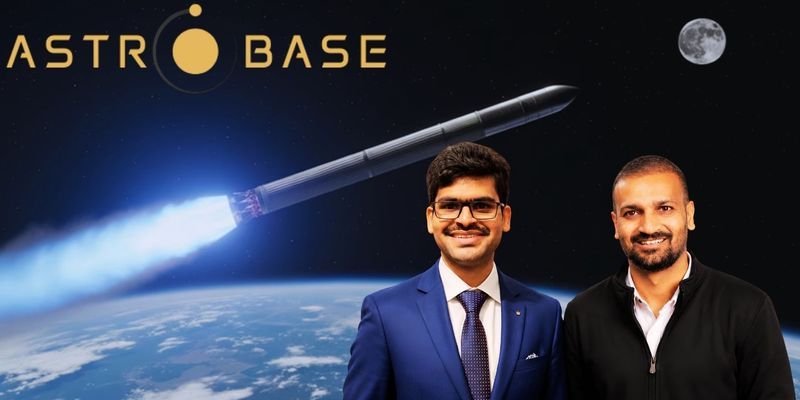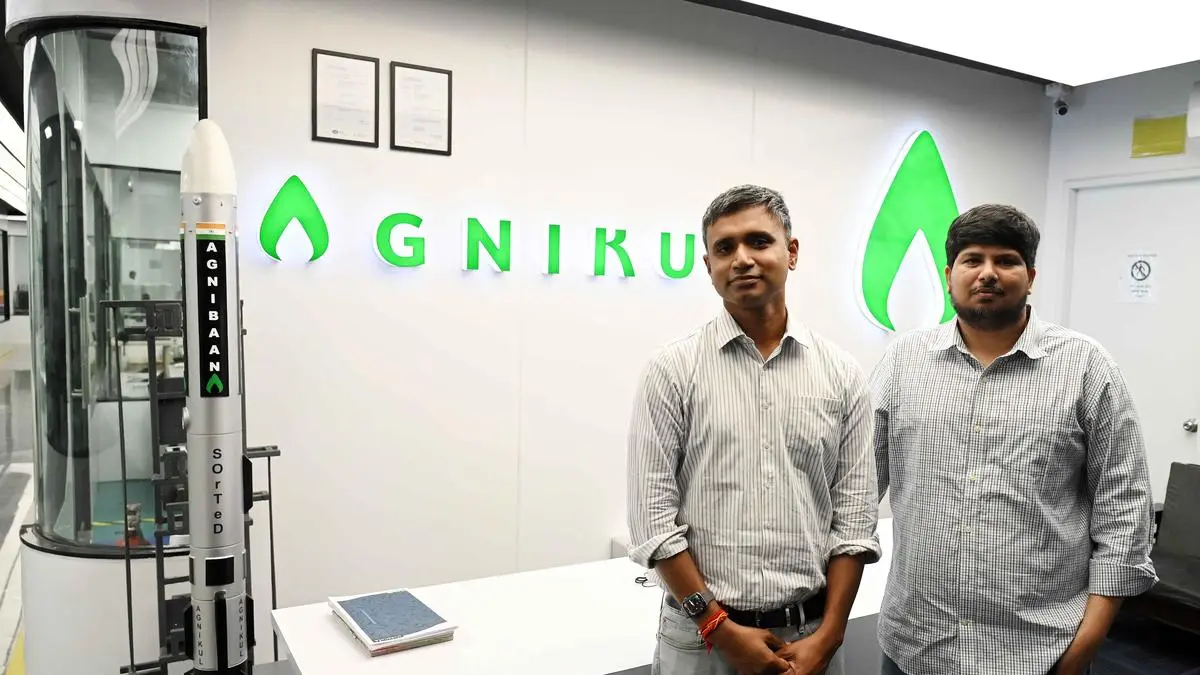
Srinath Ravichandran (left), Co-founder and CEO, Agnikul Cosmos and Moin SPM, Co-founder and COO at their office at IIT Research Park, Chennai.
| Photo Credit:
Bijoy Ghosh
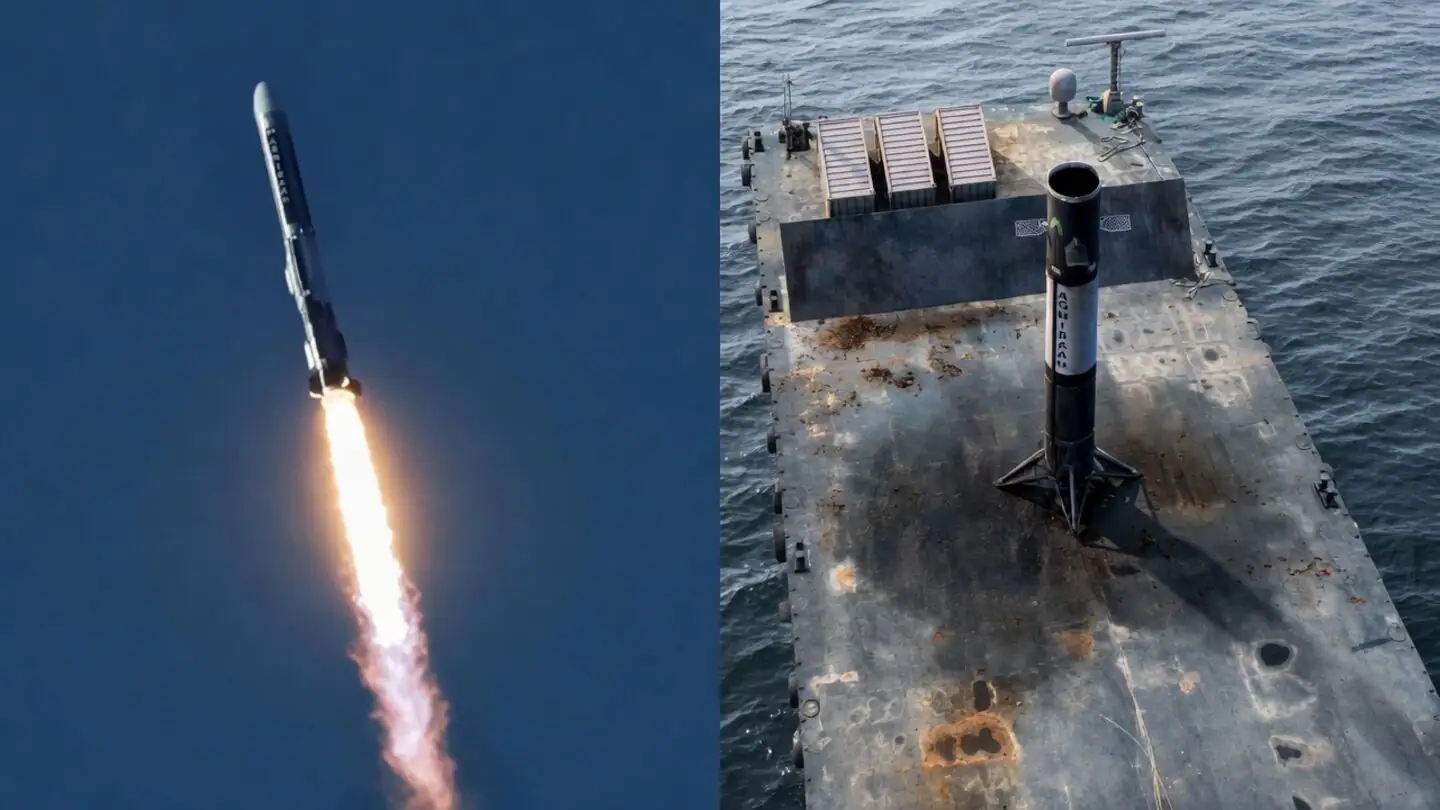
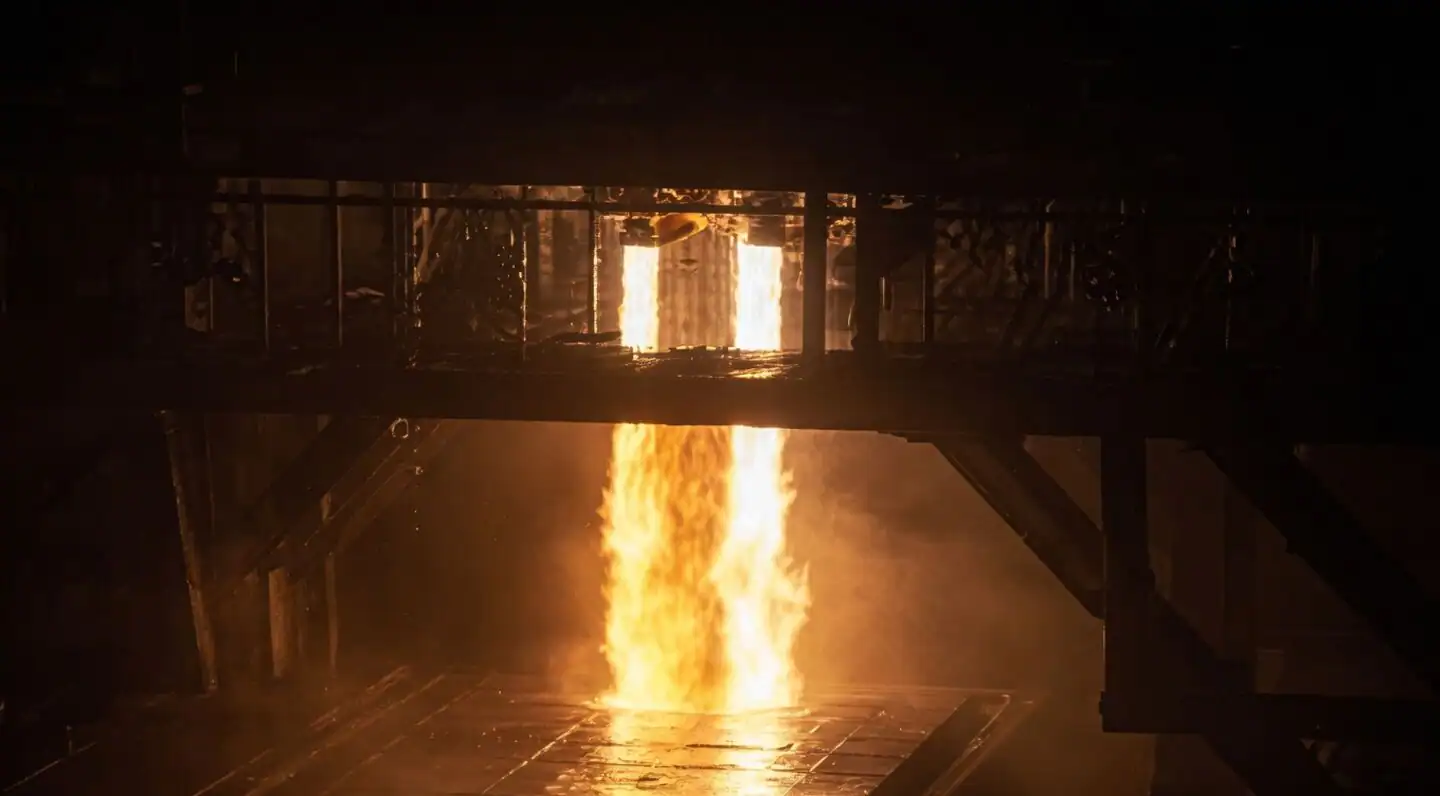
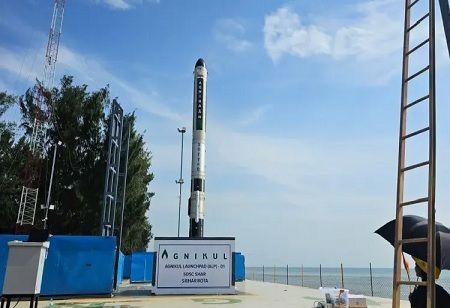
India’s space tech start-ups have tried to prove they can build rockets and get them to fly, but Chennai-based AgniKul Cosmos wants to go one step ahead, and is looking to prove that they don’t need to build a new rocket every time they launch.AgniKul is looking at an early 2027 timeline for its Mission 2, which will see them not just place a commercial payload in orbit but also attempt to recover the rocket’s lower stage for reuse. The architecture for the reusable launch vehicle is almost frozen, Srinath Ravichandran, co-founder and CEO, AgniKul Cosmos told businessline. “All the pieces of the tech needed for reusability are in place; we will have to now sequence them exactly,” he said. Video Credit: BusinesslineAfter lift-off, AgniKul’s lower stage rocket will function as an independent vehicle once separated from the rest of the rocket and it will attempt a vertical landing on a barge in the Bay of Bengal after lifting off from Sriharikota.”It has come to a point where we are thinking of that [lower stage] alone as its own separate rocket with its own brain and own hardware to return,” Ravichandran said. The plan is to start taking the hardware to the launch location as and when it is ready, probably by this year, and then the launch itself will depend on monsoons and few pending approvals, he adds.Success in this attempt will put the Indian start-up in the same league as SpaceX, and mark a breakthrough for launch economics in Indian space tech sector. Notably, both stages are being designed for multi-use — the upper stage is envisaged to remain in orbit as a reusable satellite bus. Since its maiden launch in May 2024, the semi-cryogenic rocket maker has completed cluster testing of its 3D-printed engines, firing up to four engines together, and is now scaling it further. “The next big milestone will be to replicate the exact configuration of the flight in terms of engine cluster,” Ravichandran said.